Without Parallel: North Korean Human Rights and the Russia Axis
October 14, 2026 • 9:15 – 11:00 am EDT
Hosted by Korea Chair

Photo: Talaj/Adobe Stock

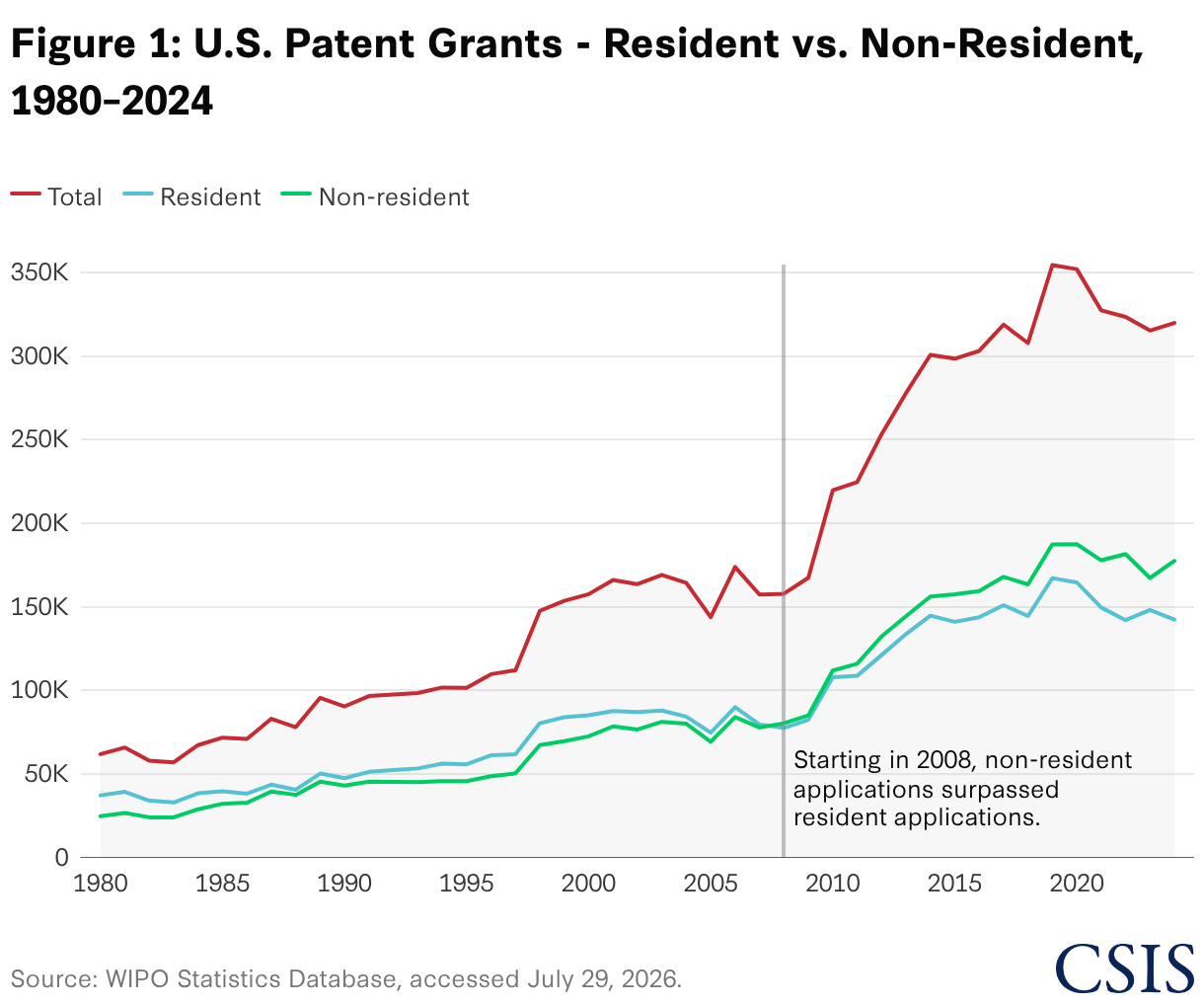
Since the late 2000s, more than half of all new patents in the United States have been granted to non-resident applicants—individuals and firms that are not primarily domiciled in the United States. At first glance, this may appear as a vulnerability: a sign that the U.S. patent system benefits foreign innovators more than American ones. But that interpretation overlooks the ways in which protecting foreign intellectual property (IP) advances U.S. competitiveness.
Countries generally protect the IP rights of foreign innovators because doing so helps ensure that their own innovators receive comparable protections abroad. This principle of reciprocity has long underpinned the international IP system and remains one of its defining features. The United States has benefited enormously from this framework. U.S. innovators are the world’s largest holders of foreign patents, which they use to commercialize technologies in overseas markets and drive the nation's substantial IP trade surplus.
Yet reciprocity is not the only reason countries protect foreign IP. In their efforts to develop world-class innovation ecosystems and strengthen their positions in critical and emerging technologies, nations compete to attract investment from innovative firms. These innovative firms possess valuable intellectual assets that underpin technological competitiveness, including patented technologies, manufacturing know-how, engineering expertise, and other proprietary capabilities. When they establish operations in a new country, they often bring those assets with them.
Where firms establish operations depends in part on the institutional environment they encounter. A strong, predictable, and non-discriminatory IP system is one reason innovative firms from around the world choose to invest in the United States and partner with U.S. companies. Because they know the United States will reliably protect their intellectual assets, despite their national origin.
In turn, these investments and partnerships strengthen the U.S. innovation ecosystem. U.S. firms and workers are exposed to new knowledge—such as manufacturing know-how, supplier relationships, and organizational capabilities—that can diffuse throughout the local economy and enhance domestic innovation. Consistent with this view, research has linked non-resident patenting in the United States to greater technology transfer and knowledge spillovers that benefit U.S. firms.
This is particularly critical today as the United States works to develop strategic industries such as semiconductor manufacturing, batteries, shipbuilding, robotics, and other sectors in which leading technologies and production expertise are located abroad. Cultivating these industries domestically will require attracting firms that possess the advanced technologies, supplier networks, and technical know-how needed to manufacture at the technological frontier. A strong, non-discriminatory IP system is a key institutional condition that makes attracting the firms, technologies, and expertise needed for that effort more likely.

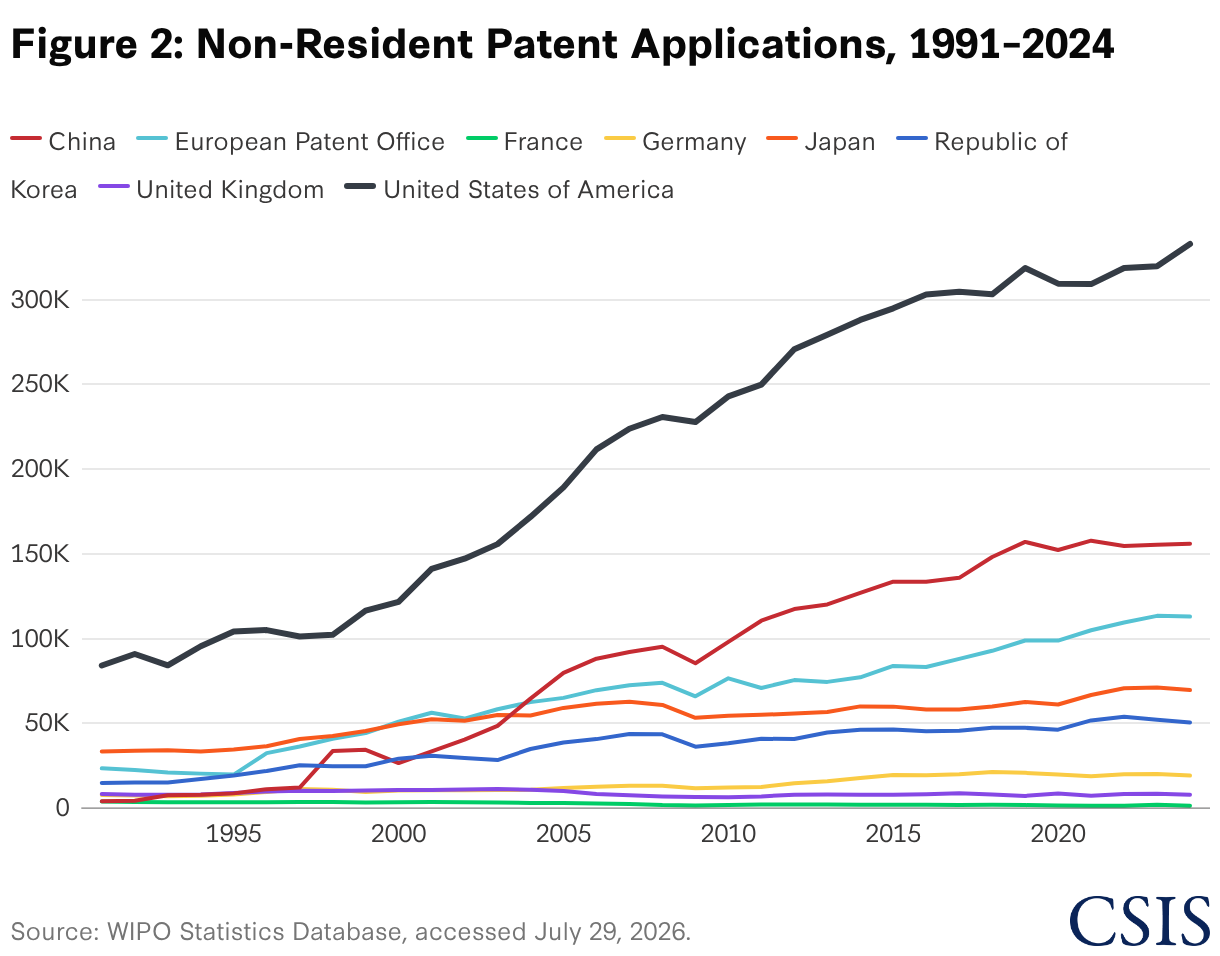
The global distribution of non-resident patenting is revealing. The United States receives the most non-resident patent applications in the world by far.
Rather than exposing a vulnerability, this illustrates a distinctive U.S. strength. A predictable and non-discriminatory IP system helps make the United States a preferred destination for deploying valuable intellectual assets. In an era when nations compete to shape where innovation occurs, attracting those assets is a source of strategic advantage. As policymakers consider reforms to the U.S. IP system, they should recognize that protecting non-resident IP helps create the conditions that attract the technologies, expertise, and capabilities needed to achieve and sustain technology leadership.


Commentary by Chris Borges — August 5, 2026