Ensuring Economic and Energy Security: Opportunities for U.S.-Japan Leadership
September 24, 2026 • 9:00 am – 12:00 pm EDT
Hosted by Japan Chair

Photo: sirylok/Adobe Stock
Welcome to the September 2026 edition of the Human Rights Initiative Director’s Note. I’m Andrew Friedman, director and senior fellow of the Human Rights Initiative (HRI) at the Center for Strategic and International Studies (CSIS). I produce this outlet monthly to talk through human rights and democracy issues that have been occupying significant space in my mind, highlight some of what we’ve been doing at HRI, and present a few articles, books, podcasts, and videos that have particularly struck me over the last few weeks.
Flock cameras. Or, more accurately, automated license plate recognition (ALPR) cameras that are popping up across the United States and provide information to law enforcement and other actors about the comings and goings of cars on public streets and private thoroughfares. While I try to avoid blanket statements, I’ll make one here. If you dress up as Darth Vader to attend a town council meeting and talk about how appreciative you are of a particular technology, you have my attention.
Sure, there are privacy concerns surrounding these cameras (and I promise I'll touch on that), but the big reason these have been on my mind is what they, and the movement against them, say about democracy and civilian oversight of the security sector.
One of the most astounding elements of the conversation on ALPR cameras has been the bipartisan nature of local government engagement on them. In a time period where political engagement is changing and polarization is present in all parts of American life, spanning things like television shows, dating. and pet preference, concerns about privacy overreach seem to reach all corners. These cameras, along with data centers, seem to have touched a nerve that has led to greater political participation in an immense swathe of the population. While this engagement started at the local level, it is filtering up. The Senate Judiciary Committee’s Subcommittee on Crime and Counterterrorism scheduled a hearing entitled “Always Watching: Flock’s Nationwide AI Surveillance Network” for the day this note will reach your inboxes.
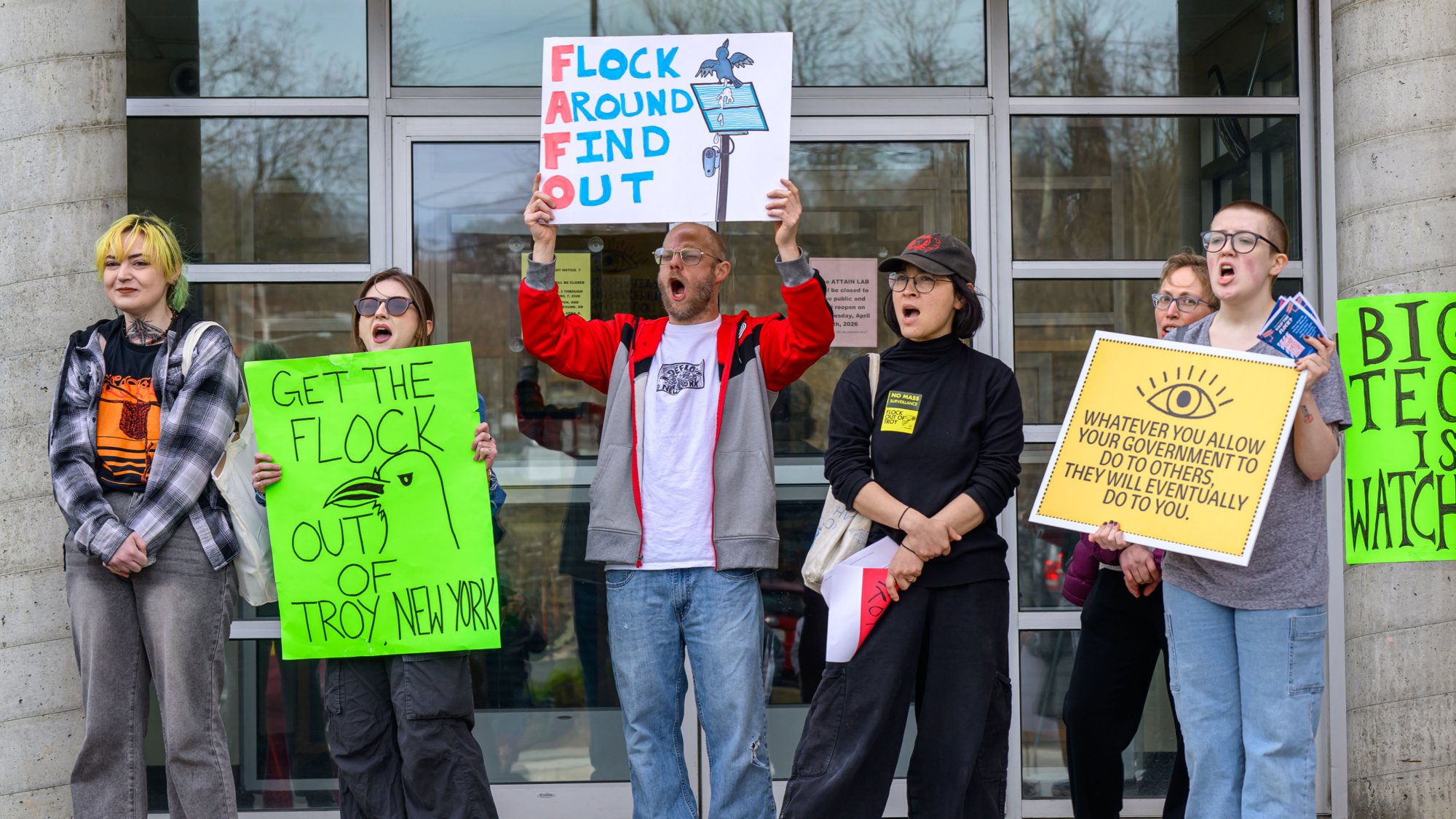
Photo: Jim Franco/Times Union via Getty Images
What does that mean for the future of these cameras? This question reveals the tension inherent in civilian oversight and democracy that is at the core of many human rights questions. Where do we draw the line between rights and security?
Once security sector actors have a new tool, they don’t want it to go away. Especially if it is one they think works. This shouldn’t be surprising. If you’d been putting in nails with a rock your whole life and I handed you a hammer, you wouldn’t like it if I told you I wanted the hammer back. Unfortunately, what we’re talking about isn’t a hammer and nail, it’s surveillance and privacy, which are far more difficult legally, morally, and democratically, and thus raise issues of actual efficacy and democratic oversight of the security sector.
To the question of actual efficacy, according to Flock (which is the largest producer of ALPR cameras), the cameras helped solve over a million cases. This number cannot be verified, but in interviews conducted for a recent Daily podcast from the New York Times, it was clear that law enforcement sees this as a useful tool.
And of course they help solve more crimes! Knowing where individuals are and where they have been makes it a lot easier to solve a lot of crimes (though sifting through the immense data always becomes an issue). This is why the right to privacy is a balancing act between public safety and the right to be left alone. Law enforcement could solve every crime if they had the machine from the Dark Knight and could access every camera on Earth, but most people wouldn’t be okay with the local police being able to access their phone camera at any moment. A close parallel is phone hacking, where we’ve seen human rights defenders unwilling to take their phone into the bathroom for fear of the capture of private moments. According to the Institute for Justice, ALPR cameras have already been used to stalk exes, as well as for “wrongful stops and detentions, non-law enforcement use, and other types of misconduct.”
This also doesn’t comport with any level of suspicion. Admittedly it’s been a minute since my 1L constitutional law and criminal procedure classes, but I recognize a camera taking a picture in a public place doesn’t require a level of suspicion in the constitutional sense, but it does from an efficacy standpoint. Think about it this way: In the first Willy Wonka movie (Gene Wilder, not Johnny Depp), Veruca Salt gets a golden ticket because her parents can buy up all the chocolate bars and have their staff open them, but they didn’t find a way to identify what chocolate bar was more likely to contain a golden ticket. For cars on the road, photographing everything doesn’t mean any car is more likely to contain someone accused (much less, guilty) of a crime; it just means that of all the cars on the road, some may contain such an individual. Collecting information without any semblance of suspicion matters in how people conceptualize privacy. It also matters whenever a shiny new tool is set to revolutionize how crime is investigated.
As I droned on and on about last month, one of the most important elements of democracy is its ability for self-correction. If law enforcement finds a tool valuable, it is hard to reverse course on that tool. “It keeps you safe” and “we need it for national security” are compelling even if those arguments don’t tell the whole story. The PATRIOT Act, passed in the days following 9/11, was repeatedly extended until sunsetting in 2020, nearly two decades into the War on Terror, and law enforcement had called for its permanent adoption despite real questions about its actual efficacy.
Time will reveal the results of this newfound engagement. Will it successfully limit the spread of ALPR cameras, or will they continue unabated? If history is a guide, if their proliferation continues, it will be difficult to reverse even if a critical mass of individuals opposes it. Further, if the cameras continue to spread, will this newfound political engagement persist? The answer to this question may be the difference between a new era of political participation and an ever more disenchanted citizenry.
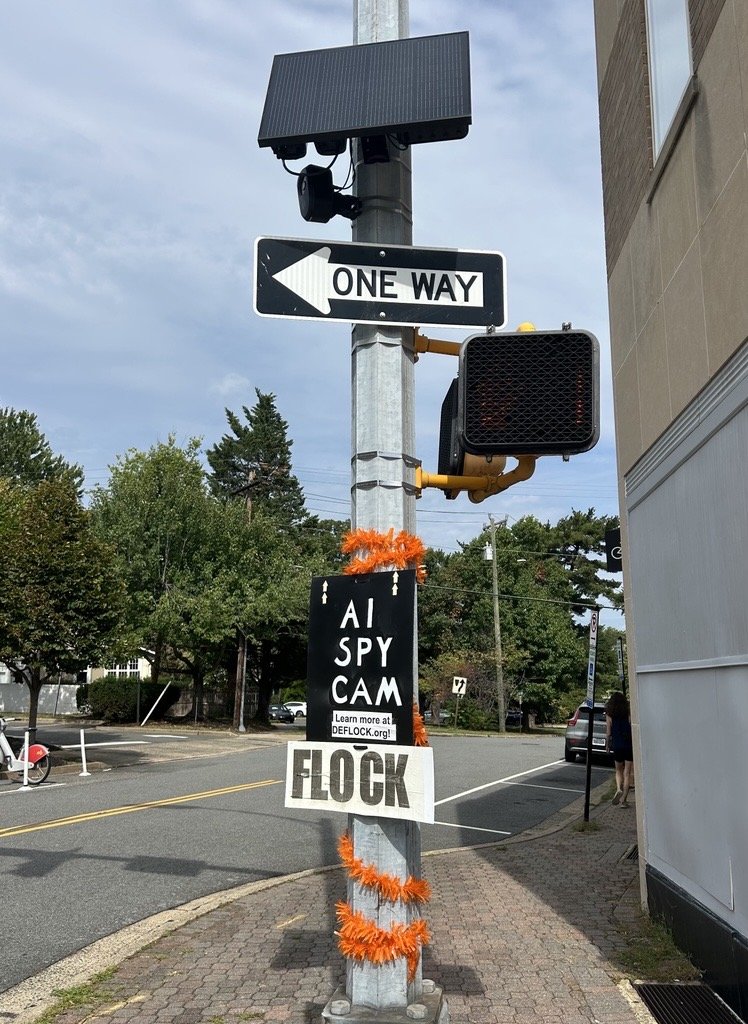
Photo: Anne Frederick/CSIS
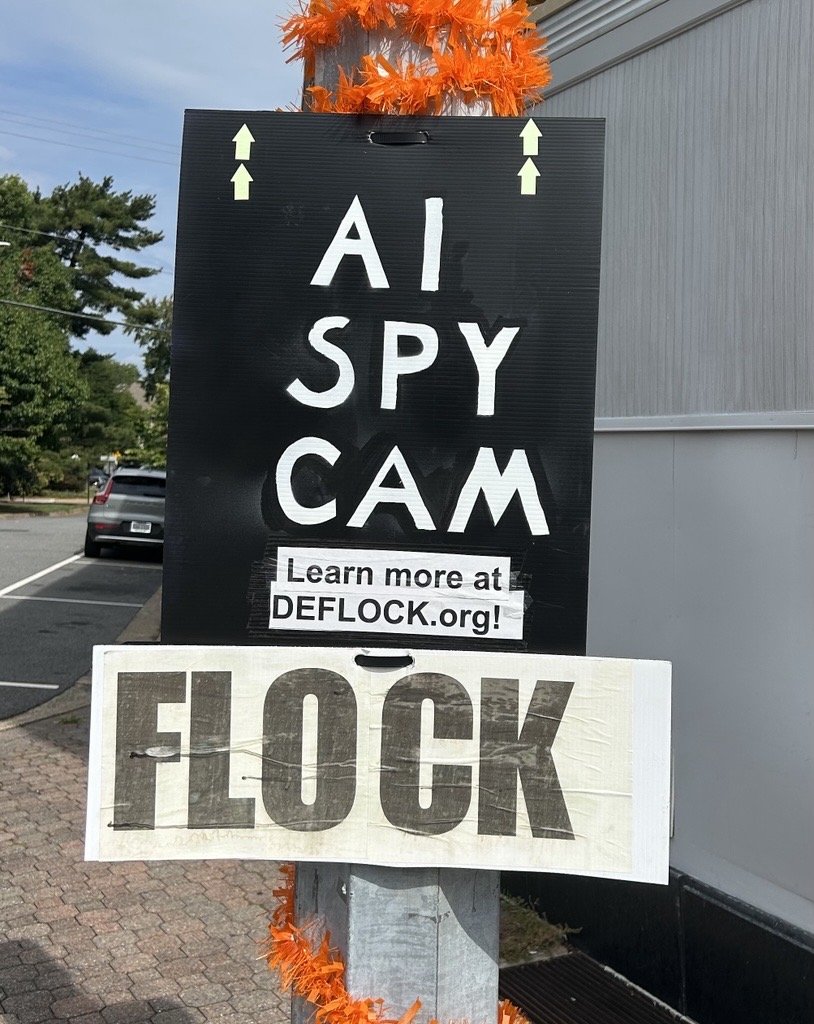
Photo: Anne Frederick/CSIS
Olara Otunnu – As the UN secretary general race heats up, we at CSIS were lucky enough to have Olara Otunnu pay us a visit. Organized by my colleagues in the Africa Program, I was able to hear directly from Mr. Otunnu about how he envisions the future of the secretary general’s role, where the United Nations needs to go from here, and what the multilateral system could and should look like. It was a fascinating conversation.
Book Review – Last week, I was asked to provide some comments for an upcoming book Authoritarian Transfers: How Foreign Agent Laws Travel and Stifle Civil Society and Free Expression by Günter Frankenberg, Jasmine Cameron, and Fernanda G. Nicola. The book delves into how foreign agent laws (laws that restrict the actions of civil society organizations or undercut their legitimacy by labeling them “foreign agents”) have disseminated across the globe and what they do. I was deeply impressed by the timeliness of this effort and how it does not shy away from the context. Civic space is closing, and resources for civil society organizations are drying up. Authoritarians work together, and these types of laws make it ever harder for human rights folks to do the same. This is an essential read for understanding the variety of tools authoritarian actors use to silence independent voices.
Installing Democracy – Umbral – This is one of the more fascinating tools I've seen in a long time. Umbral—“an independent analytical platform designed to monitor and contextualize regime transformation dynamics in Venezuela”—created a dashboard for the democratic transition in Venezuela. Based on 60 factors across 19 pillars, Umbral concludes that the transition is merely 7 percent complete. Transparency is constantly a concern when democratic transitions are taking place. Often, decisions are made behind closed doors and communicated to a populace already disinclined to trust its government. Years ago, I attended an event with civic tech innovators where one app from a North African country allowed voters to observe how their members of parliament voted in near-real time. This type of transparency was unheard of in the country's authoritarian recent history, and Umbral appears to be offering a similar window into the state of a transition. Such civic intelligence efforts inform populaces and make it easier to rally against the inevitable pitfalls of a transition. Umbral’s work deserves further coverage, research, and support, and I hope this is emulated elsewhere.
AI and the Future of Development: Eight Questions for the Future of Aid – Dr. Rachel George – Much work has gone into determining what AI will do to the development field, including foreign aid. One of the more profound gaps is that we can’t even seem to agree on the right questions. Dr. Rachel George lays out eight questions here that are fundamental to how we should be thinking. Full disclosure: Rachel is a friend and a co-author, but I can’t think of anyone who has put more thought into this issue, and I can't wait to read the book it's becoming.
“Reinvention Blueprints” - Just Security, a truly great policy news outlet, is running a series that aims to answer a question: “How should U.S. government institutions be structured to serve the public and meet today’s challenges?” I’ve been impressed by all of the pieces in this series and believe the throughline is that government has to work first and foremost for individuals, or else the future of U.S. democracy is bleak. In partnership with a number of very smart people working in this space, I’m helping to think through what can come after USAID. I’m excited by the initiative and happy to be playing a role in it.
We’ll be back in October, but until then, keep up with our goings-on on the HRI homepage and on LinkedIn. If you have thoughts or questions, please feel free to reach out at [email protected], and if you were forwarded this and enjoyed it, please sign up via the homepage here.
