Welcome to the August 2026 edition of the Human Rights Initiative Director’s Note. I’m Andrew Friedman, director and senior fellow of the Human Rights Initiative (HRI) at the Center for Strategic and International Studies (CSIS), and I produce this outlet monthly to talk through human rights and democracy issues that have been occupying significant space in my mind, highlight some of what we’ve been doing at HRI, and present a few articles, books, podcasts, and videos that have particularly struck me over the last few weeks.
What I’m Thinking About
There’s a lot to love about democracy. Development outcomes across the board are better in the medium and long term in democracies. People live longer and fewer infants die. Economic growth is stronger. People are more secure. On the moral side of things, I’ve never heard a compelling argument for why people shouldn’t have a say in the decisions that most impact their lives, or at very least in the people who make those decisions. But none of those things are my personal favorite. My personal favorite is democracy’s tendency towards self-correction. A lot can go wrong in a country. In my own country, a quote often attributed to Winston Churchill (though not verified) is that “Americans will always do the right thing, only after they have tried everything else.”
This quip, in perfect Churchill style whether or not he said it, tells an important truth about democracy. Democracy, as a system, lets a populace hold their officials accountable for decisions they make and, when they disagree with those decisions, find people to make better ones. Looking at it this way, elections are a part of democracy, but far from its whole. Its whole is one long and ongoing process to just try to do better. They serve more as a moment-in-time temperature check of the health of a country’s democracy, its broader democratic trajectory, and its ability to self-correct than the be-all end-all.
Why is this front of mind?
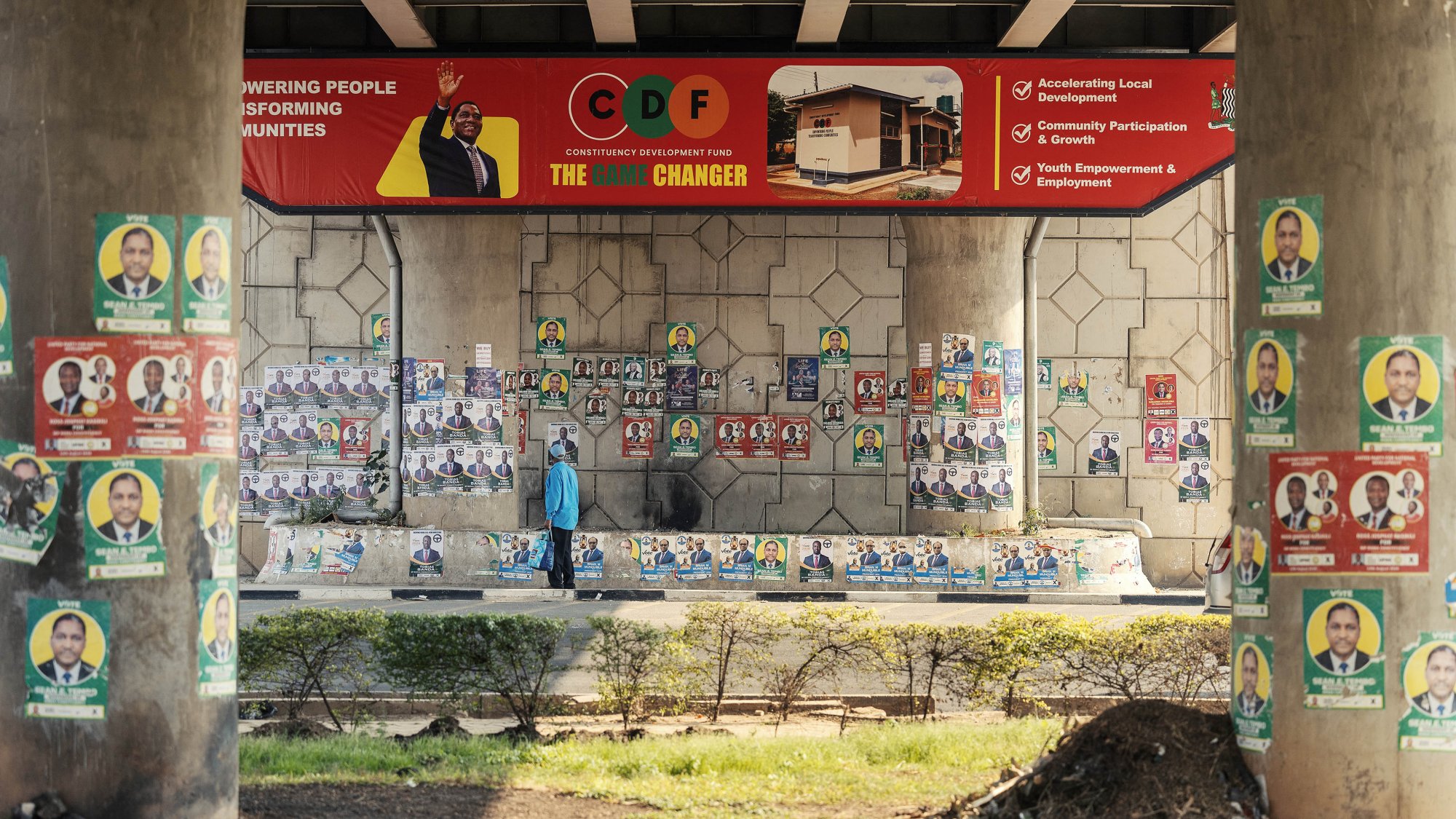
Earlier this month, Zambia held its Presidential election, in which Hakainde Hichilema was re-elected with more than 60 percent of the vote. HH (as he is known) was first elected in 2021, in large part as a rejection of the authoritarian tendencies of his predecessor, Edgar Lungu. There are two stories that can be told about the intervening five years and this election.
First, HH’s first win five years ago saw him sweep into power with immense optimism about his ability to reverse the repression of the country’s former leader and guide Zambia through difficult economic terrain, in particular from the country’s youth, a significant part of the population in a country where the median age is under 19. By convincing more than 60 percent of the electorate to vote for him, he seems to have met the expectations of the electorate in an election described by some observers as a referendum on the economy, guiding the country through a major debt restructuring and restoring relationships with international lenders.
And second, President Hichilema was elected in 2021 as a rejection of Lungu’s repression and authoritarianism, but the last five years have seen no shortage of these tactics. The government brought back de factocriminal defamation laws and passed a public gatherings bill that have collectively raised concerns about shrinking civic space. Though he received more than 60 percent of the vote, while votes were being counted, a number of opposition politicians were arrested in a violent scene at an opposition leader’s home and there have been significant accusations of electoral irregularities.
Both of these narratives are true, making it all the clearer that elections cannot be viewed in isolation, but rather must be seen as part of the wider democratic trajectory of a country.
Time will tell what the ultimate determination is concerning the election itself. Opposition leader Brian Mundubile planned take the election result to court, and claims that he is the rightful winner. However, when Mundubile attempted to file on the final day challenges were possible, Zambia’s courts were closed “for security reasons.” Further reporting from the European Union’s Electoral Observation Mission as well as multiple analysts have highlighted deep flaws in the process. It could be that these irregularities did not change the outcome. It also could be that they are overstated by an opposition candidate who is surprised by his loss. I have no idea, and frankly I would not presume to know or opine on who is better for the people of Zambia.
The reason this election caused me to wax philosophical about the value of democracy is not about who wins; it’s about the process. Elections like this serve as a temperature check for the health of a democratic trajectory. Much has been
While the outcome will ultimately make the headlines, and the next five years of Zambian leadership will have substantial impacts on the lives of everyday Zambians, the election proves a problematic temperature check for the country’s democratic trajectory. It could be that Zambians want five more years of HH, or it could be that the irregularities did impact the election and the country attempted to elect Brian Mundubile. By limiting fundamental freedoms and suppressing dissent, the environment limits democracy’s ability to self-correct, whatever that correction may look like to the people of Zambia.