Proportional to the Mischief: International Law and U.S. Grand Strategy
October 26, 2026 • 3:30 – 4:30 pm EDT
Hosted by Defense and Security
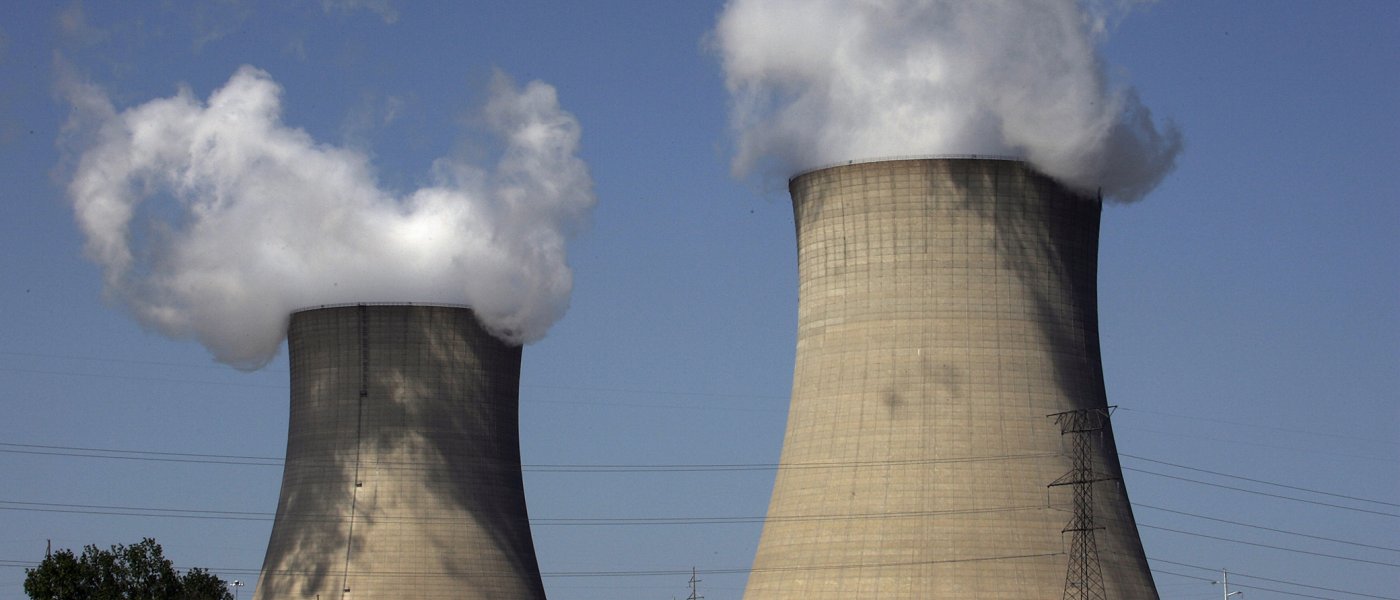
Photo: JEFF HAYNES/AFP/Getty Images
President Trump’s proposal to repurpose the U.S. plutonium stockpile to fuel nuclear reactors resulted in a May 23, 2025, executive order directing the Department of Energy (DOE) to revisit disposal plans and consider processing and redirecting some of the plutonium surplus to nuclear energy and new reactor designs, including for powering AI data centers. As of the last reporting in 2012, the United States had over 60 metric tons of plutonium in “surplus to defense needs” that were slated to be converted into nuclear waste and buried underground. The Trump administration’s initiative has drawn scrutiny: In a September 23, 2025, letter, Senator Ed Markey warned the plan poses proliferation risks and potential conflicts of interest, and a Politico article from September 29 amplified these worries, reporting that members of Congress fear the plan could divert as much as 20 percent from the surplus.
Given the size of the U.S. plutonium stockpile and the amount in surplus, why would President Trump’s proposal cause such an outcry? Couldn’t the stockpile be put to better use by increasing clean energy production rather than creating potentially dangerous waste buried underground? While the details of plutonium management may be highly technical and dredge up decades of debate, they reveal serious policy challenges for the Trump administration. The plan could create competition for both plutonium and, more seriously, capacity within the United States’ already overstretched nuclear enterprise; therefore, it should be accompanied by a parallel commitment by the administration to ensure that the National Labs are properly resourced and that the plan does not come at the expense of existing and vital nuclear modernization plans.
Q1: What is the current U.S. plutonium stockpile? Where does it come from, and is it dangerous?
A1: During the Cold War, the United States produced over 70,000 nuclear warheads. Thanks to arms control and other nuclear reduction efforts, the United States was able to cut its arsenal by 90 percent. The dismantled warheads contained a combination of dangerous nuclear material, particularly plutonium, which is difficult to destroy and can take thousands of years to decay. As part of the disarmament process, the United States amassed a stockpile of old plutonium from nuclear weapons.
Managing the stockpile has been an ongoing scientific and policy challenge. The 2000 Plutonium Management Disposition Agreement (PMDA) between the United States and Russia aimed to massively cut both countries’ plutonium stockpiles. Russia withdrew from the agreement on October 8, 2025, but the agreement was already essentially dead. Under the PMDA, the United States planned to cut its plutonium by converting weapons-grade plutonium into mixed oxide (MOX) fuel for civilian power at a site in Savannah River, South Carolina. The plan proved too costly and was ultimately canceled at the end of the Obama administration in order to free up resources for nuclear modernization. In 2015, the DOE adopted a new plan for disposing of the old weapons plutonium, namely a dilute and dispose program. The plan assumed that the National Nuclear Security Administration (NNSA) would only use the surplus stockpile for life extension programs on existing warheads. It also involved storing old plutonium at the New Mexico Waste Isolation Pilot Plant, where it would be down-blended and placed in secure underground storage. The DOE estimates that underground storage would have cost $20 billion.
As of the last reporting in 2012, the stockpile included 99.5 metric tons of plutonium, with 66 metric tons designated as “surplus,” meaning it was not to be used for new warhead pit production. Of this, 34 metric tons were slated to be converted to MOX as part of the PMDA. The plutonium stockpile is spread across sites around the country, including at Savannah River, the Pantex Plant in Texas, and Los Alamos National Lab.
Q2: What did the Trump administration recommend be done with the plutonium stockpile and why?
A2: In a May 23, 2025, executive order, President Trump directed the secretary of energy to “halt the surplus plutonium dilute and dispose program” and to replace it with “a program to dispose of surplus plutonium by processing and making it available to industry in a form that can be utilized for the fabrication of fuel for advanced nuclear technologies.” According to the DOE, the plan would be to “efficiently transfer spent nuclear fuel from commercial light-water reactors to a government-owned, privately operated reprocessing and recycling facility.” Additionally, 20 metric tons of plutonium would be diverted from the surplus stockpile, but doing so would not take away all, or even a majority, of the stockpile. Essentially, the Trump administration is recommending that some of the surplus plutonium be sent to reactors for energy production rather than be buried underground as waste.
The announcement came as part of an executive order titled “Reinvigorating the Nuclear Industrial Base,” and it warned that “the Nation’s nuclear fuel cycle infrastructure has severely atrophied.” Additionally, the order warns that the United States has become overly dependent on foreign nuclear fuel sources and needs to strengthen its domestic production, particularly for the purposes of powering AI data centers and a “military microgrid.” In 2023, 32 million pounds of imported uranium concentrate were used for nuclear power in the United States, compared to only .05 million pounds of domestically produced uranium. In response, Congress recently allocated $2.7 billion to revive domestic fuel production. Fuel for the United States’ nuclear reactors comes in the form of mined uranium from a foreign supply chain, including Canada, Kazakhstan, and Australia, which is then converted into uranium hexafluoride, put through fuel fabrication, and used in reactors in the United States. Trump’s announcement is part of a wider effort to increase domestic enrichment and production and build new plants to increase capacity from 100 gigawatts today to 400 gigawatts by 2050.
One of the biggest questions about Trump’s plutonium plan is where the 20 metric tons of plutonium will come from. The Politico reporting claimed that a July 31 memo, not yet publicly available, said 20 percent of the plutonium would come from “the highly radioactive spheres manufactured for the cores of nuclear weapons,” likely weapons awaiting dismantlement. But given that 34 metric tons were already earmarked for elimination in the PMDA, and not from weapons awaiting dismantlement, it’s unclear why plutonium in existing pits would be part of the plan.
Q3: Why are some Democrats objecting to Trump’s plan?
A3: Democrats in Congress have raised four primary concerns with the plan. First, it would increase proliferation risks. Reprocessing old plutonium could open the door to reprocessing for military purposes and increase the risks of theft for a crude atomic device. Additionally, the plan will allow for the export of reprocessing technology, which could create a latent nuclear capability in foreign countries, essentially giving them the technology to race to a bomb. These serious proliferation risks have not yet been addressed in any of the administration or DOE plans.
A second concern is that Trump’s plan would be more expensive than the current disposal plan. According to the September 10 Congressional letter, the current disposal plan will cost $20 billion, whereas processing could cost $49 billion. It is worth noting, however, that the disposal plan and the New Mexico site are not necessarily intended as a long-term solution, since the United States has never resolved the issue of finding a permanent nuclear waste disposal site.
A third, more recent concern involves a potential conflict of interest between Secretary of Energy Chris Wright and one of the companies slated to lead in civilian nuclear power, Oklo. Secretary Wright previously was on the Oklo Board of Directors, though he resigned in February 2025. Oklo is planning to build a $1.5 billion fuel center in Tennessee to recycle fuel, which ostensibly would play a crucial role in the administration’s plan.
A final concern is seemingly paradoxical: Democrats, including Markey and Representative John Garamendi, expressed concern that the plan would deplete the stockpile of plutonium available for weapons modernization; however, both congressmen have historically been opposed to nuclear modernization. In the 2015 National Defense Authorization Act, Congress mandated that the government produce 80 plutonium pits per year by 2030 to replace existing warheads. The United States has struggled to meet this requirement and produced its first new plutonium pit only in 2023. A 2023 GAO report concluded that the existing plan was not realistic and unlikely to achieve the desired production rate by 2030.
Markey previously called for limiting plutonium pit production to 30 pits per year, but in a September 10, 2025, letter, he expressed concern that Trump’s plan “would give away plutonium that could otherwise help to maintain the nuclear arsenal.” One potential explanation for this seeming incongruence is that using the existing plutonium stockpile could save costs on pit production, regardless of the number of pits. Ultimately, the risks of Trump’s plan would depend not only on proliferation risks and costs, but also on what it means for the United States’ nuclear modernization plans.
Q4: How will this impact plans for U.S. nuclear modernization?
A4: If Trump’s plan goes ahead, it could take 20 metric tons of plutonium from the surplus stockpile, potentially including 6 metric tons from warheads awaiting dismantlement, to be processed for civilian use. This would be an extremely complicated process involving pit disassembly, conversion to oxide, and fuel fabrication.
Trump’s plan could impact nuclear modernization in two ways. First, the plan could generate competition between the military and civilian sectors for plutonium to be used in nuclear fuel for warheads and reactors, respectively. According to Politico, the DOE is struggling to identify enough excess plutonium to achieve Trump’s plans, and senior officials were “displeased” with the amount being earmarked for the weapons stockpile and wanted to see warhead disassembly move faster. Assumedly, the surplus has depleted, and the numbers are smaller than the 2012 figures because of life extension programs. Concerns about the slow rate of disassembly are indicative of a wider challenge within the nuclear enterprise that could create unintended trade-offs for the Trump administration between prioritizing civilian nuclear energy and modernizing the nuclear arsenal.
The second, and potentially more disruptive, way the plan could impact nuclear modernization is through competition for capacity. If demand for the plutonium stockpile goes up, it could create competition within the nuclear enterprise for use of special government facilities that are designated for handling and storage of nuclear material, along with the already-stretched nuclear workforce. Only so many places can handle the material—Los Alamos, Pantex, and Savannah River—and private partners would need to coordinate with and use resources at these locations. These are also key locations for warhead modernization and production. To give an example, the production of gloveboxes for handling nuclear material and parts is a perennial challenge at the National Labs. In 2024, the NNSA reported that glovebox manufacturers were struggling to meet demand from Los Alamos and Savannah River, and the NNSA set a goal of doubling production capabilities and investing $70 million in industry. The new plutonium plan could put increased stress on glovebox production and use.
An additional capacity challenge relates directly to Trump’s plan. The dilute and dispose program required Los Alamos to generate plutonium oxide as feedstock; however, Los Alamos has already faced challenges meeting these commitments. A switch to processing plutonium either from reactor fuel or from the stockpile would not eliminate this burden, but rather replace it with a more onerous requirement.
This potential hurdle for Trump’s plutonium plans, however, also presents a timely opportunity for the administration to commit politically and financially to the nuclear enterprise. First and foremost, the administration should commit to modernization of the strategic arsenal, to include the current program of record, along with any additional capabilities that might be required to deter two peer competitors. For example, the 2023 bipartisan Strategic Posture Commission concluded that “U.S. defense strategy to address the two-nuclear-peer threat requires a U.S. nuclear force that is either larger in size, different in composition, or both. . . .” Part of the administration’s commitment to modernize, diversify, and expand the nuclear arsenal will also require renewed investment in the nuclear enterprise, including in the workforce and in production capabilities such as gloveboxes. Further plans for diverting the plutonium stockpile to civilian energy, therefore, must be paired with the resourcing to make that a reality without jeopardizing national security.
Heather Williams is the director of the Project on Nuclear Issues and a senior fellow in the Defense and Security Department at the Center for Strategic and International Studies in Washington, D.C.


Critical Questions by Heather Williams and Lachlan MacKenzie — April 3, 2025

Commentary by Heather Williams, Joseph Rodgers, and Elizabeth Kos — September 16, 2025