The Eurofile Live: Are Europe and China on an Economic Collision Course?
October 22, 2026 • 9:00 – 10:00 am EDT
Hosted by Europe, Russia, and Eurasia Program
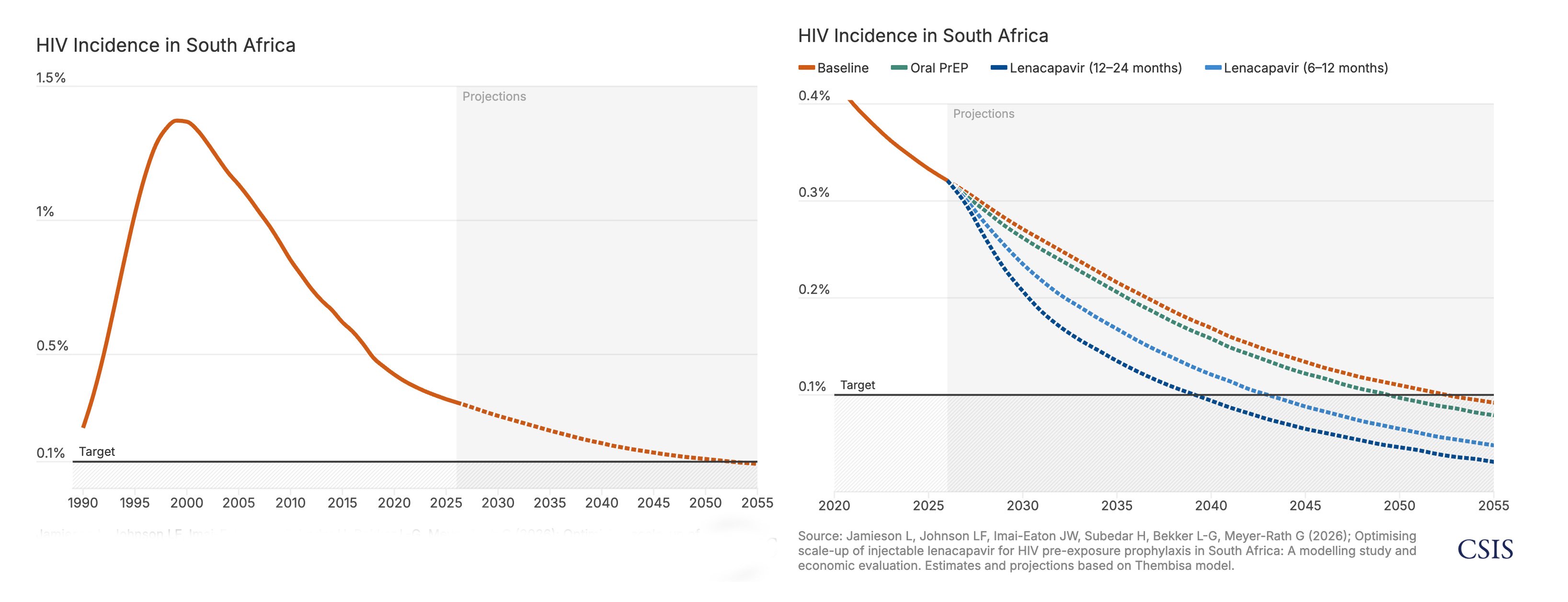
Home to nearly one-fifth of the world’s population living with HIV, South Africa plays an influential role in shaping the trajectory of the global epidemic. The country’s progress in preventing new HIV infections, particularly among adolescents and young adults, is especially important, as UNAIDS estimates that at least 600,000 South Africans between the ages of 15 and 24 are already living with the virus.
Since 2018, more than 2 million people in South Africa have initiated pre-exposure prophylaxis (PrEP), primarily in the form of a daily antiviral pill, to prevent HIV transmission. However, long-term adherence to the pills has proven challenging for many, underscoring the importance of ensuring widespread access to and uptake of affordable, sustainable, and easy-to-use prevention methods.

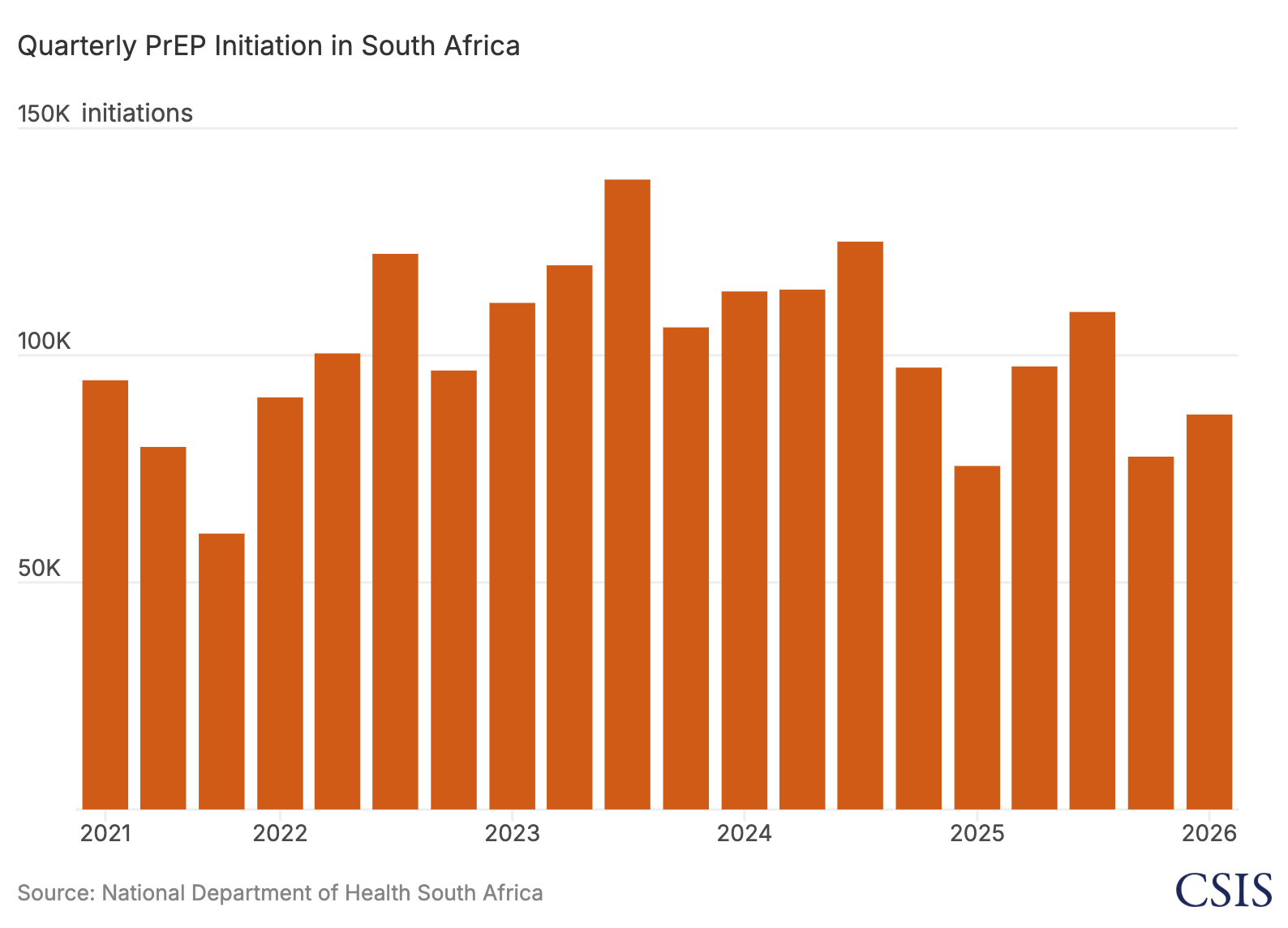
In June 2025, the U.S. Food and Drug Administration approved a new form of PrEP called lenacapavir, an injection administered every six months that is considered to be close to 100 percent effective at preventing HIV acquisition. One year later, following approval of lenacapavir by the South African Health Products Regulatory Authority in October 2025, the government launched a bold campaign to expand access to the new innovation. In partnership with the Global Fund to Fight AIDS, Tuberculosis and Malaria and the Children’s Investment Fund Foundation, South Africa began to make lenacapavir available this past June to approximately 450,000 patients at an initial set of 360 government health clinics.
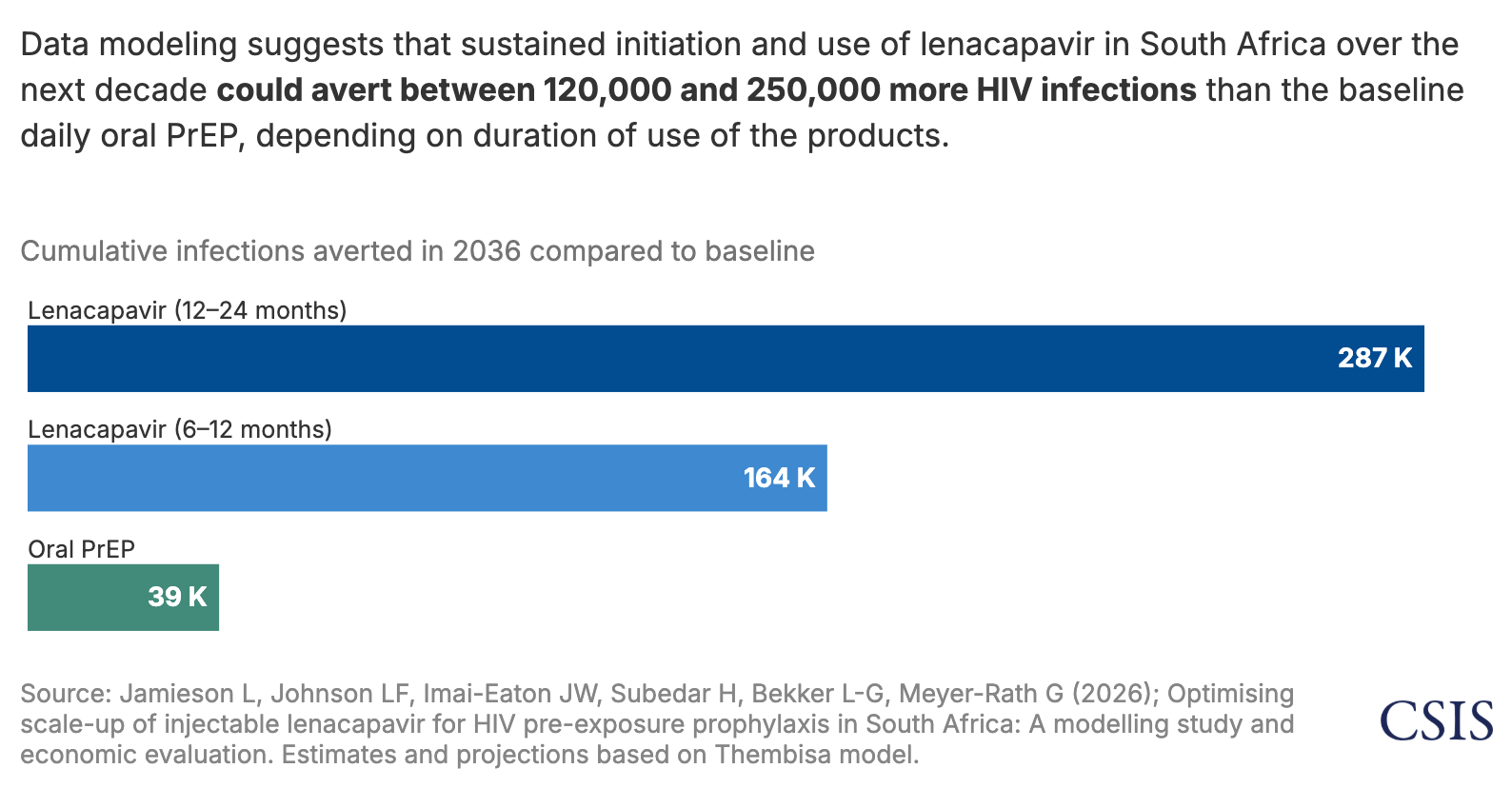
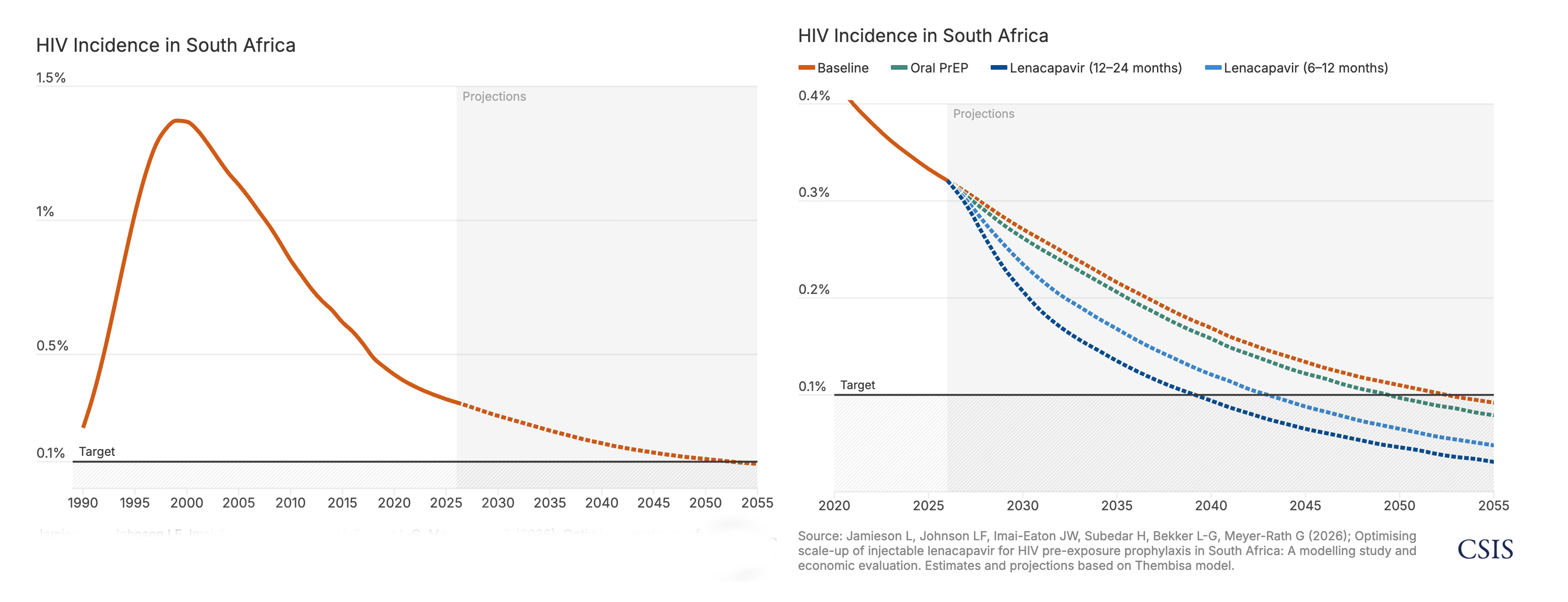
To begin to change the trajectory of viral transmission, experts at Wits University’s Health Economics and Epidemiology Research Office estimate that South Africa will need to initiate and sustain 1–2 million people per year on lenacapavir for the next five years. Researchers project that further scaling up use of lenacapavir has the potential to bring the annual population-wide HIV incidence rate to less than 0.1 percent, the virtual elimination threshold, as early as 2039. Over this period, it will be especially important to reach the diverse populations especially vulnerable to HIV acquisition, including pregnant and breastfeeding women, who can transmit the virus to newborns; men who have sex with men; and female sex workers. New cases among people between the ages of 25 and 54 have been trending higher in recent years, as well.
In just five months, South Africa’s lenacapavir campaign has shown significant promise. Early on, the government took several steps to ensure a successful rollout, including a public address by President Cyril Ramaphosa on June 5 and the launch of a dashboard that collects demographic data on PrEP users and tracks how much lenacapavir stock is available at each clinic. By October 15, the National Department of Health reported that just under 79,000 people had been started on lenacapavir; in recent reporting, some 98 percent of new clients have opted for the twice-yearly injection over the daily pill.
Building the population’s trust in PrEP options and confidence in the health department’s distribution program is essential to the success of South Africa’s lenacapavir initiative. Anticipating that demand for the shots could outpace the initial limited supply, the dashboard, which is regularly updated on Facebook, helps healthcare providers and prospective users understand where lenacapavir is available. News organizations have released educational materials, and videos on social media offer testimonials from users regarding injection experiences and side effects.
So far, the campaign appears to be attracting new PrEP users, as well as those currently taking daily tablets who wish to switch from pills to injections. Among the provinces where the injection is available, Gauteng received the largest number of initiation packs and has already replenished its stock after exhausting its initial quantity. Although by October 4 the region has already put nearly 35,000 people on lenacapavir, the government reports that there should be enough stock to reach more than 114,000 people by March of 2027 in Gauteng alone.
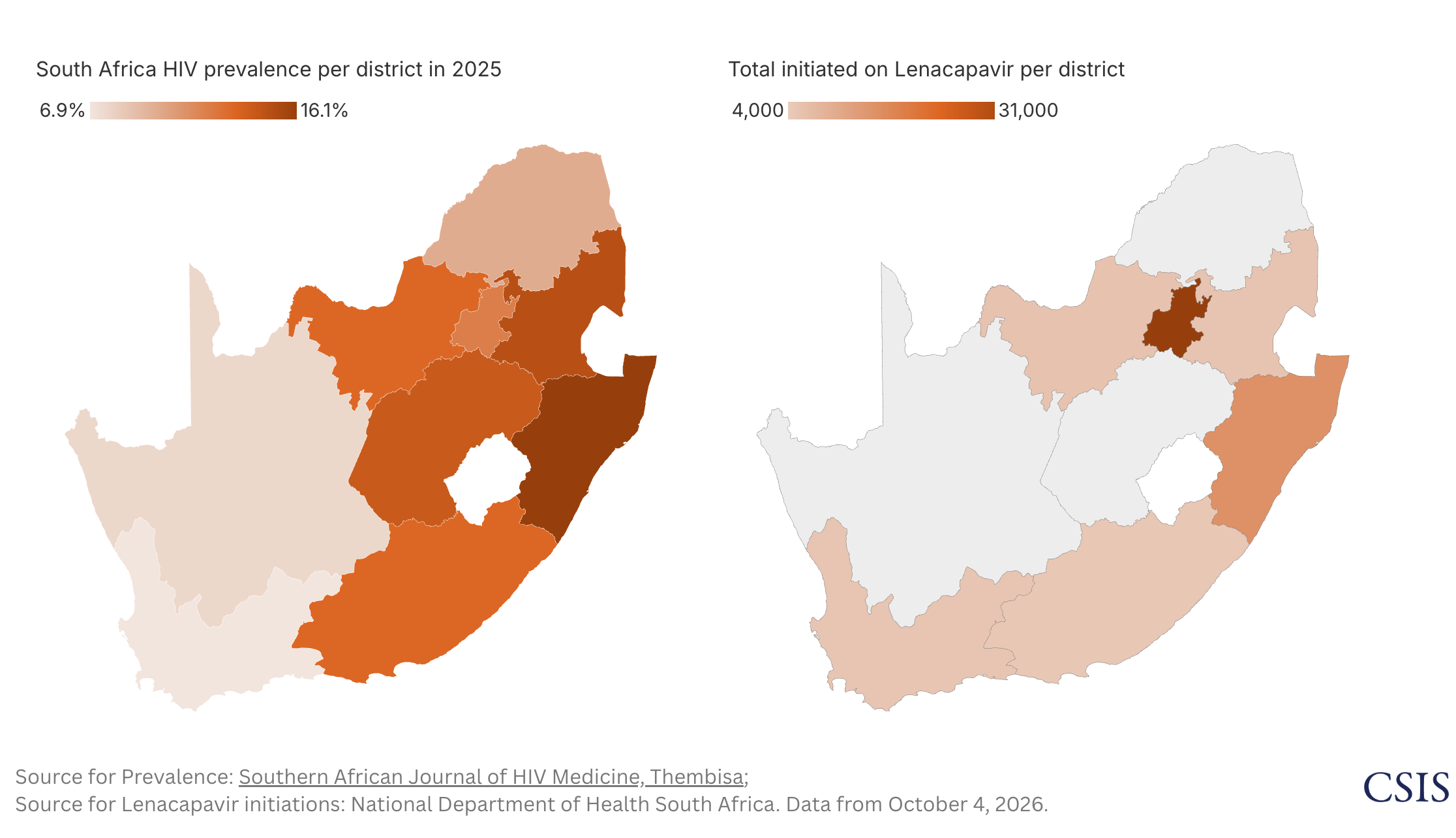
But the promise and popularity of twice-yearly PrEP come at a difficult time for the country. Until early 2025, an estimated 17 percent of South Africa’s HIV services were funded by the United States, through the President’s Emergency Plan for AIDS Relief (PEPFAR). Prior to the 2025 dismantling of the U.S. Agency for International Development, the agency’s PEPFAR funding supported nearly 60 percent of South Africa’s PrEP efforts, primarily the distribution of oral PrEP. In 2024, PEPFAR had announced plans to support the distribution of cabotegravir, a long-acting PrEP option injected every two months, but that effort had to be put on hold when overall funding was suspended in early 2025. At the same time, the public-private DREAMS partnership launched in 2015 to provide adolescent girls and young women with HIV education and prevention tools, including PrEP, has also been terminated, even as an estimated 1,000 females between the ages of 15 and 24 in South Africa continue to acquire HIV each week. With the limited lenacapavir doses currently available through the Global Fund, health authorities have been wary of over-promoting the new PrEP option, seeking to balance awareness-raising activities with ensuring there are doses available for people who are motivated to get them.
Despite terminating numerous HIV program contracts in the first months of 2025, the Trump administration later announced a new program to distribute long-acting PrEP globally. One year ago, the United States joined the Global Fund and Gilead Sciences, Inc., the manufacturer of lenacapavir, in a partnership that promises to provide access to the long-acting injectable to up to 3 million people across several countries in sub-Saharan Africa, but South Africa has been excluded from the list. Trump administration officials had at one point stated that the United States would terminate all health-related funding for the country following the February 2025 Addressing Egregious Actions of The Republic of South Africa executive order decrying several aspects of the country’s domestic and foreign policy approaches. Most PEPFAR funding terminated on September 30, with all funding to cease by the end of March 2027. However, in August, the National Institutes of Health announced that South African researchers could continue to be eligible for grant support, even though scientists from South Africa, considered to be an upper-middle-income country, will no longer be eligible for Fogarty International Center training programs after December 5, 2026.
To meet projected demand for a product that can help accelerate progress in preventing HIV nationally and regionally, South Africa announced its intent earlier this year to negotiate a voluntary licensing agreement with Gilead to manufacture a lower-cost generic version of lenacapavir in-country. The cost of lenacapavir to South Africa, with Global Fund support, is roughly $60 per person per year, whereas a generic version could cost $40 per person per year or less. But investing in the new infrastructure required to safely manufacture an injectable drug is costly, and some local producers have decided not to proceed with seeking a license, saying they are not sure there will be enough of a long-term market to justify the expense of building or retrofitting a suitable manufacturing facility. If no South African firms move forward with plans to manufacture generic lenacapavir, the country’s health department will need to look to one of the six firms already licensed by Gilead to produce generic lenacapavir to procure additional supply. Generics are expected to be in production and available in 2027, although it is not clear when they might be available in South Africa. Looking ahead, South African pharmaceutical manufacturers are already seeking advance contracts for future PrEP products that are in the research and development pipeline, including a new monthly oral pill that is currently in clinical trials.
While long-acting HIV prevention options are a critical element in the effort to move towards epidemic control, it is also important to maintain HIV diagnostic and treatment services, which have seen some backsliding following the 2025 funding cuts. To manage a positive HIV diagnosis, people must remain on antiretroviral therapy (ART) for life, a costly endeavor. Because ARTs work to keep a person’s HIV viral load at undetectable levels, staying on medication limits a person’s potential for transmitting the virus and is also considered a form of HIV prevention.
Many governments eager to introduce and scale access to lenacapavir will be paying close attention to how things play out in South Africa. As the United States and partner countries move forward with bilateral compacts under the America First Global Health Strategy, with plans to transition more financial responsibility for global health programs to domestic agencies, lessons learned from South Africa’s lenacapavir procurement and distribution will offer key insights for what works and what approaches are less likely to lead to sustainable health initiatives in the long run.
Beyond securing a sustainable and affordable supply of current and future HIV prevention options, policymakers, service providers, and advocates in South Africa will need to continue strengthening communications about PrEP with populations at risk for HIV. This will require mobilizing current users and trusted messengers to spread the word and gathering information about the most effective ways to build confidence in the product. And the first cohort of lenacapavir users, who started on the PrEP option in June, will need to return for their second injections in December or January, once six months have passed. As supplies of long-acting PrEP increase once generic supplies start to become available, it will be important to generate demand and demonstrate the size of the market for HIV prevention tools.
Katherine E. Bliss is director and senior fellow for immunizations and health systems resilience in the Global Health Policy Center at the Center for Strategic and International Studies (CSIS) in Washington, D.C. Priya Chainani is program coordinator and research assistant in the Global Health Policy Center at CSIS.
The authors would like to thank Lise Jamieson from the Health Economics and Epidemiology Research Office (HE²RO) at the Wits Health Consortium of the University of the Witwatersrand, Mia Malan from Bhekisisa, and Hasina Subedar at the South Africa National Department of Health for their invaluable insights in the background research and enabling access to the data that made this commentary possible. Sincere thanks to Fabio Murgia with the CSIS Andreas C. Dracopoulos iLab for his time and expertise in designing the various data visualizations present throughout the piece. Language included in this commentary does not imply institutional endorsement by the organizations that experts represent. This is not a consensus document, and the opinions expressed are the sole responsibility of the authors.


Podcast Episode by Katherine E. Bliss — December 4, 2025

Brief by Katherine E. Bliss — December 3, 2024
