Proportional to the Mischief: International Law and U.S. Grand Strategy
October 26, 2026 • 3:30 – 4:30 pm EDT
Hosted by Defense and Security

Photo: PATRICK MEINHARDT/AFP via Getty Images
The global transition to electric mobility is reshaping energy, trade, and industrial landscapes, with significant implications for emerging markets across the Global South. India has emerged as a prominent economy leading the electric vehicle (EV) transition in the Global South through a strategy anchored in comprehensive national policies, domestic manufacturing incentives, and growing Global South partnerships. India’s experience offers a practical road map for countries navigating similar constraints around affordability, infrastructure development, and industrial competitiveness.
Several countries in Africa, including South Africa, Kenya, Nigeria, and Egypt, are charting similar paths to accelerate EV adoption through policy frameworks, fiscal incentives, and industrial strategies focused on attracting investment, localizing value chains, and expanding charging infrastructure. While EV adoption across the continent remains nascent, consumer interest is growing, and national governments have set ambitious targets. Individual country approaches vary significantly: South Africa’s passenger EV industry is supported by government investment in original equipment manufacturers (OEMs); Kenya’s growth is concentrated in electric motorcycles; Nigeria’s EV ecosystem is nascent and moving toward EV adoption due to increased fuel costs following the removal of subsidies; and Egypt is deploying subsidies and public transit pilots.
India’s decade-long experience in scaling EV adoption through targeted policies offers an actionable and contextually relevant reference point.
Addressing the shared challenges of affordability, infrastructure gaps, and technology access will require Global South partnerships, and India’s decade-long experience in scaling EV adoption through targeted policies offers an actionable and contextually relevant reference point for these markets.
This white paper analyzes five key dimensions of the EV transition across selected Global South countries: consumer adoption, domestic manufacturing and incentives, critical minerals supply chains, capital flows, and electric mobility policies. It draws on desk research and insights from an in-person convening organized by the CSIS Chair on India and Emerging Asia Economics in Nairobi, Kenya, which brought together policymakers, industry representatives, and researchers from both regions. These insights aim to inform the key strategic pillars of the EMBRACE (Electric Mobility Bridge for Regional Africa-India Cooperation and Exchange) platform, launched at the workshop with the objective to provide a structured approach to advance Global South cooperation.
Electric mobility adoption in Africa is advancing unevenly but gaining clear momentum, shaped by a mix of consumer demand, policy frameworks, and private sector innovation.


In South Africa, EV adoption has broadly accelerated over the past few years, but 2025 marked a downward trend: Battery electric vehicle (BEV) sales fell 17 percent from 2024 and levels accounted for only 0.17 percent of total vehicle sales. The reduction was primarily driven by negative consumer sentiment stemming from affordability concerns, underdeveloped charging infrastructure, unreliable electricity supply, and a lack of purchase incentives. In Egypt, the EV market is also growing; by mid-2024, there were more than 7,000 EVs on the road, about 20 percent of which were registered in the first quarter of 2024 alone.
EV adoption in Kenya has increased significantly in recent years. Sales of EVs more than doubled between 2022 and 2023, reaching nearly 2,700 in 2023, and between the end of 2023 and 2024, the total number of registered EVs increased from roughly 3,750 to 9,000. The strongest momentum is in two- and three-wheeled vehicles and public transit. Private sector companies are supporting innovation in the sector; for example, BasiGo introduced the first electric buses in Nairobi, while Ampersand developed a battery-swapping network for electric motorcycles, making EVs more reliable and affordable for riders as it saves both time and fuel cost.
Nigeria remains in the very early stages of EV adoption. According to estimates from Climate Scorecard, Nigeria has about 15,000 to 20,000 EVs on its roads, less than 1 percent of its total vehicle population. EV activity is primarily concentrated in start-ups and pilot projects, which have yet to transition to mass adoption. High import costs, poor charging infrastructure, and affordability challenges have slowed growth. However, progress is being made in the two-wheeler segment, with African start-up Spiro launching operations and assembly plants in Nigeria.
India, on the other hand, has made notable progress in terms of market size and the policy landscape. India had more than 8 million EVs on the road as of April 2026, dominated by two- and three-wheeled EVs. Overall, EVs accounted for about 8.5 percent of all vehicles sold in fiscal year 2025–2026. India’s market is led by domestic manufacturers such as Tata Motors, MG Motor, and Mahindra, which together commanded 90 percent of passenger EV sales in 2025. Both domestic manufacturing and adoption have been driven by the government’s production-linked incentives and other policies aimed at supporting its goal of 30 percent EV adoption by 2030.
India’s rapid rise in the two- and three-wheeler segments mirrors mobility patterns in Kenya, Nigeria, and parts of Egypt—making India’s policy tools, financing models, and OEM strategies directly transferable based on form factor. However, grid reliability remains a major barrier in several markets. From reliance on diesel generators in Kenya to load shedding in South Africa, grid instability has suppressed consumer confidence, particularly in rural and peri-urban areas. Strategies pursued to decouple range anxiety from grid reliability in India include a focus on creating public charging infrastructure co-located with commercial areas, workplaces, and public transport hubs, and installing battery-swapping stations for buses and electric two-wheelers. While charging infrastructure remains a key barrier in India, its policy and infrastructure initiatives can still offer transferable lessons for other countries pursuing electrification in similar contexts.
Industrial policy is critical for EV manufacturing because it provides the framework, incentives, and infrastructure needed to build competitive local industries in a rapidly evolving global market. EVs are complex systems that rely on mineral-intensive batteries, high-tech components, and advanced assembly processes—none of which emerge spontaneously in developing markets without government intervention. Well-designed industrial policies can create enabling environments for investment, foster skills and technology transfer, and anchor demand through incentives.
South Africa’s 2023 EV White Paper set out an industrial policy road map to transition the country’s auto industry from primarily internal combustion engine (ICE) vehicles to a dual ICE-EV platform by 2035. As of this March, manufacturers can claim a 150 percent tax deduction on qualifying investments in EV and hydrogen-related production—a kind of production-linked incentive designed to retain OEM manufacturing commitments from legacy auto manufacturers such as Toyota and Ford. The government is also considering temporary import duty reductions on EV batteries and additional incentives for green hydrogen. Complementing these measures, a flagship investment of ZAR 1 billion (approximately $57 million) has been allocated to support local production of EVs, batteries, and components. At the municipal level, electrification efforts are underway, with public transport and city fleets in Cape Town being transitioned to EVs. However, to streamline implementation, South Africa should consider adopting state-level coordination mechanisms and local policies, which could be modeled after similar mechanisms in India.
In Kenya, the 2026 National E-Mobility Policy outlines seven policy objectives to guide the sector’s development. These include establishing an integrated policy and regulatory framework, advancing local EV manufacturing and assembly, scaling e-mobility infrastructure, and building technical capacity across the value chain. The policy also provides fiscal and nonfiscal incentives for manufacturers, infrastructure developers, and consumers, while ensuring broad social inclusion by supporting women, youth, and people with disabilities in the EV ecosystem. A central feature of the policy is the promotion of public-private partnerships to deploy fast-charging networks in both urban centers and highway corridors; these partnerships are underpinned by tax incentives and regulatory measures aligned with the government’s Vision 2030 and Kenya’s commitments under the Paris Agreement.
Nigeria’s Electric Vehicle Transition and Green Mobility Bill, which passed its second reading in 2025, pending the president’s assent, aims to promote the gradual adoption of electric and hybrid vehicles and bring local industry to the forefront through domestic component requirements for manufacturing. The bill also outlines support for infrastructure by mandating the nationwide rollout of charging infrastructure fleet electrification. The bill supports Nigeria’s long-term vision of achieving net-zero emissions by 2060, with transport electrification as a central pillar. Complementing these measures, the bill aims for 30 percent of all EVs to be produced locally by 2033.
In 2023, Egypt launched the Automotive Industry Development Program (AIDP) to localize EV production and strengthen the domestic automotive sector in line with the government’s Vision 2030 and climate commitments. The program sets a target of 45 percent domestic component localization and plans to commence EV manufacturing in 2025, including pilot fleets of e-taxis and public transport vehicles. By 2040, Egypt aims to phase out petrol and diesel vehicle sales entirely. To accelerate adoption, the AIDP offers a comprehensive incentive package, including a consumer cash subsidy of up to 50,000 Egyptian pounds (approximately $1,100) per locally produced EV, tax exemptions, and mandates requiring real estate developers to install charging points in residential and commercial projects. These measures are designed to position Egypt as a regional hub for EV manufacturing while supporting a broader shift to sustainable transportation.
Over the past decade, India has launched a number of economic policies to support the domestic EV manufacturing sector. The most recent is the Scheme to Promote Manufacturing of Electric Passenger Cars in India (SPMEPCI), which incentivizes large-scale investment in domestic EV manufacturing by providing customs duty concessions for imported units linked to production commitments. In addition, the Faster Adoption and Manufacturing of Electric Vehicles (FAME I and II) Scheme, the PM Electric Drive Vehicle Incentive and Ecosystem (PM E-Drive) Scheme, and the Production Linked Incentive (PLI) Scheme for Automobiles and Auto Components have focused on the entire value chain, providing incentives to boost demand, production, and charging infrastructure, as well as public transport and fleet electrification. Various state governments in India have also boosted the union government’s efforts by providing additional tax benefits, facilitating land allotments, and creating necessary infrastructure for the automobile industry. These incentives have led to the creation of a robust manufacturing ecosystem in India, primarily led by domestic companies.
Nairobi Workshop Highlight
The CSIS workshop in Nairobi surfaced a recurring theme: India’s success emerged not from any single incentive, but from building policy coherence across ministries—transport, industry, power, and finance—a factor highlighted by African stakeholders as a critical gap. India’s sequencing of incentives—from demand pull (FAME I consumer incentives) to supply push (FAME II production incentives) and structural enablers (PLI & SPMEPCI local content rules)—led to a stacked policy approach that stakeholders recognized as a compelling and replicable pathway for African markets to nurture homegrown EV industries. However, interministerial coordination will be the key.
In this context, India’s approach to integrating provincial- and state-level EV action plans offers a governance model that South Africa’s provinces can adapt to strengthen alignment between ambitions laid out in the national EV White Paper and local implementation. Kenyan officials noted that India’s experience with conditional incentives—linking benefits to local assembly and value addition—provides a useful blueprint as Kenya shifts from pilots to manufacturing-led growth. Given Nigeria’s push to develop its domestic auto market, India’s experience in retrofitting two- and three-wheeled vehicle fleets and encouraging incumbents to electrify existing product lines was highlighted as particularly relevant. Egypt’s long-term ICE phase-out targets drew interest in India’s own policy sequencing—especially how India ensured that electrification did not disrupt its traditional auto industry but encouraged incumbents to diversify.
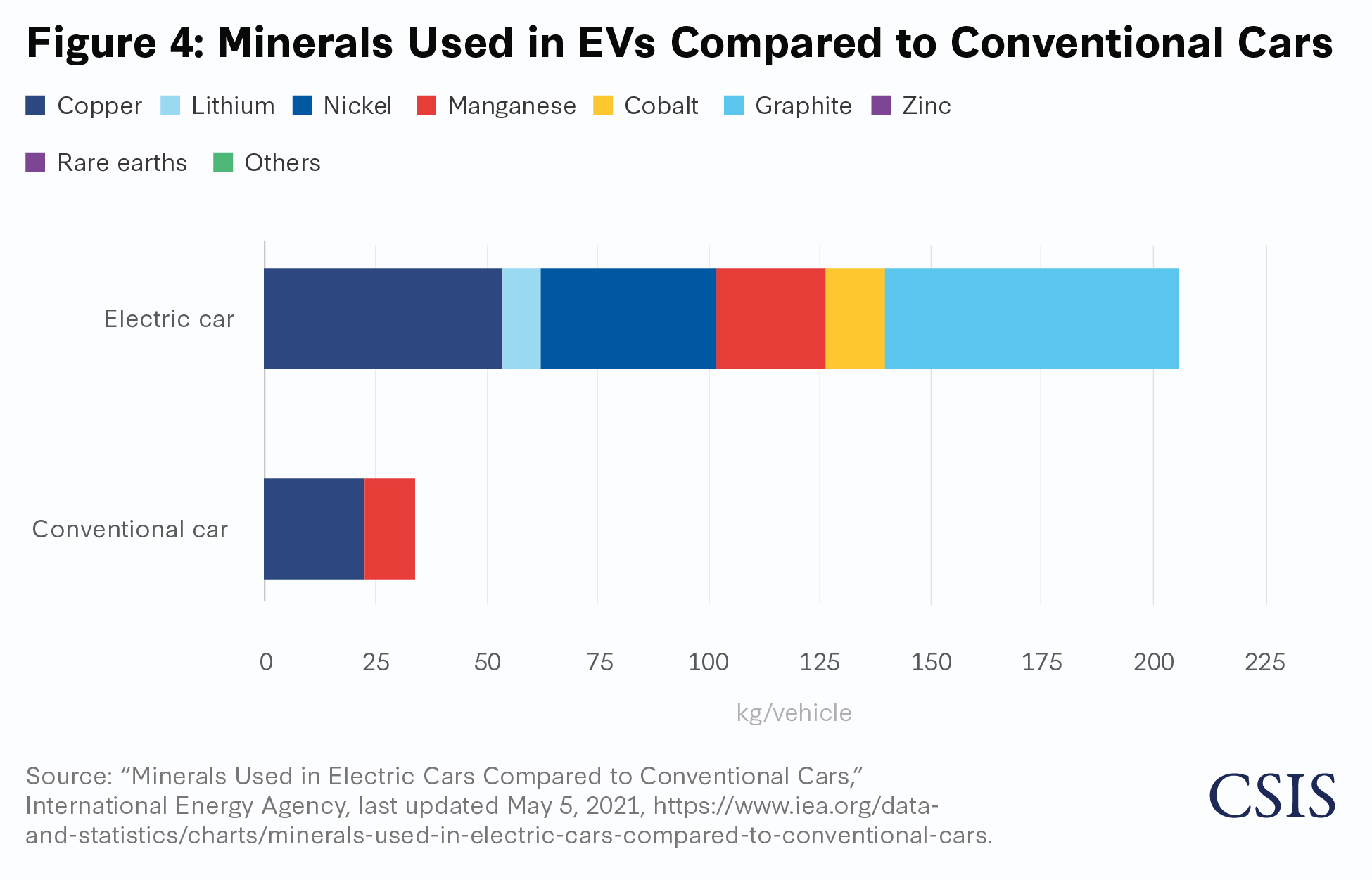
EVs are significantly more minerals-intensive than conventional ICE vehicles, requiring up to six times the mineral inputs. A typical EV battery contains large quantities of lithium, nickel, cobalt, manganese, and graphite, while the vehicle as a whole also depends on rare earth elements for high-performance magnets in electric motors. Compared to a gasoline-powered car, which requires approximately 32 kilograms of critical minerals, producing an EV can require over 200 kilograms of critical minerals, with demand for lithium projected to increase more than 40-fold by 2040 under net-zero scenarios. This minerals intensity makes EVs a major driver of global demand for critical raw materials, directly linking the pace of EV adoption to the security and sustainability of international minerals supply chains.
South Africa is a global heavyweight in critical minerals supply, holding approximately 80 percent of the world’s platinum group metals and 36 percent of the world’s manganese. Kenya holds a significant amount of rare earth elements but has a negligible share of global critical mineral reserves, especially when compared to larger African producers like South Africa or the Democratic Republic of the Congo. Nigeria is seeking to develop its lithium industry, but it is currently a small player in both reserves and production. While Egypt produces commodities like phosphate, direct-reduced iron, and ammonia, it is not a significant producer of minerals identified as “critical.”
With a focus on advancing sustainable mining and local value addition, India and Africa could potentially collaborate to drive mutually beneficial mining outcomes.
India holds significant copper and cobalt reserves, but it has only explored about 20 percent of these resources. Recognizing this vast potential, the government recently launched its National Critical Mineral Mission (NCMM), which places an emphasis on securing a resilient and sustainable domestic supply chain for minerals vital to EVs, such as lithium, cobalt, and nickel. The mission aims to accelerate domestic exploration and mining, form strategic international partnerships to diversify sources, and scale up recycling capacities. With a focus on advancing sustainable mining and local value addition, India and Africa could potentially collaborate to drive mutually beneficial mining outcomes. This may include facilitating investment by Indian firms in sustainable mining, supporting local processing and refining capacities, and establishing joint ventures that can create stronger supply chains for both regions under the NCMM.
Nairobi Workshop Highlight
During the in-person workshop in Nairobi, Indian officials emphasized that the NCMM is explicitly designed to promote “mutual development,” moving away from extractive resource models and toward partnerships that prioritize local value addition, skills transfer, and environmental, social, and governance safeguards. African policymakers—concerned about historic exploitation—welcomed India’s star-rating model for sustainable mining as a potential standard for Global South cooperation. Africa’s mineral wealth and India’s downstream processing ambitions are strongly complementary; joint processing for manganese, nickel, graphite, and rare earth elements could enable both regions to reduce dependence on China and Indonesia for battery materials.
Accessible financing is essential for building domestic EV manufacturing because the sector is highly capital-intensive, requiring substantial upfront investment in infrastructure and technology before returns can be realized. Setting up EV assembly plants, battery manufacturing facilities, and charging infrastructure involves billions of dollars in fixed costs that cannot be covered by consumer demand alone in the early stages of adoption. Moreover, EVs depend on advanced technologies—such as lithium-ion batteries, high-efficiency motors, and software systems—that require significant research, development, and licensing expenditures, often accessible only through partnerships with global firms.
Beyond physical infrastructure, capital is needed to de-risk investment in emerging markets, where financing costs are higher due to policy uncertainty, currency volatility, and infrastructure deficits. Blended finance mechanisms, which combine concessional public funds with private capital, are particularly important for bridging this gap and crowding in commercial investors. Additionally, accessible financing models for consumers and operators (e.g., leasing and battery-swapping companies) require capital pools that can absorb the upfront cost of vehicles and infrastructure, making EVs affordable for broader populations. Without adequate capital flows, countries risk being confined to import-based EV adoption, missing the opportunity to localize manufacturing, create jobs, and capture more value from the clean mobility transition.
There are new capital providers entering the African market. For example, E2W Africa is pioneering a financial aggregation platform developed by PJ & Company and supported by the UN Development Program’s (UNDP) Climate Aggregation Platform. It is designed to provide both growth equity (Series B) and small-scale asset financing, specifically targeting electric two- and three-wheelers, charging and swapping infrastructure, and light assembly across countries including Kenya, Uganda, Tanzania, Rwanda, and Ethiopia. The platform addresses critical financing gaps, including a lack of scale-up capital and upfront asset costs to enable sustainable growth of nascent e-mobility firms. E2W Africa plans to deploy over $5 million in blended financing, with both debt and equity instruments tailored to the capital-intensive nature of the EV ecosystem, particularly to support riders, operators, and start-ups scaling across multiple countries. The initiative is expected to accelerate EV adoption by enabling population-wide access to affordable financing, improving infrastructure deployment for battery swap stations and final assembly, and ultimately reducing barriers to growth in one of Africa’s most asset-heavy sectors. Spiro, Africa’s largest EV producer, has secured significant financing in recent years to scale battery-swapping systems and expand operations across the continent, including $63 million from Société Générale in 2023 and $50 million from Afreximbank in 2024.
In South Africa, capital flows into the EV sector are being shaped by a blend of public investment and private funding commitments. The government has earmarked ZAR 1 billion (about $54 million) to support domestic production of EVs, batteries, and components. Companies such as Toyota, Ford, Isuzu, Volkswagen, and Mercedes currently manufacture vehicles in South Africa. Starting in March 2026, manufacturers will be able to deduct 150 percent of qualifying investments in EV and hydrogen technologies from taxable income, an incentive designed to accelerate industrial-scale participation. These initiatives complement South Africa’s broader Just Energy Transition Partnership, a multilateral program mobilizing around $8.5 billion, part of which is directed toward clean transport infrastructure and EV adoption.
In Nigeria, investment in EVs is still at a relatively early stage but is gaining momentum, primarily in the two- and three-wheeler segment. Spiro’s expansion into Nigeria is backed by multimillion-dollar financing. Egypt is pursuing a more policy-driven path, with capital flows expected to scale rapidly as its Automotive Industry Development Strategy begins to be implemented. The strategy is attracting global automakers such as Nissan and General Motors through new industrial zones and incentive packages.
India, on the other hand, has seen an influx of capital in the EV sector from both the public and private sectors. The investments have focused on domestic manufacturing and infrastructure development. The sector attracted approximately INR 2.23 lakh crore ($25.6 billion) in investment from 2020 to 2025, including major government schemes such as FAME I & II, PM E-Drive, and PLI. While the majority of these investments were directed toward the electric two- and three-wheeler sectors, the recent trend has seen a shift toward electric cars, notably in the premium segment.
Sustainable transportation action plans and policies play a foundational role in developing domestic EV manufacturing because they create both the demand signals and the enabling environment that make large-scale investment viable. By setting long-term targets—such as phasing out ICE vehicles, electrifying public transit fleets, and mandating charging infrastructure—these policies provide certainty to manufacturers and investors that domestic markets for EVs will expand. This demand certainty is crucial in de-risking the significant capital investments required to localize assembly and component production. All five countries included in this paper are leveraging sustainable transportation policies to strengthen EV demand.
In South Africa, two of the key objectives of the Green Transport Strategy (2018–2050) are to minimize the negative environmental effects of the transportation sector and facilitate a just transition to a climate-resilient transport system and infrastructure. The strategy sets ambitious goals, with a strong emphasis on electrifying public transport and promoting rail freight, nonmotorized transport, and a modal shift away from cars. It is reinforced by the National Land Transport Strategic Framework (2023–2028), which integrates land-use planning and sustainable urban mobility across government levels. In addition, the 2023 EV White Paper offers fiscal incentives for EV and battery production, reducing duties on EV batteries and offering support for infrastructure expansion—including a target to add around 40 renewable-powered charging stations annually. Broader implementation is now tied to the Just Energy Transition Investment Plan (JET-IP), which channels funding for transport electrification alongside energy sector decarbonization.
Kenya is advancing sustainable mobility through integrated plans aligned with its Vision 2030, targeting emission reductions, improved accessibility, and modal shifts in urban centers like Nairobi. Private sector pioneers such as Ampersand and BasiGo are catalyzing real-world transition through battery-swapping infrastructure for electric motorcycles and electric bus leasing, respectively, supported by grants under initiatives like Sustainable Energy for Africa.
Nigeria embeds sustainable transport within its broader Energy Transition Plan, which aims to decarbonize the energy and transport sectors and achieve net-zero emissions by 2060. Though no standalone transport action plan exists, urban mobility reform is underway in Lagos, where the planned Green Line Metro project and ongoing public transit investments are expected to drive a modal shift and reduce road emissions. The deployment of electric buses supports the e-mobility agenda, while informal transport remains a priority for formalization and cleaner vehicle standards.
Egypt is implementing sustainable transport reforms focused on integrated public transport services. In 2025, Egypt launched the Cairo Bus Rapid Transit system (BRT), which features a fully electric fleet of buses. A comprehensive UNDP-funded sustainable transport project aims to reduce emissions by increasing the use of public and nonmotorized transport in both the greater Cairo region and provincial cities.
Along with specific supply-side incentives, the union and state governments in India have provided a range of incentives to enable consumer adoption, prioritize the electrification of public transport fleets, and support the development of charging infrastructure development under schemes such as FAME II and PM E-Drive, as well as through state-level policies. Most recently, the Goods and Services Tax (GST) rate for EVs remained at 5 percent under the tax reforms, compared with significantly higher GST rates, ranging from 18 percent to 40 percent, for ICE vehicles. These positive demand signals emphasize India’s focus on its goals of achieving 30 percent EV adoption by 2030 and boosting investor sentiment in the sector.
Taken together, the country-level review spanning consumer adoption, industrial policy, critical minerals, capital flows, and sustainable transport policies reveals that these challenges are not unique. Africa’s EV transition challenges and India’s experience in navigating similar structural constraints position them as relevant partners.
India’s EV market shares common ground with Africa’s market in terms of modes of transportation, particularly electric two- and three-wheelers, which are popular in countries such as Kenya and Nigeria. As these markets evolve, cross-country learning in policy development can reduce trial and error and support large-scale adoption of EVs. For example, India’s experiences with targeted fiscal incentives, public fleet electrification, and blended finance for charging infrastructure offer valuable opportunities to strengthen policy frameworks by drawing on models that have worked in similar contexts.
Nairobi Workshop Highlight
The Nairobi workshop reaffirmed that India’s experience with cost-sensitive EV markets, interoperable battery swapping, and local supply chain formation aligns directly with Africa’s needs. African officials repeatedly noted that India’s policy choices were “closer to home” than Western models—making India a natural reference point for practical, scalable solutions.
At the same time, the expansion of battery-swapping technology across countries in Africa through companies such as India’s SUN Mobility or Africa’s Spiro creates an opportune moment for knowledge exchanges on interoperability and standardization. Shared learning between India and Africa can help address the critical challenge of charging infrastructure.
A vital component of the EV value chain is ensuring access to key raw materials. India currently relies entirely on imports for critical minerals such as lithium, cobalt, and nickel. While India is taking important steps to develop domestic capabilities, there is tremendous potential for mutually beneficial India-Africa partnerships in minerals exploration and broader supply chain integration. This may include pursuing joint investments, fostering local value creation, and setting up joint recycling hubs through shared research and development initiatives. Such partnerships can create jobs and build resilient supply chains. At the same time, localization targets in Kenya, Egypt, and South Africa align closely with India’s approach. Joint skill development initiatives between government and educational institutions to build skills and technical know-how can be mutually beneficial to enable the EV transition in many countries in Africa.
The synergies between the regions are clear: South Africa’s manganese, Kenya’s niobium and rare earth elements, Nigeria’s emerging lithium deposits, and Egypt’s phosphates can all integrate with India’s refining and battery-materials ecosystem—offering a Global South alternative to China-centric value chains. Various stakeholder consultations reinforced these connections, presenting a strong case for institutionalized, mutually beneficial country-to-country partnerships that facilitate trade, technology transfer, and knowledge sharing, particularly around policy experiences, industrial strategies, and minerals governance frameworks. There are clear opportunities for cross-country collaboration in shaping electric mobility pathways for emerging markets.
At the country level, policies should focus on increasing synergy between fiscal incentives and manufacturing goals, mobilizing capital, and prioritizing implementation and workforce development. At the multilateral level, policy harmonization should be prioritized to ensure interoperability within the region, as discussed in this section.
Align fiscal incentives with industrial development: Fiscal incentives are key for stimulating domestic EV manufacturing because they directly address the high upfront costs and investment risks that characterize the sector, while also shaping long-term competitiveness. Unlike conventional vehicles, EV production requires large capital outlays for specialized assembly lines, battery plants, and charging infrastructure, all of which face steep cost barriers in emerging markets. Well-designed fiscal incentives—such as tax credits, duty reductions, and production-linked rebates—help offset these initial costs, making it more attractive for both domestic firms and global automakers to invest locally. Beyond cost relief, fiscal incentives create predictable demand and stable policy signals, which are essential for de-risking investment in new facilities. For example, incentives targeted at locally manufactured vehicles (rather than imports) ensure that public resources are channeled into building domestic industrial capacity rather than subsidizing foreign production. Coupled with measures like local content requirements or R&D deductions, fiscal incentives also help embed technology transfer, skills development, and supplier ecosystem growth.
Fiscal incentives also serve as a competitive lever in global EV supply chains. Countries that offer strong, targeted fiscal frameworks are better positioned to attract investment from multinational automakers and battery firms, especially as companies weigh alternative locations across emerging markets. In this way, fiscal incentives are not just short-term stimulus tools; they are strategic instruments for anchoring industrial policy, building resilient supply chains, and securing a country’s place in the rapidly expanding global EV industry.
Mobilize and diversify capital flows: Access to finance remains a bottleneck. Blended finance can be a powerful tool to accelerate domestic EV manufacturing by reducing risk for private investors and channeling capital into parts of the value chain that would otherwise remain underfunded. In the African context, leveraging blended finance for EV manufacturing could take several forms:
Prioritize the implementation of sustainable mobility plans: National action plans must translate into projects with visible impact. South Africa should accelerate the rollout of renewable-powered charging networks and public fleet electrification under its Just Energy Transition Partnership. Egypt should expand its fully electric BRT system across metropolitan centers. Kenya should institutionalize its electric bus and motorcycle pilots into a nationwide transport policy. Nigeria should integrate electrification into urban transit upgrades, particularly in Lagos, while simultaneously regulating and formalizing informal transport to enable a cleaner and more structured mobility ecosystem.
Developing a globally competitive EV manufacturing sector in Africa requires treating skills as investable infrastructure and embedding training obligations directly into investment policy.
Invest in workforce development: Developing a globally competitive EV manufacturing sector in Africa requires treating skills as investable infrastructure and embedding training obligations directly into investment policy. Governments should establish EV workforce councils with industry and education partners to map skills needs and modernize technical and vocational college curricula. Incentives like tax holidays and special economic zone benefits should be contingent on workforce outcomes, including apprentice-to-hire conversion rates and SME supplier certifications, with clawbacks for noncompliance. Paid apprenticeships and short bootcamps can quickly re-skill ICE mechanics, auto electricians, and mining workers for EV assembly, charging infrastructure, and battery recycling. OEM-led academies and supplier development hubs, cofinanced with development banks, would provide shared labs, quality coaching, and access to working capital, ensuring African suppliers can integrate into global value chains.
Advance regional cooperation and harmonized standards: To attract investment on a large scale, African governments should harmonize EV regulations, charging protocols, and safety standards across borders. The African Continental Free Trade Area (AfCFTA) provides a platform to develop continent-wide EV and battery standards, reduce tariff and nontariff barriers, and incentivize regional supply chain development. Cross-border alignment would cut costs, expand consumer markets, and make African EV manufacturing more competitive globally.
Leveraging the EMBRACE platform for structured India-Africa cooperation: As African countries fast-track their EV ambitions, the India-Africa partnership, anchored through the EMBRACE platform, stands out as a strategic pathway to build cost-effective, equitable, and resilient EV ecosystems. Partners should work to build a broad consensus around embedding EV cooperation into policy and trade frameworks.
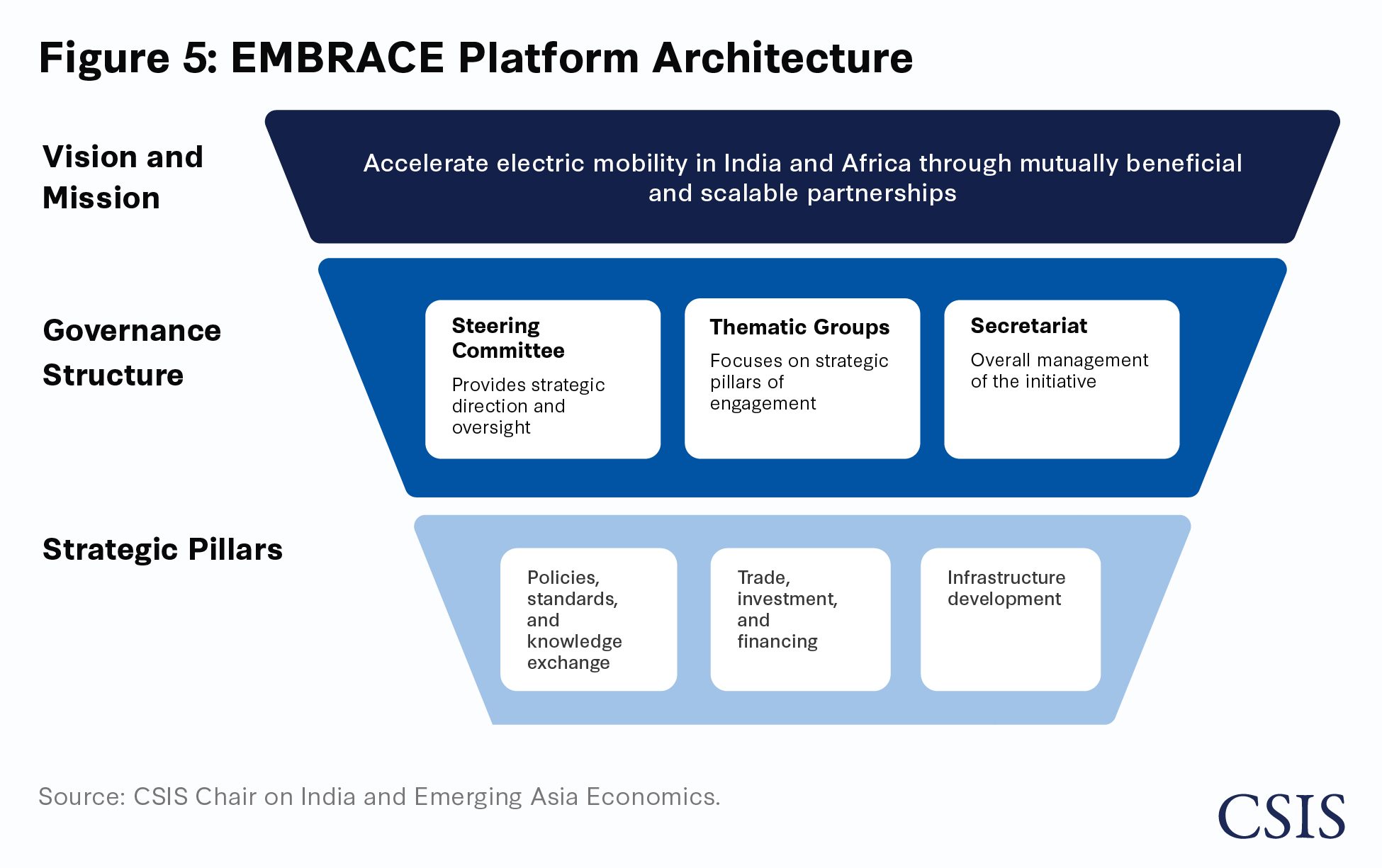
At the outset, India-Africa collaboration can be initiated in the following spheres:
The EMBRACE platform can serve as a catalyst for deeper integration—transforming bilateral interest into structured, scalable action that positions the Global South as a leader in shaping the future of sustainable mobility.
The trajectory of EV adoption across the African continent, particularly in the four countries examined in this paper, underscores both the opportunities and challenges of transitioning to sustainable transport in emerging markets. While South Africa and Egypt are advancing with robust policy frameworks, fiscal incentives, and growing consumer uptake, Kenya demonstrates how private sector innovation and targeted policies can drive rapid adoption in the two- and three-wheeler segments. Nigeria, though still in the early stages of adoption, is laying the groundwork for large-scale electrification through its Energy Transition Plan and growing start-up ecosystem.
There is little linkage between countries that have deep critical mineral reserves and those that have EV ambitions. Of the four countries, South Africa is the only one with significant critical mineral endowments. In addition, the high cost of financing, combined with infrastructure deficits, limits market integration across borders. It is crucial that stronger regional coordination mechanisms are established to enable countries with ambitious EV goals to capture greater value through domestic manufacturing and supply chain integration. This can be facilitated through progressive trade and industrial policies that can help scale the adoption of EV technologies that are fit for local economies.
As the Global South taps into transformative technology to electrify its transportation, India and African countries can collaborate to create local EV value chains, reduce dependence on imported fossil fuels, and attract global investments.
This is where strategic cross-country collaboration becomes pivotal. India, for instance, has navigated similar challenges in terms of resource, infrastructure, and technology affordability constraints, mirroring many of the realities of South Africa, Kenya, Nigeria, and Egypt. Along with this, the focus on common models such as electric two- and three- wheelers and electric buses can help lead to shared learning.
As the Global South taps into transformative technology to electrify its transportation, India and African countries can collaborate to create local EV value chains, reduce dependence on imported fossil fuels, and attract global investments. The two regions have the potential to leapfrog in EV adoption while redefining the EV landscape of the Global South. Capital flows are increasingly mobilizing around these strategies, with multilateral funds, venture capital, and public-private partnerships signaling long-term momentum. Sustainable transportation action plans are anchored in decarbonization, inclusive access to transportation, and cost-effective transport solutions. These efforts illustrate how leading economies in the Global South are positioning themselves not only to meet domestic needs but also to contribute meaningfully to the global clean mobility transition.
Akanksha Golchha is a senior associate (non-resident) with the Chair on India and Emerging Asia Economics at the Center for Strategic and International Studies (CSIS) in Washington, D.C. Gaurav Sansanwal is a fellow for the Chair on India and Emerging Asia Economics at CSIS. Abhinav Subramaniam is a program coordinator and research assistant with the Chair on India and Emerging Asia Economics at CSIS.
The authors are grateful for the valuable engagement of officials from nodal ministries in India; Indian missions in Kenya, Nigeria, South Africa, and Egypt; and a diverse range of stakeholders. Their insights and collaboration were integral to this project. We gratefully appreciate the knowledge support provided by Shakti Sustainable Energy Foundation throughout the course of this project. The authors also thank Richard Rossow and Gracelin Baskaran of CSIS for their expert guidance and input, and Rishabh Sethi for his technical review and feedback, which shaped this report.
This report was made possible by a direct grant from an international foundation.


Report by Thibault Denamiel, Abhinav Subramaniam, Aryan D’Rozario, and Akanksha Golchha — March 23, 2026

Report by Akanksha Golchha, Abhinav Subramaniam, and Akshat Singh — September 19, 2025

