U.S. and Allied Burden Sharing: A Progress Report
September 8, 2026 • 5:00 – 5:30 pm EDT
Hosted by All About the Base

Photo: Paulius Peleckis/Getty Images
Russia’s 2022 invasion of Ukraine and the rise of strategic competition in the Asia-Pacific have forced U.S. allies to reassess defense preparedness, military capabilities, and international industrial collaboration. In response, many allied governments across Europe and the Asia-Pacific have significantly increased defense spending and introduced initiatives aimed at strengthening domestic industrial capacity. At the same time, the Donald Trump administration has repeatedly called for allies to spend more on defense and take responsibility for their own security challenges, codified as “burden-sharing” in the 2026 National Defense Strategy.
To measure how U.S. allies and partners have responded, CSIS examined trends across NATO and the Asia-Pacific and found significant growth in military expenditures, procurement, and industrial initiatives. In other words, allies are adapting their defense postures to an increasingly complex security environment.
In European NATO countries and Canada, defense spending has grown by over 50 percent since 2022. Allies in close geographic proximity to Russia have particularly accelerated modernization efforts. Poland, the Baltics, and Scandinavia have increased their defense spending by 71 percent, 134 percent, and 126 percent, respectively, since 2022. European allies are also expanding defense cooperation and procurement with one another, signaling a gradual diversification of procurement sources beyond U.S. systems. Most of the $50 billion in recent deals announced around the NATO Summit are still prospective, but they indicate an increased desire for industrial collaboration to create greater allied production capacity and significantly improve collective readiness.
Asia-Pacific partners are likewise raising defense expenditures—albeit at a generally slower pace than NATO countries—and pursuing greater international industrial collaboration through initiatives such as AUKUS (the trilateral security partnership between Australia, the United Kingdom, and the United States) and the Partnership for Indo-Pacific Industrial Resilience (PIPIR). Japan has increased defense spending by 60 percent in the past decade, for example, although it started at a very low level in absolute terms. South Korea, meanwhile, is becoming a significant exporter of military equipment to countries around the globe. However, industrial collaboration efforts outside of AUKUS that aim to strengthen regional resilience and reduce supply chain vulnerabilities are currently more aspirational than real.
Although the rhetoric between the United States and some traditional allies has been particularly challenging at times, allies are spending more, building industrial capacity, and continuing to partner with U.S. firms. U.S. policymakers should seize the strategic opportunity that this moment presents to create new avenues for coproduction, licensed manufacturing, technology sharing, and industrial partnerships that can strengthen both U.S. and allied capabilities. With the creation of an assistant secretary of war for international armaments cooperation and numerous other initiatives focused on sharpening security cooperation, the conditions are ripe for the Department of Defense (now called the Department of War) to exponentially grow international industrial collaboration efforts over the next several years.
The strongest alliances and partnerships will be those that combine resilient national defense industries with deep industrial cooperation, interoperable military capabilities, and shared technological innovation.
Ultimately, burden sharing has become more about collective industrial capacity than anything else. The ability to manufacture munitions, sustain advanced weapons systems, stabilize critical supply chains, and rapidly expand production during crises has become central to effective deterrence. The strongest alliances and partnerships will be those that combine resilient national defense industries with deep industrial cooperation, interoperable military capabilities, and shared technological innovation. In this contested security environment, greater allied self-sufficiency and continued U.S. leadership are complementary pillars of a more resilient and sustainable system of collective deterrence and defense.
Since the establishment of NATO, the United States has encouraged its allies to assume a greater share of the costs and responsibilities associated with collective defense. During the Cold War, the U.S. military underwent significant modernization, widening the capability gap between the United States and its European allies. This prompted congressional concerns regarding allied contributions to alliance security. Although today’s strategic environment has changed significantly, there has historically been a great deal of criticism from past U.S. policymakers—most notably former Secretary of Defense Robert Gates—that European allies were not spending enough on defense.
As governments seek greater sovereign capabilities and industrial capacity to strengthen national security and industrial resilience, a natural tension arises from the fact that effective alliances and partnerships depend on interoperability, technology sharing, and closely integrated networks. Rather than representing opposing approaches, these goals are developing simultaneously. Difficult bilateral rhetoric, however, has made the atmosphere for cooperation challenging. Nonetheless, across Europe and the Asia-Pacific, allies are expanding sovereign defense capabilities while building deeper industrial integration through diverse procurement practices, coproduction, and collaborative defense initiatives. An examination of recent defense spending trends, procurement patterns, and emerging industrial partnerships demonstrates that the future of allied burden sharing is not defined by reduced reliance on the United States, but by the development of more capable partners that can strengthen collective deterrence within an increasingly interconnected alliance network.
Defense spending for Canada and much of Europe has increased dramatically since Russia’s invasion of Ukraine, a pace that has not been seen since the Cold War. European countries have expanded their military spending by roughly 50 percent since 2022, with NATO members accounting for nearly 80 percent of this increase. At the 2025 NATO Summit, allied states committed to raising defense-related investments to 5 percent of GDP by 2035, signaling that governments increasingly view Europe’s changing security environment as a long-term strategic challenge rather than a temporary response to the war in Ukraine. Figure 1 illustrates the upward trajectory of defense-related investment across NATO allies. Although the United States remains the largest contributor to NATO—accounting for nearly 70 percent of total spending within the alliance—European allies are taking strides to increase their military capabilities.

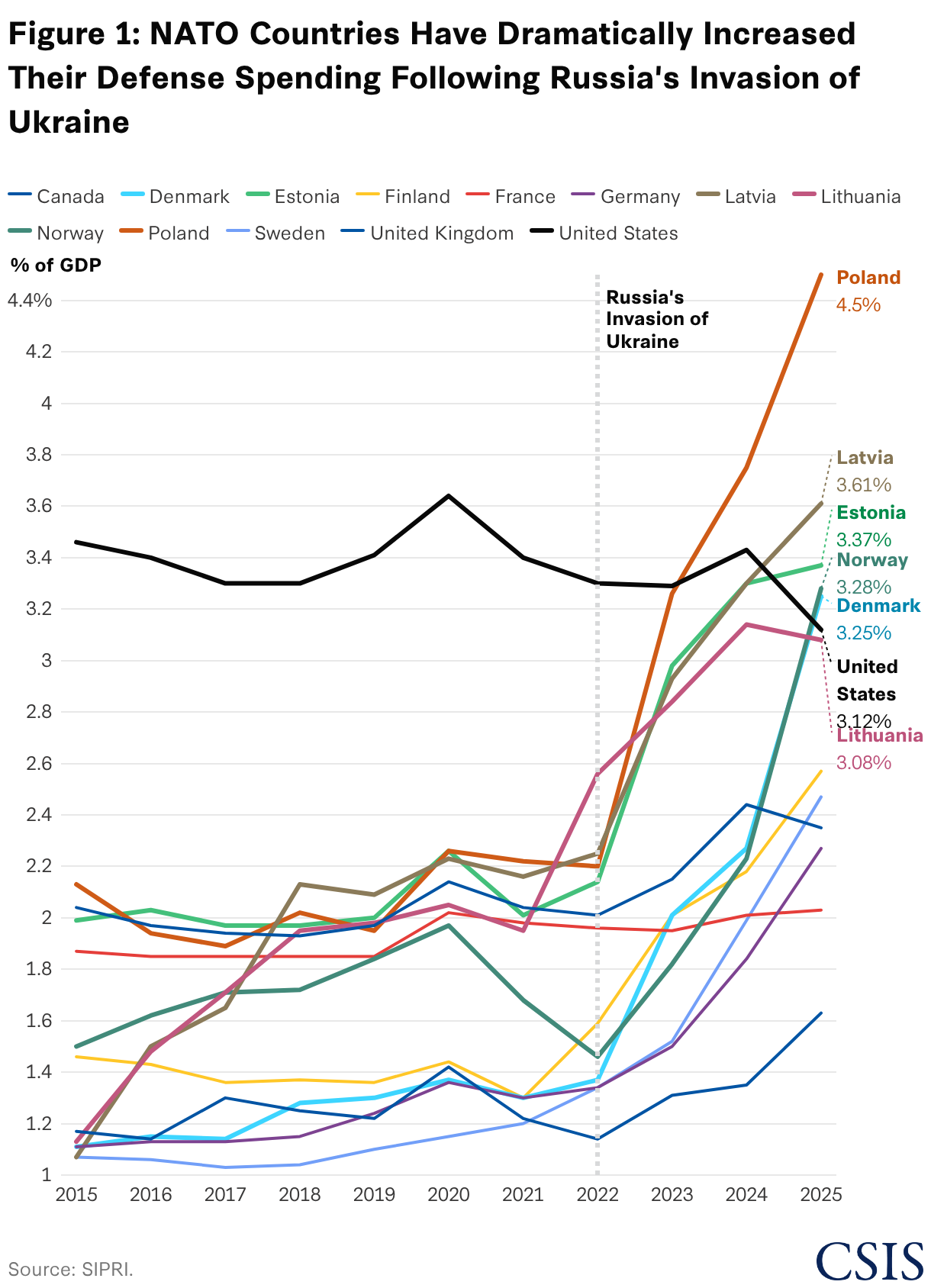
As shown in Table 1, defense budgets are larger for NATO members than in previous years, signaling initiatives to grow defense investments. However, the increase in defense spending has not been evenly distributed across the alliance. States located along NATO’s eastern flank, including Poland, Estonia, Lithuania, and Latvia, have increased defense spending at significantly faster rates that many Western European allies, reflecting their heightened threat perceptions and geographic proximity to Russia. Poland currently allocates the highest share of GDP to defense (4.5 percent) among NATO members and has increased its defense spending by over 120 percent since 2015. The country has launched an ambitious military modernization program that includes investments in armored vehicles, long-range strike capabilities, integrated air and missile defense, and expanded personnel strength. The Baltic states have pursued similar strategies, strengthening procurement practices and investing in military infrastructure. Their planned 2026 defense budgets rank the highest in NATO as a share of GDP (Estonia at 5.4 percent, Lithuania at 5.4 percent, and Latvia at 4.91 percent) and they have averaged a 134 percent increase in defense spending from 2022 to 2026, exemplifying a sustained commitment to deterrence and readiness.

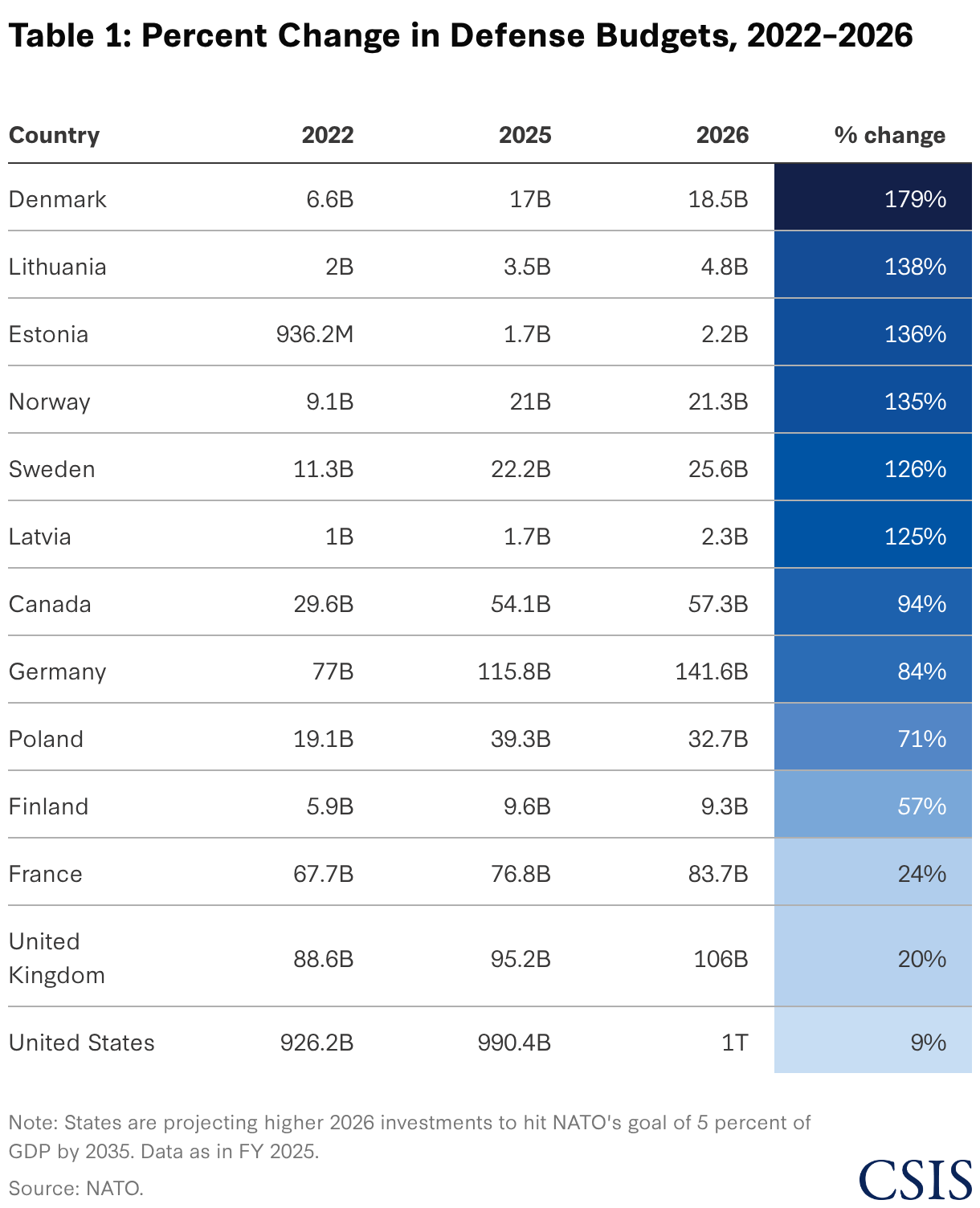
Moreover, Northern and Western European allies are also increasing defense investments in response to a changing security environment. The Scandinavian countries—Norway, Sweden, Denmark, and Finland—have expanded defense spending by 126 percent since 2022, focusing on capabilities such as air defense, maritime security, munitions, and readiness. Their increased spending represents a significant shift in regional defense priorities, particularly following Finland and Sweden’s accession to NATO. Europe’s largest defense spenders—the United Kingdom, France, and Germany—are also pursuing sustained military modernization efforts, but at a slower rate of increase: 9 percent over the past decade. The United Kingdom has prioritized readiness and industrial capacity, France continues to invest in high-end capabilities and nuclear deterrence, and Germany’s Zeitenwende policy has accelerated efforts to rebuild the German armed forces. Although these countries’ spending increases are more modest, their investments demonstrate a broader European effort to strengthen deterrence.
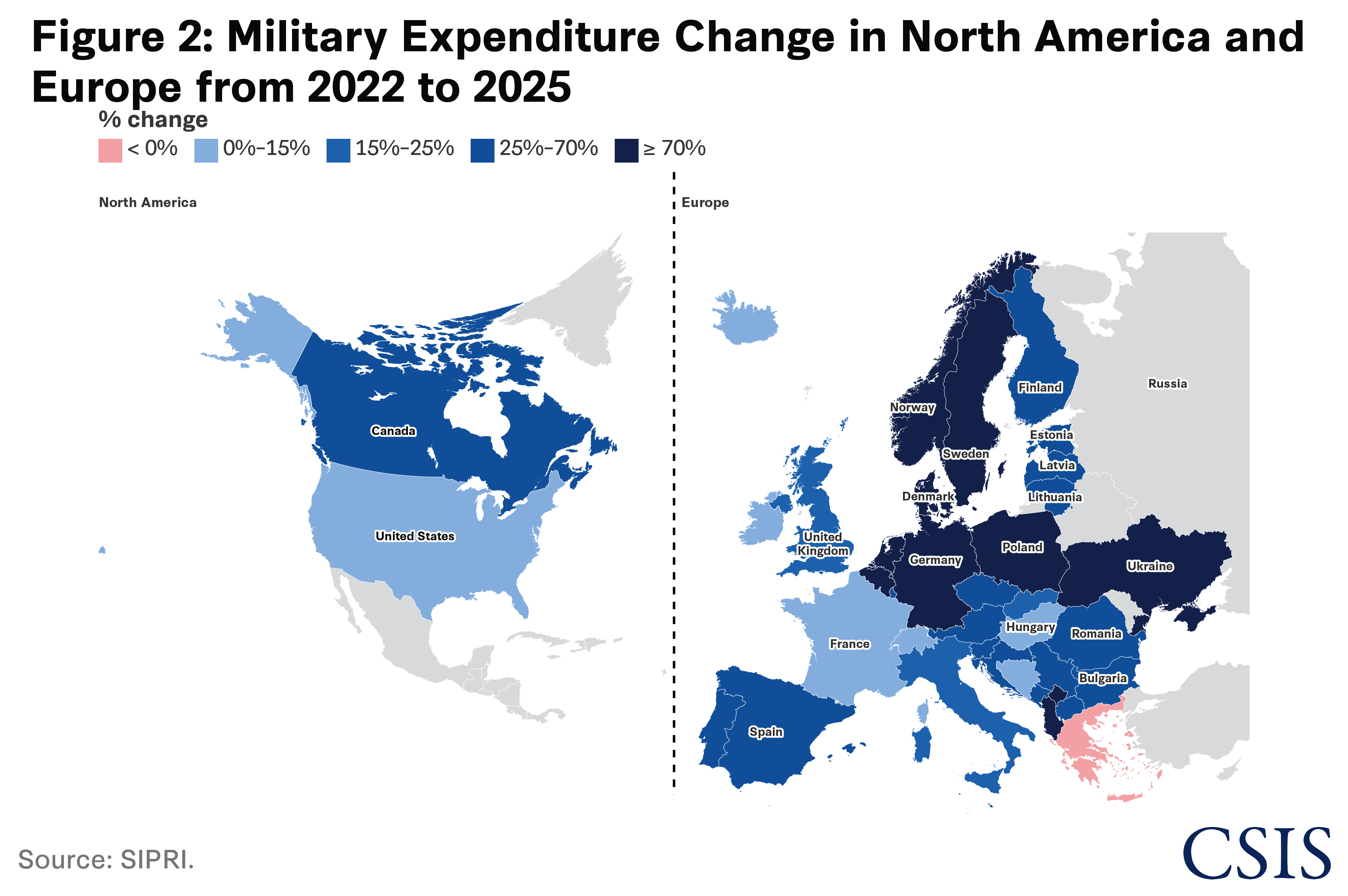
Figure 2 further demonstrates the significant role that geography plays in the increase in European defense expenditures. Countries bordering or close to Russia—including Poland, Scandinavia, and the Baltic states—have experienced the largest increases in military expenditures since the start of the war in Ukraine, while countries farther from the conflict have expanded their budgets more gradually. This geographic pattern makes it clear that proximity to security threats is the strongest determinant of defense investment.
Sustaining higher levels of military expenditure requires governments to translate financial commitments into procurement programs, industrial production and cooperation, and long-term force development. As a result, European states are focused not only on purchasing military equipment but also on expanding sovereign capabilities through building domestic defense industrial capacity and strengthening supply chains. Whether these investments will ultimately produce a more resilient and independent European defense industrial base remains a central question, particularly given the continued reliance of many European countries on U.S. defense systems and transatlantic industrial cooperation.
National and EU initiatives are targeting these priorities. The 2024 European Defence Industrial Strategy (EDIS) seeks to address weaknesses in Europe’s defense industrial base by strengthening production capacity, improving supply chain resilience, and incentivizing collaborative procurement among member states. EDIS prioritizes scaling up European manufacturing of critical defense systems and reducing fragmentation across national markets to reinforce strategic autonomy. Moreover, the Security Action for Europe (SAFE) program, developed in 2025, provides financial assistance to EU member states in the form of loans to support defense investment. This instrument is designed to finance urgent and large-scale expansion of the European defense industrial base. Within NATO, Canada recently announced the start of the Defence, Security and Resilience Bank. Canadian Prime Minister Mark Carney stated that the bank seeks to raise up to $134 billion to “build the foundations of our collective security.”
Although the surge in defense expenditures and ambitious policies reflect the desire for an less-reliant defense posture that can deter ongoing security threats in the region, there are limitations to these types of efforts. First, the defense industrial base is truly global in its composition: U.S., European, and Asian firms currently work together on programs in prime and subcontracting relationships. Second, the European market is simply not large enough to create a “fortress Europe” independent from transatlantic supply chains. Finally, the current European model lacks coordination and cooperation from national defense industries. Domestic manufacturers are operating within small markets, but attempts to spur regional procurement decisions often conflict with national priorities. This helps create supply chain fragmentation, resulting in a reliance on the U.S. defense industrial base and broader global supply chains to fill those gaps. This dynamic highlights the global nature of the defense industrial base, in which critical components, materials, technologies, and production capacity often span multiple countries. Modern defense industries depend on interconnected networks of suppliers and partners, making international cooperation essential to sustaining defense production.
As demonstrated in Figure 3, NATO members placed more than 200 defense-related article orders from the United States from 2022 to 2025, underscoring the continued importance of transatlantic defense. These orders were concentrated in high-end capabilities such as long-range air-to-air missiles, surface-to-air missile systems, fighter aircraft, transport helicopters, and air-search radars—demonstrating that European governments continue to depend on U.S. industry for many of NATO’s most technologically sophisticated systems. Rather than indicating a lack of investment, these procurement patterns suggest that European governments have prioritized rapidly fielding advanced capabilities that domestic industry cannot yet consistently provide. In 2025, U.S. foreign military sales (FMS) to NATO allies dropped by almost 40 percent. This change can be attributed to a variety of factors, including bureaucratic bottlenecks, U.S. prioritization of domestic needs, and capability concerns.

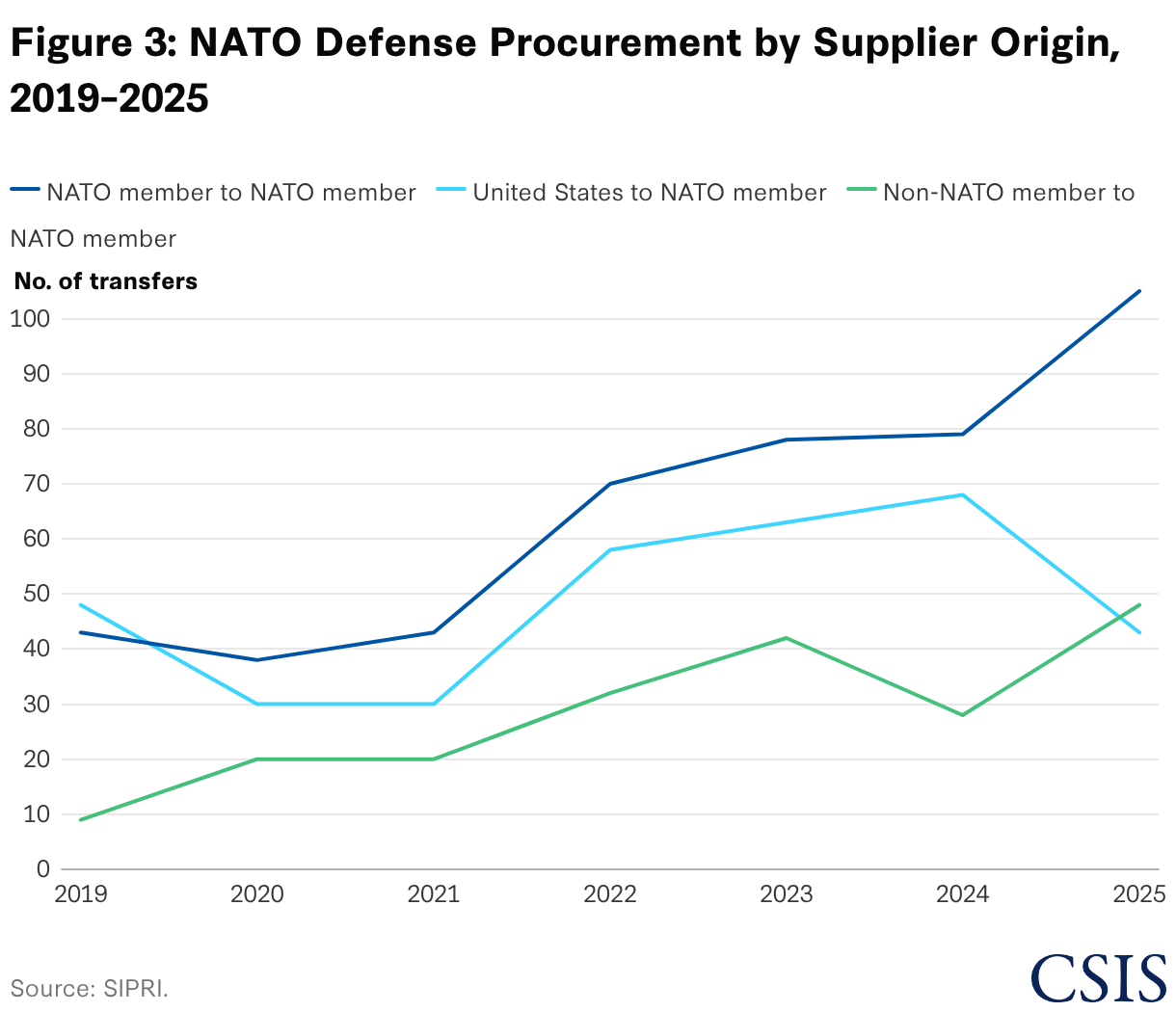
In comparison, approximately 330 defense-related article transfers occurred among NATO European allies during the same period. These transfers primarily involved platforms such as armored personnel carriers, ship engines, portable surface-to-air missile systems, and vehicle engines. While these transactions demonstrate growing industrial cooperation within Europe, they also illustrate the uneven maturity of the European industrial base. European manufacturers remain more active in producing selected land systems, components, and support equipment than in creating the advanced air and missile capabilities that continue to be sourced largely from the United States. However, NATO members are starting to diversify their procurement sources, with defense-related orders increasingly occurring between European and other allies rather than exclusively with the United States. However, a shift in a single year does not necessarily indicate a broader move away from U.S. systems, and this trend will need to be monitored over time to determine whether is represents a sustained change in procurement behavior. As illustrated in a recent CSIS analysis of the U.S. defense industrial base, FMS sales grew by over 300 percent in the past decade and there is no indication that FMS will decline significantly in the near term.
Poland accounts for a significant share of defense-related imports from both the United States and other NATO members, reflecting its position as one of Europe’s most active defense investors following Russia’s invasion of Ukraine. Poland’s procurement patterns demonstrate how frontline states have prioritized rapid capability development to strengthen deterrence and readiness. At the same time, defense exports remain concentrated among a relatively small group of Western European producers. Germany exported the largest number of defense-related articles among NATO members during from 2022 to 2025, followed by France, which suggests that industrial capacity, manufacturing infrastructure, and established defense firms remain primary drivers of European defense exports.
The F-35 Lightning II program illustrates both the benefits and limitations of Europe’s current defense industrial model. Fourteen countries have integrated the F-35 into their armed forces, making it one of NATO’s most important platforms for interoperability and collective defense. The aircraft is procured through a multinational industrial partnership led by the United States, with several European firms contributing to its manufacturing and sustainment. At the same time, the program highlights Europe’s continued dependence on the U.S. defense industrial base for advanced capabilities. Aircraft deliveries, upgrades, software, logistics, and long-term sustainment remain tied to U.S. systems and supply chains. As concerns have grown over delivery times, FMS delays, and geoeconomic uncertainty, some European governments have explored interregional alternatives. Nevertheless, for most allies, the operational advantages of the F-35 continue to outweigh the downsides. The program therefore reflects the broader challenge facing Europe: expanding indigenous industrial capacity while maintaining access to the advanced systems that underpin the alliance’s military effectiveness.
In an era of often difficult rhetoric between the Trump administration and some NATO countries, industrial collaboration continues apace. The Icebreaker Collaboration Effort Pact, for example, is a multilateral procurement initiative by the United States, Canada, and Finland established in 2024. The approach aligns design, production, and industrial capacity in a way that would be difficult for any country to achieve independently.

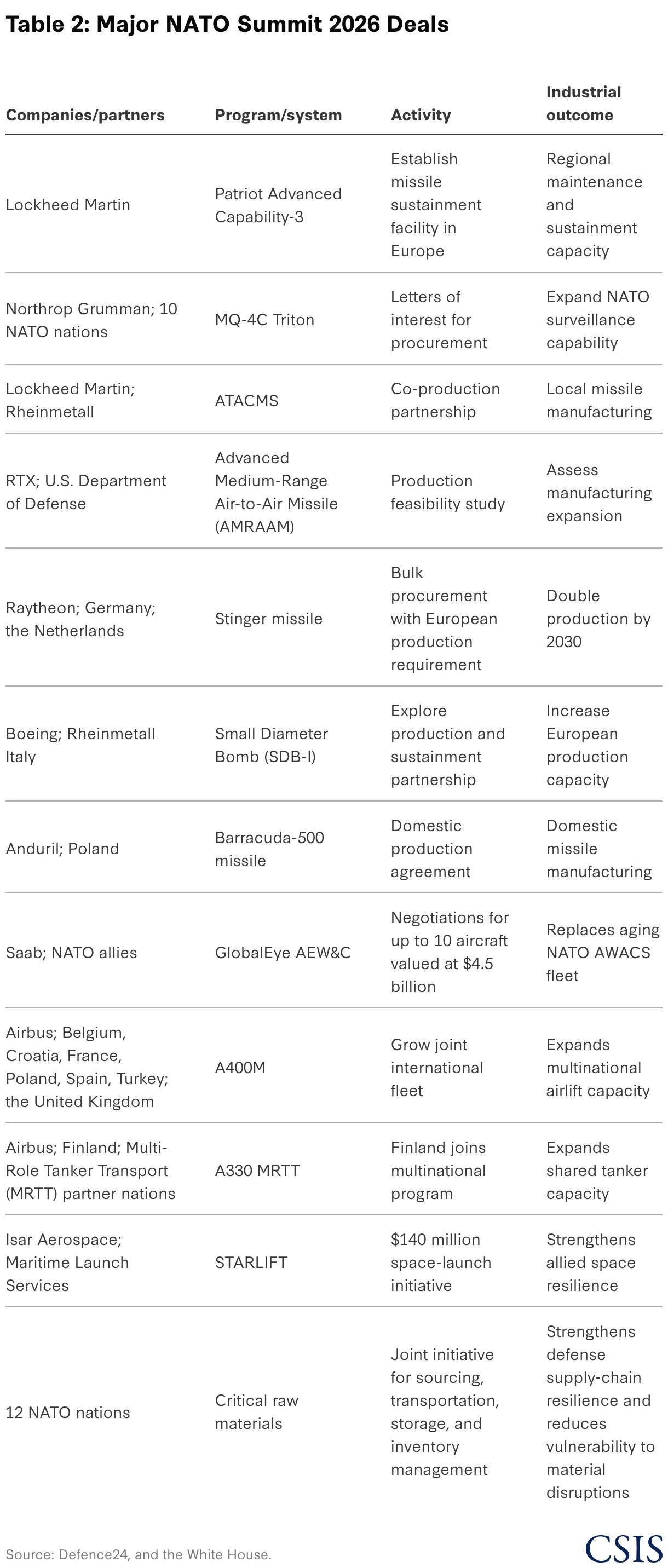
More recently, as illustrated in Table 2, allies approved at least $50 billion in new defense agreements at the 2026 NATO Summit. Most of these deals are still prospective, but they indicate an increased desire for industrial collaboration to create greater production capacity and significantly improve collective readiness. Saab, a Swedish aerospace and defense manufacturer, will develop a new surveillance aircraft for multiple countries across the alliance to replace Boeing E-3 Sentry AWACS aircraft. NATO countries also launched initiatives to expand the alliance’s fleet of Airbus A400M military aircraft, while also increasing the capabilities of the Airbus A330 Multinational Multi-Role Tanker Transport fleet. Beyond aircraft procurement, NATO has committed $40 million to drone capabilities over the next five years and $1.6 billion to 155-milimeter munitions. These investments reflect a broader effort to strengthen Europe’s defense industrial capacity while improving interoperability across the alliance. In another example of transatlantic industrial cooperation, Lockheed Martin and Rheinmetall will begin coproducing Army Tactical Missile System (ATACMS) missiles in Germany, marking the first time these short-range ballistic missile systems will be manufactured outside the United States.
Ultimately, while Europe and Canada have made substantial progress toward strengthening their respective defense industrial bases through increased spending and initiatives such as EDIS and SAFE, these efforts will not lead to a fully independent defense industrial system. Recent investments in domestic production, multinational procurement, and expanded European manufacturing, however, demonstrate a growing commitment to growing capacity and reducing vulnerabilities within the continent’s supply chains. However, these developments are not occurring through the replacement of U.S. capabilities, but rather through the gradual evolution of a more balanced transatlantic industrial partnership. Programs such as the F-35, ATACMS coproduction in Germany, and expanded European production of aircraft and munitions illustrate that future defense capacity will likely depend on deeper industrial integration with increased European content rather than industrial autonomy.
Strengthening European defense production while maintaining interoperability and cooperation across the alliance will remain essential to sustaining collective deterrence in an increasingly contested security environment.
The United States faces its own production constraints and strategic commitments that limit Washington’s ability to provide defense articles and military assistance to allies. As a result, the future of transatlantic burden sharing will depend not on European independence from the United States or continued U.S. dominance, but on Europe’s ability to develop sufficient industrial capacity to serve as a strong and resilient partner. Strengthening European defense production while maintaining interoperability and cooperation across the alliance will remain essential to sustaining collective deterrence in an increasingly contested security environment.
This presents a strategic opportunity for the United States to reshape its approach to defense industrial cooperation. As the security environment evolves, current initiatives such as FMS reform, coproduction, and coordinated industrial planning offer a path toward a more balanced transatlantic partnership. Rather than measuring success by the volume of U.S. exports alone, policymakers should prioritize policies that increase allied production capacity and accelerate defense manufacturing to improve collective readiness. Such reforms would enable the United States to better manage its own industrial constraints while ensuring that European allies can assume a greater share of the alliance’s defense production burden.
The Asia-Pacific security environment has become increasingly impacted by strategic competition and regional instability. China’s rapid military expansion has altered the regional balance of power and intensified concerns among neighboring states and U.S. allies. Growing tensions across the Taiwan Strait have heightened the risk of a potential conflict that could have significant implications for regional and global security. Additionally, North Korea’s continued missile testing and nuclear weapon development pose a threat to stability on the Korean Peninsula. Like Europe following Russia’s invasion of Ukraine, Asia-Pacific countries have responded by increasing defense spending and pursuing military modernization programs designed to strengthen deterrence and improve readiness.
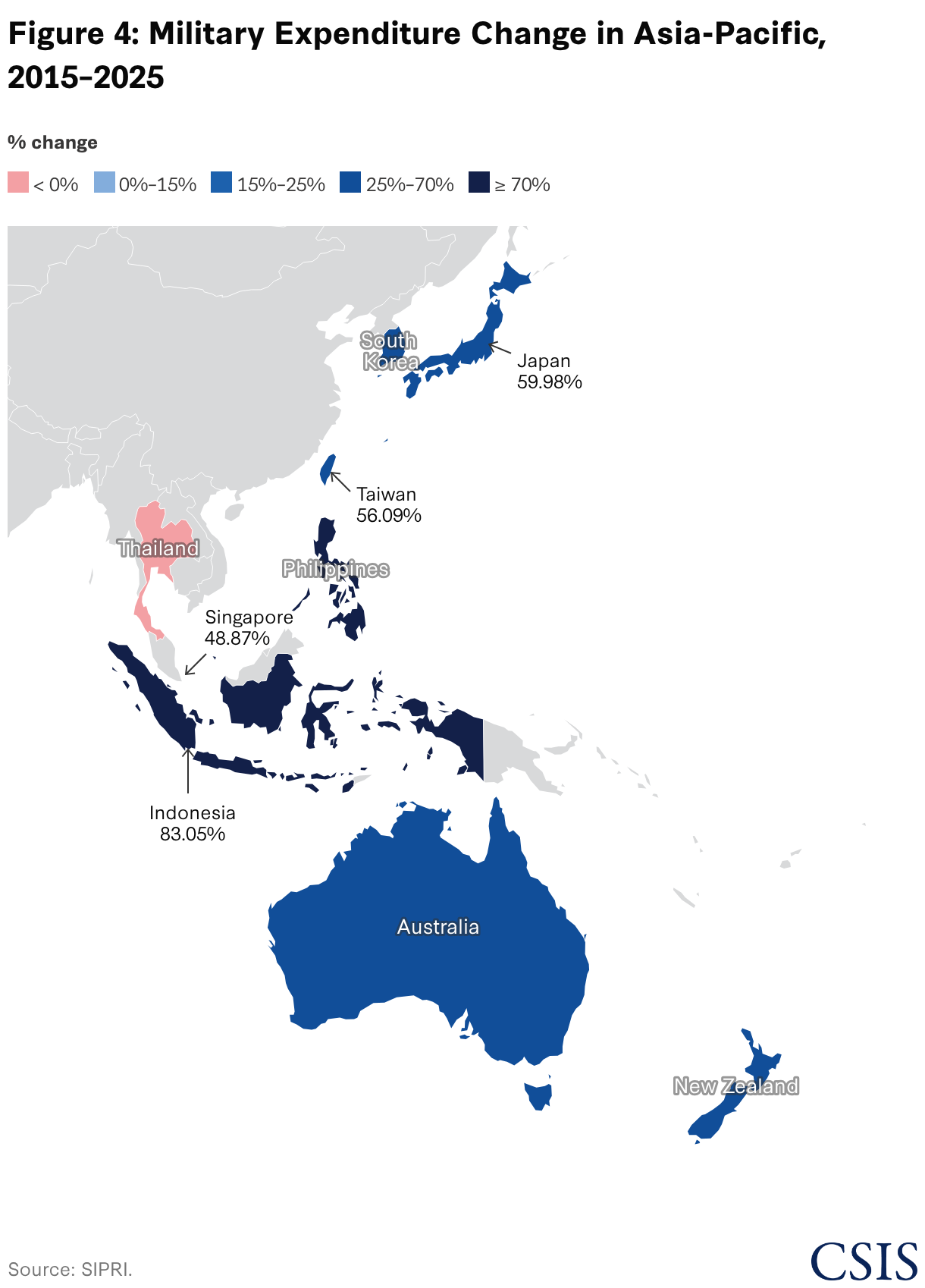
Figure 4 demonstrates the growth in defense expenditures across major Asia-Pacific partners in the past decade. While these partners are growing defense spending at a more modest pace than NATO countries, the changes are significant. While Australia and South Korea have increased their defense spending by almost 5 percent since 2022, Japan has increased their investments by 60 percent in the past decade, although it started at a very low level in absolute terms. Singapore (48 percent), Taiwan (56 percent), and Indonesia (83 percent) have similarly expanded their military spending in the past decade and are leading the way with Japan.

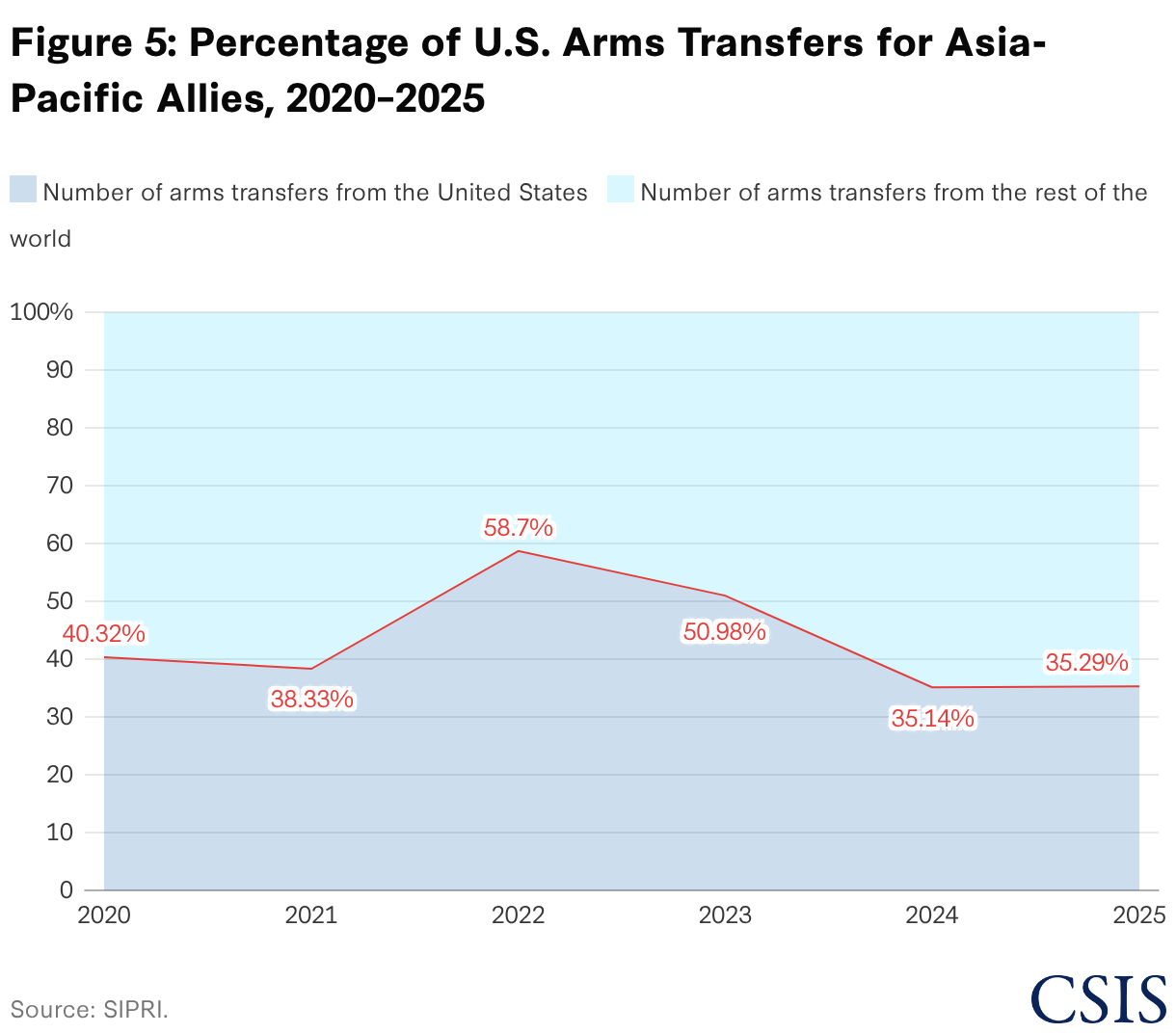
Asia-Pacific governments are taking some steps to create a regional industrial base that fosters industrial collaboration and collective deterrence. However, roughly 70 percent of defense-related orders placed by Asia-Pacific allies continue to be sourced from outside the region, demonstrating that the development of an autonomous regional industrial base remains a long-term objective. Figure 5 demonstrates that Asia-Pacific states are slowly diversifying their procurement sources away from the United States. Additionally, since 2020—and particularly following the spike in orders after Russia’s invasion of Ukraine—Asia-Pacific governments have increasingly sought to deepen defense cooperation with a broader range of international partners. While the United States remains the region’s principal defense partner and will likely continue to serve as the primary supplier of advanced military capabilities, the growing number of transfers from other countries reflects a deliberate effort to diversify procurement relationships.

Many Asia-Pacific states are strengthening deterrence through collaborative industrial and technological partnerships. AUKUS represents an effort to achieve this goal. This trilateral agreement between Australia, the United States, and the United Kingdom seeks to strengthen deterrence through deeper defense industrial integration and advanced capability development. While the nuclear-powered submarine program has become AUKUS’s defining initiative, the partnership also promotes cooperation in AI, quantum technologies, cyber capabilities, electronic warfare, hypersonic weapons, and undersea systems. Collectively, these initiatives are intended to expand Australia’s long-term defense industrial capacity while enabling greater allied specialization and interoperability across the Asia-Pacific.
One of Australia’s principal objectives is to develop a more sovereign and resilient industrial base capable of supporting long-term deterrence. Rather than reducing its reliance on the United States in the near term, AUKUS deepens Australia’s integration with the U.S. defense industrial base through technology sharing, industrial collaboration, and long-term sustainment. Although the Australian government has committed an additional $14 billion AUD ($9.9 billion USD) in defense funding over the next four years, Australia’s defense spending has increased by only about 6 percent since the establishment of AUKUS. By comparison, the United States accounted for approximately 88 percent of total AUKUS member defense expenditures in 2025. These spending patterns demonstrate that while Australia is expanding its contribution to regional security, responsibility for financing and sustaining deterrence remains concentrated in the United States.
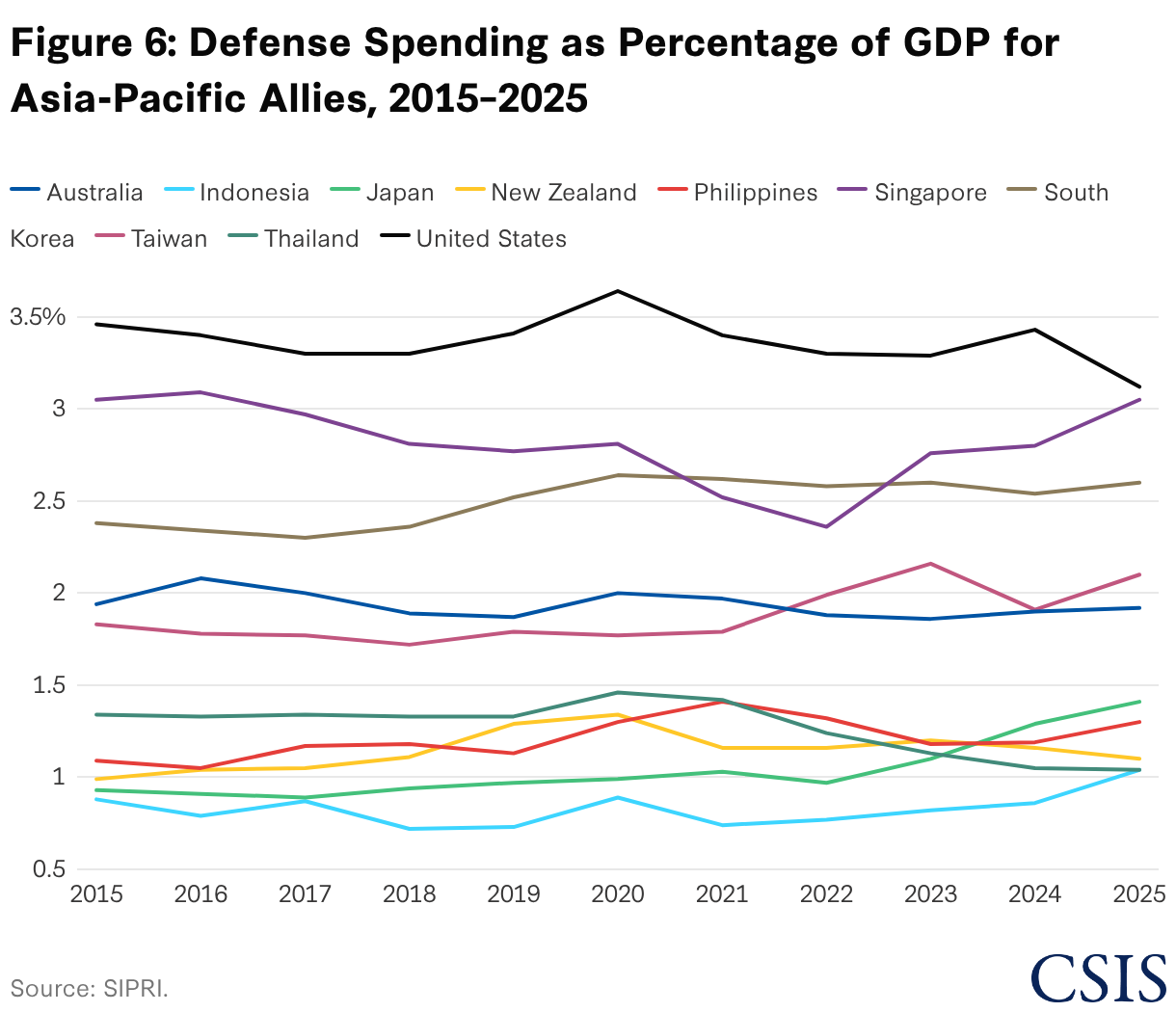
Furthermore, Asia-Pacific governments are pursuing broader initiatives designed to strengthen defense industrial cooperation and improve regional resilience. The Partnership for Indo-Pacific Industrial Resilience, launched in 2024, seeks to strengthen allied defense supply chains, expand industrial collaboration, and improve collective production capacity among regional partners. Rather than creating a formal defense organization, PIPIR focuses on improving defense manufacturing resilience and reducing supply chain vulnerabilities through coordinated industrial cooperation. Figure 6 highlights the slow rise in defense expenditures for selected member states. Although still in its early stages, the initiative reflects growing recognition that strengthening regional deterrence requires not only higher defense spending but also more resilient and interconnected defense industries.

Beyond regional initiatives such as PIPIR, Asia-Pacific governments are also strengthening security cooperation through partnerships with NATO. The Indo-Pacific Four (IP4)—Australia, Japan, New Zealand, and South Korea—have emerged as NATO’s principal partners in the region, reflecting growing recognition that security challenges in Europe and the Asia-Pacific are increasingly interconnected. Since Russia’s invasion of Ukraine, the IP4 have participated in NATO summits, expanded defense industrial dialogue, and increased cooperation on cybersecurity, emerging technologies, resilience, and interoperability. Although the absence of several IP4 leaders from the 2025 NATO Summit highlighted the fact that regional security concerns remain those countries’ primary focus, it did not signal a retreat from allied cooperation. Instead, it demonstrated that the Asia-Pacific alliance network is developing through flexible partnerships rather than a NATO-style collective defense organization. Together with initiatives such as AUKUS and PIPIR, the IP4 reflects a broader shift toward a networked security architecture in which defense industrial collaboration, technology sharing, and coordinated deterrence complement existing U.S. alliances. As strategic competition intensifies, these overlapping partnerships are likely to strengthen the resilience of the Asia-Pacific defense industrial base while reinforcing the United States’ role as the region’s central security partner.
Japan plays a crucial role within this emerging alliance network, serving as a strong example of how defense industrial cooperation can strengthen security ties across regions. In response to growing regional threats, Japan has committed to substantially expanding its defense budget, like other countries in the Asia-Pacific. Since 2015, Japan’s military expenditure has grown by over 60 percent, an increase that will significantly reframe the country’s previously exclusive self-defense posture, focusing instead on a more proactive alliance-integrated deterrence model. In the next five years, Japan is on track to be the world’s third-largest defense spender after the United States and China.
Within the alliance network, including PIPIR, Japan’s investment in defense signifies the country’s growing prioritization of security. Moreover, in 2023, the Japanese government established the Official Security Assistance, a framework that provides equipment, supplies, and support to allies, bolstering security cooperation. Japan has rescinded its long-standing restrictions on defense exports and recently reached an agreement to deliver the first three of ten Mogami-class frigates to Australia. Japan also hopes to recruit South Korea into the Acquisition and Cross-Servicing Agreement, a logistical support agreement that would operate in peacetime and wartime. Japan is already in this agreement with Australia, the United Kingdom, and the Philippines. These efforts signal an increasingly collaborative posture that aims to improve collective security in the region. Despite these initiatives, Japan’s industry is relatively isolated, creating challenges to the establishment of a competitive industrial base. In this regard, Japan serves as a valuable case study for alliance members in the Asia-Pacific, demonstrating the opportunities and challenges of leveraging industrial cooperation to strengthen regional deterrence and collective security.

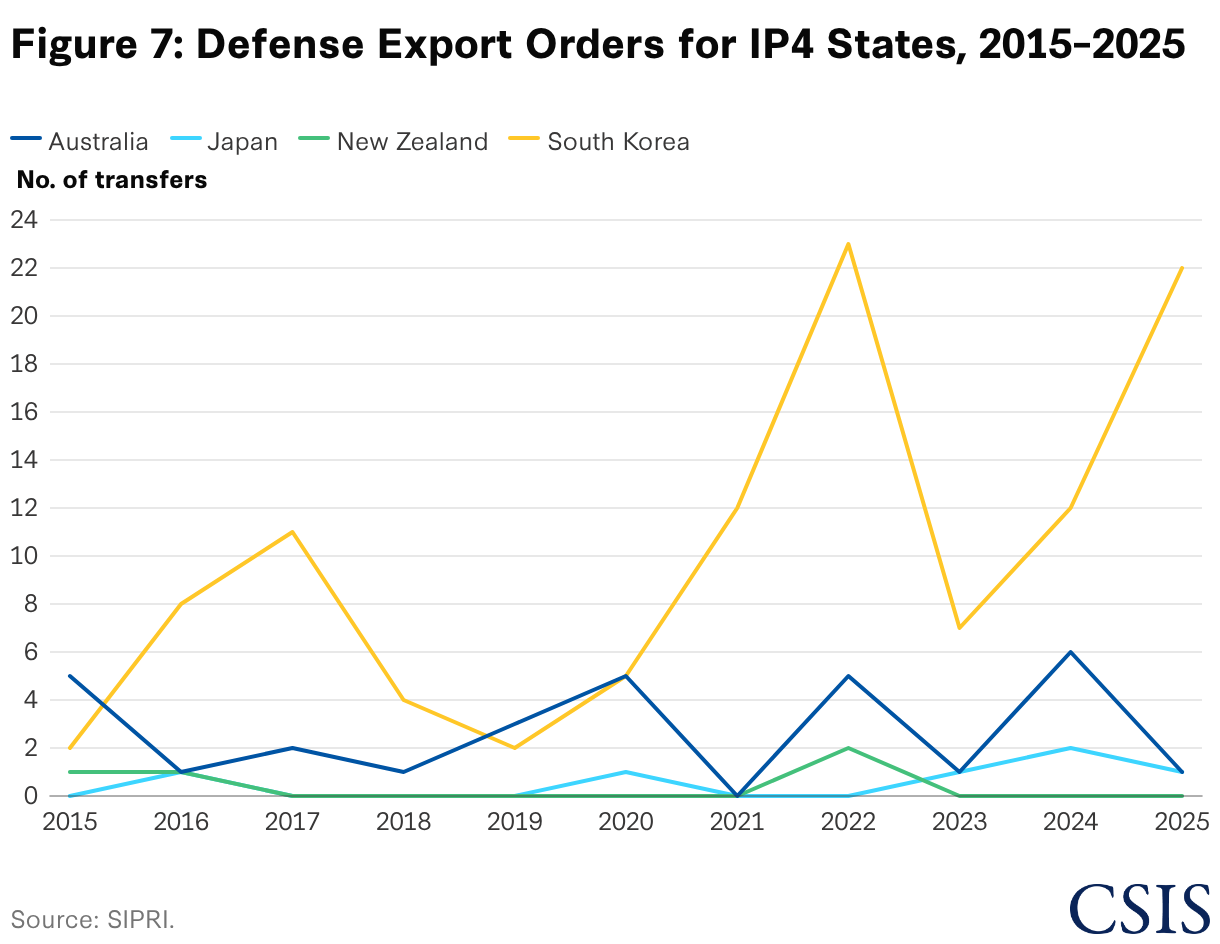
Figure 7 highlights the share of exports within the IP4, notably South Korea’s growing role within the regional security structure. The country is strategically positioning itself as an Asia-Pacific hub, focused on sustainment, logistics, and maintenance. South Korea is also expanding its defense-related exports to NATO and other allies. For example, Hanwha Aerospace began production of a new surface-to-air missile that is being marketed to states throughout Europe and the Middle East. Moreover, Poland and South Korea recently announced a new deal focusing on coproducing medium-range precision-guided missiles, building on a 2022 deal valued at more than $14 billion.
South Korea’s export-oriented economic development strategy, pursued since the 1970s, has created a highly efficient advanced manufacturing base capable of producing complex defense systems at scale. Unlike many Western defense manufacturers that contend with higher labor costs, fragmented production networks, and lengthy acquisition cycles, South Korean firms benefit from vertically integrated supply chains, lower production costs, and rapid manufacturing timelines. This combination allows South Korea to deliver modern defense equipment more quickly and at significantly lower prices than many of its Western competitors, making it an increasingly attractive supplier for countries seeking to rapidly expand their military capabilities. Following Russia’s invasion of Ukraine, President Lee Jae Myung reaffirmed South Korea’s ambition to become the world’s fourth-largest defense exporter by 2035.
Additionally, South Korea is strengthening its position within emerging alliance networks. While Seoul continues to pursue greater industrial and strategic sovereignty, its participation in multilateral defense partnerships is expected to expand, reinforcing collective deterrence across the Asia-Pacific. Beyond its involvement in PIPIR, Korean government officials are strengthening trilateral military collaboration between the United States and Japan. South Korea has also deepened defense cooperation with NATO and the IP4. Although the U.S.-South Korea alliance has traditionally centered on deterring North Korean aggression, both governments are increasingly seeking to broaden the partnership to address security challenges across the wider Asia-Pacific. This shift reflects a growing emphasis on interoperability and defense cooperation, positioning South Korea as a key contributor to regional security beyond the Korean Peninsula. These initiatives demonstrate that stronger alliance networks, combined with deeper defense industrial cooperation, can translate national investments into more effective regional deterrence.

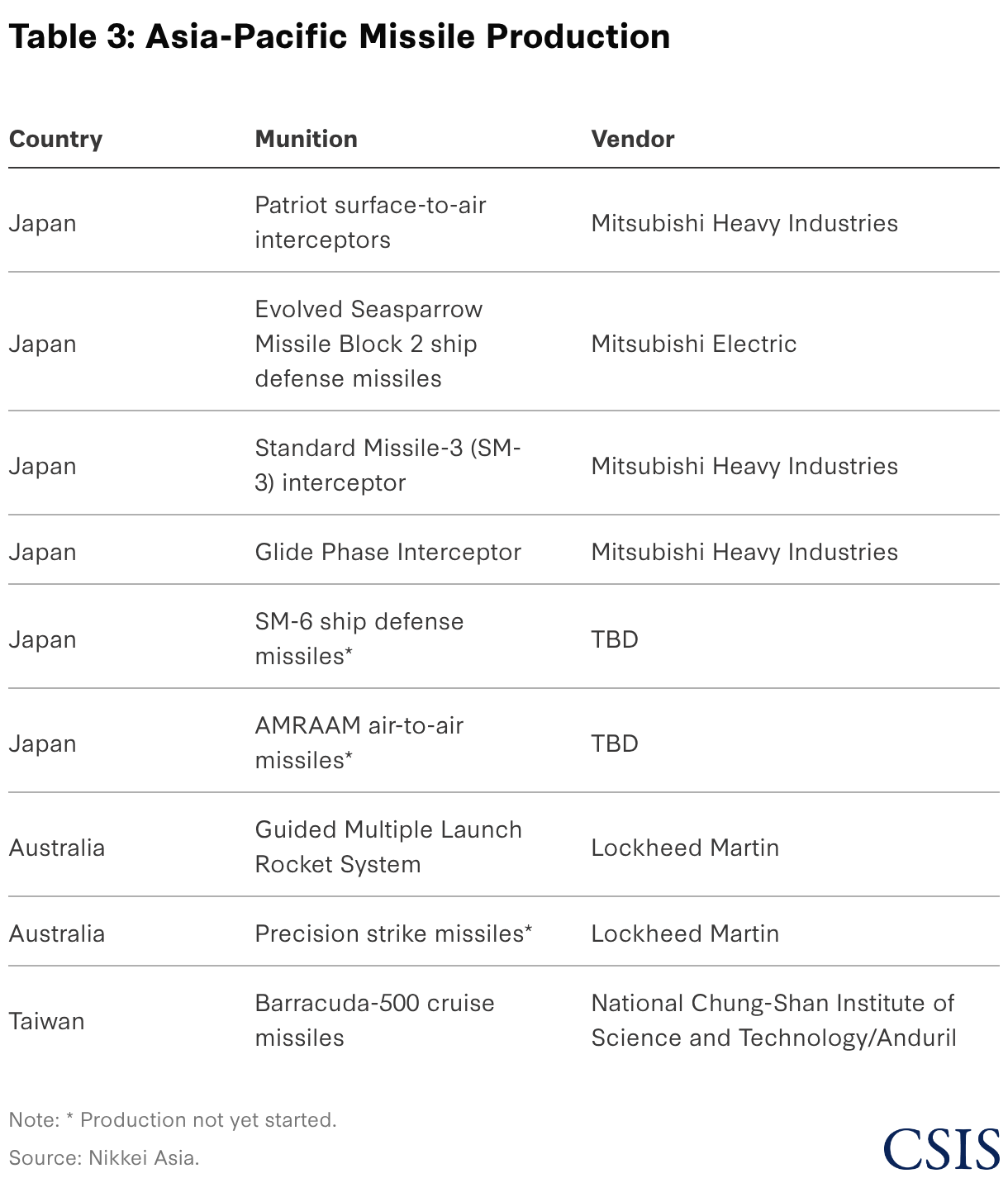
Due to constraints in the U.S. industrial base, states across the Asia-Pacific are seeking alternative methods to achieve their defense acquisition goals. Growing demand for U.S. military equipment—combined with dwindling U.S. munitions stockpiles and production delays stemming from conflicts in Ukraine, the Middle East, and other global contingencies—has extended delivery timelines for many critical weapon systems. As a result, Asia-Pacific governments are placing greater emphasis on coproduction and multinational procurement arrangements to reduce dependence on U.S.-based production capacity while improving the resilience of regional supply chains. Table 3 highlights defense industrial projects that Asia-Pacific nations are pursuing to strengthen their ability to acquire and replenish critical munitions. By expanding local manufacturing and coproduction, these countries seek to reduce risks associated with delays in U.S. production while still maintaining close defense industrial cooperation with the United States.
Like Europe, but at a more modest level, defense investments by Asia-Pacific countries, coupled with industrial cooperation among allies, are laying the foundation for a more resilient collective security architecture. As demonstrated through initiatives such as AUKUS, PIPIR, and the IP4, Asia-Pacific countries are increasingly recognizing that industrial cooperation is a critical component of modern defense strategy.
Like Europe, but at a more modest level, defense investments by Asia-Pacific countries, coupled with industrial cooperation among allies, are laying the foundation for a more resilient collective security architecture.
At the same time, the development of a more integrated regional defense industrial base does not diminish the central role of the United States. Rather, it reinforces the importance of burden sharing by enabling allies to assume greater responsibility while remaining closely connected to U.S. capabilities. Ongoing efforts in the Asia-Pacific are most effective when combined with continued U.S. leadership, industrial cooperation, and technology sharing. Expanding coproduction, increasing interoperability, and deepening technological cooperation will allow allied nations to respond more effectively to future crises while reducing vulnerabilities across the defense industrial base. As strategic competition continues to intensify, the success of the Asia-Pacific alliance network will depend not only on the strength of individual militaries, but on the collective capacity of allied nations.
Evolving security environments in Europe and the Asia-Pacific demonstrate that allied governments are increasingly pursuing two complementary objectives: strengthening defense industrial capacity while deepening integration with partners. Investments in domestic production, multinational coproduction, technology sharing, and collaborative procurement are enabling allies to assume greater responsibility for their own defense.
In Europe, initiatives such as EDIS and SAFE seek to expand industrial capacity and reduce supply chain vulnerabilities, while NATO members continue to rely on U.S. capabilities for many of the alliance’s most advanced military systems. Similarly, Asia-Pacific initiatives—including AUKUS, PIPIR, and the IP4—demonstrate that regional security is increasingly built on interconnected industrial and technological networks rather than national capabilities. Countries such as Australia, Japan, Poland, and South Korea are investing heavily in their own defense industries while simultaneously integrating those capabilities within broader alliance frameworks.
At the same time, relations between the United States and some traditional allies have become increasingly strained. U.S. actions—including demands for ownership of Greenland, threats of troop withdrawal from Germany, and heavy criticism of Spain—have generated friction. Nonetheless, allies are spending more, building industrial capacity, and continuing to partner with U.S. firms.
U.S. policymakers should seize this strategic opportunity. Growing defense investments across Europe and the Asia-Pacific create new avenues for coproduction, licensed manufacturing, technology sharing, and industrial partnerships that can strengthen both U.S. and allied capabilities. The United States remains indispensable in the provision of advanced technologies, operational expertise, alliance leadership, and many high-end capabilities that underpin collective deterrence. Realizing these benefits, though, will require adapting the mechanisms through which the United States works with its partners. Modernizing the FMS system and increasing production rates are critical steps toward reducing FMS backlogs and delivering systems to allies and partners on a more timely basis. AUKUS has shown how industrial partnerships help drive real reform. The focus on a specific program—nuclear submarines—has led to export control reforms and other practical advances that can be replicated in other industrial partnerships. The creation of new assistant secretary of war for international armaments cooperation, coupled with the move of the Defense Security Cooperation Agency and the Defense Trade Administration to the Office of the Under Secretary of War for Acquisition and Sustainment, have created a tremendous opening to supercharge coproduction and codevelopment arrangements as well as exponentially increase international industrial collaboration.
U.S. and allied burden sharing has become more about collective industrial capacity than anything else.
Finally, additional acquisition and security cooperation reforms underway could enable international industrial cooperation at the speed demanded by today’s security environment. Ultimately, U.S. and allied burden sharing has become more about collective industrial capacity than anything else. The ability to manufacture munitions, sustain advanced weapon systems, stabilize critical supply chains, and rapidly expand production during crises has become central to effective deterrence. As a result, defense industrial integration is emerging alongside military interoperability as a defining characteristic of modern alliances. The strongest alliances and partnerships will be those that combine resilient national defense industries with deep industrial cooperation, interoperable military capabilities, and shared technological innovation. In this uncertain security environment, greater allied self-sufficiency and continued U.S. leadership are complimentary pillars of a more resilient and sustainable system of collective deterrence and defense.
Jerry McGinn is the director of the Center for the Industrial Base and a senior fellow with the Defense and Security Department at the Center for Strategic and International Studies (CSIS) in Washington, D.C. Celia Barrie is a research assistant with the Center for the Industrial Base at CSIS.
This report is made possible by general support to CSIS. No direct sponsorship contributed to this report.