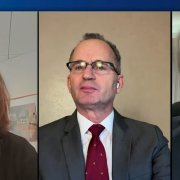
A Close Encounter in Space: What Is Russia Planning? | Space Strategic Dialogue
October 21, 2026 • 8:00 – 9:00 am EDT
Hosted by Aerospace Security Project
Providing forward-looking analysis of the political, diplomatic, economic, and security forces shaping the Middle East’s emerging order
The Middle East is at a “hinge moment,” a period of transformative change where the old order is disappearing, and a new, region-driven multipolar order is emerging. The Middle East’s changing order heralds a time of greater dynamism and unpredictability. While this transformative moment brings new opportunities for peace and prosperity, it also holds the potential for deepening conflict. For the United States, understanding the dynamics at play in the Middle East, the motivations of the region’s key stakeholders, and the inherent risks and opportunities for the United States will be critical to ensuring U.S. interests and promoting American prosperity.
In the emerging Middle East order, regional actors hold far greater agency to shape the region’s contours. For the Gulf—the Middle East’s new “center of gravity”—the vision focuses on de-escalating and containing/managing regional conflicts; stabilizing countries emerging from conflict such as Syria; transforming their economies to create jobs, develop vibrant private sectors, and capture advances toward non-carbon energy transition, and creating building blocks for a regional security architecture. If successful, these efforts could create a far more stable and prosperous Middle East, with strengthened intra-regional connections and the region’s fuller integration into the global economy.
The Middle East Program at the Center for Strategic and International Studies (CSIS) will look to unpack the complex dynamics of the region’s emerging order through the “Middle East Emerging Order Initiative” founded on four strategic pillars focused on key diplomatic, economic, security, and stabilization trends in the region. Explore the pillars below:

Photo: Giuseppe Cacace/AFP/Getty Images; AFP/Getty Images
Commentary by Mona Yacoubian — September 9, 2026
Photo: Giuseppe Cacace/AFP/Getty Images; AFP/Getty Images
Commentary by Vali Nasr — September 14, 2026

Photo: Giuseppe Cacace/AFP/Getty Images; AFP/Getty Images
Commentary by Paul Salem — September 21, 2026
Photo: Giuseppe Cacace/AFP/Getty Images; AFP/Getty Images
Commentary by Michael Ratney — September 24, 2026

Podcast Episode by Will Todman, Allison Minor, and Michael Ratney — October 16, 2026

Commentary by Allison Minor — October 15, 2026

Photo: Majid Saeedi/Getty Images
Commentary by Mona Yacoubian — April 17, 2026
Photo: Houthi Media Center/Handout via Xinhua/Getty Images
Commentary by Michael Ratney
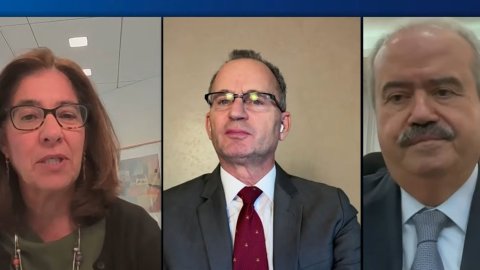
Photo: CSIS
Photo: Gallo Images/Orbital Horizon/Copernicus Sentinel Data 2026
Commentary by Michael Ratney
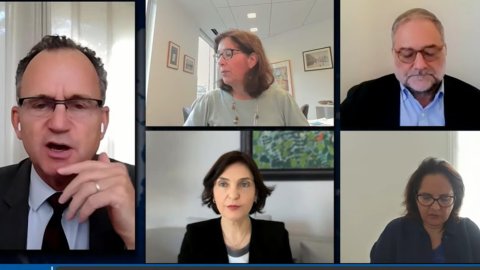
Photo: CSIS

Photo: Omar Albaw / Middle East Images / AFP via Getty Images
Report by Will Todman — October 5, 2026

Commentary by Michael Ratney — July 23, 2026

Brief by Michael Ratney and Adel Hamaizia — July 6, 2026

Commentary by Mona Yacoubian and Samuel Zabin — February 27, 2026

Commentary by Mona Yacoubian and Will Todman — April 20, 2026
Commentary by Allison Minor — October 15, 2026
Podcast Episode by Bonny Lin and Mona Yacoubian — October 8, 2026

Newsletter by Will Todman — October 7, 2026
Podcast Episode by Will Todman — October 5, 2026

Report by Will Todman — October 5, 2026
Event — September 28, 2026
Commentary by Michael Ratney — September 24, 2026
Newsletter by Mona Yacoubian and Kira Nygren — September 24, 2026
Commentary by Michael Ratney — September 23, 2026
Event — September 21, 2026