Zbigniew K. Brzezinski
Zbigniew Brzezinski did not begin his career as a geostrategist. He began it as a wunderkind.
By the time he was 30, he had a young wife, a U.S. naturalization certificate, a Harvard Ph.D. (earned in three years), two books published by Harvard University Press, and concurrent posts at Harvard’s government department, its Russia Research Center, and its newly formed Center for International Affairs.
Brzezinski’s initial specialty was understanding how the Soviet Union worked. His doctoral dissertation analyzed how the Soviet leadership used continual purges as an instrument of control, employing brutality for political ends. It drew widely on history, political science, and sociology, unpacking the enduring political patterns that not only governed the recent Soviet past, but also were likely to govern its future. It was in no way a policy book. It ends not with recommendations for the U.S. government, but instead by musing on how long such a system can endure.
Policy Relevance
In his 30s, Brzezinski’s intellectual horizons began to shift. After he moved to Columbia University in 1960 and intensified his relationship with the Council on Foreign Relations, he wrote more explicitly about the U.S.-Soviet rivalry and U.S. policy.
His 1965 book, Alternative to Partition, prescribed a U.S. approach to Eastern Europe and the Soviet Union that was a striking departure from then-current policy. Persuaded that the Soviet system would eventually be consumed by its internal contradictions, he argued that isolating the Soviets and their client states would only prolong the Cold War. Instead, he advocated reassuring the Soviets that the United States did not have military designs on them in order to infiltrate ideas into Eastern Europe that would undermine communism. It would accomplish the same goals as confrontation without firing a shot.
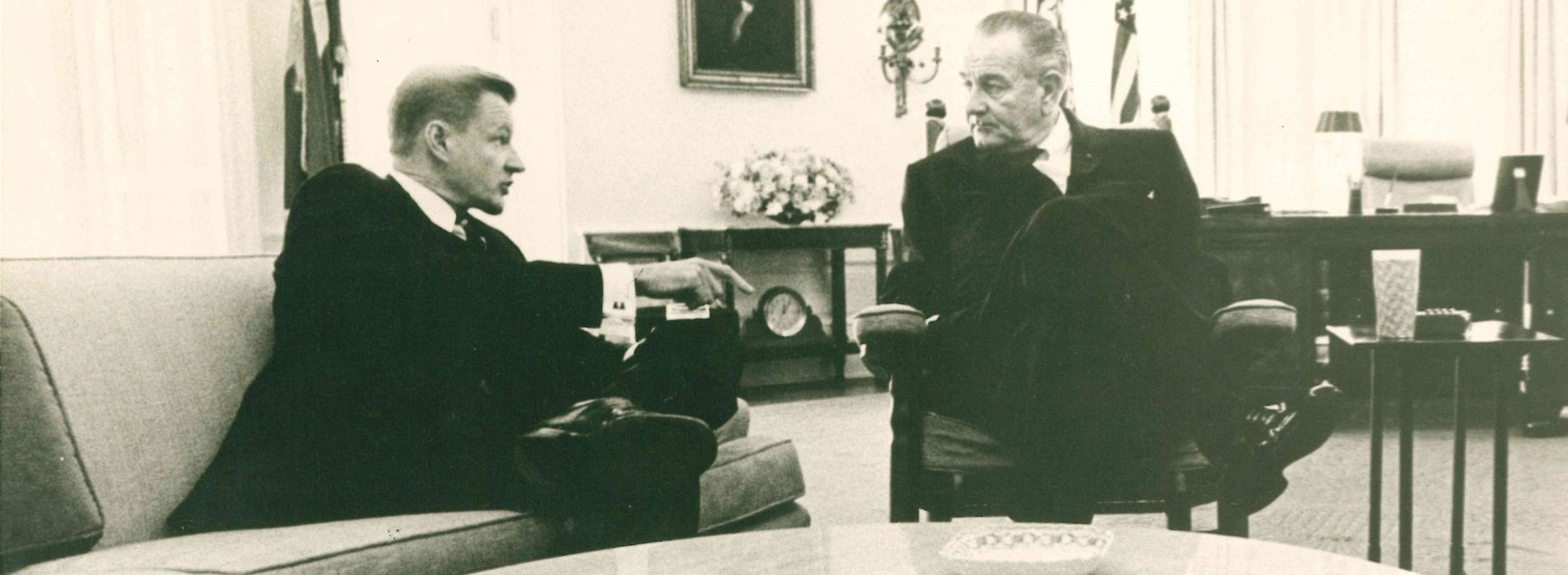
Brzezinski’s ideas on Europe were not adopted in full, but they gave him both relevance and star power in Washington. He spoke personally with President Lyndon Johnson about them, he began to appear on television, and he served for a time on the State Department’s Policy Planning Council.
Impatience with Academia
His impatience with academia and his ambitions in the policy realm were laid bare when he chaired the Foreign Policy Task Force of Senator Hubert Humphrey’s unsuccessful 1968 presidential campaign. What followed Humphrey’s defeat, however, was not a defeat for Brzezinski. Instead, it may have been his period of greatest intellectual fertility.
After two decades of writing about Russian totalitarianism, Brzezinski had become intellectually restless. In 1970, he wrote Between Two Ages: America’s Role in the Technetronic Era, an oddly titled but deeply insightful examination of how technology and mass communication would shape U.S. politics and society and the U.S. role in the world. Reread after more than 45 years, it has moments of shocking prescience.
The next year, he traveled to Japan for six months on a Ford Foundation grant (arranged by Ford Foundation president and former national security adviser McGeorge Bundy) and wrote The Fragile Blossom, about Japan’s future prospects. There, the Soviet specialist turned his intellect toward a country with a language and history completely foreign to him. His purpose, made clear in his conclusion, was advising the United States how to shape Japan’s rise so that it enhanced U.S. security. The two books were the product of a rigorously systematic approach that compensated for his lack of deep background knowledge, and they marked a sharp break from his past as a Sovietologist.
Lessons from a Life in Strategy (2012)
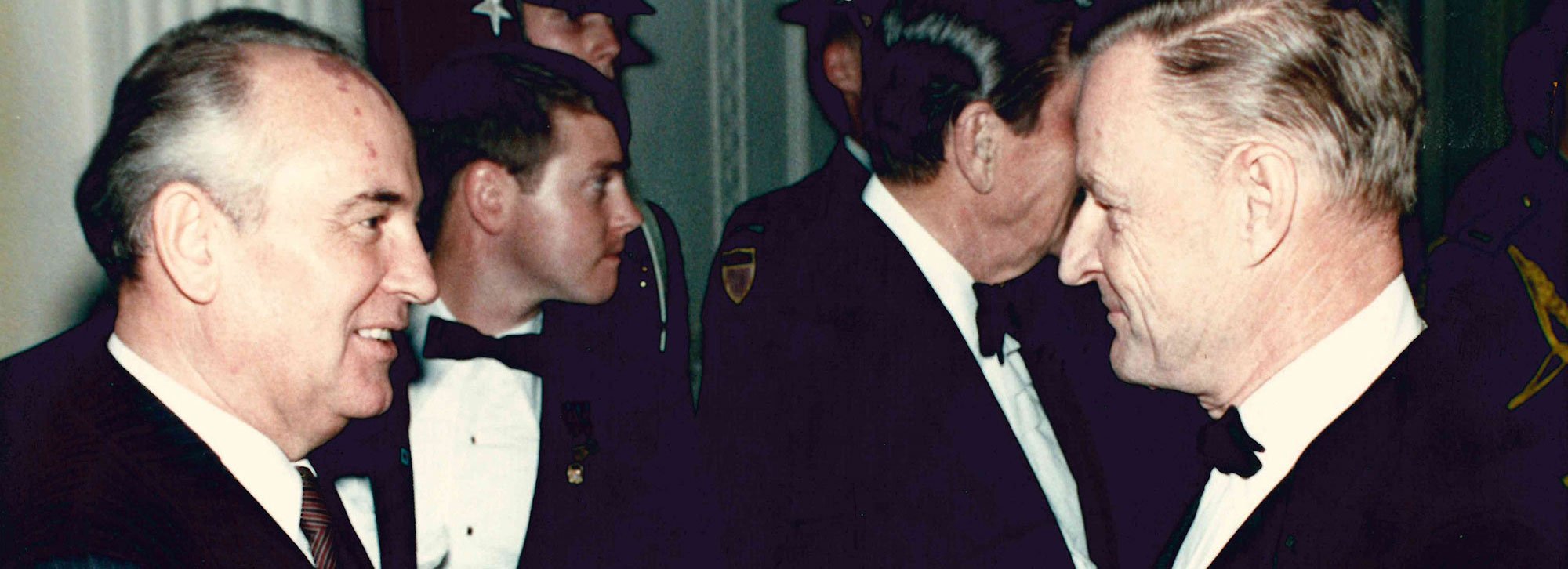
Upon his return to New York, Brzezinski also broke with being an academic. Befriending the financier David Rockefeller, he helped establish the Trilateral Commission, which brought together Americans, Japanese, and Europeans. As the commission’s executive director, he recruited a talented Georgia governor named Jimmy Carter. Though he had his choice of Democratic candidates to support in the 1976 election campaign, Brzezinski aligned with Carter when he was still an unknown. As Carter’s star rose, so did Brzezinski’s, and when Carter won the election, he named Brzezinski his national security adviser.
In the White House
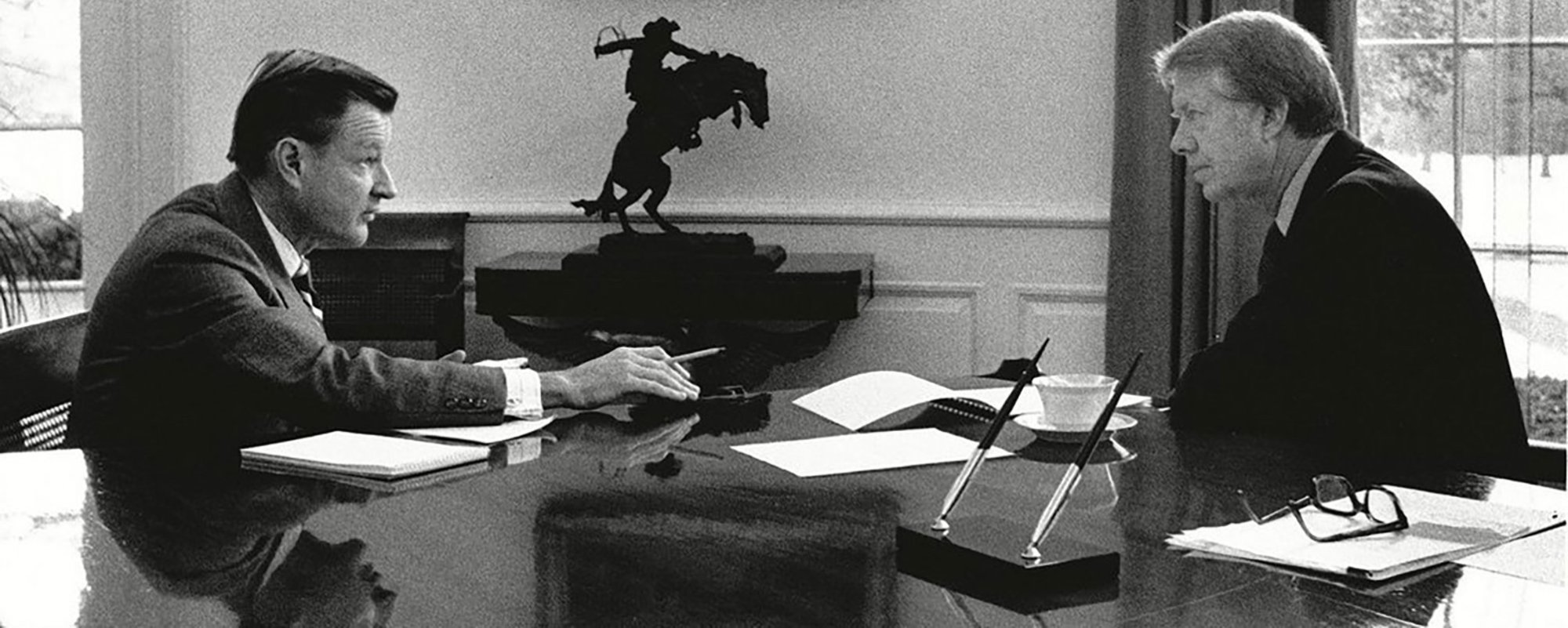
In the White House, Brzezinski was known as a pugilistic cold warrior, and his hawkish reputation seemed well-earned by the Carter administration’s reaction to the Soviet invasion of Afghanistan. While Brzezinski maintained a strategic focus on defeating the Soviet Union, he often had a sophisticated approach to the Cold War rivalry. He sought to starve the Soviet Union of external support by drawing closer to Western allies, deepening ties between the West and the Global South, building closer ties with China, and resolving conflicts in the Middle East and Africa that provided opportunities for Soviet intervention.
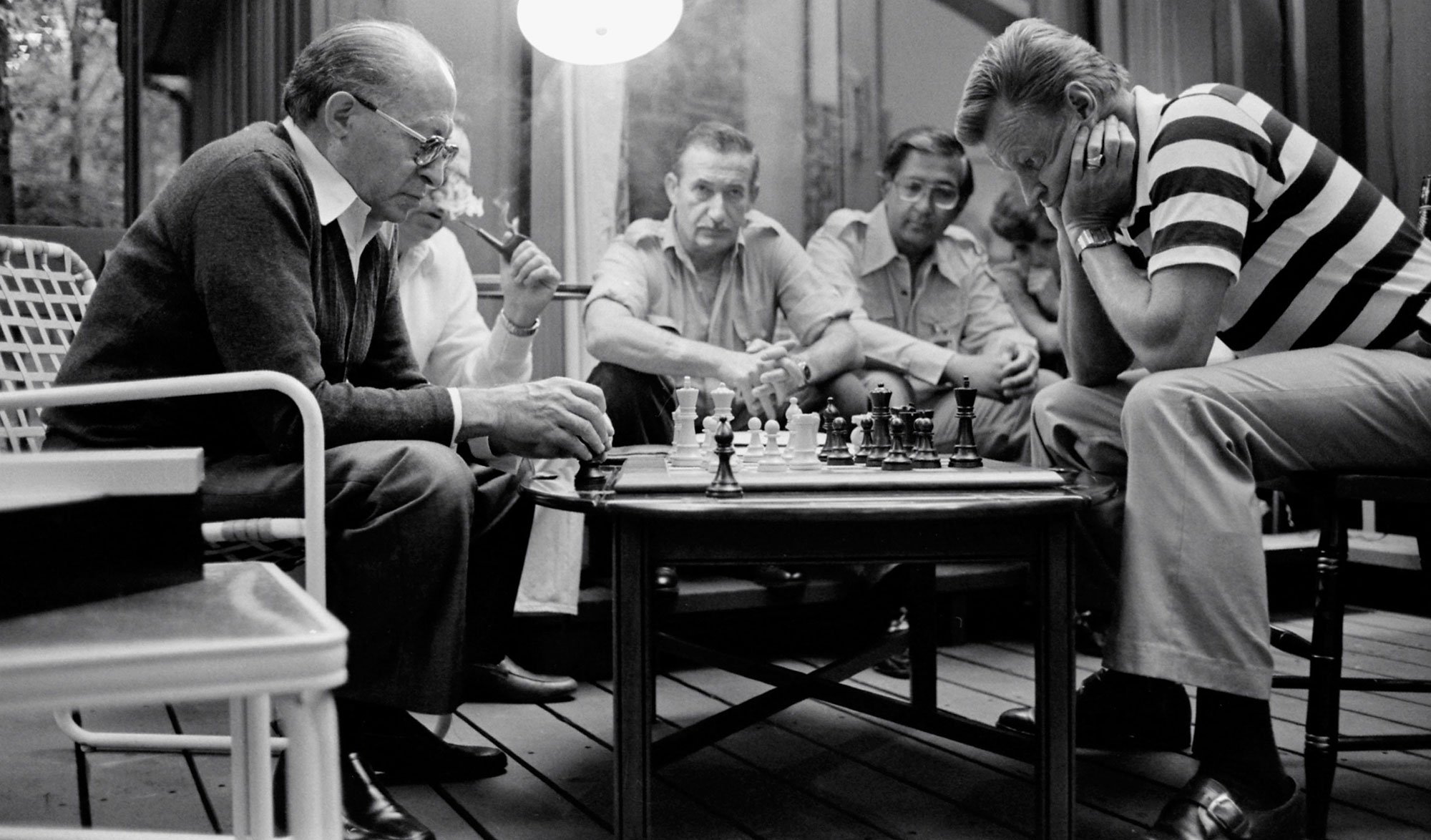
While his understanding of Soviet conduct was deep, his greatest successes in the White House lay elsewhere—helping to negotiate the Camp David Accords between Israel and Egypt, to normalize relations with China, and to strike a new treaty over the Panama Canal Zone. He sparred with Secretary of State Cyrus Vance on arms control negotiations with the Soviet Union, often seeking to gain leverage over the USSR at the same time Vance was trying to improve the climate for negotiations. The Iran hostage crisis did more than mark the transformation of a stable ally into a destabilizing foe. Carter believed it doomed his presidency, and Brzezinski, who had established his primacy on intelligence issues and crisis response, had been unable to devise a solution while in office.
Upon leaving government in 1981, Brzezinski stayed deeply involved in the policy world.
In more than 35 years at the Center for Strategic and International Studies, his writing and advocacy had several sustained and interrelated themes.
On U.S. Global Leadership
The first was U.S. global leadership. When he first started writing about U.S. policy in the 1960s, Brzezinski was confident in the attractiveness of the U.S. model, but he was committed to multilateralism and concerned by the prospect of U.S. overreaching. In his 2004 book, The Choice, he stated the problem plainly: “Ultimately, the central question confronting America is ‘Hegemony for the sake of what?’ At stake is whether the nation will strive to shape a new global system based on shared interests, or use its sovereign global power primarily to entrench its own security.” Though Brzezinski felt it was vital for the United States to lead the world, he thought it was folly to seek to dominate the world. He told an interviewer:
The challenge to U.S. leadership had three parts. One was deepening ties to generally democratic governments that were already favorably disposed to the United States, including in Western Europe and Japan. Brzezinski believed that it would be an error to take their support for granted, or to assume that their policies would automatically align with those of the United States.
Even more difficult, in his mind, was the second, finding a way for the United States to lead the developing world. He said, “The political awakening that is happening worldwide is a major challenge for America, because it means that the world is much more restless. It’s stirring. It has aspirations which are not easily satisfied. And if America is to lead, it has to relate itself somehow to these new, lively, intense political aspirations, which make our age so different from even the recent past.”
Most important was the third: deftly playing a unique global role promoting and guaranteeing Western unity while balancing and conciliating between rising powers in Asia. As described in his last book, Strategic Vision, the only way to do that was through building partnerships based on common interests with what he expects will be a democratizing Russia and an increasingly empowered China.
On the USSR and Russia
The second theme that drew his attention was the Soviet Union and, later, Russia. History had vindicated his analysis of the Soviet Union, but he saw modern Russia adopting many of the same political strategies. In his mind, the effort wouldn’t yield better results this time. As he said:
He was more sanguine about the post-Putin future, not because of more benign Russian intentions, but because Russia will lack other options. He said, “In the longer run, I happen to think that Russia really has no choice but to become gradually more associated with the Euro-Atlantic community. Because if it isn't, then it's going to find itself essentially facing China all by itself, facing the Euro-Atlantic community all by itself. And while it is awash with liquidity because of its present ability to export a lot of energy, that is actually a transitional arrangement. It’s not going to last forever. There are already some indications as to what the time limit on that might be. And with its declining population, with people moving out of the Far East, with an enormously powerful China in the east, I think the real destiny of Russia is to become closer to the West.”
How to hasten that transition was a problem that Brzezinski was never able to solve. Though he was cautious not to close the door to cooperation with Russia, he was also insistent on the need to oppose repeated Russian efforts to trample on its neighbors.
On China
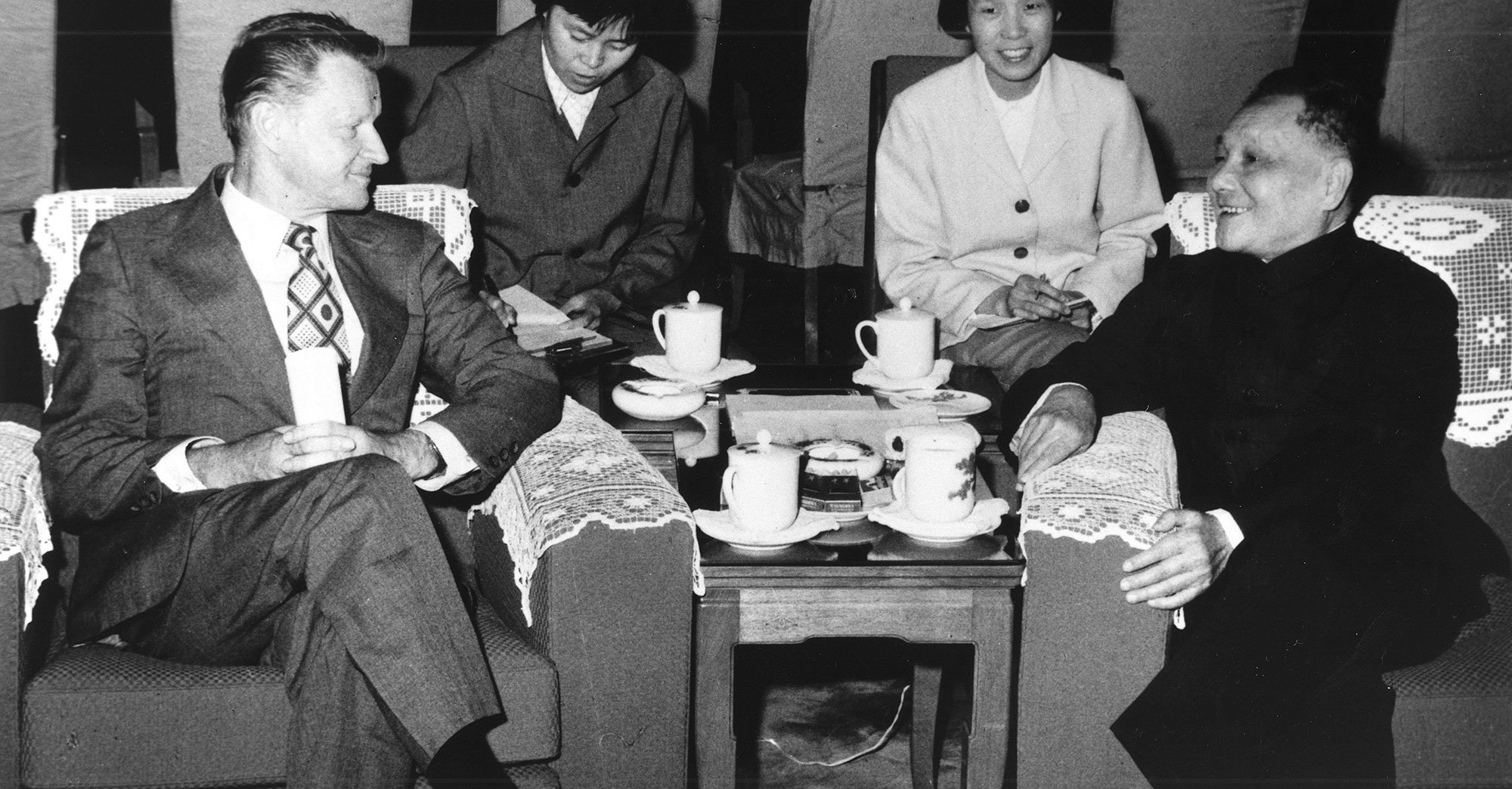
The third theme on which he focused was China. Even when China was relatively weak in the 1970s, Brzezinski believed in the strategic imperative of keeping China closer to the United States than it was to the Soviet Union, and later to Russia. A solid Russo-Chinese bloc would not only have tremendous global sway, but it would frustrate U.S. intentions around the globe. Although united formally by Marxism, even in the 1960s he reported seeing any number of reasons for rivalry and friction between them. In his later years, he came to see both the importance and possibility of reaching understandings with China.
"The Chinese are now more confident, full of pride, and justifiably so. So I’m not a pessimist, but I do worry occasionally that we have not asked ourselves often enough—which is what statesmen should ask themselves when dealing with others—how do my actions affect their actions?
He was especially intrigued by the Chinese approach to Central Asia, which China recently branded as “One Belt, One Road,” or “The Belt and Road Initiative. Although China relies largely on maritime links for its trade, it has begun to invest tens of billions of dollars in deepening its terrestrial ties all the way to Europe. As Brzezinski explains, “It’s an expansion westward by China which greatly increases Chinese access to the world as a whole, and indirectly to control over what was once part of the Soviet Union without in any way intimating that they’re seeking control over these parts and asserting their domination. And it’s very hard to resist. It seems legitimate. It seems appropriate. And in many respects, it is. But it alters the balance of power between China and Russia immensely.”
Brzezinski did not seek to favor China over Russia, although he often seemed more optimistic that understandings could be reached with the former than the latter. Still, he said:
On Global Order
The fourth theme that drew Brzezinski’s attention was the problem of declining global order. During the Cold War, the United States sought to stabilize the developing world in order to keep out communism. Brzezinski’s attention to ending apartheid in South Africa, to the Arab-Israeli conflict, and even to U.S.-Iran relations fell into this rubric. But the end of the Cold War brought with it an unexpectedly robust complexity. U.S. politics became increasingly unruly, and he talked about a “global political awakening, in which people are motivated all of a sudden very intensely, and act politically on behalf of sometimes fanatical causes religiously or ethnically or otherwise.” The problem, as Brzezinski saw it, was not merely that a wide array of long-simmering inter-state conflicts threatened to erupt. It was also the prospect that intra-state conflicts and non-state conflicts would thrust the world into turmoil.
He also became seized with global warming as a threat that would not be recognized until it was too late to stop. Speaking to an audience in Oslo in 2016, he worried openly about “the now increasingly vulnerable humanity” that would only act on climate after it was too late.
In his last decade, he became increasingly wedded to the study of “geostrategy,” which sought to weave together the dynamic field of geopolitics with the slow-changing constraints of history and geography. In his own words:
It was a study in which he was deeply engaged until his final month, with an energy, a curiosity, and an intellect that had been scarcely dimmed by the passage of time.
A Lifetime of Achievements
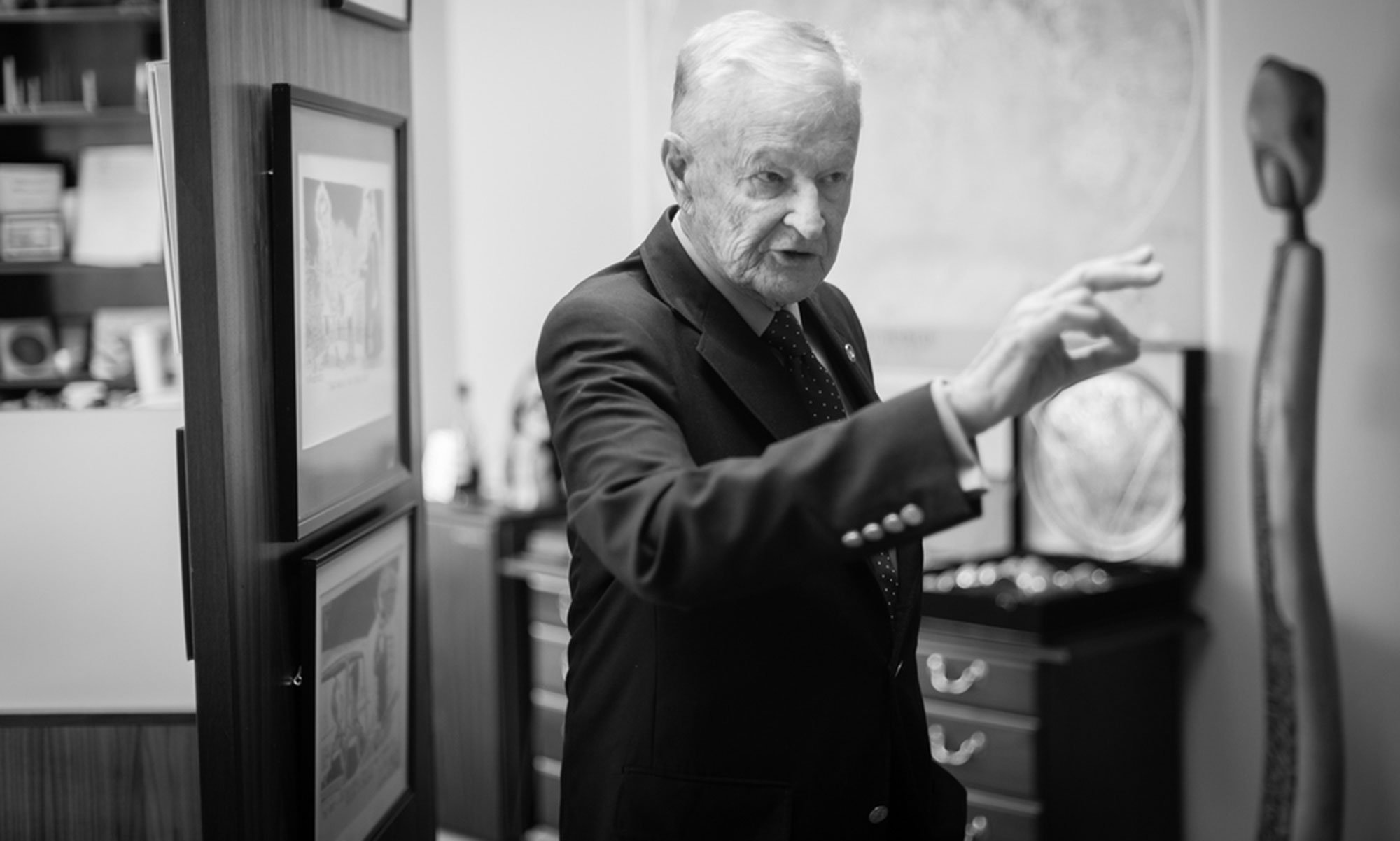
Dr. Brzezinski’s personal office is filled with notes of appreciation from presidents and premiers, some dating back more than 50 years. He received the Presidential Medal of Freedom, the U.S. Department of Defense’s Distinguished Public Service Award, Harvard’s Centennial Medal, and a number of honorary degrees from universities around the world.
Dr. Brzezinski’s body of work is so large, there is no complete record of it. A selection of some of his most important books, Congressional testimony and articles can be found under Sources & Credits at the end of the page.
Remembrances
Many who worked with Dr. Brzezinski wrote touching remembrances.
- Statement by Dr. John Hamre, CSIS President and CEO
- "Zbigniew Brzezinski: The Professor-Strategist," Charles Gati, Politico, December 28, 2017
- “Zbigniew Brzezinski and the untimely death of American statecraft,” Edward Luce, Financial Times, May 31, 2017
- “In Memoriam,” Dr. Jon B. Alterman, CSIS Zbigniew Brzezinski Chair in Global Security and Geostrategy
- “Zbigniew Brzezinski,” James Fallows, The Atlantic, May 27, 2017
Chronology
Sources & Credits
- Strategic Vision: America and the Crisis of Global Power (Basic Books, 2012)
- America and the World: Conversations on the Future of American Foreign Policy, co-authored with Brent Scowcroft (Basic Books, 2008)
- Second Chance: Three Presidents and the Crisis of American Superpower (Basic Books, 2007)
- The Choice: Global Domination or Global Leadership (Basic Books, 2004)
- The Geostrategic Triad: Living with China, Europe, and Russia (Center for Strategic & International Studies, 2000)
- The Grand Chessboard: American Primacy and Its Geostrategic Imperatives (Basic Books, 1997)
- Note: The Grand Chessboard was republished in December 2016 by Basic Books and includes a new epilogue.
- Out of Control: Global Turmoil on the Eve of the 21st Century (Collier Books, 1993)
- The Grand Failure: The Birth and Death of Communism in the Twentieth Century (Collier Books, 1990)
- Game Plan: A Geostrategic Framework for the Conduct of the U.S.-Soviet Contest (Atlantic Monthly Press, 1986)
- Power and Principle: Memoirs of the National Security Adviser, 1977–1981 (Farrar, Straus, Giroux, 1983)
- The Fragile Blossom: Crisis and Change in Japan (Harper and Row, 1972)
- Between Two Ages: America's Role in the Technetronic Era (Viking Press, 1970)
- Dilemmas of Change in Soviet Politics (Columbia University, 1969)
- Soviet Bloc: Unity and Conflict (Harvard University Press, 1967)
- Alternative to Partition: For a Broader Conception of America's Role in Europe (Atlantic Policy Studies, McGraw-Hill, 1965)
- Political Power: USA/USSR, co-authored with Samuel P. Huntington (Penguin Books, 1964)
- Totalitarian Dictatorship and Autocracy, co-authored with Carl J. Friedrich (Harvard University Press, 1956)
- The Permanent Purge: Politics in Soviet Totalitarianism (Harvard University Press, 1956)
- “Global Challenges and U.S. National Security Strategy,” Senate Armed Services Committee, January 21, 2015 (video)
- “Russia and Developments in Ukraine,” Senate Foreign Relations Committee, July 9, 2014 (video)
- “Implications of the Crisis in Ukraine,” Senate Foreign Relations Committee, January 15, 2014 (video)
- “US Strategy Regarding Iran,” Senate Foreign Relations Committee, March 5, 2009
- “Oil, Oligarchs, and Opportunity: Energy from Central Asia to Europe,” Senate Foreign Relations Committee, June 12, 2008
- “Strategic Assessment of U.S.-Russian Relations,” Senate Foreign Relations Committee, June 21, 2007
- “U.S. Involvement in Iraq,” Senate Foreign Relations Committee, February 1, 2007
- “The Lessons of Kosovo,” Senate Foreign Relations Committee, October 6, 1999
- “Trade Relations with China,” Senate Finance Committee, July 9, 1998 (video)
- “NATO Enlargement,” Senate Foreign Relations Committee, October 9, 1997
- “Why the World Needs a Trump Doctrine,” New York Times, February 20, 2017
- “How To Address Strategic Insecurity In A Turbulent Age,” The World Post, January 3, 2017
- “Brzezinski: America's Global Influence Depends On Cooperation With China,” The World Post, December 23, 2016
- “Toward a Global Realignment,” The American Interest, April 17, 2016
- “Russia must work with, not against, America in Syria,” Financial Times, October 4, 2015
- “Once a Hawk, Brzezinski Sees Hope for US-Russia Relations,” Politico, November 27, 2015
- “Interview with Zbigniew Brzezinski on Russia and Ukraine,” Der Spiegel, July 2, 2015
- “Zbigniew Brzezinski: Cooperation on Iran Deal Boosts US-China Ties,” The World Post, April 9, 2015
- “America's Global Balancing Act,” Project-Syndicate, January 21, 2015
- “It's Time for a New Opening to China,” Politico, November 6, 2014
- “A Time of Unprecedented Instability?,” Foreign Policy, July 21, 2014
- “Putin’s Three Choices on Ukraine,” Washington Post, July 8, 2014
- “What Obama Should Tell Americans about Ukraine,” Politico, May 2, 2014
- “Brzezinski's Rx for Keeping Ukraine Independent,” Wall Street Journal, April 30, 2014
- “Stand Firm, John Kerry: It’s Time for the Secretary of State to Insist on America’s Position on Middle East Peace,” with Frank Carlucci, Lee Hamilton, Carla A. Hills, Thomas Pickering, and Henry Siegman, Politico, April 8, 2014
- “Coping with Crimea, In Ukraine And Beyond,” The American Interest, March 6, 2014
- “What Is to Be Done? Putin’s Aggression in Ukraine Needs a Response,” Washington Post, March 3, 2014
- “Russia Needs a ‘Finland Option’ for Ukraine,” The Financial Times, February 2, 2014
- “Russia, like Ukraine, will Become a Real Democracy,” Financial Times, December 10, 2013
- Joint Letter to Senate Leaders Supporting Phased Negotiations with Iran, with Brent Scowcroft, November 18, 2013
- “The Steps that Obama Must Now Take on Syria,” The Financial Times, August 27, 2013
- “Syria: Intervention Will Only Make It Worse,” Time Magazine, May 8, 2013
- “China and America in a Post-Hegemonic Age,” New Perspective Quarterly, April 19, 2013
- “The Cyber Age Demands New Rules of War,” Financial Times, February 24, 2013
- “Giants, but Not Hegemons,” New York Times, February 13, 2013.
- “The Stupidest War? Iran Should Be Key Topic at Hearings,” Washington Post, January 3, 2013
- “In defense of Chuck Hagel,” with James L. Jones, Brent Scowcroft, and Frank Carlucci, Washington Post, December 26, 2012
- “Obama’s Moment: How the President Can Seize Back the Initiative on Foreign Policy,” Foreign Policy, December 4, 2012
- “America’s Foreign Policy Is Ill-Served by Its Election,” Financial Times, October 25, 2012
- “The West Needs a Long-Term Sense of Purpose,” New Perspectives Quarterly, Vol. 29, No. 2 (Spring 2012)
- “Balancing the East, Upgrading the West: U.S. Grand Strategy in an Age of Upheaval,” Foreign Affairs, (January - February 2012)
- “After America,” Foreign Policy, (January - February 2012)
- “8 Geopolitically Endangered Species,” Foreign Policy (January - February 2012)
- “Three Reconciliations,” The American Interest, Vol. 7, No 3 (December 2011)
- “How the US can Secure the New East,” The Diplomat, February 16, 2012
- “The Global Need for a Revitalized United States,” The Fletcher Forum of World Affairs, Vol. 36, No. 1 (Winter 2012)
- “As China Rises, a New U.S. Strategy,” Wall Street Journal, December 14, 2011
- “Toward a Global Political Culture,” New Perspectives Quarterly, Vol. 28, No. 4 (Fall 2011)
- “How to Stay Friends with China,” New York Times, January 2, 2011
- “To Become an Occupying Power Is a Strategic Defeat,” New Perspectives Quarterly, Vol. 27, No. 1 (Winter 2010)
- “America and China’s First Big Test,” Financial Times, November 23, 2010
- “Israeli Settlements Threaten US Security,” New Perspectives Quarterly, Vol. 27, No. 3 (Summer 2010)
- “From Poland's Tragedy, Hope for Better Ties with Russia,” Time Magazine, April 15, 2010
- “To Achieve Mideast Peace, Obama Must Make a Bold Mideast Trip,” with Stephen Solarz, Washington Post, April 11, 2010
- “What Richard Cohen Got Wrong about my Iran Views,” The Washington Post, 24 February 24, 2010
- “From Hope to Audacity: Appraising Obama's Foreign Policy,” Foreign Affairs (January - February2010)
- “Revisiting the Political Motives of Terrorism,” Center for Strategic and International Studies, January 6, 2010
- “Clash of the Titans,” with John J. Mearsheimer, Foreign Policy, No. 146, October 22, 2009
- “Dim Prospects in Afghanistan,” Christian Science Monitor, September 8, 2009
- “NATO and World Security,” New York Times, August 19, 2009
- “Russia Must Re-Focus With Post-Imperial Eyes,” Financial Times, July 1, 2009
- “A Tale of Two Wars: The Right War in Iraq, and the Wrong One,” Foreign Affairs (May - June 2009)
- “An Agenda for NATO: Toward a Global Security Web,” Foreign Affairs September-October 2009)
- “Major Foreign Policy Challenges for the Next US President,” International Affairs, Vol. 85, No. 1 (January 2009)
- “The Group of Two That Could Change the World,” Financial Times, January 13, 2009
- “The Global Political Awakening,” New York Times, December 16, 2008
- “Obama and the Arab-Israeli Peace,” with Brent Scowcroft, Washington Post, November 21, 2008
- “Putin's Imperial Designs Are Reminiscent of Stalin's,” New Perspectives Quarterly, Vol. 25, No. 4 (Fall 2008)
- “Staring Down the Russians,” Time Magazine, August 14, 2008
- “A Sensible Path on Iran,” with William Odom, Washington Post, May 27, 2008
- “Putin's Choice,” Washington Quarterly, Vol. 31, No. 2 (April 2008)
- “How to End the War,” Washington Post, March 30, 2008
- “Bush Must Dispense Bitter Pills for Peace,” Financial Times, January 8, 2008
- “Une Nouvelle Vision Pour L’Amerique et l’Europe,” with Isabelle Hausser, Commentaire, Vol. 30, No. 117 (Spring 2007)
- “A Partner for Dealing with Iran?,” Washington Post, November 30, 2007
- “Failure Risks Devastating Consequences,” with Thomas R. Pickering, Lee Hamilton, Carla Hills, Nancy Kassebaum-Baker, Brent Scowcroft, Theodore C. Sorensen, and Paul Volcker, New York Review of Books, Vol. 54, No. 17 (November 8, 2007)
- “How to Avoid a New Cold War,” Time Magazine, June 7, 2007
- “Terrorized by 'War on Terror,'” Washington Post, March 25, 2007
- “A Road Map Out of Iraq,” Los Angeles Times, February 11, 2007
- “Four Steps Towards Calming the Chaos in Iraq,” Financial Times, February 1, 2007
- “Five Flaws in the President's Plan,” Washington Post, January 12, 2007
- “There Is Much More at Stake for America than Iraq,” Financial Times, December 4, 2006
- “The Beginning of the End for Israel?” New Perspectives Quarterly, Vol. 23, No. 4 (Fall 2006)
- “A Dangerous Exemption,” in “The War Over Israel's Influence,” with John J. Mearsheimer, Stephen M. Walt, Aaron Friedberg, Dennis Ross, and Shlomo Ben-Ami, Foreign Policy, No. 155 (July - August 2006)
- “Been There, Done That: Talk of a U.S. Strike on Iran Is Eerily Reminiscent of the Run-Up to the Iraq War,” Los Angeles Times, April 23, 2006
- “It Is Time to Plan for an American Withdrawal from Iraq,” Financial Times, April 18, 2006
- “The Real Choice in Iraq,” Washington Post, January 8, 2006
- “Do These Two Have Anything in Common?” Washington Post, December 4, 2005
- “George W. Bush's Suicidal Statecraft,” New York Times, Vol. 23, No. 1 (October 13, 2005)
- “From Bush, Mideast Words to Act On,” with William B. Quandt, Washington Post, June 17, 2005
- “Russian Roulette,” Wall Street Journal, March 29, 2005
- “Iran: Time for a New Approach: Report of an Independent Task Force Sponsored by the Council on Foreign Relations,” Council on Foreign Relations, July 19, 2004 (Co-Chaired by Zbigniew Brzezinski and Robert M. Gates; with Suzanne Maloney as Project Director)
- “Americki Izbor: Globalna Dominacija Ili Globalno Vodstvo,” with Davor Boban, Politicka Misao, Vol. 41, No. 3 (2004)
- “How to Make New Enemies,” New York Times, October 25, 2004
- “Moscow's Mussolini,” Wall Street Journal, September 20, 2004
- “Hostility to America Has Never Been So Great,” New Perspectives Quarterly, Vol. 21, No. 3 (July 9, 2004)
- “America's Policy Blunders Were Compounded By Britain,” Financial Times, August 5, 2004
- “Know Thine Enemies” The American Prospect, July 16, 2004
- “Lowered Vision,” The New Republic, May 28, 2004
- “The Wrong Way To Sell Democracy To The Arab World,” New York Times, March 8, 2004
- “Hegemonic Quicksand,” National Interest (Winter 2003-2004)
- “Pour une Nouvelle Stratégie Américaine de Paix et de Sécurité,” Politique Etrangère, Vol. 68, No. 3/4 (Fall-Winter 2003)
- “To Lead, U.S. Must Give Up Paranoid Policies,” International Herald Tribune, November 15, 2003
- “Another American Casualty: Credibility,” Washington Post, November 9, 2003
- “Address to the New American Strategies for Security and Peace Conference [Titled “A Must-Read Speech” in American Prospect”],” American Prospect, October 31, 2003
- “China and America in the Changing World,” Harvard Asia Pacific Review, Vol. 7, No. 1 (Summer 2003)
- “Iraq and US Global Leadership,” New Perspectives Quarterly, Vol. 20, No. 2 (May 2003)
- “Why Unity Is Essential,” Washington Post, February 19, 2003
- “A ‘Road Map’ For Israeli-Palestinian Amity,” with Brent Scowcroft, Wall Street Journal, February 13, 2003
- “Cyrus Vance,” New York Times, February 2, 2003
- “The End Game,” Wall Street Journal, December 23, 2002
- “Carter’s Winning Presidency,” with Stuart E. Eizenstat, Washington Post, October 22, 2002
- “Confronting Anti-American Grievances,” New York Times, September 1, 2002
- “If We Must Fight Iraq, Let's Get It Right,” Washington Post, August 22, 2002
- “Paradigms and Priorities of Hegemony,” with Samuel Huntington, Francis Fukuyama, George Soros, and Hillary Clinton, New Perspective Quarterly, Vol. 19, No. 2, (Spring 2002)
- “Moral Duty, National Interest,” New York Times, April 7, 2002
- “NATO Should Remain Wary of Russia,” Wall Street Journal, November 28, 2001
- “A New Age of Solidarity? Don’t Count on It,” Washington Post, November 2, 2001
- “The Primacy of History and Culture,” Journal of Democracy, Vol. 12, No. 4 (October 2001
- “A Plan for Political Warfare,” Wall Street Journal, September 25, 2001
- “Avoiding a New Cold War with China,” New Perspectives Quarterly, Vol. 18, No. 3 (Summer 2001)
- “Can Communism Compete With the Olympics? The Beijing Games May Help a Regime Change,” New York Times, July 14, 2001
- “Bush Must Give Europe a New Sense of Direction,” Wall Street Journal, June 12, 2001
- “NATO and EU Need To Grow Together,” New York Times, May 17, 2001
- “The Geostrategic Triad: Living with China, Europe, and Russia,” CSIS Significant Issues Series, December 18, 2000
- “Living With Russia,” The National Interest, Fall 2000
- “Living With a New Europe,” with Daniel Vernet, Christoph Bertram, and Timothy Garton Ash, The National Interest (Summer 2000)
- “As Clinton Courts Russia’s Autocrats, Russians Suffer,” Wall Street Journal, August 29, 2000
- “Living With China,” The National Interest, Spring 2000
- “Indulging Russia Is Risky Business,” New York Times, May 31, 2000
- “War and Foreign Policy, American Style,” Journal of Democracy, Vol. 11, No. 1 (January 2000)
- “War and Football,” Washington Post, January 7, 2000
- “A Genocide, a Political Coup. Some Democracy,” Wall Street Journal, January 4, 2000
- “Why Milosevic Cracked,” Prospect, November 20, 1999
- “Russia Would Gain by Losing Chechnya,” New York Times, November 19, 1999
- “Why the West Should Care About Chechnya,” Wall Street Journal, November 10, 1999
- “Why Milosevic Capitulated in Kosovo,” New Leader, Vol. 82, No. 11 (September 20 - October 4, 1999)
- “Bombshells Lurk in the Russian Scandal,” Wall Street Journal, September 3, 1999
- “Why Washington Should Stick to Its ‘One China’ Policy,” Wall Street Journal, July 27, 1999
- “End Shootouts,” New York Times, July 18, 1999
- “...NATO Must Stop Russia’s Power Play,” Wall Street Journal, June 14, 1999
- “Compromise Over Kosovo Means Defeat,” Wall Street Journal, May 24, 1999
- “In Kosovo, U.S. Cannot Avoid Grim Choices,” Wall Street Journal, March 24, 1999
- “Standing Alone in the Turbulence,” Chicago Tribune, February 19, 1999
- “NATO: The Dilemmas of Expansion,” National Interest, No. 53 (Fall 1998)
- “Pol Pot’s Evil Had Many Faces; China Acted Alone,” New York Times, April 22, 1998
- “Disruption without Disintegration,” Journal of Democracy, Vol. 9, No. 1 (January 1998)
- “Advocate, Not Lobbyist,” New York Times, October 5, 1997
- “A Strategy for Eurasia,” Foreign Affairs, Vol. 76, No. 5 (September – October 1997)
- “For a New World, a New NATO,” with Anthony Lake, New York Times, June 30, 1997
- “Differentiated Containment,” with Brent Scowcroft and Richard Murphy, Foreign Affairs, Vol. 76, No. 3 (May - June 1997)
- “The New Challenges to Human Rights,” Journal of Democracy, Vol. 8, No. 2 (April 1997)
- “Ukraine's Critical Role in the Post-Soviet Space,” Harvard Ukrainian Studies, No. 20 (1996)
- “Geopolitical Pivot Points,” Washington Quarterly, Vol. 19, No. 4 (Autumn 1996)
- “Voice of Reason From Moscow,” Washington Post, August 18, 1996
- “Let’s Add 4 to the G-7,” New York Times, June 25, 1996
- “The New Dimensions of Human Rights,” Ethics & International Affairs. Vol. 10, No. 1 (March 1996)
- “Fifty Years After Yalta: Europe and the Balkan’s New Chance,” Balkan Forum, Vol. 3, No. 2 (1995)
- “Give Them Arms and Dignity,” with David Howell, Independent, July 21, 1995
- “A Plan for Europe: How to Expand NATO,” Foreign Affairs, Vol. 74, No. 1 (January-February 1995)
- “The Illusion of Control,” in Peacemaking, Moral and Policy Challenges for a New World, Edited by G.F. Powers, D. Christiansen, and R.T. Hennemeyer (Washington, DC: United States Catholic Conference, Inc., 1994)
- “NATO--Expand or Die?” New York Times, December 28, 1994
- “Facing Up to Consequences of a Castro Crash Landing,” Los Angeles Times, September 7, 1994
- “A Short Solution,” New York Times, July 24, 1994
- “Getting Real on Central Europe,” New York Times, June 28, 1994
- “A Good Decision; Now the Hard Part,” with Michel Oksenberg, Los Angeles Times, June 7, 1994
- “Normandy Evasion,” Washington Post, May 3, 1994
- “The Untimely Exclusion of Germany and Russia from a Friendly Fete,” New York Times, May 2, 1994
- “The Premature Partnership,” Foreign Affairs, Vol. 73, No. 2 (March-April 1994)
- “The Great Transformation,” National Interest, No. 33 (October 1993)
- “Never Again’--Except for Bosnia,” New York Times, April 25, 1993
- “The Cold War and Its Aftermath,” Foreign Affairs, Vol. 71, No. 4 (Fall 1992)
- “Order, Disorder, and U.S. Leadership,” The Washington Quarterly, Vol. 15, No. 2 (Spring 1992)
- “The West Adrift: Vision in Search of a Strategy,” Washington Post, March 1, 1992
Zbigniew Brzezinski
Former CSIS Counselor and Trustee
Zbigniew Brzezinski was a prolific author and scholar. He contributed books, articles, and testimonies for CSIS over many decades of service. To see a full list of his work from CSIS, see Sources & Credits above.