Manila Strategy Forum 2026
September 9 – 10, 2026
Hosted by Southeast Asia Program
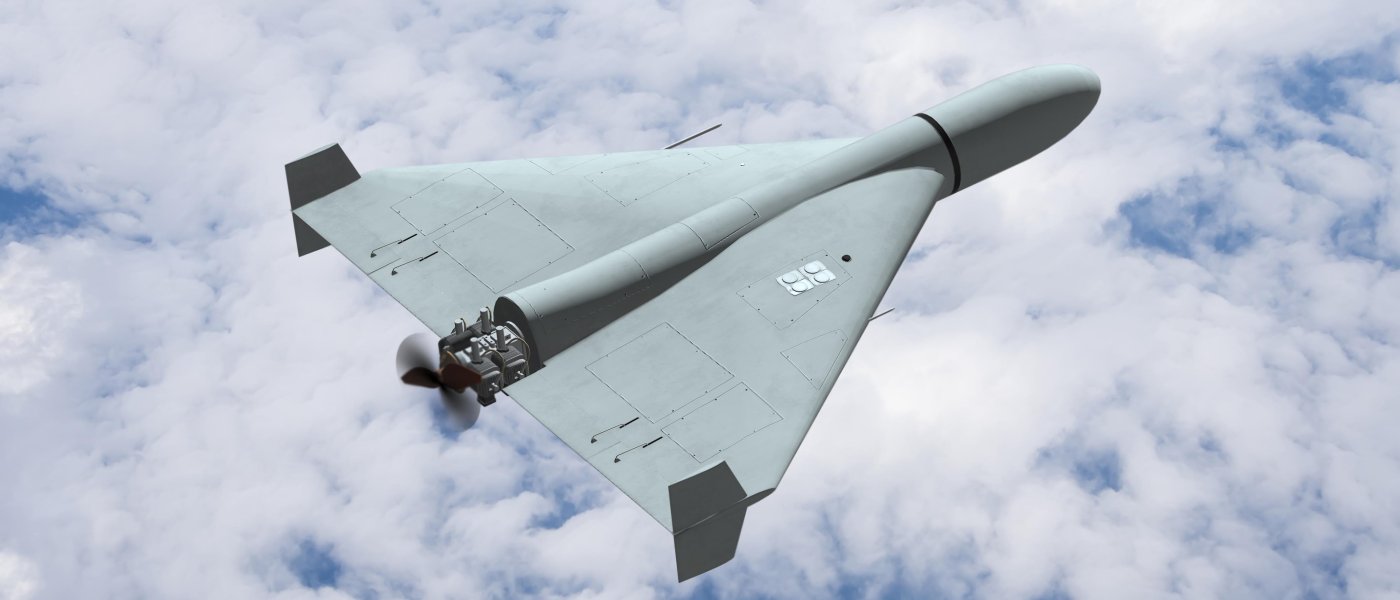
Photo: Anelo/Adobe Stock
The defining challenge posed by Russia’s Geran program is the speed at which Russia can learn and adapt. Since acquiring the original Shahed design, Russia has treated the Geran as a continuously evolving platform, rapidly modifying its navigation, communications, payloads, propulsion, and tactics in response to changing Ukrainian defenses. Improvised modifications are tested in combat, successful solutions are standardized and scaled, and unsuccessful experiments are quickly discarded. This creates a continuous adaptation cycle in which battlefield feedback drives production decisions at a cadence measured in weeks rather than years. The Geran therefore illustrates a broader shift in modern weapons development: Advantage increasingly depends not on building the most advanced system at the outset, but on maintaining the organizational and industrial capacity to continuously iterate a system after it has entered combat. The central question is whether the United States is structured to compete with this model of rapid wartime adaptation.
The Shahed-class one-way attack drone has emerged as one of the defining assets of contemporary conflict. Originally developed by Iran and first deployed by Houthi insurgents against the Saudis in 2019, the system has since been replicated by a growing number of militaries and defense firms, including the United States, which deployed its Low-Cost Uncrewed Combat Attack System (LUCAS) for the first time in Operation Epic Fury, and China, which unveiled its Shahed copycat Feilong-300D at an air show in 2024. The Shahed’s expansive range, low cost, and high lethality against fixed targets have made its basic concept of a cheap, propellor-driven, delta-winged airframe carrying a substantial warhead over hundreds of miles a fixture of nearly every serious conversation about the future of strike warfare.
But the country that has most thoroughly mastered the Shahed is not the one that built it. Since acquiring the original design from Iran in 2022, Russia has used its license-built variant, designated the “Geran,” as a base platform for unprecedented wartime iteration. What distinguishes the Geran is not its technical sophistication, but how rapidly Russia has reconfigured the drone’s subsystems to adapt to changing battlefield conditions.
The Geran’s evolution over four years of combat in Ukraine offers one of the clearest views into what modern drone warfare looks like at the production level. It reflects rapid iteration cycles, parallel factories running competing design programs, integration of commercial off-the-shelf electronics from Chinese markets, and ad hoc modifications adopted as formal subsystems. More importantly, it reveals a model of wartime innovation built around speed, adaptation, and continuous feedback from the battlefield. This is a model that the United States is not currently structured to match, despite its efforts in the LUCAS program to replicate Russia’s success.
In mid-August 2022, roughly six months after launching its full-scale invasion of Ukraine, Russia received its first shipment of Iranian-made Shahed-136 and Shahed-131 attack drones. The first publicly documented use of the Shahed-136 in Ukraine came a month later, when Ukrainian forces recovered the wreckage of a drone near Kupiansk on September 13. Although the drone was of Iranian origin, the recovered airframe was marked with the model name “Geran-2,” the Russian designation for the Shahed-136, and the series letter “M.” Later in 2023, Russian engineers introduced two more domestic variants marked “Ы” and “К.”
The Geran-M featured a delta airframe, 11.5 feet long with an 8.2-foot wingspan, made of fiberglass lined with carbon fiber and Nomex honeycomb—a heat-resistant composite that is both stiff and light. It carried a 50-horsepower piston engine produced by the Iranian company Oje Parvaz Mado Nafar Company (Mado), which has been sanctioned by both the United States and the European Union for providing engines for unmanned aerial vehicles to the Islamic Revolutionary Guard Corps (the engine itself is a reverse-engineered clone of the German Limbach L550E).
The M series was also equipped with a Nasir satellite receiver and a Sadra navigation unit, both of Iranian design, which combined global navigation satellite system (GNSS) capabilities with an inertial measurement unit to keep the system from straying too far from its preprogrammed route when the satellite signal was compromised. Its payload was a 118-pound two-stage penetrator warhead of Iranian origin, designed to punch through armor before detonating a main charge.
About two months after the Geran-M appeared in Ukraine, a delegation of Russian defense industry representatives traveled to Iran to finalize a $1.75 billion deal authorizing production of the drone on Russian soil—specifically, at the Alabuga Special Economic Zone (SEZ) in the Republic of Tatarstan.
The Alabuga SEZ had been originally founded in 2006 with the goal of attracting investment from Western companies. But when those companies started pulling out of the region at the onset of the war in Ukraine, Alabuga pivoted to producing drones for Russia’s military. In the initial stages of the contract, Alabuga would receive components for assembly directly from Iran, making the first batch of Gerans to emerge from the facility virtually identical to the “M” variant with the exception of the letter “Ы” painted on the wingtips.
While Alabuga has become synonymous with production of the Geran, it is not Russia’s only domestic drone production facility. In 2023, JSC Izhevsk Electromechanical Plant Kupol, a subsidiary of state-owned defense firm Almaz-Antey, began operating a parallel production site in Izhevsk. The Kupol model, denoted by the letter “К” and also referred to as the Garpiya, saw several design modifications, mostly driven by Russia’s desire to reduce dependency on foreign components.
The Nomex honeycomb airframe lining was replaced with a thick foam layer sandwiched between what appears to be a carbon fiber–reinforced polymer coating. This kind of composite sandwich is used extensively in aerospace, valued for its strength and light weight, but similar polyurethane-foam structures have also been shown to mask radar signatures, a plausible explanation for the change.
The Iranian Mado engine was swapped for one of two Chinese copies of the same German Limbach design in a supply-chain hedge, while the Iranian Nasir satellite receiver was replaced with Russia’s Kometa-M4, integrated into a larger B-105 navigation module and moved inside the airframe. The original Iranian flight controller, comprising eight layers of circuit boards, was replaced with the Russian B-101, a four-layer design with 3D-printed supports and an integrated inertial measurement unit. The warhead shifted from the Iranian penetrator to the Russian BSF-50, a fragmentation-high-explosive design wrapped in tungsten balls for additional shrapnel.
The nature of the relationship between the two production sites, and whether they function more as competitors or collaborators, is not entirely clear. But when comparing the factories’ respective outputs—which would gradually expand beyond the variants Ы and К to include variants КБ, Ъ, КЦ, Э, and КК—two distinct development philosophies emerge.
Drones built in Izhevsk tend to be of higher production quality, while Alabuga models tend to be scrappier and strapped with ad hoc solutions to problems on the battlefield. In November 2023, for instance, Geran drones began appearing in black paint, allowing them to camouflage against the dark sky in night attacks. While К-series drones were painted uniformly, Ы models were initially only painted on their undersides, a half measure indicating the change had not yet been standardized.
That same month, a Geran-Ы drone was deployed with a 4G modem in a 3D-printed box taped to the outside of its tail fin along with two antennas and a portable power bank. This was not a formal modification—it was a hack, something built on a workbench, possibly by students at Alabuga Polytech, and taped onto a production drone before launch.
Over the years that followed, engineers at Alabuga would treat the Geran as a platform for innovation, testing new systems, serializing what worked and discarding what did not. Production would continue in parallel in Izhevsk. At times the sites would diverge, arriving at two different solutions to the same problem in the field. Other times they would converge on the same solution, indicating some level of coordination between the two programs.
The single clearest illustration of the Geran’s rapid development cycle is the progression of its satellite-navigation antennas to make it increasingly resilient to methods of electronic warfare (EW). EW involves jamming or spoofing GNSS signals to navigation systems and throwing unmanned systems off course. A Ukrainian Air Force official claimed in early 2026 that EW systems can neutralize nearly half the Geran drones launched in some night attacks.
Controlled reception pattern antenna (CRPA) technology is Russia’s best technical countermeasure against EW so far. Units such as the Kometa-M, Russia’s homegrown CRPA series, use several antenna elements to neutralize signal interference from multiple directions. EW resilience scales linearly with the number of elements: The four-element Kometa-M4 can resist three sources of interference, the eight-element Kometa-M8 can resist seven, and so on.
From 2023 to 2025, the number of antenna elements carried by the Geran grew exponentially. The original Iranian Nasir carried four antenna elements. The Nasir was swapped out for Russia’s Kometa-M4—another four-element unit—in mid-2023. Other Russian weapons systems were flying with the eight-element Kometa-R8 by March 2024. While it is unclear whether the Geran received the same upgrade, Ukraine’s monthly interception rate of Geran drones climbed from 77 percent in February 2024 to a high of 97 percent that May, and in what appears to be a Russian technical report on the Kometa-R8 published later that year (shared on Telegram by a Ukrainian analyst), the authors attribute the high interception rate to a flaw in the Kometa’s design. Where the original design apparently comprised two Kometa-M4 modules placed side by side, the authors of the report recommend an alternative configuration, with eight antenna elements arranged in a circle. A circular model was in use on the Geran by January 2025. And for the first time, the CRPA was a product not of Iran or Russia but of China.
This was the beginning of a spell of rapid-fire iteration. By March 2025, there was a 16-element version of the Chinese module, its antennas configured in two concentric rings. Another three months passed and a new Chinese variant emerged, this time with 16 antennas in a four-by-four array. Meanwhile, Gerans began to fly with the Kometa-M8 in addition to the new Kometa-M12, which featured 12 antenna elements in a three-by-four grid. By the end of 2025, Izhevsk drones were flying with the Kometa-M16—an unusual geometry of 16 patch antennas spread across three rows.
The plants at Izhevsk and Alabuga showed diverging supply chain preferences throughout this period, with the former leaning heavily on Russian Kometa modules and the latter importing units from China after exhausting its initial supply of Iranian Nasirs. But they still iterated at a similar cadence, suggesting that engineers at both sites were responding directly to improvements in Ukrainian EW.
The antenna counts trace the Ukrainian jamming curve. Every time Ukrainian EW got better at interfering with GPS signals, Russian and Chinese suppliers answered with more antenna elements and novel geometries. The cycle ran faster than any Western procurement program could plausibly match.
Ukraine’s anti-air defenses were not limited to EW tactics, and Russia’s attempts to thwart these defenses did not stop at CRPAs. While some Russian engineers were experimenting with increased antenna counts, others were trying out new ways of communicating with the drone mid-flight.
The earliest Gerans operated under fire-and-forget logic. They followed preprogrammed flight paths, relied on contested satellite signals to reach their targets, and had no way of communicating back to operators whether the mission had been a success.
The first attempt to establish communication between drone and operator came in November 2023, when the Geran carrying a 4G modem in a 3D-printed box taped to the outside of one winglet was found. Ukrainian analysts theorized that the module was intended to transmit the drone’s location over a Ukrainian cellular network mid-flight. If transmission cut out before the drone reached its target, Russian operators could infer the presence of anti-air defenses at the last transmitted location and program future Gerans to fly around the area. Several months later, another drone reportedly paired a 4G modem with a video camera attached to the top of the airframe, unlocking visual reconnaissance capabilities.
The success of these initial experiments was confirmed in early 2025. Ukrainian military intelligence shared that the Geran-2 series Ы and Ъ were flying with standardized telemetry modules. The formalized solution consisted of a Raspberry Pi minicomputer and two 3G/LTE modems produced by Chinese telecommunications firm ZTE. The modems carried both Russian and Ukrainian SIM cards for redundancy, a clear upgrade to the original design, which only contained a Ukrainian Kyivstar SIM card. By June 2025, almost all Gerans were flying with the new telemetry module taped outside the airframe, and by the end of that year, the unit seemed to have earned a place inside the body with the rest of the electronics. With that, the ad hoc solution had been incorporated into the drone’s design as a formal subsystem. The field experiment had become a production feature, still present in the Geran today.
Equally telling are the experimental systems that are seen once or twice before falling to the wayside. In September 2024, Ukrainian media reported a Geran-Ы had been downed with a Starlink terminal onboard. Like the modem that came before it, this appears to have been an experiment from Alabuga. Unlike the modem, Starlink did not become a serialized solution.
The Geran’s communication capabilities underwent another major shift in the summer of 2025, when Russians began equipping the drone with mesh radio network modems. The mesh radio XK-F358, produced by Chinese firm Xingkai Tech, transformed every drone that carried it into a signal repeater for other units nearby, forming an airborne network that facilitated not only the transmitting of information about air defenses and potential targets but also remote operator control in real time. Data could now be transmitted between an operator on the ground and a unit in the air via a “chain” of network nodes. If a link in the chain became compromised, the signal could dynamically reroute through another neighboring node, making the communication channel remarkably resilient (as long as there were enough nodes nearby). The effectiveness of the communication system was entirely dependent on the network’s density, making it difficult to deploy improvisationally. It tracks, then, that the modems were quickly scaled up. By early 2026, Gerans of all series were participants in the sprawling communication network, a testament to Russia’s ability to aggressively scale and synchronize across production sites when necessary.
The technical upgrade was accompanied by new tactics. Gerans were spotted flying in circles to act as radio repeaters and transmit control commands from operators in Russia deeper into Ukrainian territory.
Modems were also paired with a broad range of cameras, attached to the Geran in diverse configurations. Camera models ranged from cheap, off-the-shelf security cameras to the sophisticated Honpho TS130C-01 with long-wave infrared capabilities, a laser rangefinder covering up to two miles, and built-in computer vision. They were carried facing forward underneath the drone’s nose, sitting atop the nose and facing the rear, lodged inside the nose tip, and sticking up from a hole cut into the top of the nose. At least one version carried two cameras, one facing forward and the other backward; this model was armed with an air-to-air missile to take down interceptor drones and helicopters, and the positioning of the two cameras on the missile’s mount suggests a synthesis of innovation across component types.
With that, the Geran was no longer purely a preprogrammed munition flying to a fixed coordinate. It had become a remotely-piloted strike aircraft that could loiter, observe, identify targets, and be redirected mid-mission by an operator watching a live video feed—a fundamentally different weapon than the one that first appeared in Ukrainian skies in 2022.
As electronics grew more capable, the Geran’s payloads also grew heavier and more diverse.
The progression of the warhead was relatively straightforward. The original 118-pound Iranian penetrator gave way to the Russian 110-pound BSF-50 fragmentation warhead on the Geran-Ы and to the 115-pound BST-52 shaped-charge-incendiary on the К and КБ. By January 2025, two new 115-pound warheads had been introduced on the Ы—the OFZBCh-50 fragmentation-high-explosive-incendiary and the TBBCh-50M thermobaric, both of which were lined with metal balls for shrapnel. Before long, the Alabuga plant had expanded into nearly 200-pound explosives, arming the Ъ with the KOFZBCh-90 cumulative-fragmentation-high-explosive-incendiary unit. Izhevsk had a different approach, stacking two BST-52 warheads back-to-back in the fuselage for an almost 230-pound combined payload—a rare case of Izhevsk opting for an ad hoc solution while Alabuga took a more conventional route.
In 2025, Russia began experimenting with auxiliary munitions attached to the Geran for mid-flight release. Some, including the PTM-3 anti-tank mines carried under the wings, seemed intended to attack secondary targets en route to the final destination. Others, such as the R-60 air-to-air missile mounted on the drone’s fuselage, or the Verba man-portable air defense missile carried in addition to a primary warhead, were used to fend off anti-aircraft helicopters and interceptors. These new payloads spurred further improvisation: Within four months of the first R-60 on a Geran, drones were flying with decoy missiles to further complicate Ukrainian threat assessment. And in perhaps the most unusual case, in March 2026, a Geran was spotted carrying two first-person view drones on top of the airframe for mid-flight release. This highlights how even a technically primitive modification can radically transform the Geran’s role on the battlefield: With the addition of two drone mounts, the platform had become a drone mothership.
For most of the Geran’s life cycle, Russian engineers treated the drone as a chassis onto which new subsystems were hung without changing the structure of the chassis itself. All of the modifications described above, from novel payloads to increasingly EW-resistant satellite antennas, were implemented within and around the original Iranian airframe. This modular and incremental approach enabled Russia to achieve unprecedented wartime innovation. It allowed the drone’s subsystems to evolve in parallel and rapidly adapt to new battlefield conditions. But it also meant there was a ceiling for the performance gains any one modification could deliver.
This trade-off became particularly evident in Russia’s efforts to increase the Geran’s flight speed. As with many of the changes described above, the upgrade was motivated by increasingly effective Ukrainian anti-aircraft defenses. A faster Geran enabled by a turbojet engine could outrun interceptors and present a smaller window in which Ukrainian defenses could respond.
The first Geran to swap out its piston engine for a jet engine was of Iranian origin. Designated Shahed-238, this model was deployed in Ukraine as early as January 2024. It would be another year before Ukrainian military intelligence reported that Russia was setting up a domestic production line for the jet-powered Geran. This domestic variant, dubbed the Geran-3, was equipped with a Chinese Telefly JT80 turbojet engine that pushed it to speeds of up to 300 miles per hour—twice the maximum speed of the Geran-2.
However, the new model faced a critical limitation. It was flying with the same airframe as its piston-powered predecessor, and lacked the structural strength to withstand the G-load that came with such high speeds. Russia was running up against the ceiling of what it could achieve by swapping out individual components. To continue to innovate its way out of Ukrainian defenses, it would need to redesign the Iranian airframe. To scale production of the new model, it would have to upend its production lines.
That is exactly what it did. The result was the Geran-4 and Geran-5.
These models were introduced in 2026 and have many subsystems in common with the Geran-2 and Geran-3. Like the Geran-3, both fly with a Chinese Telefly turbojet engine (but a different model with greater thrust). Where they differ is the airframe. The Geran-4 features a more aerodynamic variant of the original delta shape, plus a reinforced structure that allows it to withstand significant G loads. It can maneuver at speeds of 186–249 miles per hour and achieve a maximum speed of 311 miles per hour. The Geran-5, on the other hand, eschews the delta-winged design entirely for a structure more typical of a cruise missile.
In August 2026, Ukrainian Defense Intelligence reported that Russia had halted production of its jet-powered Geran-3 kamikaze drones. It previously cut back on its attack drone production as it reoriented production lines around the two new models. In one sense, this is a break in a pattern. But it is also consistent with the doctrine of constant reinvention that Russia has followed with the Geran since 2023. Russian engineers will likely continue to innovate in modular, incremental fashion on top of the Geran-4—one base platform is simply getting swapped out for another.
These iterations reveal a fundamentally different model of weapons development—one that prioritizes speed, experimentation, and continuous adaptation over traditional, requirements-driven acquisition. There are three patterns that stand out.
First, new modifications are scrappy in the beginning and built around commercial components. Taped-on modules, 3D-printed parts, Chinese consumer electronics—all of these features are ways to iterate fast and not to be afraid of imperfection. Field experiments are encouraged and the most successful experiments are adopted and scaled rapidly, while less effective solutions are quickly discarded.
Second, iteration is driven by battlefield feedback rather than requirements documents. When Ukrainian jamming improved, antenna element counts went up. When interceptors began to pose a larger threat, the Geran got a jet engine to outrun them. Engineers did not set out to build the fastest or most EW-resilient system possible. They determined the minimum performance level needed to outmaneuver the enemy and delivered accordingly.
Third, the loop between what operators need and what engineers deliver is measured in weeks. Completed weapons move straight from production to the battlefield—one Geran shot down by Ukrainian forces on October 15, 2025, had its satellite receiver installed on October 8, meaning the unit was launched no more than one week after leaving the production line. There is no program office in that loop.
None of this is a tribute to Russian engineering brilliance. By most technical measures, the Geran drone is a crude weapon. Until 2026, its airframe remained unchanged from the original Iranian design. Its individual subsystems are, in isolation, unimpressive.
Russia’s achievement is not in any particular component, but in its approach to the underlying production and innovation model: two parallel factories competing on design, aggressive substitution of commercial off-the-shelf components, direct feedback from operators to engineers, permission for factory-floor modifications without lengthy requalification and certifications, and acceptance that a meaningful fraction of fielded units will be experimental.
Each of those practices runs into a specific constraint in the United States. U.S. programs of record are structured around single primes rather than competing production lines on the same platform. U.S. qualification standards treat integration of commercial components as a risk to be managed, not a normal engineering practice. U.S. acquisition rules treat fielded systems as finished products whose modifications require formal engineering change proposals. None of these features are accidents, and most of them exist for defensible reasons. But the combined effect is that U.S. manufacturers cannot iterate on a deployed strike drone at a cadence measured in days or weeks.
Kateryna Bondar is a senior fellow with the Wadhwani AI Center at the Center for Strategic and International Studies (CSIS) in Washington, D.C. Nicole Errera is a research assistant for the Wadhwani AI Center at CSIS.
The authors would like to thank Samuel Bendett, senior associate (non-resident) at CSIS, for his contributions to this research.
This brief is made possible by general support to CSIS. No direct sponsorship contributed to this report.

Report by Kateryna Bondar — April 13, 2026

Report by Kateryna Bondar — February 10, 2026

Commentary by Kateryna Bondar — March 10, 2026