Changing the Narrative on African Investment
September 15, 2026 • 9:00 – 9:30 am EDT
Hosted by Global Development

Photo: COLIN MURTY/POOL/AFP via Getty Images
On September 15, AUKUS—the trilateral security partnership between Australia, the United Kingdom, and the United States—turns five.
From the start, AUKUS has had outsized ambitions. When President Joe Biden announced the deal alongside Australian Prime Minister Scott Morrison and UK Prime Minister Boris Johnson in September 2021, he hailed it as a vital contribution to sustaining peace and stability in the Indo-Pacific region. The intent of the pact went even further, aiming to keep the Indo-Pacific free and open, bind three maritime democracies into a common industrial and strategic project, rejuvenate the submarine-building industry in all three countries, and, above all, complicate the calculus of the People’s Liberation Army Navy, which is now outbuilding the U.S. Navy in terms of number of hulls.
While there were initial questions surrounding whether AUKUS would receive support from administrations of very different political persuasions, in fact the ambitions and objectives of AUKUS have remained in place across a total of nine different administrations between Washington, Canberra, and London. In some ways, the original goals of the pact have grown, with current U.S. Secretary of State Marco Rubio calling the arrangement “almost a blueprint” for how Washington might build “consortium-like” partnerships with allies across defense, critical minerals, and emerging technology.
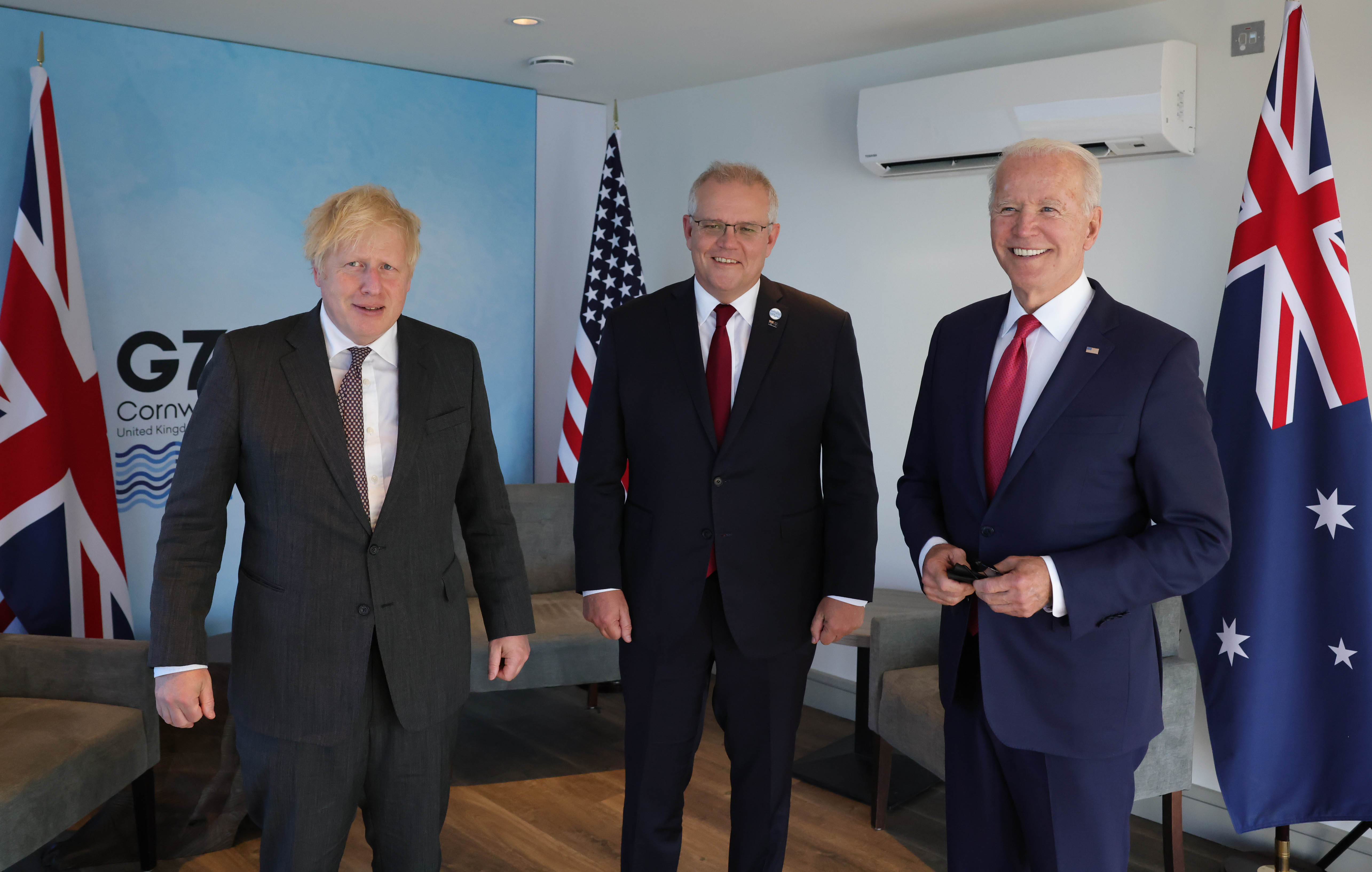
UK Prime Minister Boris Johnson, U.S. President Joe Biden, and Australian Prime Minister Scott Morrison during a meeting at the G7 Summit in Carbis Bay, Cornwall. Photo: Andrew Parsons / No 10 Downing Street/UKinUSA/via Flickr.
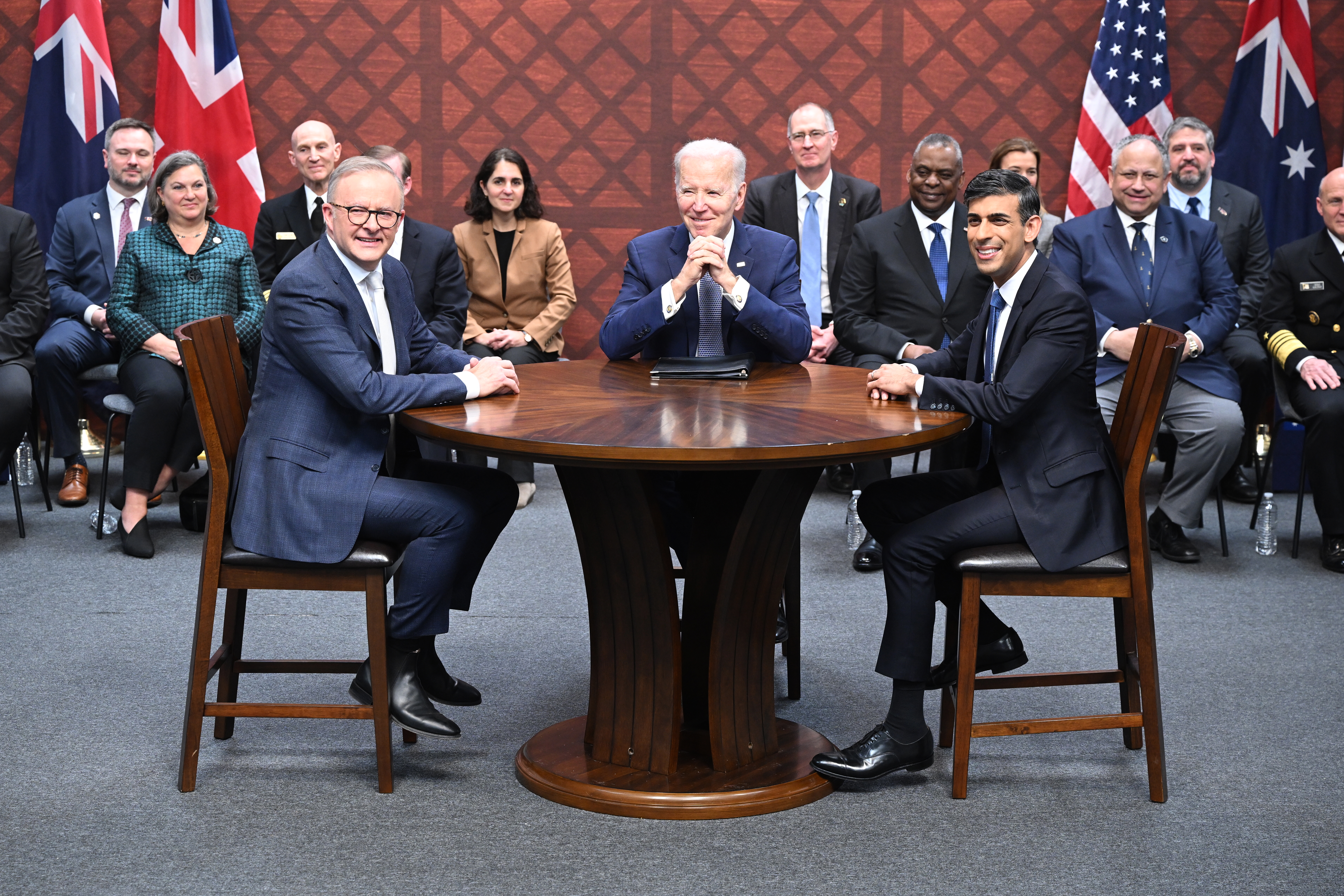
U.S. President Joe Biden participates in a trilateral meeting with Australian Prime Minister Anthony Albanese and UK Prime Minister Rishi Sunak during the AUKUS summit on March 13, 2023, in San Diego, California. Photo: Leon Neal/Getty Images.
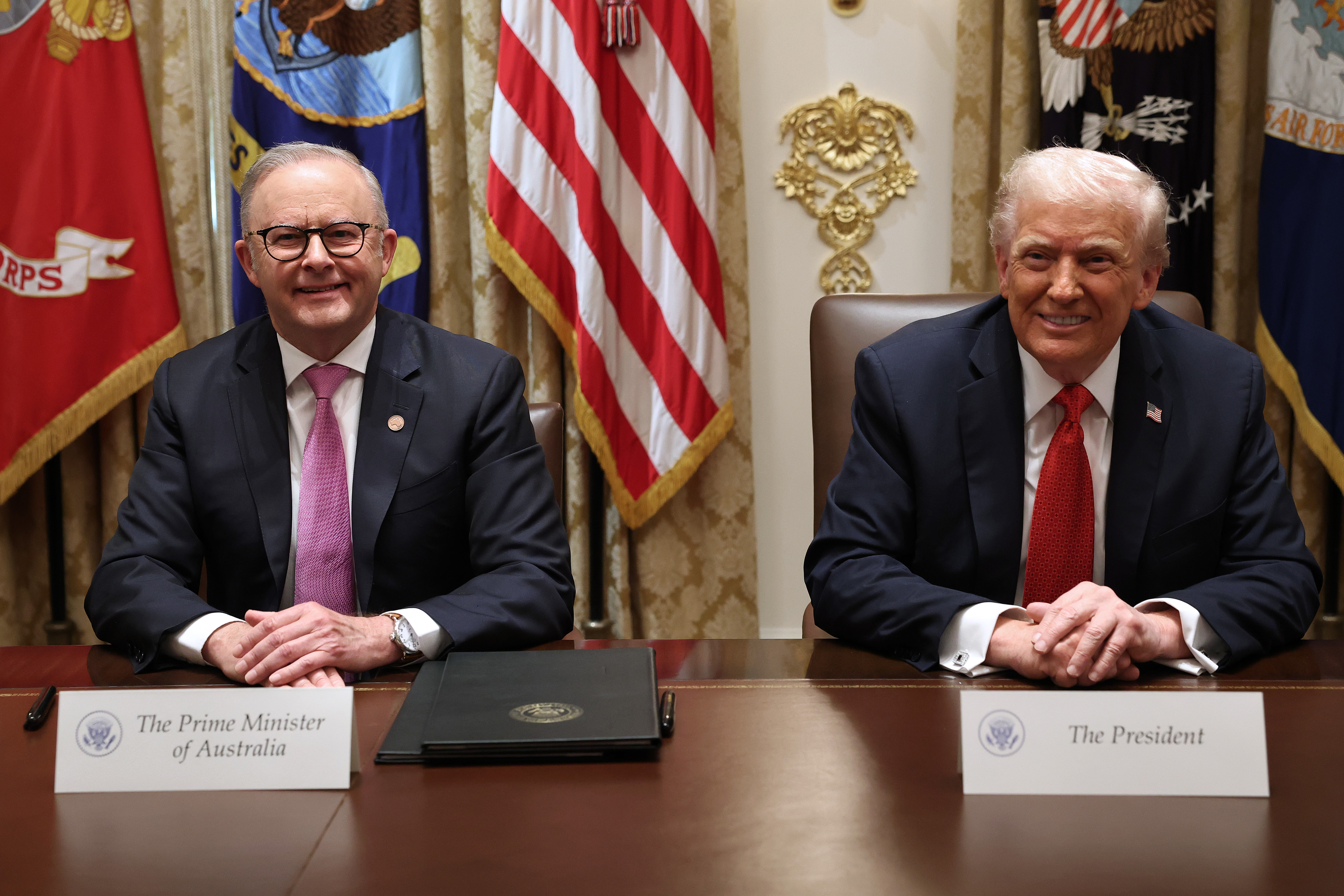
Australian Prime Minister Anthony Albanese and U.S. President Donald Trump speak to reporters after signing a $8.5 billion rare earth minerals agreement during a bilateral meeting in the Cabinet Room of the White House on October 20, 2025, in Washington, D.C. Photo: Anna Moneymaker/Getty Images.
AUKUS’s ambitions were outsized from the start and remain so. But realizing them requires solving technical, industrial, legal, and bureaucratic problems that get far less attention than the headline announcements—challenges that function as the limiting reagents of the enterprise. In chemistry, a limiting reagent is the reactant that runs out first, stopping the reaction and capping how much product forms. AUKUS has no shortage of political capital or strategic rationale. What it lacks is the unglamorous stuff: nuclear-qualified welders, International Atomic Energy Agency (IAEA) safeguards arrangements, submarine hulls, and clarity about what the apparatus is meant to produce, tactically and operationally, once built. It is these scarce inputs, not the abundant ones, that will determine how much AUKUS actually yields.
An honest accounting of AUKUS at the five-year mark entails examining both how much progress it has made thus far, as well as charting the limiting reagents required for it to start bearing fruit. At the end of the day, the question hanging over AUKUS as it turns five is not whether its aims remain lofty, but how quickly those ambitions can be converted into hulls in the water, welders in the yards, and doubt in the minds of war planners in Beijing.
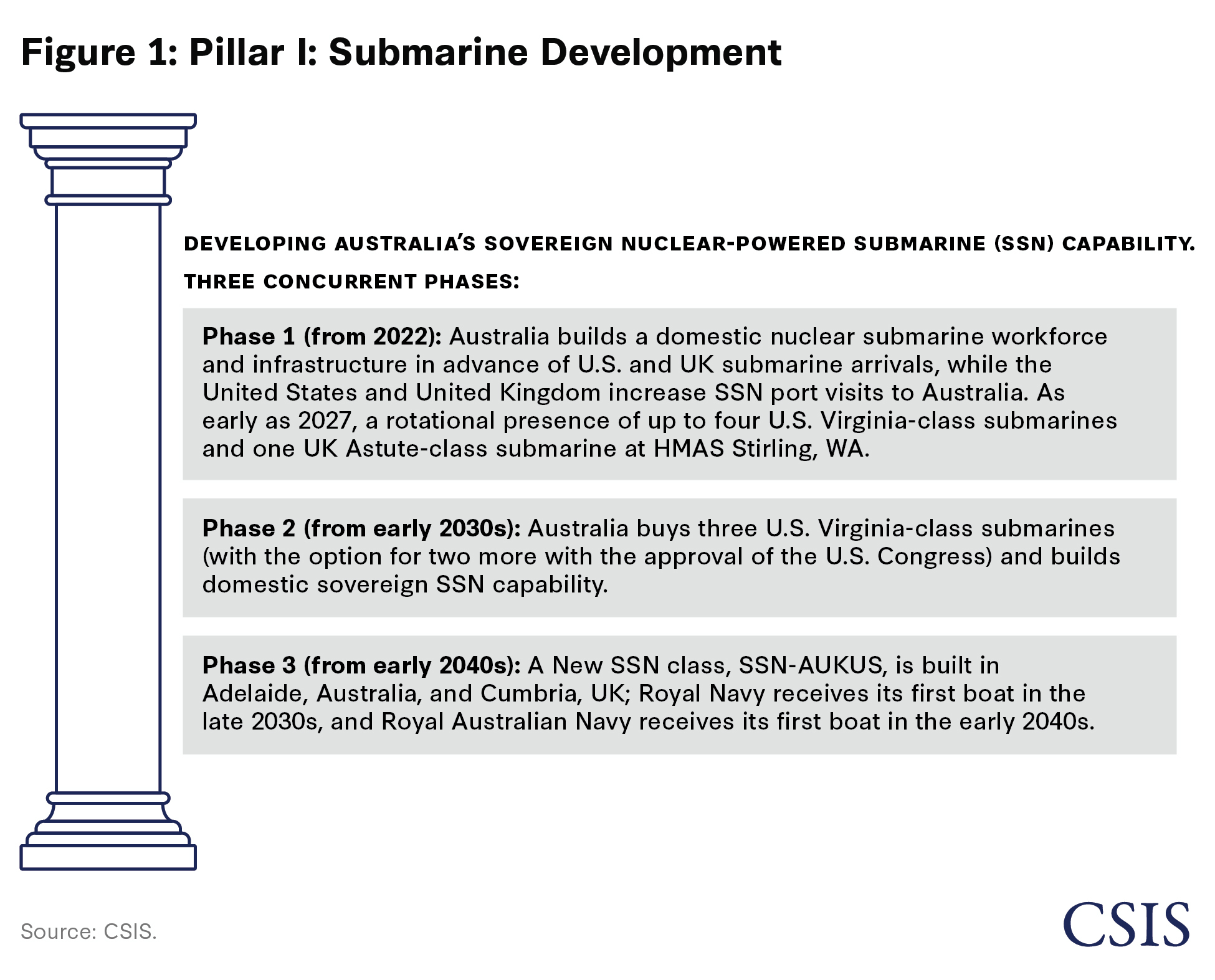
AUKUS was never going to result in submarines in the water under Australian command in its first five years—the “early 2030s” timeline for Australia’s first Virginia-class boat was baked into the plan from the start. Rather, the first five years were mainly about building institutions and infrastructure, both of which are now considerable.
The clearest evidence is human. While Australia has a fleet of submarines and a cohort of submariners and workers trained to work on them, this cohort is not nuclear-trained. Building a military and civilian workforce capable of safely handling naval nuclear propulsion information, technology, and material is a significant undertaking (see Figure 1), and one that few nations have achieved. Australian sailors and officers have been steadily moving through the U.S. naval nuclear propulsion and submarine training pipelines for several years and are now serving aboard U.S. attack submarines deployed across the fleet—not just observing but standing watches. In mid-2024, the Virginia-class submarine USS Hawaii was driven into HMAS Stirling, an Australian naval base, by a qualified Royal Australian Navy officer. Pearl Harbor Naval Shipyard, serving as the U.S. Lead Maintenance Activity for Submarine Rotational Forces-West (SRF-W), already hosts more than 200 employees of ASC, Australia’s national submarine company. These tradesmen learn the nuclear enterprise culture and embed in operational shops, attaining critical skills to support Australia’s future nuclear submarine sustainment capability. This training is progressing at pace, with the first cohort of qualified craftsman already returning to Western Australia.
The infrastructure to support a nuclear-powered submarine fleet is likewise taking shape. At the Shangri-La Dialogue in Singapore this past May, U.S. Secretary of War Pete Hegseth, Australian Deputy Prime Minister Richard Marles, and then-UK Defence Secretary John Healey confirmed the arrangements needed to stand up SRF-W at HMAS Stirling in 2027 are in place, and Hegseth announced he had that month authorized the establishment of Naval Support Activity (NSA) Stirling and a supporting submarine squadron. A U.S. commanding officer for NSA Stirling is now in place, and dozens more U.S. personnel are due to begin arriving later this year—a steady march toward an anticipated peak of 2,300 U.S. service members and their families by 2030. Physical infrastructure transformation at HMAS Stirling is noticeable, including a nearly completed training facility, substantial submarine pier upgrades, broken ground on a new controlled industrial facility capable of handling low-level nuclear materials, and an overall hardened base with an increased security readiness. None of this is glamorous, but none of it existed five years ago.
The legal architecture has moved just as fast, if less visibly. All three countries have passed enabling legislation: the U.S. Congress authorized nuclear technology and material transfers in the FY 2024 and FY 2025 National Defense Authorization Acts, and Australia passed the Naval Nuclear Power (Safety) Act and amended its Defence Trade Controls Act in 2024. The trilateral AUKUS Naval Nuclear Propulsion Agreement, a 50-year framework governing the transfer and stewardship of nuclear material, entered into force in January 2025. Six months later, Australia and the United Kingdom announced the Geelong Treaty, another 50-year commitment covering the design, construction, operation, and disposal of the SSN-AUKUS boats the two countries plan to build together. Washington has also moved to loosen its export controls, reforming International Traffic in Arms Regulations exemptions to facilitate faster movement of information and components between the three countries.
Perhaps the most consequential thing AUKUS has done in five years is forcing all three governments to publicly confront their threadbare submarine industrial bases. What used to be filed as a U.S. Navy budget problem is now discussed as a national security issue. The Trump administration’s push on maritime dominance and a recent series of White House statements on U.S. Navy shipbuilding reflect a belated recognition that AUKUS commitments necessitate improvements across the board by U.S. Navy shipyards.
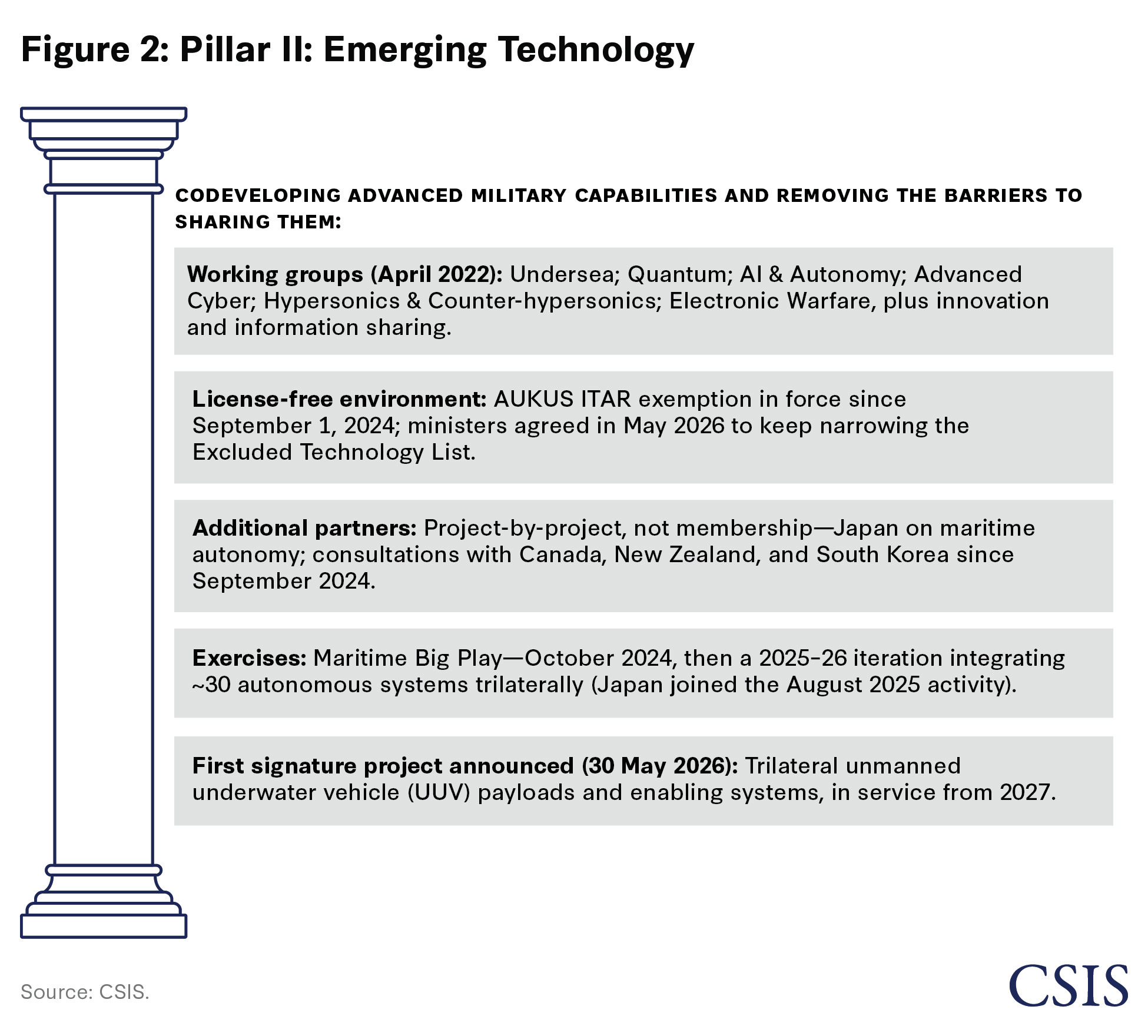
Nor has activity been confined to submarines. In May, the three governments announced the first “signature project” under AUKUS Pillar II: a joint program to develop payloads and enabling systems for unmanned underwater vehicles (UUVs), with national systems slated for delivery starting in 2027. Jointly developed payloads will follow past successes including a trilateral arrangement for the operation of a Deep-Space Advanced Radar Capability (DARC), a project agreement to enhance hypersonic testing, and the development and deployment of advanced AI algorithms across shared military systems to process sonar buoy data. It is a modest start relative to Pillar II’s sprawling ambitions—spanning hypersonics, undersea, quantum, cyber, electronic warfare, and AI (see Figure 2)—but is nonetheless a start with real money behind it.
Behind this list of accomplishments sits a shorter, harder list of unresolved problems—the behind-the-scenes work necessary to transfer Virginia-class submarines to Australia and the limiting reagents that will determine how much of AUKUS’s promise can actually be realized.
The most legally intricate challenge is the one least visible to the public: the safeguards architecture Australia must build with the IAEA before any U.S. or UK nuclear material can be transferred for naval propulsion. Australia already operates under a Comprehensive Safeguards Agreement and an Additional Protocol, but naval nuclear propulsion is addressed nowhere else in the nonproliferation regime except for the Nuclear Non-Proliferation Treaty’s rarely used Article 14. Such an arrangement must be negotiated bilaterally with the IAEA before any nuclear fuel changes hands, which has become a standing diplomatic pressure point. China, the most vocal and consistent opponent of AUKUS, has regularly attempted to place AUKUS as a standalone item of business on the IAEA board’s agenda. In November 2025, China’s ambassador to the IAEA told the board that AUKUS was “a textbook case of nuclear proliferation.” However, AUKUS members have been clear since the partnership’s announcement that the transfer of conventionally armed nuclear-powered submarines would uphold the highest standards of nuclear nonproliferation and allow the IAEA to carry out its responsibilities to manage a transfer of this nature, a view the IAEA director general has endorsed. That this ritual now repeats twice a year with metronomic predictability is telling: Beijing has decided keeping the safeguards question alive is worth the diplomatic capital. AUKUS allies must ensure they do not treat the IAEA process as a formality.
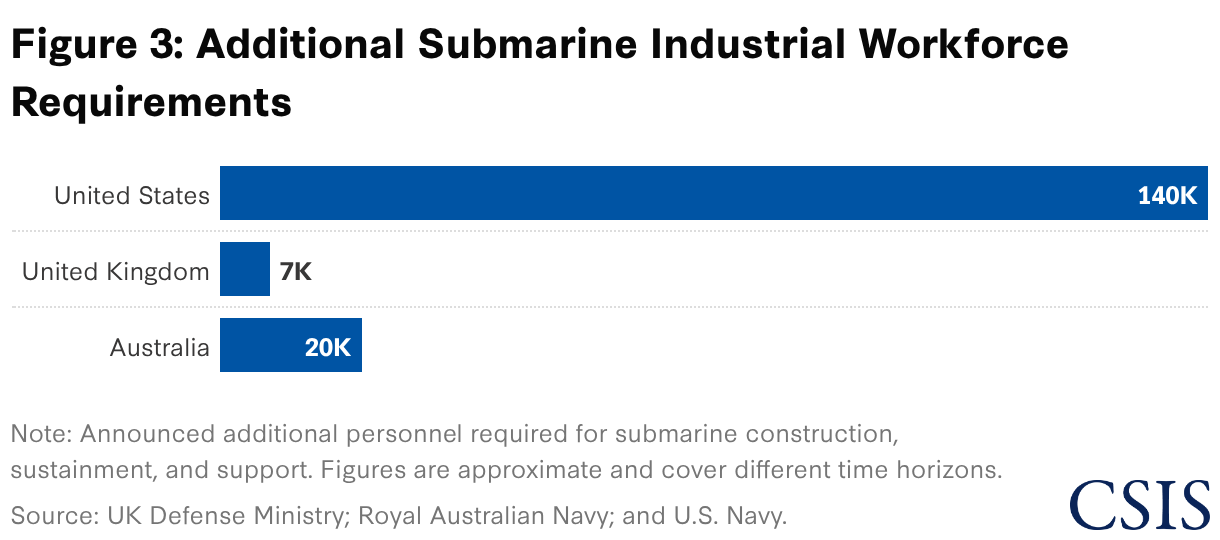
The second, and likely least tractable, issue is workforce. Submarines are built by nuclear-qualified welders, pipefitters, and technicians who take years to train, and none of the three countries currently has enough of them (see Figure 3): The United States alone projects a need to grow its submarine industrial workforce by 140,000 workers over the next decade. The immediate risk is not that Australia will fail to train people—the Pearl Harbor pipeline is working, and cohorts are rotating back to Australia. The risk is what happens to those people once they arrive: Australia will not have its own nuclear submarines to maintain for years after its first trainees return, raising the question of whether there will be enough meaningful work to retain a workforce trained at great expense. Absent a steady flow of U.S. and UK submarines rotating through HMAS Stirling for maintenance or other creative arrangements that allow Australian workers to maintain newly developed nuclear maintenance skill sets, that workforce risks atrophying before it is needed.

The third and most structurally important factor is the health of the U.S. submarine industrial base itself, as the optimal pathway rests on a U.S. commitment the Navy has not yet built the capacity to fulfill. AUKUS calls for the United States to sell Australia three in-service Virginia-class submarines beginning in the early 2030s, with an option for up to two more. Chief of Naval Operations Admiral Daryl Caudle told Congress in May 2026 that Electric Boat and Newport News are unlikely to reach a sustained rate of two Virginia-class boats a year until 2032—a target that has already slipped from an earlier projection of 2028, and one the shipyards have never hit despite being nominally committed to it since 2011. Australia’s acquisition schedule is thus keyed to a U.S. production target with a documented history of slipping, raising the deeper question of whether the United States is measuring AUKUS against the right metric.
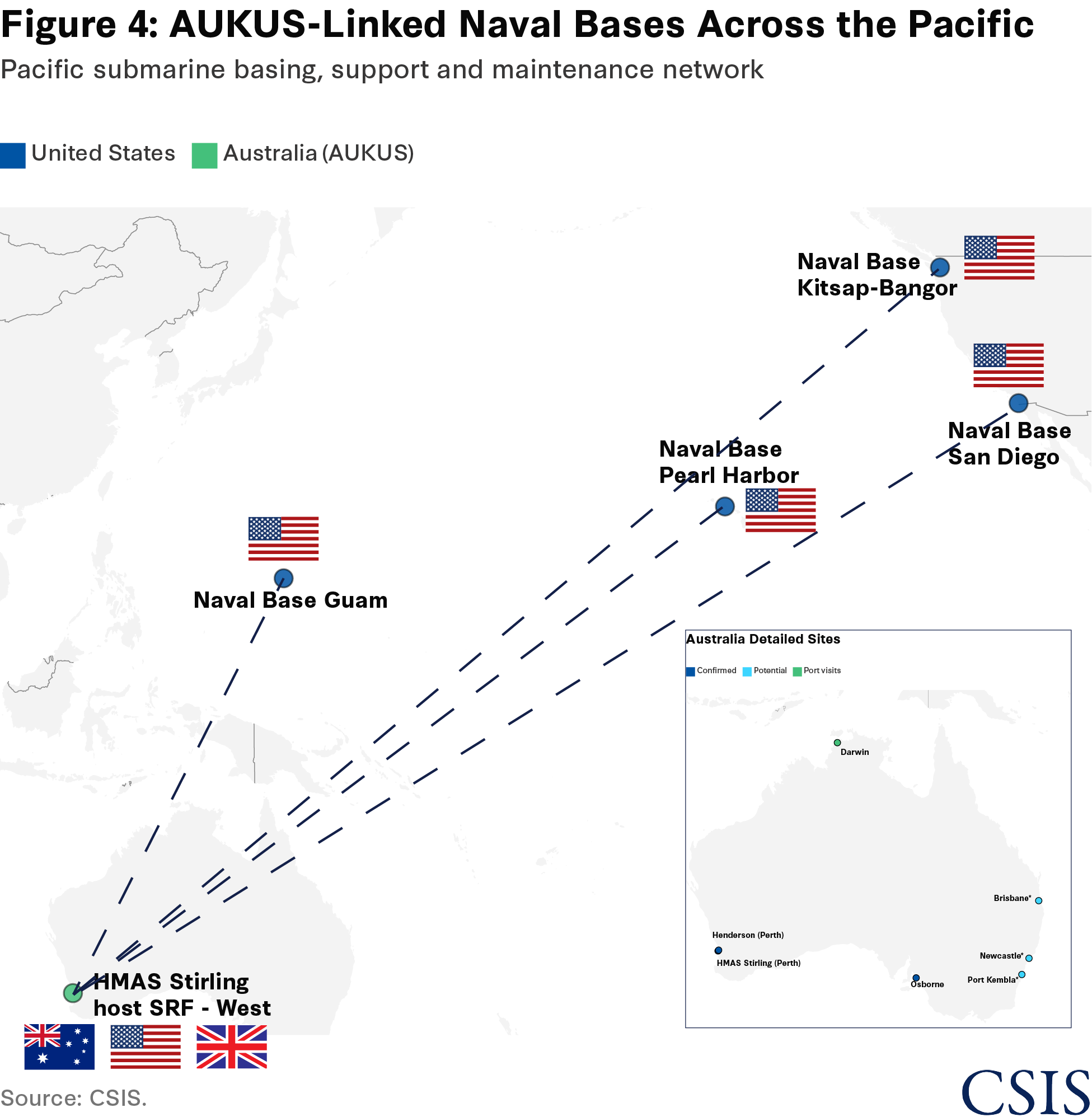
In maximizing the number of submarines in the water, there are two primary levers at work: production rates of SSNs and maintenance throughput for SSNs in overhaul in U.S. shipyards. While both are important, maintenance throughput is often underplayed in the larger narrative of submarine availability and is an issue that AUKUS directly contributes to improving. In addition to Australian maintenance support in the form of its growing nuclear-trained workforce supporting maintenance efforts on U.S. submarines and the qualification of Australian vendors to provide supply parts for Virginia-class submarines, when Australia acquires its own Virginia-class submarines, the Henderson Defence District will be ready to support more complex maintenance efforts that could include maintaining U.S. SSNs (see Figure 4). To that end, perhaps the most consequential metric should be the number of boats, under any of the three ensigns, that are actually forward deployed in the Indo-Pacific in a crisis.
Then there is SSN-AUKUS, the trilaterally designed submarine meant to succeed the transferred Virginia-class boats and eventually anchor the Royal Australian Navy’s undersea fleet. The design and early production work in the United Kingdom is, by most public accounting, behind where it needs to be, which matters because the optimal pathway assumes SSN-AUKUS will be ready on a schedule that lines up with the retirement of the aging conventional Collins-class submarine fleet it is meant to replace. If production slips further, Australia faces an uncomfortable choice: extend the life of an aging Collins fleet or return to the United States for more Virginia-class boats at a moment when Congress, having already stretched to authorize the sale of three to five submarines, is unlikely to be receptive. The United Kingdom’s own industrial strain, including reported delays to the Dreadnought-class program and difficulty sustaining continuous at-sea deterrent patrols, compounds the concern. The United Kingdom cannot solve Australia’s timeline problem if it has not yet solved its own.
Pillar II, for its part, remains the pillar of promise rather than delivery. There is now clearer institutional focus and, with the UUV payload program, an actual project with funding attached. But five years in, it remains genuinely unclear what capability will be fielded, on what timeline, and at what scale—a gap that matters, as much of the deterrent logic of AUKUS depends on pooling the best from each of the partner countries to deliver distinctive advantages to the warfighter.
On that score, the next 12 months matter more than the last five years. Hundreds of U.S. sailors and personnel will move to Western Australia in the coming months, and public commitments call for the first U.S. submarine to rotate to Western Australia in late 2027. Australia’s fledgling nuclear sustainment workforce will work alongside its U.S. counterparts to demonstrate its ability to sustain an SSN at HMAS Stirling. The infrastructure at HMAS Stirling—new buildings, information technology systems, security measures, and power grids—will be put to the test with the arrival of the first Virginia-class submarine as early as next year.
Five years on from its inception, AUKUS has, by any fair accounting, made real progress—more than skeptics on either side of the Pacific predicted. But turning a fifth anniversary into something that lasts still requires, as Australians are fond of saying, some hard yards. What has not yet happened—what could not yet have happened, given the timelines involved—is the actual accumulation of boats, sensors, and presence sufficient to create the dilemmas the partnership was designed to pose. That is the conversation still to be had in Washington, Canberra, and London: not simply whether the paperwork is in order or the AUKUS committee meetings are keeping a regular tempo, but how the assets now slowly coming online will actually be used to create tactical, operational, and strategic dilemmas for an adversary.
Winston Churchill, surveying the British fleet from Spithead in 1914, likened Britain’s Grand Fleet to “scores of gigantic castles of steel wending their way across the misty, shining sea, like giants bowed in anxious thought.” The context could hardly be more different: a different century, a different part of the world, a different opponent, a different platform, and boats that sit at different depths. Nevertheless, the underlying logic remains the same: Mass, visibly assembled, is meant to induce anxious thought in an adversary’s mind. The steel is not yet in the water in the quantities the mission requires, but the true measure of AUKUS’s success will be whether, a decade from now, enough castles of steel patrol beneath the Pacific to give Beijing pause.
Jonathan Ahlstrom is an adjunct fellow (non-resident) with the Australia Chair at the Center for Strategic and International Studies (CSIS) in Washington, D.C. Charles Edel is the Australia Chair and a senior advisor at CSIS.