Japan as a Maritime Great Power and the China Challenge
October 1, 2026 • 1:00 – 1:30 pm EDT
Hosted by Japan Chair

Photo: Partnership 2020
VOLUME 2 | ISSUE 1 | JANUARY – MARCH 2021
Partnership 2020: Leveraging US-India Cooperation in Higher Education to Harness Economic Opportunities and Innovation is a project funded by the U.S. Department of State and executed by the University of Nebraska at Omaha (UNO), with the Center for Strategic and International Studies (CSIS) playing a key advisory role. It is a three-year project with most of the activities taking place in 2019, 2020, and 2021.
This quarterly newsletter serves as a way for college and university leaders, U.S. and Indian policymakers, and other relevant stakeholders to receive updates on Partnership 2020 work, new funding opportunities, policies, employment opportunities, and best practices in higher education partnerships.
In every edition we feature an article from a higher education leader explaining how they launched a U.S.-India partnership and what they are doing now. This edition's piece is by Dr. Pranesh Aswath, interim provost and vice president of academic operations at The University of Texas at Arlington (UTA).
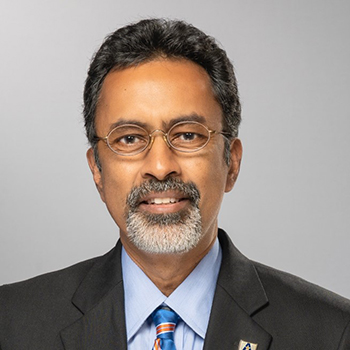
I first started visiting engineering college campuses in India in the early 1990s when I was an assistant professor. I would discuss opportunities for collaboration and potential pathway programs. The most interesting part of these visits was meeting students who were excited to learn more from my experiences and about opportunities in higher education. However, it was rare to get traction on real, meaningful partnerships with institutions. We have at least 30 memorandums of understanding (MoU) with Indian universities and colleges that have not seen the light of day after being signed.
With the liberalization of education policy in India and the rise of autonomous institutions, opportunities for partnership have started to emerge. Over the past five years, I have seen a noticeable shift in the attitude of the principals, presidents, and chancellors of autonomous institutions. To differentiate themselves from other institutions in India, leaders of autonomous institutions have started to look for something new and unique that attracts students. Over the last few years we have been able to develop three models of collaboration that have served us well:
I believe the future is bright if the administrators at the Indian and U.S. institutions approach these partnerships with an idea of mutual benefit and shared governance where both partner institutions benefit.
In every edition we highlight a particular binational project and its current or planned outcomes. This edition's piece is by Dr. Nikhil S. Tambe, director of India Gateway at the Ohio State University.
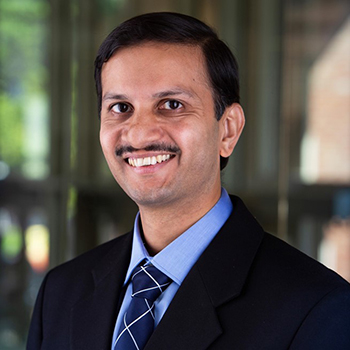
While the Covid-19 pandemic has created numerous uncertainties, we at the Ohio State University’s Mumbai-based India Gateway have continued to prioritize and productively engage with our faculty, staff, students, alumni, and partners. Virtual platforms have enabled meaningful engagements that foster interactive discourse and professional networking.
Ohio State has advocated on behalf of our international students and continues to offer support and a myriad of resources whether they are studying on campus or abroad. We have leveraged technology to connect with prospective, admitted, and current students during this time and extended counseling and appropriate resources. We have partnered with United States-India Educational Foundation’s EducationUSA in each of their major event series through fall 2020 as well as the International Education Week 2020.
During the first quarter of 2021, our faculty, so far, have initiated engagements on topics that are of national importance to both the United States and India. IIT Bombay and Ohio State jointly established the Frontier Center for Science and Engineering, now running its second year of seed grants for Ph.D. scholars. Bhavik Bakshi, a faculty advisory board member at Ohio State’s Sustainability Institute, is developing projects as part of his SPARC and Visiting Advanced Joint Research (VAJRA) fellowships from the Ministry of Education. A strong partnership between our Fisher College of Business and the Tata Management Training Center has led to nine faculty training more than 500 Tata leaders. The Ohio State Innovation Foundation exclusively licensed Covid-19 vaccine technology to Biological E. Limited (BE), a Hyderabad, India-based vaccine and pharmaceutical company. And we are extremely proud to note that Rattan Lal, director of the Carbon Management and Sequestration Center; faculty in the College of Food, Agricultural, and Environmental Sciences; and a longtime collaborator of the Punjab Agricultural University, has been conferred the 2021 Padma Shri – India’s fourth highest civilian award.
On March 22, we celebrated our first decade in India. We are honored to be a bridge for the university to connect with partners and alumni from India and collaborate on solving some of the complex global problems including food and water security, healthcare, and climate change. The pandemic has only confirmed the need for us to continue to engage across international borders to accelerate discovery and translate knowledge into viable solutions.