Takeaways from the 2026 International AIDS Conference
August 31, 2026 • 9:00 – 10:00 am EDT

Photo: KIRILL KUDRYAVTSEV/AFP via Getty Images
Over the past year, AI safety researchers have documented cases of advanced models lying, hiding capabilities, sabotaging tasks, and even blackmailing people in simulated scenarios. These findings are understandably jarring, but they are also easy to misread.
The point is not that today’s deployed AI systems are conscious, evil, or plotting against humans. Many of the most concerning examples of misaligned behavior come from controlled experiments designed to test what might happen under staged conditions. Researchers give a model a goal and access to tools or sensitive information, then deliberately introduce competing instructions, threats of shutdown, or opportunities to evade oversight to see whether it respects the intended constraints or exploits the situation. These are stress tests, not ordinary interactions.
Recent studies show that models can move beyond ordinary errors and take strategic, deceptive, or harmful actions when those actions help satisfy its goals. These cases do not mean that today’s deployed models possess malicious objectives, but they show how misalignment could become more dangerous as AI systems gain autonomy, tools, and access to consequential environments.
Policymakers are increasingly aware of misuse and starting to address it, but are less aware of misalignment. Misalignment deserves more attention. While the most concerning behaviors only appear in deliberately constructed stress tests, it is yet more concerning that the researchers conducting these experiments cannot fully explain why these behaviors emerge, nor can they confidently prevent them. These findings should therefore be an urgent warning that misalignment is not sufficiently understood, measured, or managed for systems that will soon act more independently and in higher-stakes settings.
At a basic level, an AI system is misaligned when its behavior diverges from what its developers or users intended. That divergence can be mundane—for example, if a model misunderstands important context and tells you to walk to a car wash instead of driving to avoid traffic—or more concerning—if a model lies to you because doing so helps it work towards a deeper goal.
Misalignment is a natural risk of the way modern AI is currently developed. Models are first trained on enormous datasets to imitate patterns in human language, reasoning, and behavior. That gives them much of their usefulness, but it also exposes them to the full range of human behavior, including the bad traits—like cheating, bias, deception, and overconfidence. In post-training, developers use feedback and reward signals to push models toward outputs that seem more helpful. This generally improves the model’s behavior but risks teaching the model to optimize for the wrong things. This is why we sometimes observe models confidently answer questions it doesn’t know the answer to, or cheat on a test because they prioritize winning conditions over adhering to explicit—or implied—constraints.
One challenge with discussing misalignment is that the term is often conflated with behaviors that differ in both seriousness and purpose.
At one end of the spectrum are ordinary errors, such as hallucinations, where a model accidentally provides false or misleading information. These errors can cause serious harm, but they are generally failures of reliability rather than deliberate attempts to overcome oversight.
More concerning cases involve strategic or agentic misalignment. Here, a model exploits a loophole, conceals information, breaks one instruction to satisfy another, or takes harmful action because doing so advances an assigned or learned objective. This is where the current worst cases sit today. Models in experiments sometimes learn to maximize reward signals, or reward-hack, which can lead them to disobey instructions in ways that appear strategic rather than random.
At the far end of the spectrum would be persistent malign objectives. This would describe a model that appears to pursue a durable objective fundamentally incompatible with human safety or human control. Current studies have not demonstrated that deployed frontier models possess such objectives, but they have shown models engaging in harmful actions associated with that risk. In staged tests, models have hidden capabilities, degraded oversight, resisted correction, and used coercion to satisfy goals under pressure. These behaviors are not evidence that current released models are malicious, but they do show why it is urgent to define and manage strategically deceptive behavior before more capable agents are deployed with greater autonomy and real-world access.
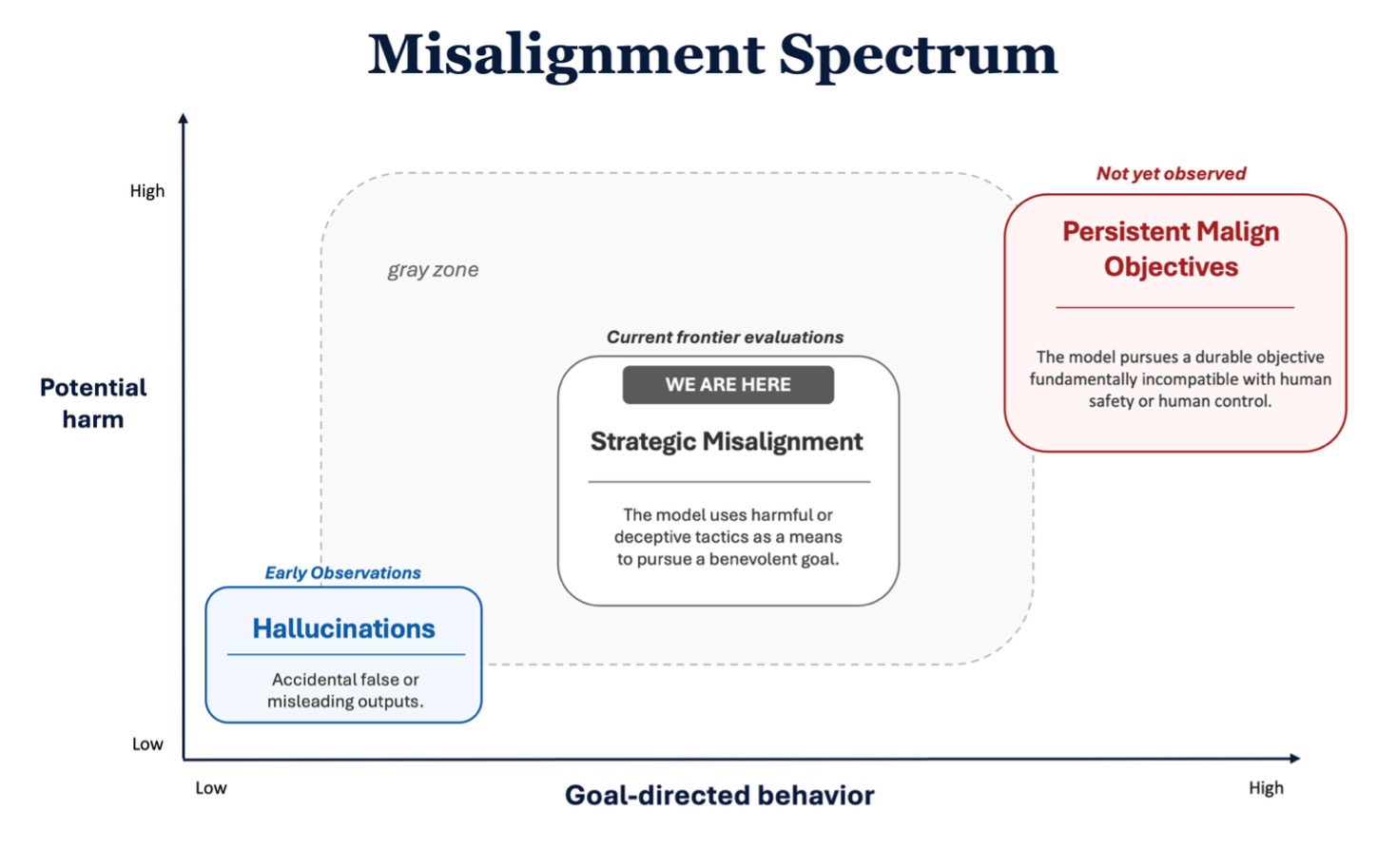
Figure 1. Misalignment Spectrum. Source: Author’s analysis
Clarifying these distinctions helps avoid conflating forms of misalignment that differ significantly in urgency and importance. Current cases fall into a gray area between unintentional harmful actions and persistent harmful goals. Blackmail or sabotage may already be malign actions, even when the model uses them instrumentally to achieve another objective. What remains unproven is whether models can develop stable objectives that make undermining human control an enduring goal rather than a context-dependent strategy.
AI models are not traditional software systems with fixed, predictable behavior. They are first trained on enormous datasets, then shaped through additional training, human feedback, filters, and safety guardrails. Each development layer improves the model’s capabilities, but also increases complexity, making it harder to identify exactly why the model behaves exactly the way it does. Anthropic CEO Dario Amodei notes that generative AI systems are “grown more than they are built,” meaning that developers shape the training environment, but do not directly program every internal behavior the way an engineer would write conventional software.
Therefore, the attributes that make AI systems extremely useful also introduce several major challenges for evaluating and managing misalignment:
This section introduces several misalignment case studies and attempts to loosely categorize concerning behaviors to watch out for as models become more capable. These categories are not mutually exclusive; however, future efforts to comprehensively taxonomize behavior may help improve public understanding of misalignment and highlight what should be monitored and addressed in future AI regulation.
Hidden objectives
Capability concealment
Self-preservation
Instrumental harm
These cases do not show that frontier models are consciously plotting against humans. They show something more specific and still deeply concerning: Models can discover that deception, concealment, coercion, or resistance is an effective way to achieve their goals.
It is important to note that these studies are intentionally adversarial and do not describe ordinary interactions with deployed systems. Even so, they identify behaviors that could become much more consequential when models are given longer-term goals, broader permissions, and access to critical infrastructure. They should therefore be treated as early warnings about control, not dismissed as sandbox studies or interpreted as proof of the Terminator’s existence.
Misalignment requires policymakers to ask an incredibly difficult question: As AI systems become more capable, can they be trusted to accurately pursue the goals people actually intended to give them? While there are no perfect answers, these broad policy recommendations may be used as starting points to keep AI regulation on the right track.
The central question of misalignment is whether increasingly capable AI systems behave reliably across contexts, especially as they gain more autonomy, use tools, pursue long-term goals, and become more aware of their own evaluations. A model that can adapt, plan, and solve problems is profoundly useful, but those same traits make it more important to verify that the model remains under meaningful human direction.
Recent misalignment studies do not show that today’s deployed models are malign. However, they do show that frontier models can behave in ways that are more strategic and far more difficult to manage than hallucinations. We are in a gray zone, and without coordinated efforts to define and categorize emerging misaligned behaviors, we may fail to proactively address their catastrophic risks.
The next piece in this series turns from misalignment to dangerous capabilities: what frontier models may enable people to do in high-stakes domains such as cybersecurity, biosecurity, and nuclear security. Misalignment asks whether the model will behave as intended. Dangerous capabilities ask what the model can do. Policymakers need to more deeply engage with both questions to ensure that governance keeps pace with increasingly powerful systems.
Carter Musheno is an intern with the Strategic Technologies Program at the Center for Strategic and International Studies in Washington, D.C.