The Return of the Nuclear Sea-Launched Cruise Missile (SLCM-N) | HTK
November 4, 2026 • 1:00 – 2:00 pm EST
Hosted by HTK Series
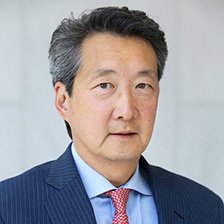
Victor Cha is president of the Geopolitics and Foreign Policy Department and Korea Chair at the Center for Strategic and International Studies (CSIS). He is also the distinguished university professor and professor of government at Georgetown University. He was appointed in 2021 by the Biden administration to serve on the Defense Policy Board in an advisory role to the secretary of defense. From 2004 to 2007, he served on the National Security Council (NSC) and was responsible for Japan, Korea, Australia/New Zealand, and Pacific Island nations. Dr. Cha was U.S. deputy head of delegation at the Six Party Talks and received two outstanding service commendations during his tenure at the NSC. He is the author of nine books, including the award-winning Alignment Despite Antagonism: The United States–Korea–Japan Security Triangle (Stanford University Press, 1999), which won the 2000 Ohira Book Prize, and The Impossible State: North Korea, Past and Future (Ecco, 2012), selected by Foreign Affairs as a “Best Book on the Asia-Pacific for 2012.” His other books are Nuclear North Korea: A Debate on Engagement Strategies (Columbia University Press, 2003); Beyond the Final Score: The Politics of Sport in Asia (Columbia University Press, 2009); Powerplay: Origins of the American Alliance System in Asia (Princeton University Press, 2018); Korea: A New History of South and North (Yale University Press, 2023); The Black Box: Demystifying the Study of Korean Unification and North Korea (Columbia University Press, 2024); North Korea’s Sea-Based WMD Capability (Bloomsbury, 2025); and China’s Weaponization of Trade: Resistance through Collective Resilience (Columbia University Press, 2026). Dr. Cha is a two-time Fulbright scholar, former Olin fellow at Harvard, and former Hoover, CISAC, and Koret fellow at Stanford. He currently serves on 10 editorial boards of academic journals and is coeditor of the Contemporary Asia book series at Columbia University Press. He serves on the board of the National Endowment for Democracy and is a senior fellow at the George W. Bush Institute. He is also a foreign affairs contributor for MSNBC and NBC News. Dr. Cha received his PhD, MIA and BA degree from Columbia University and a BA Honors.
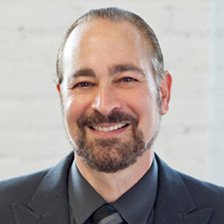
Randall L. Schweller is Professor of Political Science, Director of the Program for the Study of Realist Foreign Policy, a Social and Behavioral Sciences Joan N. Huber Faculty Fellow at Ohio State University. He is the author of Maxwell’s Demon and the Golden Apple: Global Discord in the New Millennium (Johns Hopkins University, 2014); Unanswered Threats: Political Constraints on the Balance of Power (Princeton University Press, 2006); and Deadly Imbalances: Tripolarity and Hitler’s Strategy of World Conquest (Columbia University Press, 1998). He is currently a member of the editorial boards of International Security, Security Studies, Foreign Affairs Review (China), and the Studies in Asian Security book series published by Stanford University Press. Noted for his work as a grand theorist of international relations and as a founder of neoclassical realism, Schweller was selected as one of the top 25 scholars in a survey of international relations faculty in 10 countries conducted by the Institute for the Theory and Practice of International Relations. In 1993, he received a John M. Olin Post-Doctoral Fellowship in National Security at the Center for International Affairs, Harvard University, and in 2012, Schweller was awarded a Social and Behavioral Sciences Joan N. Huber Faculty Fellowship.
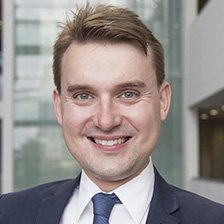
Alexander Lanoszka is an Associate Professor of International Relations at the University of Waterloo as well as the Director of the Master of Public Service program. He studies alliance politics, theories of war, and European security. His first book Atomic Assurance: The Alliance Politics of Nuclear Proliferation (Cornell University Press, 2018) examines the conditions under which states that receive formal security commitments begin, and sometimes stop, seeking their own nuclear weapons. His second book Military Alliances in the Twenty-First Century (Polity, 2022) offers a holistic overview of how alliances operate from their conception to their eventual demise. He has published in leading journals such as International Affairs, International Security, and International Studies Quarterly. He taught at City, University of London prior to coming to Waterloo and held fellowships at the Massachusetts Institute of Technology and Dartmouth College. He is a fellow at the UK-based Council on Geostrategy, as well as the Ottawa-based CDA Institute and the Macdonald-Laurier Institute. He is also a co-director of the Réseau d'Analyse Stratégique and a Visiting Professor at the College of Europe, Natolin. He received his Ph.D. in Politics from Princeton University in 2014.
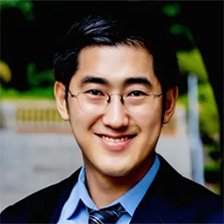
Joshua Byun is an Assistant Professor of Security Studies in the Edmund A. Walsh School of Foreign Service at Georgetown University. He specializes in questions related to American grand strategy. Byun is the author of The Adversary’s Veto: Rival Powers, Alliance Politics, and the Limits of Grand Strategy (Cornell University Press, forthcoming 2027). He is also co-author, with John J. Mearsheimer, of The Two-Leviathan Problem: Why Rival Hegemons Cannot Coexist (Yale University Press, forthcoming 2027). Byun’s scholarship speaks to a wide range of issues that arise in debates surrounding grand strategy, including preventive war, the relationship between power politics and international norms, the performative uses of violence, and the making of political order. Some of his works have been published in leading peer-reviewed journals such as the American Political Science Review, International Studies Quarterly, Texas National Security Review, and Contemporary Security Policy. Byun holds a Ph.D. in Political Science from the University of Chicago and a B.A. in International Studies and Political Science, summa cum laude, from Korea University. Prior to joining the Georgetown faculty, he was an Assistant Professor of Political Science at Boston College. He has also held the Stanton Nuclear Security Junior Faculty Fellowship at the Massachusetts Institute of Technology, the Global Innovation Program Postdoctoral Fellowship at the University of Pennsylvania’s Perry World House, and the Hans J. Morgenthau Predoctoral Fellowship at the Notre Dame International Security Center. Before beginning his academic career, Byun served as the interpreter to South Korea’s Chairman of the Joint Chiefs of Staff.
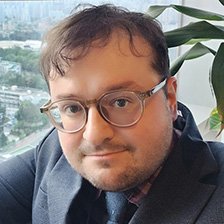
Fyodor Tertitskiy is a lecturer at Korea University and is a Russian and South Korean historian and specialist on North Korea. His research focuses on North Korean political, social, and military history, as well as Soviet-North Korean relations during the Cold War. He is the author of Accidental Tyrant: The Life of Kim Il Sung (Hurst and Oxford University Press, 2025), a biography of North Korea's founding leader that was selected for the Financial Times "Best Summer Books: History" list. He is also the author of The Forgotten Political Elites of North Korea: Woe to the Vanquished (Routledge, 2024) and Soviet-North Korean Relations During the Cold War: Unruly Offspring (Routledge, 2023). Tertitskiy writes on North Korean political, social, and military history for outlets including NK News and Daily NK. He has been credited with several archival discoveries including: a 1941 Soviet interrogation protocol of Kim Il Sung; Kim Il Sung's confession regarding clandestine financial assistance to Cho Bong-am, an opposition candidate in the 1956 South Korean presidential election; a 1969 KGB report on Kim family relatives; and records of talks between Pak Song-chol and Leonid Brezhnev. He received his master's degree from the University of North Korean Studies and earned his Ph.D. from Seoul National University in 2017.
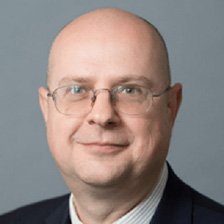
Alexandre Mansourov is a specialist in Northeast Asian security, politics, and economics, focusing primarily on the Korean peninsula, teaching as an adjunct professor at the John Hopkins School of Advanced International Studies and at the Security Studies program at Georgetown University. He is also serving as Founding Member of the US National Committee on North Korea and Senior Associate of the Nautilus Institute. He worked as Professor of Security Studies at the College of Security Studies of the Asia-Pacific Center for Security Studies from October 2001 to January 2008. Dr. Mansourov received his Ph.D. in Political Science from Columbia University in New York, B.A. in International Relations from the Moscow State Institute of International Relations (MGIMO) in Moscow, Russia, and Advanced Diploma in Korean studies from the Kim Il Sung National University in Pyongyang, DPRK. Dr. Mansourov has broad research interests ranging from the defense, foreign and domestic policies of two Korean states, China, Japan, Russia, Mongolia, and Taiwan to comparative political and economic development in Northeast Asia, proliferation of WMD, IT revolution, and the impact of globalization and revolution in military affairs on security dynamics in Northeast Asia. He is also a specialist on post-conflict stabilization and reconstruction, as well as humanitarian assistance and disaster relief with on the ground experience in Indonesia, Cambodia, Malaysia, Thailand, and Brunei. Dr. Mansourov has done consultancy work related to Korean affairs and SSTR/HADR for corporate and government clients in the United States, Republic of Korea, Australia, and Japan.

Hanna Notte is the director of the Eurasia Nonproliferation Program at the James Martin Center for Nonproliferation Studies in Monterey, California, and a senior associate (non-resident) with the Europe, Russia, and Eurasia Program at the Center for Strategic and International Studies. She is also an associate fellow with the Kennan Institute. Her expertise is in Russian foreign policy, the Middle East, and arms control and nonproliferation. Notte holds a doctorate and an MPhil in international relations from Oxford University and a BA in social and political sciences from Cambridge University. Based in Berlin, her writing appears in outlets such as the Financial Times, Foreign Affairs, the New York Times, War on the Rocks, and ZEIT, among others. Notte previously worked with the Shaikh Group, a nongovernmental organization focused on informal diplomacy in Middle East conflicts, supporting its engagement with Russia. During her doctoral studies, she was a visiting researcher with the Institute of Oriental Studies of the Russian Academy of Sciences and the Carnegie Moscow Center. She is the author of We Shall Outlast Them: Putin’s Global Campaign to Defeat the West (W. W. Norton, 2026) and the co-author of Death Dust: The Rise, Demise, and Future of Radiological Weapons Programs (Stanford University Press, 2023). Notte is a regular guest on conference panels and podcasts produced by leading U.S. and European think tanks. She is proficient in her native German, Russian, and has a solid command of Arabic.
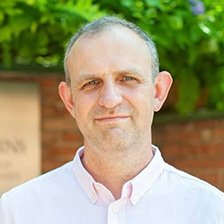
Sergey Radchenko is the Rupert Murdoch Distinguished Professor at the Johns Hopkins School of Advanced International Studies Henry A. Kissinger Center for Global Affairs. He has written extensively on the Cold War, nuclear history, and on Russian and Chinese foreign and security policies. He has served as a Global Fellow and a Public Policy Fellow at the Woodrow Wilson Centre and as the Zi Jiang Distinguished Professor at East China Normal University (Shanghai). Professor Radchenko’s books include To Run the World: the Kremlin’s Cold War Bid for Global Power (Cambridge UP, 2024), Two Suns in the Heavens: the Sino-Soviet Struggle for Supremacy (Wilson Center Press & Stanford UP, 2009), and Unwanted Visionaries: the Soviet Failure in Asia (Oxford UP, 2014). Professor Radchenko is a native of Sakhalin Island, Russia, was educated in the US, Hong Kong, and the UK, where he received his PhD in 2005 (LSE). Before he joined SAIS, Professor Radchenko worked and lived in Mongolia, China, and Wales.
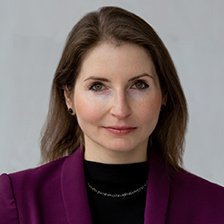
Maria Snegovaya is a senior fellow for Russia and Eurasia with the Europe, Russia, and Eurasia Program at the Center for Strategic and International Studies (CSIS) and an adjunct professor in Georgetown University’s Walsh School of Foreign Service. She studies Russia’s domestic and foreign policy, as well as democratic backsliding in post-communist Europe and the tactics used by Russian actors and proxies who exploit these dynamics in the region. Her analysis has been published in multiple policy and peer-reviewed journals. Her first book, When Left Moves Right: The Decline of the Left and the Rise of the Populist Right was published by Oxford University Press in 2024, and shortlisted for the 2025 Luebbert Best Comparative Politics Book Award (American Political Science Association). Her second manuscript, “The Nomenklatura Strikes Back: Soviet Legacies and the Making of Russia’s Foreign Policy,” is under contract with Oxford University Press. Her research and commentary have appeared in a number of publications such as the New York Times, the Wall Street Journal, Bloomberg, The Economist, and Foreign Policy. Throughout her career she has collaborated with multiple U.S. research centers and think tanks such as Center for a New American Security and Center for European Policy Analysis. Snegovaya holds a Ph.D. in political science from Columbia University.
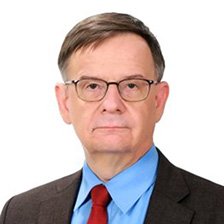
Andrei Lankov is a Professor of History at Kookmin University in Seoul and Director of the Korea Risk Group. He specializes in North Korean history, society, and politics, with particular expertise on the country's formative years and its relations with the Soviet Union. His major publications include From Stalin to Kim Il Sung: The Formation of North Korea, 1945-1960 (Rutgers University Press, 2003), Crisis in North Korea: The Failure of De-Stalinization, 1956 (University of Hawai'i Press, 2004), North of the DMZ: Essays on Daily Life in North Korea (McFarland, 2007), and The Real North Korea (Oxford University Press, 2013). In addition to his academic work, Lankov has contributed to leading international publications including The Wall Street Journal, The New York Times, Financial Times, Newsweek, Foreign Affairs, and Foreign Policy. In 2017, Foreign Policy magazine named him among its "Global Thinkers." He has also written extensively in Korean and Russian. Before joining Kookmin University in 2004, he taught Korean history at the Australian National University from 1996 to 2004. His research has included extensive work with North Korean archival materials, including a major project examining captured North Korean documents held at the U.S. National Archives, which shed light on the inner workings of the North Korean state and the role of Soviet advisers during the country's formative years. He received his Ph.D. from Leningrad State University in 1989.
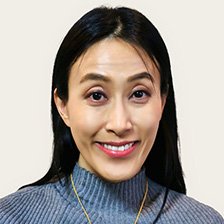
Rachel Minyoung Lee is a Senior Fellow for the Stimson Center’s Korea Program and 38 North. She is also co-chair of the North Korea Economic Forum, which is part of the policy program at the George Washington University’s Institute for Korean Studies (GWIKS). Lee was a North Korea collection expert and analyst with Open Source Enterprise (OSE; formerly known as Open Source Center) in the US government from 2000 to 2019. During that time, she wrote on the gamut of North Korean issues, from leadership, domestic politics and economy, and foreign policy, to social and cultural developments. As Analysis Team Lead, Lee led a team of collection officers and analysts to track and analyze North and South Korean issues with implications for Pyongyang’s regime stability and regional security. Most recently, from 2022 to early 2024, Lee headed engagement and network-building efforts at the Vienna-based Open Nuclear Network (ONN). In July 2025, she was a POSCO Visiting Fellow at the East-West Center in Hawaii. Lee earned her B.A. in English literature and her M.A. in international law, both at Korea University in Seoul.
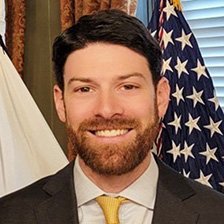
Adam Farrar is senior associate (non-resident) of the Korea Chair at the Center for Strategic and International Studies (CSIS). Mr. Farrar is the senior geoeconomics analyst for the Asia-Pacific for Bloomberg Economics, where he is responsible for the organization’s research and analysis on geopolitical risk throughout the region. Prior to joining Bloomberg, Mr. Farrar had a long government career serving in a variety of senior positions with an emphasis on U.S. policy toward the Indo-Pacific, with a focus on Korea. He last served as the special advisor to Vice President Harris for all issues related to the Indo-Pacific, space, and intelligence. He also served on the National Security Council staff as the director for the Korean Peninsula and Mongolia during the Biden and Trump administrations (2019–2022), where he was responsible for the bilateral relationships with the ROK and Mongolia, and addressing the threat posed by North Korea. Mr. Farrar began his career as an intelligence officer for the National Geospatial-Intelligence Agency, where he worked on a variety of national security issues related to Northeast Asia. Mr. Farrar holds an M.A. in international relations and international economics from the School of Advanced International Studies at Johns Hopkins University and a B.A. from George Washington University.
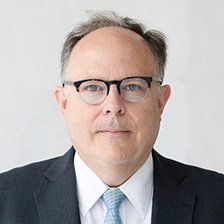
Sydney Seiler is senior adviser (non-resident) at the CSIS Korea Chair. He was the national intelligence officer for North Korea at the National Intelligence Council from 2020 to 2023 and is one of the nation’s top experts on North Korea. Previously, he was the U.S. Forces Korea (USFK) senior analyst and senior defense intelligence expert for North Korea from 2016 to 2020, serving as the principal adviser and senior expert on Korean Peninsula security issues to the USFK commander and the U.S. Defense Intelligence Enterprise. Seiler also served as the U.S. special envoy for Six Party Talks (2014–2015), where he coordinated U.S. diplomacy and policy on the DPRK and led negotiations with North Korea. Prior to that, Seiler served as the director for Korea on the National Security Council (2011–2014). A member of the Senior National Intelligence Service, Seiler has over 40 years of experience focusing on Korean Peninsula affairs in a range of executive management, intelligence, and policy positions within the Office of the Director of National Intelligence, the Central Intelligence Agency (CIA) Directorate of Analysis, the CIA’s Directorate of Operations, the CIA’s Open-Source Center, and the National Security Agency. He has over four decades of experience watching North Korea and 17 years of serving in South Korea. He received his M.A. degree in Korean studies from Yonsei University and is a graduate of the Korean language programs of the Defense Language Institute and Yonsei University.