Launching the International Call to Action for 6G Leadership and Security
July 29, 2026 • 9:30 am – 12:00 pm EDT
Hosted by Strategic Technologies Program
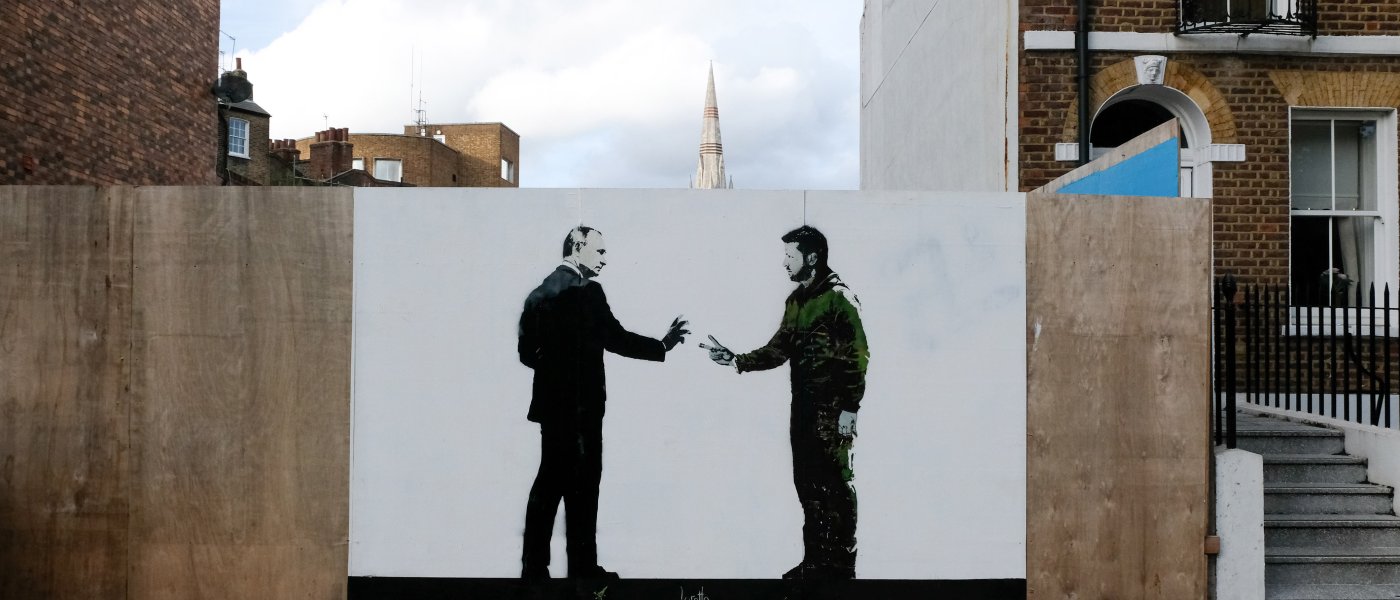
Photo: Matthew Chattle/Future Publishing via Getty Images
A new effort to end Russia's war in Ukraine is gaining momentum. Washington has handed Kyiv a 28-point peace plan, with expectations that it will be signed in the near term. Since then, the plan has allegedly been reduced to 20 points. While this story continues to evolve, it is useful to analyze the current situation along with the motivations, benefits, and costs for key stakeholders in the process. Behind the smoke screen of fragmented public statements, media leaks, and expert commentary lies a complex mix of views and interests that will shape the outcome of this process.
The battlefield has settled into a positional stalemate. Neither Ukraine nor Russia have achieved significant breakthroughs in the past year for several reasons: Ukraine lacks weapons, including long-range strike capabilities, and is unwilling to send scarce troops for marginal gains. Russia, meanwhile, has increased its military industrial base at the expense of its civilian economy, and secured external supplies from China, Iran, and North Korea. However, Russia has been unable to seize any major cities or significant stretches of territory as Ukrainian forces continue to hold the line against daily attacks.
Ukraine has managed to stabilize the frontline through layered fortifications and pre-sighted fire zones that render enemy attempts unsuccessful or extremely slow. In practice, the Ukrainian army has created a defense system that functions as a meat grinder for Russian troops pushed forward by their commanders. Russian losses are now much higher than Ukraine’s and reach thousands of soldiers weekly, a dynamic that will become a problem for Moscow if it decides to go ahead with a full-scale mobilization to replenish its ranks. In this case, Moscow will need to conscript soldiers from major cities instead of distant regions and prisons, ultimately bringing the war closer to Russia’s mainstream society and endangering their support. Despite extraordinary military losses, Moscow has continued to pursue a slow, grinding war to occupy more land, wear down Ukraine’s military capabilities and Western willingness to support Kyiv.
This situation is reinforced by drone warfare, which has made meaningful advances nearly impossible for either side. Heavy machinery, tanks, or troops cannot operate without the risk of facing a near instant destruction, creating a 15-20 kilometer kill zone between the two armies. This creates a major obstacle for Russian occupation plans, and constitutes one of Ukraine’s key trump cards both on the battlefield and at the negotiations table. Hence, pushing the Ukrainian army back from their positions is a key objective for Russia and an outcome that may create significant strategic disadvantage for Ukraine and Europe, unless leveraged with security guarantees from international allies.
Regardless, Russia has substantially expanded its military production. It has increased output of artillery shells and refurbished Soviet stockpiles. The European Union, after a slow start, is now on track to manufacture about 2 million 155-millimeter shells, with major new plants and multi-billion-euro procurement programs in place. Ukraine and Europe are gradually closing in, and are projected to reach Russia’s production level in 2026.
Ukraine, meanwhile, has also significantly increased military production compared to 2022, including long-range drones, cruise/drone missiles, and short-range tactical drones. Ukraine is slowly becoming one of the leading producers of low-cost precision-strike systems, while relying on partners for heavy munitions. By contrast, Russia continues to prioritize mass production of traditional ammunition, equipment and Shahed-136-type strike drones, a divergence that reflects each country’s industrial capacities and battlefield strategies.
The contrast between the two armies goes beyond their aims, strategy and casualties. Their morale, composition and sense of purpose are strikingly different. The Ukrainian army is largely made up of people that enlisted to defend their homes, and most of them look toward rebuilding their communities.
By contrast, Russia draws much of its manpower from mercenaries, prison recruits, and economically marginalized regions with widespread poverty, and Moscow is less interested in ending the war on terms that would genuinely protect Ukraine and Europe from future aggression. The Kremlin has repeatedly relied on wars to divert public attention away from economic issues, feeding their population with imperialistic ideology, manufacturing enemies through propaganda to justify losses. For Russia’s leadership, the only way to frame the war as a victory is to present to its people territorial gains, and a weakened, futureless Ukraine.
Although Ukrainians have been subjected to Russia’s terror in countless ways, they are not willing to give up and accept Moscow’s imperialistic designs. The Kremlin continues to miscalculate by believing that escalating suffering through regular attacks on civilian infrastructure and residential areas will force Ukrainians to turn against their leaders.
Any Ukrainian political leader who attempts to trade land for an unstable peace outcome risks loss of legitimacy: Ukrainians understand that Russia will not stop with partial gains, and peace without credible security guarantees and the ability to rebuild Ukraine’s economy and defense is not a real peace.
Approval by Ukraine’s citizens weighs as heavily as that of top officials. Ukrainians, known for their free spirit and defiant character, are unlikely to support any settlement that feels unjust, imposed, or shortsighted. That said, many Ukrainians now recognize the steep price to achieve full territorial recovery by military means. Regaining territories through political reconciliation is seen as a long, but increasingly acceptable, path.
Ukraine’s top political leadership must adapt to a rapidly shifting geopolitical landscape. Going forward, their actions must be proactive, rather than reactive: managing relations with key allies strategically to secure long-term support, implementing fair policies to sustain the economy, and avoiding actions that fuel a sense of social injustice.
Ukraine must shift from perpetual emergency management to implementation of a well-planned agenda supported by citizens and international allies. If political leaders keep lagging in this approach, society may eventually force it. This scenario is undesirable under any circumstances, and especially dangerous during war.
Kyiv’s ability to maintain front lines, the economy, and effective negotiations rests heavily on Western support. Any actions that cast doubt on the integrity of Ukrainian leaders or state’s ability to function properly and transparently introduce unnecessary risks to these processes. Any communications from a position of exhaustion weakens Ukraine’s hand and undermines its ability to sign an agreement that meets the country’s future needs.
In current and future negotiations, Ukrainian leaders must be able to represent the interests of their citizens with full credibility. Appointments driven by personal loyalty rather than professional merit, the habit of downplaying uncomfortable realities under loud slogans, and chronically delayed reactions are the most challenging aspects right now.
With the change of administration, U.S. support for Ukraine has shifted from piecemeal arms deliveries to a focus on negotiating a peace deal with major concessions from Ukraine. However, U.S. public opinion is moving in the opposite direction, with support for continued military assistance to Ukraine higher than last year. Congress is still seeking to sustain the pressure on Russia through sanctions and asset seizures, as increased funding has stalled.
President Trump appears to be interested in ending the war, driven by political, strategic, and personal factors. This is a laudable aim if the concessions offered to Russia do not contradict with international law or undermine the durability and credibility of the peace deal, something that concerns Ukraine and its allies.
The recent round of talks in Geneva showed that the U.S. delegation led by Secretary Rubio hears these arguments, and several points of the plan have been revised. Most sensitive issues including territorial concessions and NATO membership were left for direct discussion between Trump and Zelensky. None of this guarantees that Moscow will accept these terms, however, it signals that Washington is willing to pursue an agreement that is designed to last in the interest of peace and security on the European continent.
The peace process remains fast-moving but unstable. Secretary Rubio’s recent suggestion that security guarantees should be discussed after a peace deal is signed, again raises serious concerns in Ukraine, Europe, and other parts of the world.
While the support from the United States, European Union, NATO, and other allies has enabled Ukraine to hold the line, it has not been sufficient to end the war. Actions of partners often lacked decisiveness, a hesitation largely explained by a natural desire to prevent escalation. This logic fits a typical Western strategic mindset, but functions differently when applied to the Kremlin. Moscow reads this not as prudence, but as weakness. This has encouraged them to test the European Union and the United Kingdom with increasingly bold provocations such as border violations involving ships, aircraft, and drones—actions that require immediate and firm countermeasures without countless consultations and statements of concern.
The time for half-measures is over. Russia is actively probing for weak spots across multiple fronts and looking for ways to escalate not just against Ukraine, but the broader West. Europe and NATO cannot afford hesitation. Reactions should be strong and unambiguous. Bigger defense budgets for NATO, the European Union, and Ukraine, a clear lead in military production, and the ability to react fast and fight, if needed, should be the baseline—not the aspiration.
Yet EU actions show hesitancy: A slow retreat from purchasing Russian energy and months of back-and-forth debates over a €165 billion reparations-based loan are cases in point. These delays give the Kremlin an opportunity to regroup, prepare for new offensives, and influence the fragmented European Union, especially with pro-Moscow positions of Hungary, Slovakia, and other member states.
Some positions are in flux: European Commission President Ursula von der Leyen announced that the legal documents for the loan are ready to be presented, UK Prime Minister Keir Starmer underscored the task to fully remove Russian energy supplies from global markets, and NATO’s Military Committee Chair Admiral Giuseppe Cavo Dragone admitted that NATO is in a weaker position compared to Russia because it operates under ethics, law, and jurisdiction, but added that NATO is considering being “more aggressive,” hinting that the alliance should deeply analyze how deterrence is achieved through retaliation and even preemptive strikes. These statements show a broader recognition of how dangerous the war in Ukraine is for the security of EU and NATO states. However, words need to become actions.
Unity among the United States, Europe, NATO, and Ukraine is crucial. When these actors move in sync, it sends a strong message to Moscow, and governments that have backed Russia outright or quietly. Against the backdrop of talks about a potential peace deal for Ukraine, President Xi made an unusual move by calling President Trump to discuss issues related to Taiwan and Ukraine. While details on the call are unknown, the message between the lines is clear: Washington and Beijing are trying to stabilize the political dialogue. This could increase the chances of bringing the war to an end and reduce tensions around Taiwan through political negotiation.
Putin and his government continue to project a unified, confident position to domestic and international observers, portraying readiness to continue the war indefinitely. No one expects a different public posture, even if it differs from reality.
However, Russia’s economy is notably weaker than prewar; its economy is no longer expanding, but hovering on the edge of stagnation. Sanctions and the withdrawal of foreign direct investment have cost Russia an estimated $400 billion and $282 billion, respectively. The country’s international economic opportunities and profits from their energy business abroad are declining.
None of this means that Russia is incapable of continuing the war, and propaganda continues to shape domestic public opinion. According to the Levada Center, 81 percent of Russians supported the war in 2022, and as of 2025 that figure is 74 percent. Crucially, 61 percent of Russians now say that they favor peace negotiations: Their population wants war to end, but with victory gains. All of this takes place in the absence of full-scale mobilization in Russia, the stage at which public opinion often turns sharply against the war, and what Moscow may still attempt.
The war is unquestionably weakening Russia’s economy at the cost of further economic decline and civilian quality of life. The war is also reinforcing Moscow’s fast-growing dependence on China in terms of selling its energy supplies, gray-market imports of military equipment components, and limited diplomatic cover. Russia is a large country capable of absorbing major shocks, but its scale also creates deep vulnerabilities: Political and economic collapse may become irreversible quickly, in the light of regional inequality and structural problems.
Moscow is likely seeking a way out of this situation, but on terms that would preserve domestic control, protect the regime against international accountability, secure the lifting of sanctions, and revive its energy sector as the core revenue engine.
The key question now is whether the international community can exert enough unified pressure on Russia to agree on a genuine peace settlement, leaving no uncertainty that further escalation would bring unbearable losses to Russia. Russia could easily adapt its propaganda to claim victory back home, presenting any negotiated settlement as a triumph over Ukraine, the European Union, NATO, and the entire Western world.
The grand chessboard is in motion. President Trump’s second term has brought disruptive changes, forcing major powers to recalibrate their strategies, including on Ukraine. In this environment, Russia appears to be more interested in a deal that looks like a jackpot for the Kremlin: more Ukrainian territory, a defenseless Ukraine, a return to international economic normality, a chair at the G8 table, and little or zero financial or legal accountability for crimes committed. The Kremlin is also using the negotiations to divide the Ukraine and its allies and delay the process of debating the terms. Kyiv and its allies need to avoid a settlement that would end this war at the cost of guaranteeing the next one.
Against this backdrop, the current peace process represents an opportunity, not because of its substance, but because of the dynamics it has set in motion. The very possibility of the deal that may be signed soon—and the risks it would carry if it favored Russian interests over durable peace—has sharpened awareness across Ukraine, Europe, and NATO. The growing sense of reality is now pushing allies to urgently reassess their actions.
Whatever becomes of the latest peace deal attempt, the European Union and NATO should move beyond ad-hoc crisis management and agree on a long-term European security policy with Ukraine as its integral part. Such policy must have a clear goal of stopping and preventing any current or future wars through collective strength and dominating military capabilities. This should include making Europe and Ukraine structurally resilient, and prohibitively costly to attack. This political goal can be built into the core points of the current peace plan or retained as strategic leverage if Russia opts to continue the war, which appears to be a likely scenario for now.
Sergiy Tsivkach is an adjunct fellow (non-resident) for the Project on Prosperity and Development at the Center for Strategic and International Studies (CSIS) in Washington, D.C. Romina Bandura is a senior fellow with the Project on Prosperity and Development at CSIS.

Critical Questions by Benjamin Jensen and Yasir Atalan — November 21, 2025

Critical Questions by Emily Harding — November 24, 2025

Critical Questions by Benjamin Jensen and Yasir Atalan — October 17, 2025