From Partners to Producers: U.S.-Australia Defense Cooperation
October 5, 2026 • 9:00 – 9:30 am EDT
Hosted by All About the Base

Photo: Simon Dawson/Bloomberg/Getty Images
By 2016, as Saudi Crown Prince Mohammed bin Salman was consolidating his control of the Saudi state, he was also concluding—correctly—that his kingdom was on a dangerously unsustainable path. Saudi Arabia’s economic model remained overwhelmingly reliant on oil revenues. Subsidized domestic energy prices and rising electricity demand were increasing internal consumption levels at a pace that raised concerns about future fiscal sustainability and reduced export capacity over the long term.
Meanwhile, state institutions were struggling to respond effectively to the expectations of a young and growing population, and a feeble Saudi private sector was unable to create enough jobs to meet the demands of the labor market. In addition, Saudi Arabia’s educational system, from primary school through university, was ill-suited to produce graduates at scale who could embrace the opportunities of a twenty-first-century economy. The kingdom’s society was further encumbered by deeply conservative religious institutions and cultural mores that weighed heavily on the lives of both Saudi men and women. Opportunities for entertainment, recreation, and public cultural life remained limited, especially for women. Relatedly, society was experiencing rising public health challenges, including obesity and diabetes.
More fundamentally, Saudi policymakers were increasingly recognizing that the global energy system was going through a long-term transition. While oil and gas will remain critical for decades, the future of the energy sector is clear: Technological change, renewable energy deployment, electrification, climate policies, and shifting investor preferences will gradually reduce the relative importance of hydrocarbons in the global economy. For a country whose fiscal model, export earnings, and geopolitical influence were built on oil, preparing for that future was no longer optional. Launched in April 2016 by Crown Prince Mohammed bin Salman, Saudi Arabia’s Vision 2030 presented a strategic framework for addressing these growing concerns and achieving the kingdom’s goals of diversification and growth in the twenty-first century.
The 2026 Iran war is likely to accelerate these trends. The closure of the Strait of Hormuz, attacks on energy infrastructure, and the targeting of oil and gas tankers have further driven Gulf policymakers’ determination both to diversify their economies and bolster energy security. The conflict has highlighted a broader lesson in energy realism: While investment in new energy technologies will continue to expand, hydrocarbons remain vital to global transportation, petrochemicals, industrial production, food systems, and energy security. For Saudi Arabia, diversification sits alongside, rather than replaces, a sustained commitment to energy leadership, greater export resilience, and the development of new and alternative transport routes that lower dependence on vulnerable maritime chokepoints.
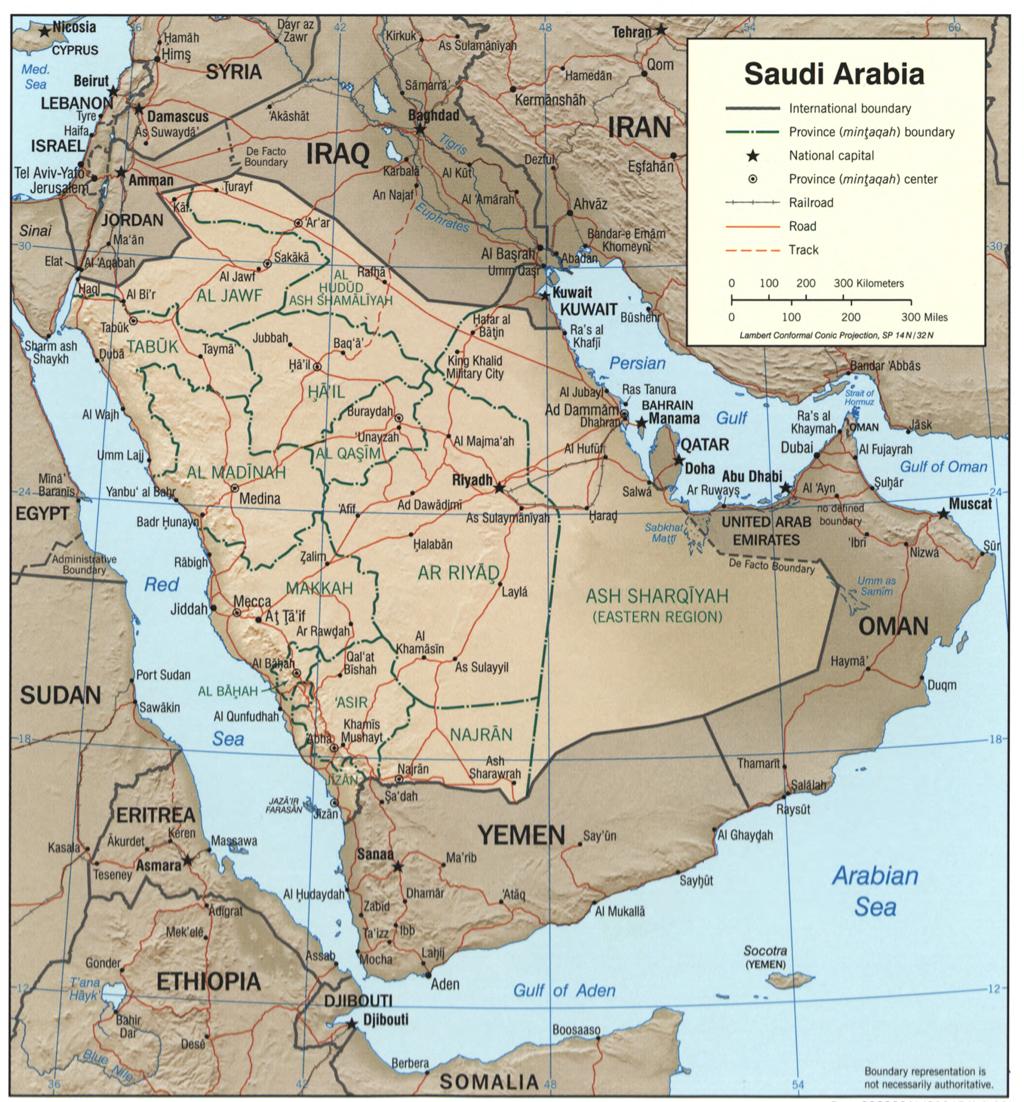
Source: “Saudi Arabia,” United States Central Intelligence Agency.
At its core, Vision 2030 represents an attempt not simply to diversify the economy and prepare for a post-oil Middle East, but to redesign the relationship between the Saudi state and the country’s society and economy for a far more competitive and uncertain century. This brief argues that Vision 2030 should be evaluated not only as a diversification program, but also as an exercise in national resilience—again, even more relevant in 2026 in the shadow of the Iran war.
The plan’s first decade was focused on transformation: laying the foundations to reduce oil dependence, opening up society, developing state capacity, and mobilizing capital at unprecedented scale. Its second decade will center on disciplined prioritization: deciding which ambitions are commercially viable, which institutions can deliver, and how Saudi Arabia can remain an attractive platform for capital, talent, tourism, industry, and technology in a region where disruption has become structural rather than episodic. The partial listing of Saudi Aramco in 2019, then the largest IPO in history, provided both capital and symbolism for this transition, demonstrating how oil wealth was being leveraged to support a broader economic transformation.
In April 2026, Vision 2030 marked its ten-year anniversary, presenting an opportune moment to take stock of the plan’s achievements, assess persistent structural and bureaucratic challenges, and map out what Saudi Arabia’s next decade might bring. The anniversary came as Saudi Arabia found itself in the midst of the Iran war, a conflict with global implications and the region’s most consequential war since the U.S. invasion of Iraq in 2003. The U.S. and Israeli war with Iran will “stress test” Vision 2030’s resilience, coming just as Saudi Arabia began its own process of evaluating its national priorities and expenditures, recalibrating its sovereign wealth fund, and contemplating its strategic relationships both globally and locally.
At the heart of Vision 2030 are two grand objectives: (1) a national economy able to thrive in a post–fossil fuel world and (2) a happy, healthy, and competitive population. Many Gulf countries have embarked on national programs of economic and social development, but few have been as far reaching or consequential as Saudi Arabia’s Vision 2030. These objectives encompass numerous specific programs, each with a multitude of performance metrics by which progress is assiduously tracked and measured.
Though incomplete and sometimes unevenly implemented, Vision 2030 has touched nearly every aspect of Saudi Arabia’s society and economy. The scale of the transformation is evident both in highly visible social changes and in less-visible institutional and economic reforms. Notably, the most consequential reforms are often the least visible internationally. Fiscal reforms, for example—including the introduction of a value-added tax, excise taxes, and various energy-pricing reforms—yielded improved fiscal resilience and bolstered state capacity. More significantly, these reforms signaled a willingness by the state to undertake sensitive, and significant, economic changes and to thus lay the foundations for a pathway to a less oil-dependent future. As of mid-2026, Vision 2030 has boasted several accomplishments:
1. Economic diversification continues to advance on multiple fronts. According to the Vision 2030 2025 Annual Report, non-oil activities now account for approximately 56 percent of the nation’s GDP, up from roughly 47 percent when Vision 2030 launched in 2016 (see Figure 2). This claim corresponds with the International Monetary Fund (IMF) 2025 Article IV consultation report, which confirms that the Saudi government’s non-oil revenue climbed from SAR 186 billion (USD 49 billion) in 2016 to SAR 502 billion (USD 132 billion) in 2024. Private sector contributions to GDP have reportedly grown as well, rising from approximately 40 percent in 2016 to around 51 percent in 2025.

These figures suggest that the kingdom’s economic base has broadened, not that oil has lost its central role in the Saudi economy. Hydrocarbons remain the kingdom’s primary source of export earnings, fiscal revenues, and international economic influence, and are likely to remain so for the foreseeable future. However, the data reveals that tourism, financial services, manufacturing, logistics, mining, technology, entertainment, and other service sectors have come to play a larger role in generating employment, attracting investment, supporting government revenues, and contributing to economic activity than they did a decade earlier. This shift illustrates not only diversification for its own sake, but the successful creation of additional engines of growth and a broader set of economic capabilities that can support resilience in a more uncertain global environment.
2. Unemployment is down. Unemployment among Saudi nationals fell from 12.3 percent in 2016 to approximately 7 percent by 2025, achieving the original Vision 2030 target six years ahead of schedule (see Figure 3). The employment story, however, is more nuanced than headline figures alone suggest. While substantial numbers of jobs have been created across the economy, many are linked directly or indirectly to state-led investment, particularly through the kingdom’s Public Investment Fund (PIF) and its growing ecosystem of portfolio companies. In fact, much of the kingdom’s employment-generation strategy has involved shifting opportunities from traditional ministries and public sector entities toward commercially oriented organizations operating alongside the state. Though this has resulted in job creation and even supported the development of new sectors, the long-term sustainability, productivity, and commercial viability of this strategy once state/PIF support subsides is uncertain.

The next challenge in reaching the goals outlined in Vision 2030 is therefore likely to be qualitative rather than merely quantitative. The true test of success will not simply be the number of jobs created, but the quality, productivity, and sustainability of those jobs. As Saudi Arabia seeks to move up the value chain in sectors such as advanced manufacturing, logistics, financial services, tourism, technology, and artificial intelligence (AI), policymakers must focus on wages, skills development, labor productivity, career progression, and avoiding forms of underemployment or labor market mismatches. In this sense, the next phase of the labor market reform will be measured in terms of Saudi workers’ abilities to compete, innovate, and prosper in a growingly sophisticated global economy, as well as by employment rates.
3. The role of women in the economy is changing. According to the World Bank, female labor force participation increased from approximately 20 percent in 2017 to more than 34 percent by 2025, comfortably surpassing Vision 2030’s original target of 30 percent (see Figure 4). Simultaneously, female unemployment has also fallen sharply since Vision 2030 began. While legal and labor market reforms, changing social norms, and economic diversification all contributed, other societal changes, particularly the removal of the driving ban, reforms to the guardianship system, and broader labor market opening helped unlock a substantial pool of previously underutilized human capital. The result has been a larger workforce, broader household earning potential, and stronger long-term economic competitiveness nationwide. The scale and speed of this transformation is virtually unprecedented among G20 economies and represents one of the most consequential social and economic reforms undertaken under Vision 2030.
Labor market reforms have been accompanied by wider improvements in household welfare. Homeownership has increased to over 66 percent in 2025, up from 47 percent in 2016, reflecting growing housing supply, mortgage market reforms, and state support for first-time buyers. Ensuring affordability and avoiding excessive household leverage, however, will be essential as housing demand continues to rise, particularly in Riyadh.

4. Public service delivery has improved markedly, particularly in e-government. In fact, as of mid-2026, Saudi Arabia ranks among the world’s leading digital governments, placing second globally in the World Bank’s 2025 GovTech Maturity Index and sixth globally in the United Nations E-Government Development Index. Saudi Arabia offers its citizens over 4,600 digital government services, representing 97 percent of all public services. Licensing, permitting, payments, and a growing range of citizen and business services have been integrated into digital platforms, reducing bureaucratic friction and transaction costs across the board. The transformation is especially visible in areas such as business registration, taxation, customs, and visa processing, where digital systems have significantly improved speed, accessibility, and user experience.
Anti-corruption enforcement has also evolved into a more institutionalized government function, contributing to greater accountability and transparency after earlier anti-corruption drives had received considerable international criticism.
Saudi Arabia has expanded its productive economy through targeted industrial development, mining, logistics, and infrastructure investments. Specifically, nearly 5,000 new factories have been established since 2016, as the kingdom’s industrial production index rises (petrochemicals are included in calculations).
Saudi authorities estimate the kingdom’s mineral resource potential at approximately $2.5 trillion, including gold, copper, lithium, zinc, and a range of rare earth elements critical to emerging technologies and advanced manufacturing. Reflecting these ambitions, Saudi Arabian mining company Maaden has announced plans to invest approximately $110 billion in metals and mining over the coming decade. In 2025, Saudi Arabia ranked 10th on the Fraser Institute’s Mining Investment Attractiveness Index, up from 23rd in 2024. The World Bank’s Logistics Performance Index ranks Saudi Arabia 38th. Increasingly, mining, logistics, and infrastructure are regarded as elements of a wider geoeconomic strategy which must be considered in tandem, not as isolated economic segments.
Its geographic position at the crossroads of Africa, Asia, Europe, and the Middle East has enhanced Saudi Arabia’s strategic relevance to both regional and international partners. Regional conflicts and supply chain disruptions in particular have highlighted the value of resilience and connectivity, bolstering the kingdom’s attractiveness. Investments in industrial and logistical hubs such as Ras Al Khair, Yanbu, Jubail, King Abdullah Port, Jeddah Islamic Port, and more recently, Neom’s Oxagon not only support economic diversification, but also position the kingdom as a regional platform for trade, production, processing, and connectivity. The 2026 Iran conflict has further underlined the strategic value of diversified logistics infrastructure, Red Sea access, and transport networks connecting Gulf, African, Asian, and European markets, and, consequently, of Saudi Arabia’s own strategic relevance.
Despite the economic diversification, growing workforce, and increasing strategic relevance to the wider economy facilitated by Vision 2030 and related initiatives, success is not guaranteed. While Saudi Arabia possesses massive capital, scale, energy resources, and a large domestic market, it faces competition from established regional hubs and special economic zones, including in the United Arab Emirates (UAE), that often benefit from more robust regulatory frameworks, deeper global value chain integration, and long-standing reputations among international investors. This has become a major focus of the Saudi Ministry of Investment and its new minister.
5. Tourism draws are extending beyond religious pilgrimages. The 2025 tourism sector contribution of 5 percent of GDP—up from 3 percent in 2019—is on a path to reach the 10 percent goal by 2030. International and domestic visitor numbers have already exceeded 100 million annually, prompting the government to raise its Vision 2030 target. Looking to expand the tourist base beyond the nearly 18 million annual religious pilgrims (to Hajj and Umrah), the kingdom has invested in domestic and international tourism infrastructure, cultural destinations (including Diriyah and Al Ula), sports, and entertainment (including the entertainment and recreation city of Qiddiya).
The Saudi government views tourism as more than a source for revenue and employment—it is a driver of wider economic growth and development. While statistics do not break this out clearly, the tourism sector powers small- and medium-sized enterprises, service industries, aviation connectivity, and infrastructure development. UN Tourism, for example, highlighted Saudi Arabia as one of the world’s fastest-growing tourism destinations. According to the World Travel and Tourism Council’s (WTTC) 2024 Economic Impact Research, the Saudi tourism sector supported nearly 2.7 million jobs nationwide as of 2024. Moreover, the WTTC projects the tourism industry will employ over 3.6 million people within ten years. Notably, unlike many capital-intensive sectors also being developed, tourism has the distinct advantage of creating employment not only across education and skill level, but also across regions, making this sector especially important to broader goals related to increasing private sector participation and reducing regional inequalities.
6. Freedom of expression remains a challenge, but has witnessed a notable cultural transformation. Whereas prior to January 2018, women were forbidden from attending public sporting events with men—which featured only male athletes until the launch of the Saudi Women’s Premier League in 2022—the country currently hosts multiple women’s sports leagues and Saudi women compete in the Olympics. As part of the Vision 2030 framework, sporting events are designed both for recreational value and to encourage physical activity, addressing the long-standing public health problems of obesity and juvenile diabetes. The related investments have also bolstered the kingdom’s international profile, with key milestone events such as Expo 2030 and the 2034 FIFA World Cup on the horizon. Furthermore, Saudi investments in sports, entertainment, and culture are integral parts of its quality-of-life agenda. In a country where popular music concerts were nonexistent prior to 2017, global stars such as the Backstreet Boys and Cardi B perform for audiences of both men and women, and sporting events including Formula 1, WWE, and heavyweight boxing are regularly held in the kingdom.
Increasingly, culture is also viewed as a strategic asset that supports economic diversification, international engagement, soft power, domestic identity building, and the development of a nascent creative economy.
Vision 2030 has successfully changed the trajectory of the Saudi economy and instilled a sense of purpose and direction in Saudi society. However, the decade since its 2016 launch has also witnessed shortcomings in the kingdom’s efforts. Going forward, efforts to address the following weaknesses in particular should inform the design of future initiatives.
Saudi Arabia began a wholesale reform of its educational system as far back as 2004, focusing on science, technology, engineering, and mathematics (STEM), vocational training, and other fields necessary to thrive in a twenty-first-century economy, an effort accelerated as part of the Vision 2030 framework. However, the kingdom continues to face challenges in its development of human capital. Almost every component of Vision 2030—the development of a technology industry, creating a competitive manufacturing sector, implementing a modern educational system, and improving public health—depends upon human capital. Meeting these growing demands is no easy task, and, as of mid-2026, the ambitions of Vision 2030 have outpaced Saudi Arabia’s ability to produce Saudi workers with the skill sets necessary to compete and thrive in a transformed economy.
To address this growing gap, the kingdom has prioritized reform of its education sector, including focusing curricula in Saudi universities on STEM and other topics that can contribute the kingdom’s economic development and competitiveness. In addition, the Ministry of Education has narrowed eligibility for scholarships for Saudis studying abroad, ensuring that such support matches the country’s identified workforce priorities. This reflects a broader evolution from the earlier King Abdullah Scholarship Program, which created a generation of globally educated Saudis that today benefits Vision 2030, toward a leaner more targeted model aligned with workforce priorities and national development objectives. At the same time, the kingdom has sought out partnerships with foreign educational institutions able to help the kingdom supercharge a reform effort that could otherwise take a generation or more to realize.
As it pushes for the increased “Saudization” of its workforce—i.e., the replacement of foreign workers with Saudi nationals—through these educational reforms, the kingdom will need to strike a reasonable balance between favoring Saudi nationals and its continued reliance on expatriate workers, particularly at the executive level.
Balancing job creation, social stability, and economic competitiveness will remain a key economic policy challenge in the years leading up to 2030. The first decade of Vision 2030 primarily focused on reducing unemployment and increasing broader labor market participation. The next phase must emphasize productivity, wages, and competitiveness. Saudi Arabia should create opportunities for a growing workforce while ensuring the various localization policies and regulatory conditions do not deter investment, stifle innovation, or inhibit private sector competitiveness. In many middle-income economies struggling to reform, challenges quickly expand beyond simply creating employment to nurturing a labor market that is able to support rising incomes, increased productivity, and broader growth without excessive dependence on state intervention. Saudi Arabia is no exception.
Policymakers will also need to track rising living costs, including in Riyadh, where rapid growth, housing demand, and population inflows will continue to impact affordability. Ensuring that the fruits of transformation are well-distributed across Saudi regions and income groups will be crucial for preserving social cohesion and broader support for reforms.
The PIF, Saudi Arabia’s sovereign wealth fund, has played a critical role in driving Vision 2030. It has been effective at directing national resources to seed strategic sectors, catalyze industries, and build infrastructure that would not have otherwise emerged. However, a healthy and competitive economy cannot rely exclusively on state-led investment; attracting private and foreign capital remains central to the success of much of the Vision 2030 agenda.
Vision 2030’s target of increasing FDI contribution to GDP from 3.8 percent to 5.7 percent by 2030 is lagging and inflows have underperformed. The kingdom ultimately aims to attract $100 billion in annual FDI by 2030, which would be three times the record inflows that were achieved in 2024, underscoring the scale of the challenge. While this shortfall may partially reflect global financial conditions and regional geopolitical risk, it also exposes the reality that many investors and foreign companies continue to view Saudi bureaucracy as burdensome. Furthermore, where other countries are seen to incentivize FDI, international businesses considering an investment in Saudi Arabia sometimes feel that Saudi measures are coercive, such as the requirement that companies seeking to do business with the Saudi government establish a regional headquarters (although exemptions may be granted), and specific requirements that companies use local content. Moreover, coordination between investment-attraction initiatives, sectoral priorities, and bankable opportunities have not always been well communicated or harmonized.
The next phase of Vision 2030 may benefit from more focus on sector-specific strategies, stronger partnerships with international firms, robust investment frameworks, and stronger alignment between the PIF and relevant ministries. In addition, in the short term, the kingdom must grapple with the real possibility that the Iran war has shaken the confidence of potential investors in the region and perhaps even harmed the country’s reputation as a safe destination for FDI.
The scale of Vision 2030’s ambitions almost inevitably led the kingdom to pursue projects of unprecedented size and maximum visibility. The Saudi government’s “Giga-Projects,” such as Neom, Diriyah, Qiddiya, and various other major tourism and infrastructure developments, serve as both economic objectives and as more comprehensive signaling, illustrating domestically and internationally the sheer scale of Saudi ambitions and its determination to reorient itself toward a drastically new future.
Since Vision 2030’s launch in 2016, however, the implementation of key projects has highlighted the importance of pace, fiscal/capital discipline, and delivery bandwidth. Projects that initially embodied the early momentum and grand ambitions expressed in 2016 are being recalibrated to align with fiscal realities, investor feedback, operational requirements, and the broader regional environment. However, progress has been uneven rather than uniformly disappointing. Giga-Project developments—notably Diriyah, with an estimated value at around $63 billion—have demonstrated significant progress and growing tourism and investment momentum.
Some high-visibility projects have been delayed, scaled back, rescheduled, or canceled completely. This includes The Line, originally envisioned to be a 100-mile-long glass city in the desert of Neom in northwest Saudi Arabia, which had work halted in May 2026. A winter sports resort called Trojena, also in Neom, was supposed to host the Asian Winter Games in 2029. That event has since been moved to Kazakhstan. LIV Golf, an expensive and ill-fated competitor to the PGA Tour, will no longer receive PIF support after 2026. And the Mukaab, a gargantuan cube-shaped mixed-used retail, commercial, and residential development in Riyadh, saw construction suspended and funding halted in early 2026.
The PIF’s recently announced 2026–2030 strategy signals a shift from a primary focus on asset creation and market-making toward one of value realization. While remaining central to Saudi Arabia’s transformation, the PIF is placing greater emphasis on commercial returns, partnerships, third-party capital, and portfolio synergies. This evolution reflects the fund’s dual mandate to generate long-term financial returns while also advancing the kingdom’s national economic transformation. As its assets under management have grown significantly, the fund is increasingly seeking to use its scale not only to build new industries, but also to improve capital efficiency and create more resilient and self-sustaining engines of growth. A central challenge for this next phase will be ensuring that PIF investment crowds in, rather than crowds out, private investment, a balance that will be critical to developing competitive markets, attracting foreign capital, and reducing long-term dependence on the state. The kingdom will therefore focus on a narrower set of priorities and projects viewed as strategic to national transformation or future growth sectors, including AI (centered around Saudi AI company HUMAIN), advanced manufacturing, multimodal logistics, and major milestones such as Expo 2030 and the 2034 FIFA World Cup. Central to this recalibration—and at least partially motivated by the disruptions to transit through the Strait of Hormuz related to the Iran war— is Saudi Arabia’s acceleration of the expansion of the Port of Neom, located within the Oxagon industrial complex; current plans are to develop it into a major global hub, including for data.
Vision 2030’s first decade witnessed one of the most geopolitically volatile periods in the contemporary Middle East. Saudi Arabia’s ongoing transformation has coincided with regional conflicts, unprecedented attacks on critical energy infrastructure, a global pandemic, supply chain disruptions, and growing great power competition. These realities highlight that national transformation and geopolitical stability are inextricably linked.
The success of Vision 2030 depends in no small measure on two factors largely beyond Saudi Arabia’s control: stable oil prices and the absence of conflict. Stable oil prices remain critical because Saudi Arabia’s ambitions (and perceived regional responsibilities) come at a hefty price, and will likely continue to outpace the country’s ability to wean itself off energy exports. Large domestic investments, continued support for PIF portfolio companies (and PIF investments abroad), major infrastructure commitments, expected rise in defense expenditure, and potential future regional reconstruction efforts all place demands on public finances. Even in a $70–80 oil environment, prioritization and fiscal discipline will remain essential. And an absence of conflict is vital because it is difficult to attract the investors and tourists Saudi Arabia hopes will fuel its transformation if rockets and drones are targeting the country and the broader neighborhood.
Saudi Arabia’s foreign policy decisions should be seen within that context: Its continued commitment to the expanded Organization of the Petroleum Exporting Countries (OPEC+)—even while the UAE has left the group—serves as an imperfect tool to stabilize oil prices; and its regional diplomacy serves as an equally imperfect tool to de-escalate and distance itself from the region’s persistent conflicts, most of which may defy a fully satisfying resolution. Recent Saudi diplomacy has focused, for example, on de-escalating the war in Sudan, coexisting with a deeply troubled Yemen, building international support for an end to the war in Gaza and a two-state solution, and supporting the nascent government of Ahmed al-Sharaa in Syria.
The Iran war has made clear why the kingdom had been markedly unenthusiastic about the U.S. and Israeli decision to launch it and why Saudi Arabia preferred diplomacy to de-escalate the conflict. Saudi Arabia recognizes that the longer the Iran war continues, the Strait of Hormuz remains closed, and the region retains a reputation for volatility, the harder it will ultimately be to resume business as usual. That said, the Saudi model should prove resilient: Oil revenues will eventually resume at prewar levels, and Saudi ambition is unlikely to flag. The IMF noted in June 2026 that “Saudi Arabia’s strong fundamentals—low government debt, ample reserves, and a large sovereign wealth fund—provide important buffers.” The East-West Pipeline, with a capacity of around seven million barrels per day, alongside export infrastructure in Yanbu on the Red Sea, have provided strategic redundancy that has shifted reliance from one single maritime route, though April 2026 reporting indicates that this route is approaching a bottleneck. In light of the conflict, Saudi Arabia will undoubtedly look to develop and expand transportation routes that reduce its dependence on vulnerable waterways such as the Strait of Hormuz.
More broadly, recent geopolitical developments—particularly the Iran war—have highlighted a shift in strategic thinking, from efficiency toward resilience and redundancy. In an era of continued technological competition, supply chain fragmentation, and growing geopolitical risks, Saudi Arabia is increasingly presenting itself as more than an energy producer. The kingdom seeks to be what could be called a “platform state,” leveraging its geography, logistical infrastructure, capital, and energy assets to connect Africa, Asia, Europe, and the broader Middle East. Saudi Arabia’s ambitions go beyond oil, encompassing ports, pipelines (such as the East-West), railways, aviation, trade corridors, data centers, and electricity interconnections. Saudi government investments in transport and logistics infrastructure, in particular, highlight the state’s recognition that redundancy can prove to be an economic multiplier as well as a security measure and, potentially even a buffer against geopolitical disruption. If successful, such government endeavors can facilitate the institutionalization of resilience and further bolster economic diversification efforts.
There are few examples of large resource-dependent economies transforming into truly diversified economies. Norway is often benchmarked and heralded for its prudent resource management. Smaller Gulf states, particularly the UAE, have illustrated how tourism, aviation, logistics, and financial services can decrease dependence on oil revenues and drive economic transformation. The scale of Saudi Arabia’s population and the size of its labor market, along with its socioeconomic challenges, industrial ambitions, and geography, mean that Saudi Arabia’s challenge is considerably greater.
To succeed in establishing a truly diversified economy, a country must have ambition and focus. Saudi Arabia certainly does not lack the former, and experiences since 2016 have steadily helped it develop the latter. Though Vision 2030 has sometimes been overwhelmed by the sheer ambition that created it, that ambition has not waned. Some projects have been more commercially successful than others, but priorities and timelines have evolved with shifting market conditions, fiscal realities, and geopolitical dynamics.
Just as its recalibration of plans for Neom illustrates how transformation at scale necessitates adaptability, so too does Saudi Arabia’s embrace of AI and digital infrastructure as a major element of its national development under Vision 2030. AI did not figure in Vision 2030 when it was first launched, but became a central element as its importance grew globally. The kingdom recognized that it enjoys several structural advantages, including access to low-priced energy, ample land for large-scale data center development, substantial (but more rigid) investment capacity, and a strategic location connecting continents and markets. However, leadership in AI will hinge on more than infrastructure and capital. Success will require attracting talent, incentivizing innovation, pushing ahead with trusted global technology partnerships, safeguarding digital infrastructure, and careful navigation of an increasingly fragmented technological landscape shaped by strategic competition between the United States and China.
On its 10th anniversary, the basic logic driving Vision 2030 remains sound. The Iran war certainly added an unwelcome variable, but Saudi Arabia has so far come out of the conflict—perhaps the ultimate stress test of the kingdom’s national resilience—physically intact, still able to export oil, and with its ambitions refocused but undiminished. It is too early to know to what degree the Iran war will affect the risk tolerance of investors in the Gulf, not only in AI data centers but across manufacturing, tourism, logistics and other strategic sectors. Fortunately, though, the kingdom had already begun a process of reevaluating the priorities of its sovereign wealth fund, which had been driving so many Vision 2030 projects. This recalibration now appears to be both prudent and timely. If anything, the Iran war is likely to heighten the urgency felt by many Gulf states—including Saudi Arabia—to reduce their economic dependence on hydrocarbons and to accelerate their efforts to build more diversified economies and more vibrant societies. If the conflict with Iran has any silver lining, this might be it. In that sense, the conflict has reinforced rather than diminished the strategic rationale behind Vision 2030: Economic diversification is not merely a development imperative, but a foundation of national resilience in an increasingly uncertain and volatile world.
Michael Ratney is a senior adviser (non-resident) in the Middle East Program at the Center for Strategic and International Studies (CSIS) in Washington, D.C.
Adel Hamaizia is managing director of Highbridge Advisory and a non-resident fellow of the Middle East Initiative at the Harvard Kennedy School.
This brief is made possible through general support to the CSIS Middle East Program.