U.S. Navy Fighting Instructions with the Chief of Naval Operations
March 31, 2026 • 1:00 – 2:00 pm EDT
Hosted by Defense and Security

Photo: Saul Loeb/AFP/Getty Images
This issue brief summarizes a strategic dialogue that brought together U.S. and Australian analysts and policymakers to consider how changes in the regional security environment create challenges and opportunities for the Australia-U.S. alliance to meet looming security concerns. In a two-part dialogue held under the Chatham House rule, participants largely agreed that leaders in both countries are focused on developing new technologies and deploying them as new capabilities to better deter conflict or prevail if deterrence fails. The dialogue highlighted, however, that despite close alignment between senior leaders in both governments, hurdles remain within both governments that are slowing progress and placing at risk the deterrence objectives. Dialogue participants identified recommendations to overcome those obstacles—the most important of which may be that senior policymakers may need to spend a larger portion of their time ensuring new initiatives are implemented by those accustomed to operating at a pace suited for a stable peace, rather than a period of geopolitical dynamism.
The United States and Australia share a long history of collaboration, fighting side by side in every conflict since World War I—most of which happened outside of Australia’s neighborhood, whether in Europe, Asia, or the Middle East. However, concerns about China’s military modernization and its vision for the region are causing analysts to consider the possibility that the U.S.-Australia alliance may be required to meet a military challenge in the Indo-Pacific, including near Australia, in the coming years or decades. Although neither country in the alliance seeks conflict, worries of a looming crisis are pushing both to think more actively—and jointly—about how to deter and prevail in a potential conflict.
Against this backdrop, the Center for Strategic and International Studies (CSIS) convened a two-part dialogue in partnership with the Australian Strategic Policy Institute. The 2022 meetings, which continued a 2021 Australia-U.S. dialogue, brought together experts and policymakers from both countries to examine the current state of—and prospects for—strategic stability given changing regional dynamics and emerging technology. The group sought to identify potential tipping points to regional stability and, ultimately, actionable recommendations for improving security and stability in the Indo-Pacific region.
Several key takeaways emerged after two discussion sessions held in June and October 2022. The U.S.‑Australia alliance is as strong as ever, with both countries closely aligned in their assessments of geopolitical dynamics in the Indo-Pacific and Europe. Participants are confident the alliance can—and should—play a major role in preserving stability and security in the Indo-Pacific region. There are doubts, however, regarding whether the internal processes in their respective countries are oriented to deliver results at the pace current threat assessments suggest may be required. Below is a summary of the findings from the discussions.
A strong alliance. The clearest finding from the discussions is that the U.S.-Australia alliance remains as close as ever. Washington and Canberra have been on a path of strategic convergence that has now spanned administrations and parties in each capital.
Despite facing real challenges, the alliance retains numerous strengths that should not be taken for granted, including the ability to innovate, transparency, the skill to deal with complexity, and the breadth and strength of relationships both Australia and the United States bring.
Importance of awareness around “tipping points.” The discussions identified several potential “tipping points” for regional stability, all of them negative. These include the possibility of an armed attack or invasion by China (particularly against Taiwan), changes in China’s nuclear doctrine, or substantially coercive gray zone actions such as a blockade or quarantine of Taiwan. The degree of concern about these actions represented an assessment that they would be some of the most destabilizing to the region and most stressful on the alliance.
Another concern about the alliance’s ability to respond is that the United States and Australia lack the ability to identify or acquire near-term capabilities that are “good enough” while they await delivery of improved capabilities in the out-years. The alliance needs near-term delivery in addition to long-term development.
Cumbersome restrictions on technology transfers. Technology-transfer restrictions and export controls hinder alliance collaboration more than they slow adversary technology development. These include time-intensive review processes whose Cold War origins are not fit for the pace (or venue) of technology advancement today, as well as a commitment to upholding technology-control practices that rivals have already breached and whose technologies they are exporting.
Advantages of asymmetry. Discussions emphasized the need to prioritize asymmetric capabilities. Efforts should capitalize on national strengths based on each country’s values and seek to create disproportionate challenges for rivals. Continued reliance on “dominance” in a broad domain is unlikely to be effective or affordable in the future.
Deterrence is important. It is also complex and must be specific, tailored, and disciplined rather than applied to all efforts. There should be clear benefits (not just the absence of punishments) to an adversary for taking the preferred course of action.
Interoperability. Preparing for the magnitude of the threats faced will require a more operationally oriented alliance able to quickly engage tools and forces across both countries. The alliance will have to address political, diplomatic, and military questions to meet interoperability goals and build on the existing strong foundation.
CSIS, in collaboration with the Australian Strategic Policy Institute, convened two sessions of expert engagement in 2022. The first, a virtual session in June, preceded an in-person engagement in Canberra in October. Both exchanges, held under the Chatham House rule, enabled experts and policy practitioners to have a structured yet informal discussion. The events included sessions on views of regional stability or risks, the role of emerging technology, the possibility of “Sputnik moments,” concepts of deterrence, and what the allies (and alliance) should be doing to compete effectively within the dynamic Indo-Pacific region and beyond.
This report captures key findings and recommendations from the rapid and wide-ranging conversations. The summary will only present the issues the author assessed as most impactful. Furthermore, to highlight areas of action within the alliance, topics covered here are those which garnered the greatest consensus or greatest division among participants. Any mistakes or omissions are the sole responsibility of the author.
Australian and U.S. participants engaged in the type of frank, analytically driven, outcome-oriented discussions sought in any alliance relationship. Participants largely provided their own views based on current geopolitical realities and their understanding of government positions. Unless otherwise attributed, all quotations in this report are from dialogue participants.
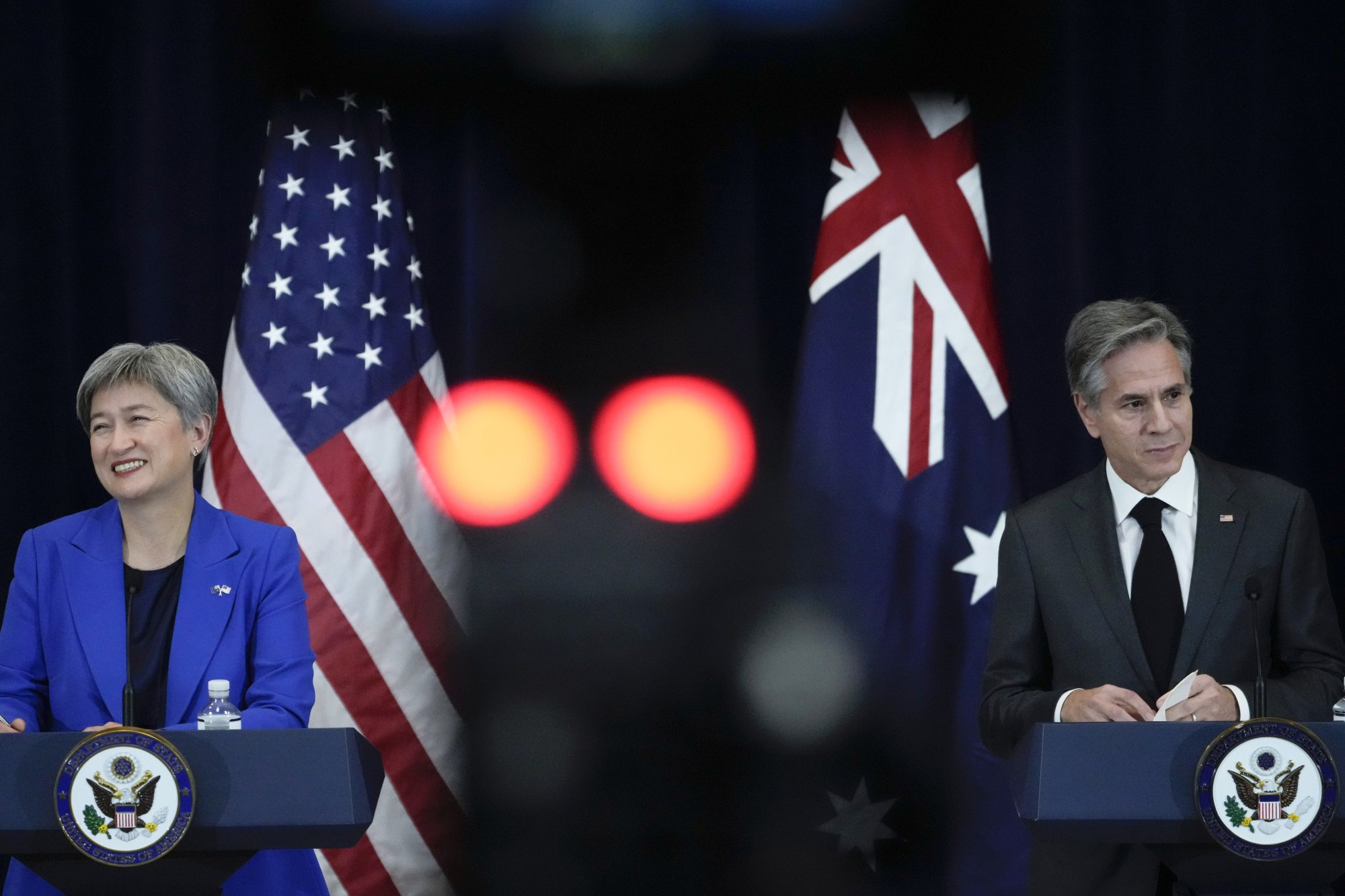
(L-R) Australian foreign minister Penny Wong and U.S. secretary of state Antony Blinken listen to questions during a joint news conference after the 32nd annual Australia-U.S. Ministerial Consultations at the U.S. State Department on December 6, 2022, in Washington, D.C.
Photo: Drew Angerer/Getty Images
Close Alignment
Built over a century of fighting side by side in conflicts, ranging from World War I to the war in Afghanistan, and grounded in a mutual defense treaty, the U.S.-Australia alliance is as strong as ever. President Joe Biden’s approach to allies—seeking consultation and engagement—helped restore Australian analysts’ confidence in the United States as a partner, following four difficult years under President Donald Trump. Questions of how the government of Australian prime minister Anthony Albanese would prioritize defense generally, partnerships broadly, and the alliance specifically were set to rest almost immediately when Albanese traveled to Tokyo for the meeting of the Quad (the leaders of Australia, India, Japan, and the United States) on his first day in office.
Alignment between Australia and the United States is also captured in more enduring ways. The tone of official strategic documents, while not identical, is increasingly similar. Examples include Australia’s Defence Strategic Update and Foreign Policy White Paper, as well as the United States’ Indo-Pacific Strategy, the 2017 and 2022 National Security Strategies, and the 2022 National Defense Strategy. Having survived changes in administrations in each country, there is confidence that close alignment will endure.
Contributing to this alignment are shared concerns over China’s military expansion and modernization—which Australian deputy prime minister Richard Marles recently called the largest defense buildup by any country since World War II. Responding to China’s buildup will require the alliance to cooperate more effectively with partners and jointly leverage resources.
Working as an alliance, several participants noted, will require greater skill in prioritizing, focusing, and developing a more effective cooperative approach. “Good complementary capabilities between our countries are a good place to start,” said one, suggesting that both countries need not act the same—or always together—but instead find ways to divide labor and share benefits.
The continued close alignment of U.S. and Australian policy and objectives creates space for additional steps of coordination. One recurring, overarching position throughout the discussion was that the U.S.-Australia alliance should ensure “Beijing feels it is no longer operating in an environment hospitable to authoritarian regimes.”
Discussions in both June and October highlighted several potential tipping points for regional stability. All involved potential Chinese decisions or actions.
The single greatest change in regional stability would be an armed attack or invasion. Participants expressed greatest concern over a scenario wherein the People’s Republic of China (PRC) attacks or invades Taiwan militarily. Concerns over Taiwan are not new to this iteration of the dialogue. Australian participants in the 2021 dialogue also raised concerns over China taking armed action against Taiwan. These worries are based on China’s decades-long military-modernization efforts, its perceived success in transforming the People’s Liberation Army (PLA) into a high-tech force, and its incursions into disputed territories along the border with India.
Russia’s invasion of Ukraine in February 2022 has intensified participants’ concern that China may seek to capitalize on the global focus on Ukraine to launch an invasion. China-stoked tensions related to Speaker of the House Nancy Pelosi’s visit to Taiwan in August further heightened anxieties. This year’s discussion included worries that the alliance is unprepared for a conflict in or around Taiwan. The question, “What would the United States want Australia to do in a crisis?” revealed a degree of uncertainty within Australia concerning U.S. expectations and reflected the viewpoint that “the scenario over Taiwan is the main driver” for force planning and modernization.
However, participants also perceived substantial risk of China undertaking continued or escalated gray zone actions against Taiwan. Most concerning in this discussion was that China might impose some form of limited blockade or quarantine of Taiwan, limiting its ability to secure food or energy and curtailing its access to global markets. Should non-military assets from China be the ones to take such actions, then China could see Taiwanese, U.S., or third-country responses that include military assets as being highly escalatory or acts of war, further complicating political calculus on whether and how to respond. Over the course of the dialogue, participants assessed that an embargo or blockade was less likely than an actual attack, as it would incur most of the same costs, provide limited benefits, and rapidly galvanize global public opinion against China.
Meeting challenges in the gray zone, a space in which “U.S. administrations are uncomfortable taking decisions” even as “authoritarian regimes run wild,” will require governments to “come to agreements beforehand” internally and externally with allies. One way to do this is by regularly conducting political-level war games or tabletop exercises within the alliance.
Over the past several years, China has expanded and modernized its nuclear forces. Possessing a larger and more capable force, China may consider shifting its nuclear doctrine or its declaratory policy. One participant assessed that there has been “a shift in Chinese language on nuclear no first use, away from posture and toward a willingness to use explicit nuclear threats.” This would be destabilizing in the Indo-Pacific region and risks causing a downward spiral for stability. The participant further noted, “It would be a game changer if China changes thoughts on how to use nuclear deterrence. . . . It may be the most significant shift we must be ready for.”
First, a change in nuclear doctrine or declaratory policy that expands China’s aperture for use would be seen by regional states as increasing their risk of being targeted by China’s nuclear weapons. Under such a threat, most states would likely reassess their defense posture, capabilities, and response doctrine—even if only conventional doctrine. This would lead countries—particularly the United States, Australia, and Japan, and possibly South Korea—to consider increasing their defense capabilities: intelligence, surveillance, and reconnaissance (ISR); long-range strikes; and airborne response.
Moreover, states may want to develop their own nuclear-weapons capabilities. Although this remains highly unpopular in Australia and Japan, both Japanese and South Korean strategic thinkers have explored the possibility of developing independent nuclear capabilities. Concerns that the United States’ extended deterrence commitments will not hold could strengthen proponents of indigenous nuclear-weapons programs in the Indo-Pacific. Such an outcome would pose substantial risks of proliferation and instability throughout the region.
The importance of maintaining parity in hypersonic offense was a recurring theme in both the June and October conversations, given the ways that the development of offensive hypersonic missile capabilities is outpacing that of defense against them. Should China (or another U.S. adversary) develop credible hypersonic strike weapons at scale, it could effectively neutralize much of current U.S. air and missile defense capability for some time. As one participant summarized, “If autocracy gets good at hypersonic offense and has first-mover advantage, deterrence is out the window.”
The cost and complexity of developing hypersonic weapons—particularly using present technology—will initially limit their widespread use and proliferation, as they will be prohibitively expensive for all but a few countries. As one participant suggested, “Defense [against hypersonic weapons] is harder; only the U.S. will get good at it.” This suggests that future conflict against an adversary armed with hypersonic weapons will require new assessments of risk and alternative concepts of operations.
Overcoming Inertia on Acquisition and Technology Controls
U.S. military leaders have stated that the PRC aims to have the capability to engage in offensive military operations in the Indo-Pacific as early as 2027. While apparently hotly debated within the halls of the Pentagon, this public assessment suggests the possibility of a much more urgent timeline than the projected 2030s window of heightened risk identified in the U.S. National Defense Strategy.
With Australia expected to receive the first of the nuclear-powered submarines under the Australia–United Kingdom–United States (AUKUS) agreement by the mid- to late 2030s, close watchers of the military balance in the Indo-Pacific are concerned that the U.S.-Australia alliance may be missing out on potentially lower-cost, faster-production capabilities. Analysts shared a degree of skeptical optimism that the three governments are working on additional concrete efforts that will deliver capabilities well before the mid-2030s, but thus far the governments have been quiet about what those may be.
Discussions highlighted the alliance’s need to “plan and equip for the worst case rather than hoping for something better,” with one participant saying succinctly, “We must prioritize capabilities that deliver sooner” because “if we are wrong, conflict will be later, and we will end up better off.”
One of the most consistent criticisms from U.S. allies and partners is that it is too difficult to partner on defense items because of restrictions on technology transfer. Australians regularly make this point to U.S. officials and think tank counterparts. They acknowledge that the 2017 expansion of the National Technology Industrial Base (NTIB) framework made things “better” but note it is still nowhere near “good.”
Australian officials and analysts shared that it can take 18 months of review for government-to-government agreements to get to “yes”—a process one dialogue participant described as an “export-control quagmire.” Government-to-business agreements can take even longer. All the while, U.S. officials can say that the process is working because approval is eventually granted. For those seeking to innovate at a relevant pace—to market forces, deterrence goals, and ultimately to the warfighter—18-month delays in the process dramatically limit the degree to which the alliance can leverage its innovation potential to solve real problems.
A U.S. participant observed that export controls can “add two to three years on an existing two-plus year commercial-delivery timeline. Five years from order to receipt will be late-to-need.” To begin resolving these challenges, the United States needs to “loosen ITAR [International Traffic in Arms Regulations] requirements for key allies.”
The war in Ukraine is demonstrating the importance of industrial capacity to sustaining a war effort against a highly capable and motivated adversary. If part of deterrence is credibly communicating the capability to fight at least as long as the adversary does, industrial capacity is an important strategic and deterrent signal. Currently, the United States and Australia are falling short on this.
Two comments from the June discussion capture the sentiment clearly. “[The] question of mass is talked about as if we’re approaching it, but we are not”; instead, “we are not even close to mass production” of critical munitions or other capabilities. Later in that discussion, another participant observed, “China is building boats at speeds that we can’t, mean[ing] the coalition of the willing has to figure out if they will have to make the decisions that Europe is now making with energy: How much would we sacrifice to counter China’s aggression?”
A U.S. Department of Defense fact sheet on Ukraine from August indicates that the United States has shipped 8,500 Javelin anti-tank missile systems to Ukrainian forces. Based on procurement figures published by the Department of Defense, this accounts for the equivalent of all Javelins acquired by the U.S. Army and Marine Corps since 2013. Maximum annual acquisition during that timeframe suggests it would take the United States nearly seven years to produce enough Javelins to reconstitute those supplies.
This analysis is not intended to argue against support for Ukraine. Instead, it intends to highlight the gap between peacetime munitions production capacity and the expected rate of expenditure in conflict. A key finding in the 2021 iteration of the U.S.-Australia dialogue was that “the alliance lacks adequate manufacturing capacity or existing stocks of missiles to sustain high-end conflict.” The war in Ukraine proves this.
Analysis conducted since the 2021 dialogue (and shared during the 2022 dialogue) also corroborates the 2021 finding. Recent CSIS war games of U.S.-China conflict scenarios suggest the United States would run out of key precision-guided munitions in the first few days of a conflict with China over Taiwan. Credible deterrence will require greater stocks of munitions by the United States and its allies, as well as the ability to produce munitions far more quickly than the current timeline, potentially two years. This led one participant to suggest it would be necessary to “reassess munitions requirements” for major conflict and identify “ways to fill the gap” rapidly. “Until we fill the gap, we have a deterrence problem.”
Deterrence
“Deterrence” has been the buzzword of defense planning since the release of the 2022 U.S. National Security Strategy and National Defense Strategy. Getting deterrence right will be a difficult but important task if the United States is to avoid conflict. Despite U.S. views that the Department of Defense overall has a poor grasp of what deterrence is or how it works, Australian participants noted that “U.S. thinking on deterrence is quite advanced.” Over the course of both sessions of the dialogue, the exchange on deterrence was extensive and illuminating. It surfaced two main topics: (1) what deterrence is and how it works and (2) the importance of strategic signaling.
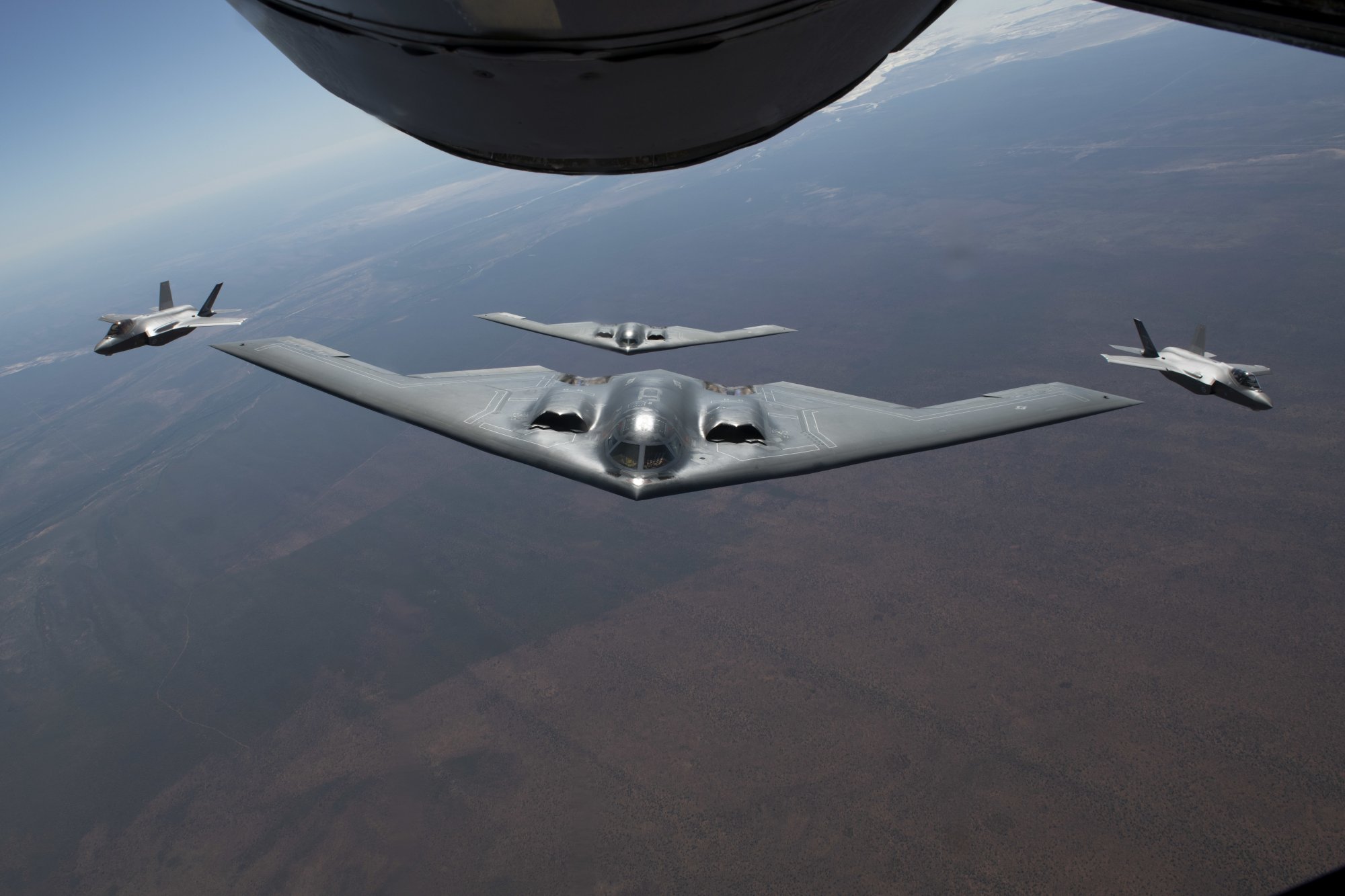
Two U.S. Air Force B-2 Spirit Stealth Bombers, assigned to the 509th Bomb Wing, fly a Bomber Task Force mission on July 18, alongside two Royal Australian Air Force F-35A Lightning IIs, over Royal Australia Air Force Base Curtin, Australia, during exercise Koolendong 22.
Photo: Tech. Sgt. Dylan Nuckolls/U.S. Air Force
A starting point for understanding deterrence is understanding what deterrence is not. Discussions captured that deterrence is not for “Russian or Chinese propaganda,” “disinformation,” “Belt and Road Initiative projects,” “navy port visits,” “espionage,” or “shaping.” Deterrence is not “decisive” in the Clausewitzian sense.
Participants also discussed the elements necessary for effective deterrence. Several key items emerged repeatedly. “Deterrence strategy needs to be specific and tailored.” Core aspects of deterrence include “communication, capability, and credibility.” It needs to be based on “a broad assessment” of adversary interest, vulnerability, and sensitivity, carried out repeatedly over time. In some cases, effective deterrence can depend as much on the credibility of not inflicting punishment for compliance as the credibility of the threat itself; if a country believes it will suffer roughly the same consequences whether it complies, it is more likely to act in its interest. Furthermore, successful deterrence is more likely to take the form of a “campaign,” with multiple elements incorporated over an extended period.
Interventions throughout this conversation underscored the idea that deterrence is not solely a “military action” or “defense problem.” Integrated deterrence is valuable, but currently there is no clear effort or coordination element within the Department of State, Department of Commerce, or other U.S. agencies to suggest that the United States is approaching deterrence in an integrated way—which will be necessary in signaling the credibility of U.S. commitments to China.
Discussion also noted the importance of prioritization among deterrence aims. Participants proposed a hierarchy in which like-minded countries first deter strategic nuclear attacks and then deter aggression. In the Indo-Pacific, this includes both Chinese and North Korean nuclear use and conventional aggression. Within this prioritization, participants in both dialogue sessions emphasized that “deterrence by denial and punishment should be at the center of our strategic thinking.”
Deterrence is more than just military or defense actions. As one participant noted, it is important to remember that “showing off an alliance working toward a common world order is more threatening to China than showing off fancy ships and aircraft. . . . Partnerships are our strongest deterrent.” In that regard, it is important for the United States to consider what actions it can take to develop broad and sustainable coalitions. These likely cannot be based on confronting China but can be grounded in important common values and shared objectives. Here, the concept of a “free and open Indo-Pacific” presents a positive vision for what the region should be, rather than a punitive vision of which sides to choose from in a potential conflict.
To deter, “we need to know the fine line between what would provoke China versus what would mobilize” it. Yet it is not always clear what would fall in either category. This serves as a reminder that deterrence is not a fixed condition but, at best, a dynamic equilibrium that needs constant adjustment. Developing an effective deterrence strategy will require close attention to what is provoking rivals (versus simply eliciting a response from them) and what actions intended to have a deterrent effect are instead inflammatory. As one U.S. participant noted, “Third Offset is a great example of what we thought could be deterrent but turned out to be more provocative.”
Rather than provoking a response, participants believe the primary concern should be the ability to adapt rapidly if an approach is pushing beyond leaders’ desired response. Since any deterrence effort involves risk of escalation or provocation, participants noted that governments in Washington and Canberra “need to be less risk-averse” if they are to deter effectively. Sometimes, “sufficiency in the moment may appear to be excess until after the fact.” Additionally, Australian participants shared that there is growing discussion within Australia on how it can seek to deter using conventional forces and other (nonnuclear) tools of state.
Asymmetry
Asymmetry is critical to achieving U.S. and Australian objectives in the Indo-Pacific. It is more than just being different, according to one participant. Instead, asymmetry is “circumventing an adversary’s strength or converting an adversary’s strength into a weakness.” Based on the power disparities between Australia and China, Australia “must be asymmetric.”
An effective asymmetric strategy will require the United States and Australia to be more cognizant of their advantages and China’s limitations. It will also require both countries to consider more carefully which regional states to focus on so policies can prioritize those outcomes. For example, because “maritime Southeast Asia is primarily focused on absolute economic gains, not relative gains,” these countries are relatively susceptible to PRC economic coercion.
Regarding defense issues, the alliance should recognize that “AUKUS is inherently disruptive” in introducing an unprecedented degree of cooperation, technology, and capability to the region. Such disruptions will need to include more effective communication strategies to reduce regional discomfort and limit the ability of disinformation and counternarratives to take hold.
One commenter noted that the United States, however, “is not in the habit of thinking asymmetrically.” Instead, the U.S. reflex is to assume the solution to challenges is “achieving dominance” in a space. As technology and innovation increasingly stem from private sector actors spread across the globe, the United States (or any power) will have little ability to achieve technological dominance absent significant state intervention.
This section presents findings and recommendations focused on the United States and its government, unless otherwise specified.
Finding: The alliance is as strong as ever—but the challenges it faces in the coming decade, particularly from China, are great. Sustaining close alignment will be crucial to deterring China and adjusting quickly to changing regional dynamics. Delivering on current commitments and continuing to deliver over the medium-to-long term will require senior leaders to invest the time in revising long-standing bureaucratic practices and incentivizing personnel to change.
Finding: The Indo-Pacific region faces several potential strategic stability tipping points in the coming years. Preparing for those will require the alliance to develop new mechanisms to work through potential scenarios in advance and have carefully considered a range of tools (and expected consequences) before a crisis emerges. The most concerning potential tipping points include an armed attack or invasion, possible changes to China’s nuclear doctrine or declaratory policy, and the fielding of a destabilizing technology at scale, such as a hypersonic strike.
Finding: Current national and alliance processes are focused on developing exquisite capability for a conflict that occurs decades in the future, while threat assessments suggest windows of greater risk will begin in only a few years. The alliance needs to prioritize capabilities that deliver in months rather than decades and adapt its review and approval processes to facilitate—rather than hinder—timelines that meet warfighting needs.
Finding: Effective deterrence should be led by the White House and involve multiple parts of the government. The United States will need to update and adapt its deterrence campaigns in an ongoing fashion over extended periods of time. They will be most effective when rhetoric matches capability and will. Working with allies and partners to send similar messages will contribute to a stronger front and reinforce deterrence of China, which seeks to work solely in bilateral contexts. Policies that do not risk escalation will not succeed in effective deterrence.
Finding: Asymmetry creates an opportunity for a limited application of resources to have an outsized effect. China is actively pursuing asymmetric options to deter, counter, or defeat the United States. China’s vulnerabilities suggest a wide array of potential applications for asymmetric pressure to shift its resource allocation or alter PRC risk assessments.
John Schaus is a senior fellow in the International Security Program at the Center for Strategic and International Studies in Washington, D.C
The project leading to this brief would not have been possible without the assistance of several CSIS colleagues. Carolina Ramos was instrumental in starting this effort. Christine Brazeau and Elizabeth Pipes each contributed in large ways to bring the effort to fruition. The workshop in Canberra would not have been possible without great commitment and partnership from the Australian Strategic Policy Institute, in particular Olivia Nelson and executive director Justin Bassi.
This project was sponsored by the Defense Threat Reduction Agency of the U.S. Department of Defense.
