Manila Strategy Forum 2026
September 9 – 10, 2026
Hosted by Southeast Asia Program
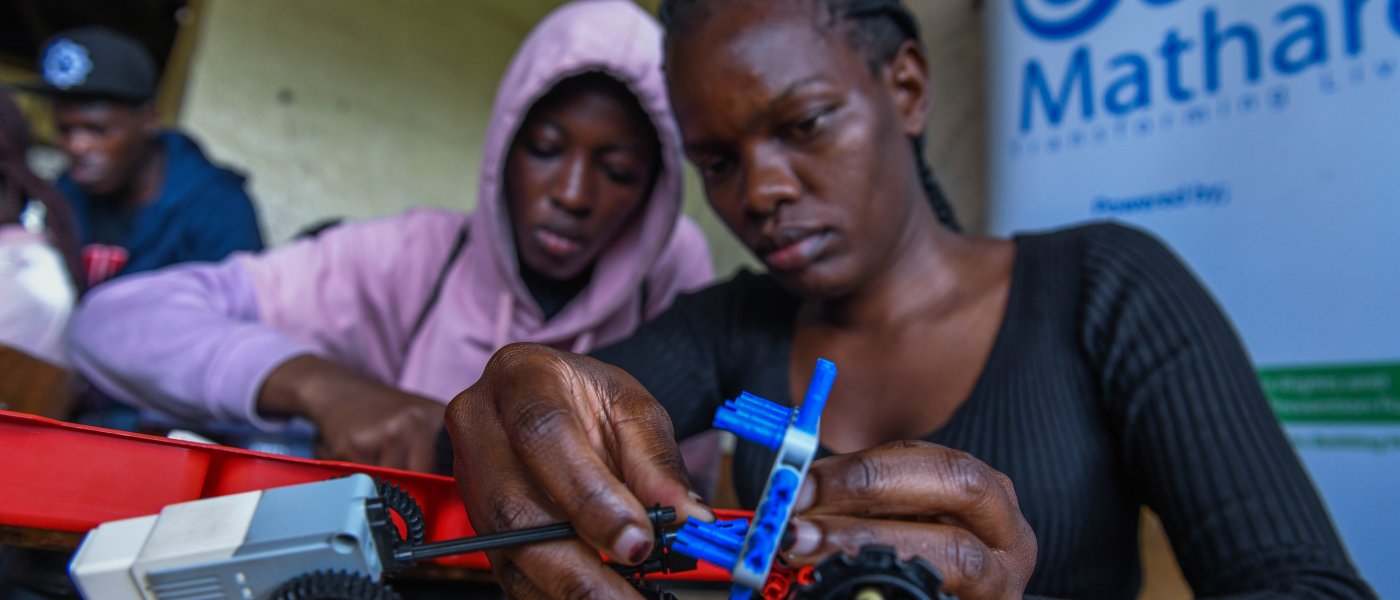
Photo: Gerald Anderson/Anadolu Agency via Getty Images
This analysis is a component of Part II of a three-part series, A New Landscape for Development, that examines the context, current state, and early impacts of the dramatic changes to U.S. foreign assistance in 2025.
The arrival of the second Trump administration led to tectonic and unprecedented shifts in the global development sector. One of the most significant changes was the dismantling of the United States Agency for International Development (USAID) based on criticisms of fraud, waste, and wokeism. While significant attention has been on the United States, there have been staggering reductions in official development assistance (ODA) from other Western donors, such as France, the United Kingdom, and the European Union, which announced a €2 billion cut to its main development aid delivery instrument. Much of the focus in recent months has been on the implications for health initiatives, humanitarian assistance, and other life-saving programs. However, we have seen little discussion on the loss of USAID funding to youth programming and engagement. There is a real need to understand what USAID funds are on youth programming, the importance of investing in youth within the broader development agenda, and what the short- and long-term implications of this funding gap are.
Q1: What youth programming did USAID fund?
A1: USAID funded youth-specific programming under two main frameworks: the Positive Youth Development (PYD) and the Youth Workforce Development (YWFD). Under PYD, USAID oversaw the implementation of laws and policies to promote youth participation at all levels of society, youth well-being resources, training in soft and life skills, and the creation of a youth-inclusive development ecosystem. In addition to PYD, USAID committed to ensuring youth gain the skills needed for employment and economic participation. These efforts ran through USAID’s YWFD programming, which focused on promoting youth entrepreneurship, building technical and vocational skills, and advancing youth leadership and engagement. This range of programming aimed to ensure youth gain the necessary skills to lead healthy lives, access economic opportunities, and contribute productively to society. Between FY 2013 and FY 2020, USAID trained 1.4 million youth in leadership and life skills, including management, leadership, social, and civic engagement. In FY 2020 alone, youth-focused allocations reached $412 million.
Alongside PYD and YWFD, USAID was the world’s largest bilateral donor in education, with over $1 billion in annual allocations for international education. Within this area, USAID focused on funding primary education, vocational and technical training, and higher education. Over the last few years, a majority of USAID education funding was geographically spent in the Middle East, North Africa, and Sub-Saharan Africa. The top five countries that received education funding were of strategic interest to the United States, such as Egypt, Jordan, and Afghanistan. With the closure of USAID, 396 education programs in 58 countries were abruptly halted.
What did these programs look like in practice, and what impact did they have? Below are examples from several continents:
Q2: Why are youth a critical component of development?
A2: With half of the world’s population under 30 and Africa being the youngest continent, young people are key drivers of change and opportunity. Today’s unprecedented socioeconomic and political challenges require the inclusion of young people’s voices and skills.
Yet young people have often been framed as a risk rather than agents of change with creative ideas and solutions to a multitude of crises, such as climate change, authoritarianism, and rising economic inequalities. From Nepal and Morocco to Bangladesh and Kenya, Gen Z is leading a wave of generational upheaval against repressive regimes. These protests have been sparked by systemic issues across multiple regions, like corruption, unemployment, and widening economic disparities. In short, youth often experience an elite-driven system that fails to deliver on their needs and aspirations.
The active engagement of youth is critical to the achievement of an inclusive and sustainable development agenda. Young people should not only be beneficiaries of any development agenda but also active participants in the ideation and implementation processes. Countries cannot reach their full potential without integration of the full spectrum of society, and that includes a rapidly growing youth population. According to a 2023 social return on investment study, investments in youth programming led to long-term success across civic engagement, economic growth, and peacebuilding. In FY 2023, U.S.-funded programs trained 1.3 million youth in soft and life skills, and 60 percent of youth participated in civil society activities following soft and life skills training.
A key component of this investment is correlated to the high unemployment rate that disproportionally impacts young people across the globe. Despite progress, the trends of youth not in employment, education, or training (NEET) are worsening. As of 2023, 20 percent of global youth are NEET. Of these, two out of three are women. These alarming statistics signal an unstable economic outlook, a lack of workforce readiness, and a missed opportunity to unlock human capital development.
While the current youth bulge could be a serious asset for innovation, inclusive development, and economic growth, neglecting the younger generations could have devastating consequences at the country level and for global resilience. This lack of investment threatens increased social and political unrest, an unsteady economic environment, and a weakened civil society.
Q3: What are the short-term and long-term implications of youth programming loss?
A3: The recent development funding cuts have ignited existential conversations on the loss of life-saving programming, primarily in the Global South. An additional critical impact that has been under-examined is on youth development programming. The absence of youth-targeted programming requires a serious assessment of the short-term and long-term implications on the development picture.
The halting of USAID-funded youth workforce development signifies fewer youth in training and less access to technical and life skills. The decrease in opportunities to acquire those skills creates individual and societal vulnerabilities. Fewer youth in training likely means a growing number of youth susceptible to unemployment, which contributes to more fragile economies and less social cohesion. A considerable impact of USAID programming on youth was related to civic engagement, which creates a potential gap in youth’s political and civic participation, as well as the potential for the closing of civic space.
Historically, there has been insufficient integration of evidence to showcase how youth inclusion improves policy outcomes in peace, security, and development. Therefore, it will be especially important to find mechanisms to track the implications of the recent programming loss. While we cannot correlate the dismantling of USAID youth programming to the growing number of Gen Z protests across the world, this global trend is increasingly worrisome and could be exacerbated by the absence of programs that give youth the necessary skills, tools, and support.
In the long term, while it is too early to assess the implications, there are clear potential risks. What we are getting rid of here is a reliable connection between the United States and an engaged global youth population. That means that we may be putting millions of youth at risk of unemployment, disenfranchisement, and potential radicalization. Given the sudden and dramatic cuts the United States has made, there is a risk that we are fostering a generation of young people who may be unwilling to engage with the United States as they enter the workforce. While other donors will not necessarily fill the gap, it allows others to invest in the next generation of young people instead of the United States. The programs USAID was running are unlikely to stand up in the same manner, but the United States still has a choice to make on its involvement in the youth development agenda. If the United States fails to recognize the mutual benefit and return on investment, the consequences could be long-lasting on the United States’ reliability and credibility as a partner.
Hadeil Ali is the chief of staff of the Global Development Department at the Center for Strategic and International Studies (CSIS) in Washington, D.C.
The author would like to thank Veronica McIntire for her valuable research assistance in the preparation of this piece.
