From Concept to Contract: Conversations at the Army Demand Signal Forum | All About the Base
May 18, 2026 • 9:00 – 9:45 am EDT
Hosted by All About the Base
Over the course of the the 14-year long Syrian civil war, Syria's public health system has undergone deliberate targeting by all parties, and particularly by the Assad regime. Systematic attacks on medical facilities, diversion of aid, and the mass exodus of healthcare workers throughout the conflict has resulted in a fragmented and devastated healthcare infrastructure struggling to meet the needs of Syria's population.
The fall of the Assad regime on December 8, 2024 now presents an opportunity for a rehabilitation of Syria's current healthcare system. Recent violence in southern Syria, however, also underscores the fragility of Syria's transition. To explore both the opportunities and challenges of rebuilding Syria's public health system, the CSIS Middle East Program will host Syria's transitional minister of health Musaab Nazzal Al-Ali for virtual keynote remarks followed by a virtual panel discussion on Tuesday, July 29, from 11:00 AM to 12:15 PM EDT. The panel will consist of experts Lolwa Al-Abdulmalek, Dr. Diana Rayes, and Dr. Bachir Tajaldin, and will be moderated by Mona Yacoubian.
Panelist bios:
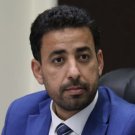
Dr. Musaab Nazzal Al-Ali is the Syrian minister of health, a post he has held since March 2025. He earned his MD from Al-Ba'ath University in 2009, specializing in neurosurgery at the University of Aleppo. His support for the Syrian uprising led to his arrest in 2011 and eventual forced exile to Germany, where he continued his education and completed his specialization in neurosurgery, eventually becoming a consultant. In addition to his clinical work, he played a role in humanitarian efforts during the Syrian civil war, including helping establish field hospitals and provided critical care in affected areas, training local medical teams in trauma care, and contributing to health care delivery in opposition-held areas.
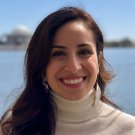
Lolwa Al-Abdulmalek is a Projects and Programs Researcher at Qatar Fund for Development, working under the Humanitarian Aid department. She focuses on early recovery projects, building strategic partnerships, and ensuring that QFFD initiatives create sustainable, long-term impact. She currently leads the portfolios for Syria and Ukraine, while also supporting projects across various countries in need.
Dr. Diana Rayes is a nonresident fellow with the Syria Project at the Atlantic Council's Middle East Programs and a postdoctoral associate in the Science, Technology, and International Affairs (STIA) Program at Georgetown University's Edmund A. Walsh School of Foreign Service. Her research focuses on the impact of conflict and displacement on population health, with specific interests in global mental health and humanitarian assistance. In addition to her academic work, Dr. Rayes recently chaired the Syria Public Health Network, where she led research and policy dissemination on public health trends resulting from the Syrian crisis, and consults for UN organizations including the WHO and UNICEF. She earned her BS in Psychology from Arizona State University and both her MHS and PhD from the Johns Hopkins Bloomberg School of Public Health.
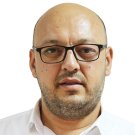
Dr. Bachir Tajaldin is the Türkiye Country Director of the Syrian American Medical Society (SAMS), managing a $30 million annual portfolio across over 50 health projects in Syria and Turkey. He holds an MD from Aleppo University, completed his Internal Medicine residency at Tishreen University Hospital, and earned an Executive MBA for Physicians from Brandeis University. With the onset of the Syrian crisis, Dr. Tajaldin shifted his focus to humanitarian medical work—initially as a frontline physician and later through key roles in humanitarian NGOs. With over a decade of experience in humanitarian health, he has led major emergency responses, including the establishment of Syria’s EWARN system, coordination of polio and cholera outbreak responses, COVID-19 interventions, efforts addressing conflict-related displacement, and SAMS’ response to the 2023 earthquake in Syria and southern Turkey. His work focuses on bridging emergency relief with long-term health system strengthening in crisis-affected settings.
This event is online-only and will be livestreamed on this webpage.
This event is made possible through general support to CSIS.