Capturing National Security Benefits from Offshore Wind
October 20, 2026 • 9:30 – 10:30 am EDT
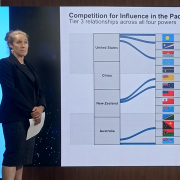
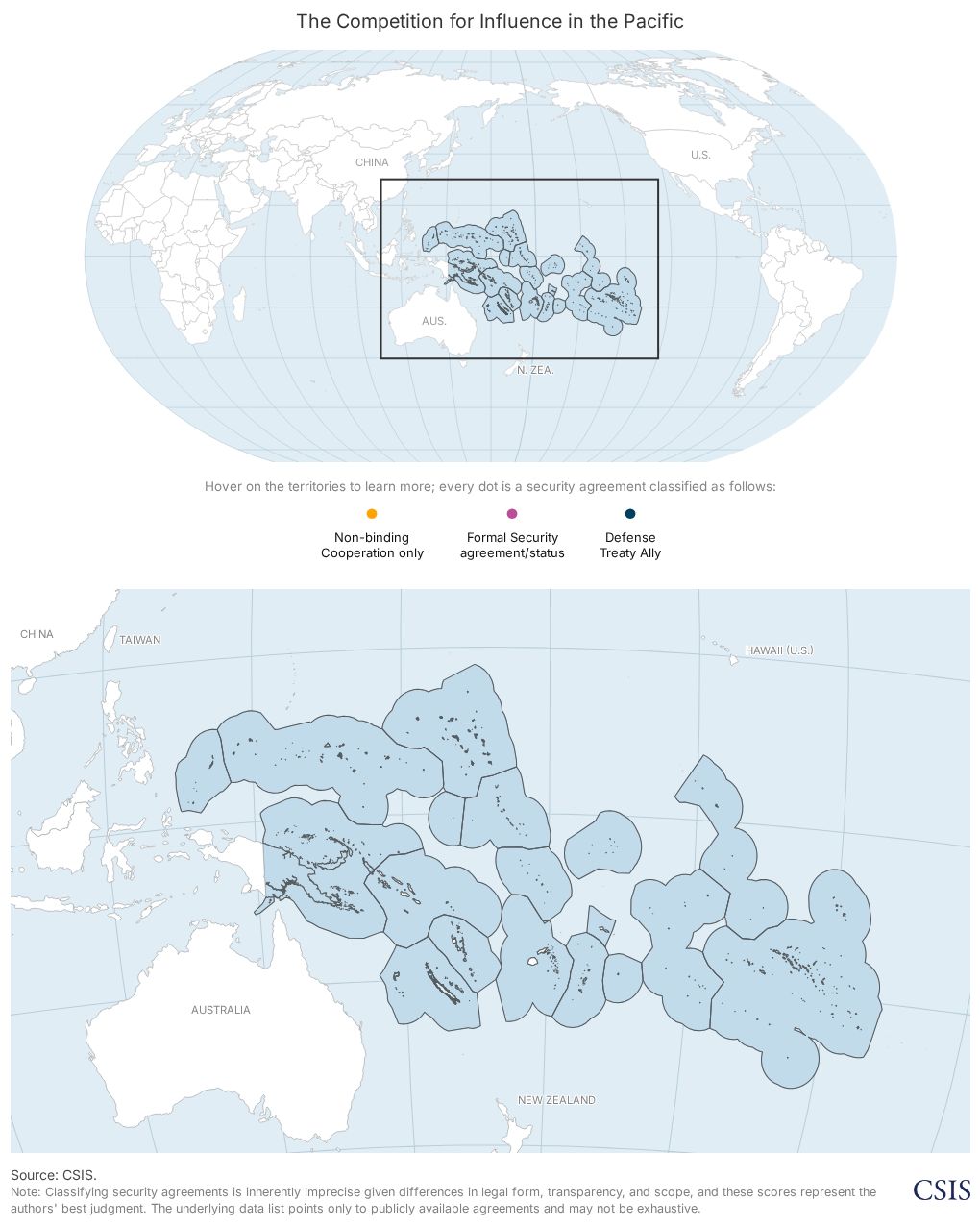
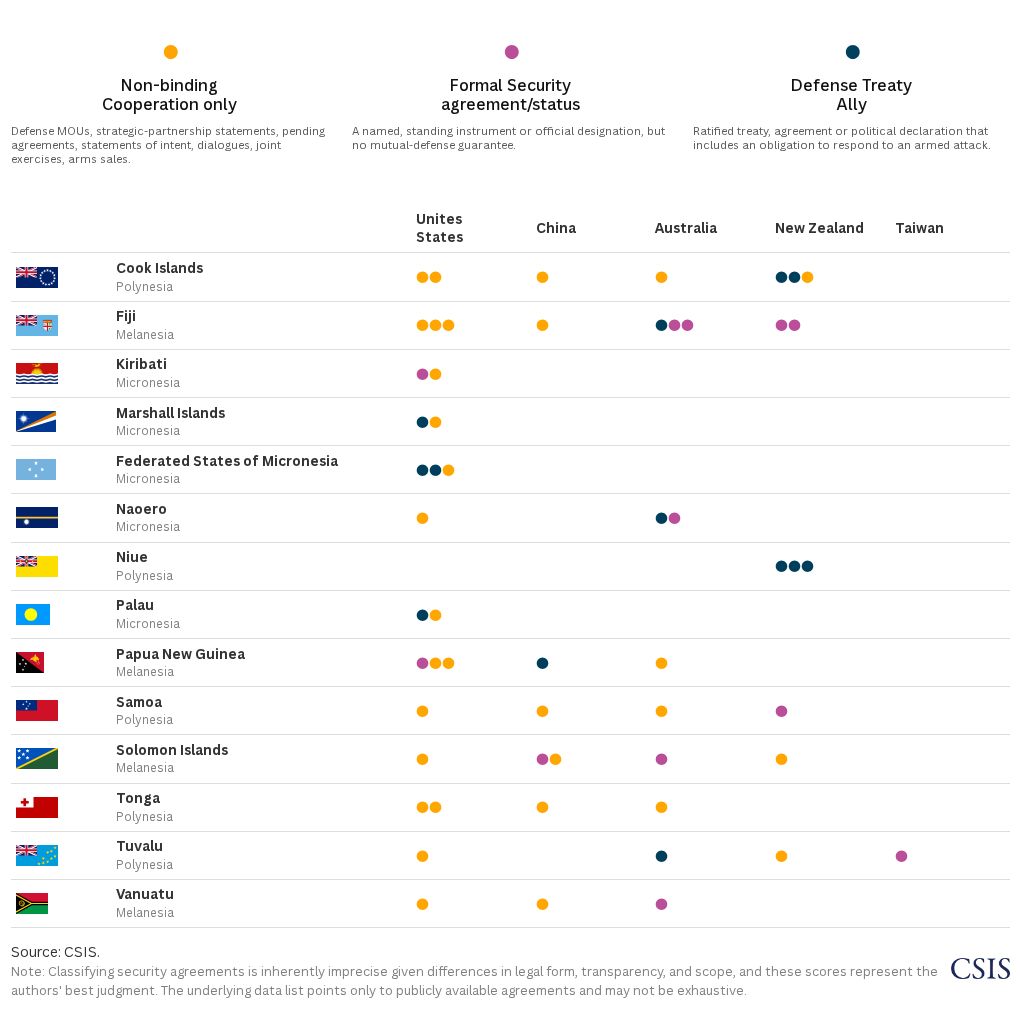
The Security Influence in the Pacific: Who's Competing—and Where? interactive map plots the security relationships between Pacific Island countries and Australia, the United States, New Zealand, China, and Taiwan.
The Security Influence in the Pacific: Who's Competing—and Where? interactive map plots the security relationships between Pacific Island countries and Australia, the United States, New Zealand, China, and Taiwan. The tool covers 56 arrangements across 14 countries, including treaty-level defense obligations, status of forces agreements, maritime surveillance arrangements, and policing memoranda. The arrangements are broken down into three categories: 1. Defense Treaty Ally which includes a ratified treaty, agreement or political declaration that includes an obligation to respond to an armed attack; 2. Formal Security Agreement/Status which is a named, standing instrument or official designation, but has no defense guarantee; and 3. Non-Binding Cooperation Only which includes defense MOUs, strategic-partnership statements, pending agreements, statements of intent, dialogues, joint exercises, and arms sales.
The map below shows each country and its relevant security arrangements. Simply hover over a country to see a representation of its agreements with the five external partners. Further below, you’ll find additional information on each agreement, including when it was signed, who it is with, its classification level, and what it covers.
This project is made possible by general support to CSIS.
Event — October 20, 2026
Commentary by Angelina Bruno and John Augé — October 20, 2026