What did the Trump-Xi Summit Achieve? | State of Play
May 15, 2026 • 11:00 am – 12:00 pm EDT
Hosted by Geopolitics and Foreign Policy

Photo: Felix Cesare/Getty Images
This report was researched, modeled, and substantially written before the late-February/early-March 2026 disruption and de facto closure of the Strait of Hormuz. As a result, the quantitative baselines and scenario assumptions presented below should be read as a pre-disruption assessment of Europe’s liquefied natural gas (LNG) portfolio options for 2026–2030.
The closure of the Strait of Hormuz has materially changed the near-term LNG market context. The disruption has removed close to 20 percent of global LNG supply from the market, driven by a loss in exports from Qatar and the United Arab Emirates (UAE). This is especially consequential for Qatar, because roughly 93 percent of Qatari LNG exports normally transit the Strait of Hormuz, and there are currently no alternative routes to bring those LNG volumes to the global market. Alongside this, Qatar’s Ras Laffan export facility was forced to suspend production and declare force majeure due to Iranian missile attacks.
These developments change how the Qatar-related scenarios in this report should be interpreted. The modeling treats Qatari LNG as physically available under normal market-access conditions and assesses it primarily through three risk dimensions: price volatility, geopolitical risk, and supplier concentration. It does not estimate the effects of the current conflict on LNG prices, cargo availability, shipping and insurance costs, or contract performance associated with Qatari supply. Because the disruption remains ongoing, its duration and market consequences are uncertain.
For this reason, the paper’s numerical results should be understood as a portfolio analysis under normal market access conditions. They remain useful for evaluating Europe’s long-term procurement trade-offs, especially the risks of excessive spot-market exposure, overconcentration in any single supplier, and the tension between price stability and geopolitical alignment. The Hormuz disruption reinforces the paper’s broader conclusion: European LNG security cannot depend on a single supplier, pricing mechanism, route, or geopolitical assumption. A resilient strategy requires diversified long-term contracting, retained spot-market flexibility, close attention to infrastructure and chokepoint risks, and continued demand-side reductions under REPowerEU.
In short, the current crisis changes the immediate LNG outlook, particularly for Qatar’s availability as a supplier in the near term. But the paper’s core policy message remains highly relevant for Europe’s long-term energy security, in that the European Union should avoid replacing dependence on Russian gas with a new form of concentrated exposure, whether that be a supplier, pricing basis, or transit route.
Russia’s full‑scale invasion of Ukraine in February 2022 triggered the fastest reshaping of European gas supply in decades. Russia, in an attempt to coerce the European Union to recognize its annexation of Ukraine, stopped delivery of its natural gas. At the time, Russia accounted for nearly 45 percent of EU gas imports. The European Union, in the face of a historic energy crisis, responded by implementing the REPowerEU agenda in May 2022. The plan proposed a comprehensive set of energy efficiency, energy diversification, and energy saving measures meant to completely wean the bloc of all Russian gas supplies. Within two years of its implementation, the European Union had shifted from a system dominated by Russian pipeline gas to one in which LNG plays a central role. In 2024, the European Union imported more than 100 billion cubic meters of LNG, with the United States emerging as the single largest supplier, providing almost 45 percent of EU LNG imports. Qatar, already one of the world’s leading exporters, has also become a pivotal player in Europe’s new gas landscape. Together, the United States and Qatar anchor Europe’s post‑Russia gas strategy—both as suppliers of physical molecules and as counterparts in a broader web of trade, regulatory, and security relationships.
In order to completely eliminate the European Union’s reliance on Russian gas, both piped and liquefied, European policymakers passed a provisional agreement that would phase out Russian LNG imports by 2026 and terminate long‑term pipeline contracts by 2027. This agreement would turn the REPowerEU political pledge into binding law. This shift is not only about replacing supply sources but also about restructuring Europe’s import portfolio: balancing spot-market purchases with long‑term contracts, diversifying away from single‑supplier dominance, and aligning energy security with climate and sustainability objectives.
Both Doha and Washington are undertaking ambitious expansion plans that will shape the options available to European buyers. Qatar is moving ahead with a multiphase expansion of its North Field, targeting LNG production of roughly 142 million metric tons per year by 2030. U.S. export capacity has grown rapidly over the past decade and could more than double by 2029, with the European Union already purchasing a large share of U.S. cargoes. However, future U.S. export availability will be influenced by competing claims from domestic demand, including rising electricity loads from energy‑intensive data centers and AI applications, and domestic politics. Policy swings in Washington—such as the 2024 pause on new LNG export approvals and the subsequent decision in early 2025 to lift that pause and “return to regular order” in permitting—highlight the political sensitivity surrounding further production expansion.
Having become a major global importer of LNG, the European Union aims to use its buying power to influence global market behaviors. The bloc’s Corporate Sustainability Due Diligence Directive (CSDDD) and related sustainability regulations have drawn sharp criticism from both U.S. and Qatari officials and companies, who argue that the rules will raise costs, complicate compliance, and undermine LNG export competitiveness. In 2025, the United States and Qatar jointly warned EU member states that the CSDDD could result in “unintended consequences” for reliable, affordable gas supply, echoing earlier statements from Qatar that had linked compliance burdens to potential supply decisions. These episodes underscore that long‑term contracts are both commercial risk‑management tools and levers in wider disputes over climate policy, human rights, and industrial competitiveness.
For the European Union, the central challenge is to avoid trading one form of overreliance for another. Europe’s strategy seeks to end dependence on Russian gas, but there are growing concerns that it may slide into a different concentration risk, this time centered around U.S. LNG, just as global fragmentation and cross‑border tariff disputes intensify. At the same time, Europe’s reliance on the spot market to balance its system exposes the region to sharp price swings, particularly during global demand shocks, while increasingly stringent internal climate and sustainability constraints limit the number of acceptable long‑term suppliers. Analyses by the EU Agency for the Cooperation of Energy Regulators (ACER) and others highlight how the balance between spot purchases and long‑term contracts will be central to Europe’s gas security, at least through 2030.
This paper uses a model to examine the trade-offs between the certainty of long-term contracts and the flexibility of spot purchases. The model measures three types of risk: price volatility (how much costs swing from year to year), geopolitical exposure (how much leverage suppliers hold over the European Union), and supplier concentration (how dependent the European Union becomes on any single source). The authors applied this framework to ACER’s baseline projections for 2026–2030, testing what could happen if the European Union replaces some spot-market purchases in 2030 with additional long-term contracts (LTCs) from the United States or Qatar. This allowed the tracing of how each option affects financial stability, political alignment, and market diversification. The primary concerns center on whether the European Union can reduce geopolitical risk (GPR) without creating new dependencies—and, if so, what mix of U.S., Qatari, and spot LNG best achieves that balance.
To evaluate the resilience of the European Union’s LNG portfolio for the 2026–2030 period, this study employs a dual-risk framework that quantifies financial exposure (price volatility), geopolitical risk (GPR), and concentration risk.
Financial risk is based on calculating the annualized volatility of the portfolio’s aggregate returns using a covariance-based approach. Rather than relying on weighted averages, which assume all prices move in unison, this framework captures the structural diversification benefits that arise when supply sources are uncorrelated.
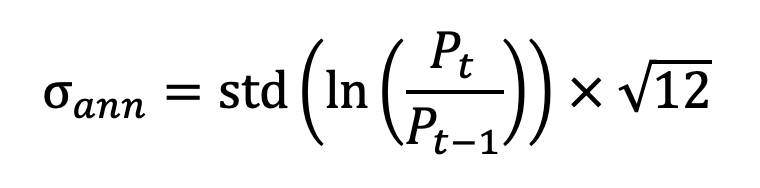
The analysis utilized historical monthly price data from 2016 to 2024 to establish volatility profiles for three primary pricing benchmarks. For each index, annualized volatility () was computed as the standard deviation of logarithmic monthly returns multiplied by the square root of 12:
This analysis yielded distinct risk profiles for each contract type:
Critically, the total risk of the portfolio is determined by the historical covariance between these indices. Analysis of the 2016–2024 period reveals low correlation between U.S. Henry Hub prices and global oil markets (0.07), alongside a moderate correlation between Henry Hub and European spot prices (0.28). These structural disconnects allow for a “diversification discount,” meaning the volatility of the combined portfolio is lower than that of a weighted average. The final annualized volatility () is derived using the standard variance formula for a weighted portfolio, where represents the vector of portfolio weights and is the historical covariance matrix of the index returns.

To quantify the political reliability of the European Union’s supply partners, the model employs the ideal point distance (IPD), a metric derived from voting records in the UN General Assembly (UNGA). The IPD computes a “distance score” between pairs of countries where larger values indicate divergent voting patterns and smaller values indicate aligned geopolitical interests. To ensure the risk scores reflect the geopolitical reality following the 2022 Russian invasion of Ukraine, the IPD is based on voting data from 2022 to 2023, sourced from the Harvard Dataverse.
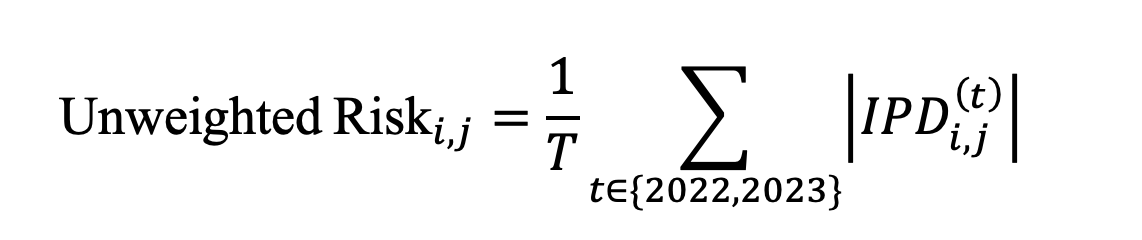
To derive a single “EU-wide” risk score for each external supplier, this analysis employed a two-stage aggregation process. First calculated were the unweighted risk score between every individual EU member state () and a specific external supplier (), done by averaging the absolute IPD over the 2022–2023 period.
Second, to reflect the bloc’s actual exposure, the analysis aggregated these bilateral scores into a single weighted metric, with each member state’s score weighted by its share of total EU gas imports (), ensuring that a geopolitical misalignment with a major importer impacts the final risk score more heavily than misalignment with a minor importer.

The resulting weighted risk scores for the European Union’s major suppliers are presented in Figure 1. Russia presents the highest risk profile (3.00), followed by Algeria (2.29) and then Nigeria (2.05). Qatar occupies a middle ground (1.75), while the United States offers the most favorable alignment with a score of 1.21.1 In the report’s scenario analysis, the portfolio’s aggregate GPR is calculated as the volume-weighted average of these identified GPR supplier scores.

Notably, the analysis does not include spot-market volumes in overall, portfolio-wide GPR calculations. Spot-market volumes often come from third-party aggregators, who source LNG cargoes from a variety of countries, essentially smoothing over country-level GPRs and making it difficult to accurately assign a specific value to any single supply source. Throughout the remainder of this study, the GPR of an LNG portfolio will refer to the weighted-average sum of the GPR values of the supplier countries providing long-term supply to a given portfolio. Note that the GPR values of each supplier country do not change depending on the scenario or procurement year. In the baseline scenario defined below, the GPR of supplier countries is set at the 2022–2023 IPD average from 2026 through 2030. The overall portfolio’s GPR changes due to shifts in the European Union’s signed long-term supply contracts from 2026 through 2030.
Supplier concentration represents the share of total LNG imports held by the largest single supplier. This is computed as:

Alternative metrics such as the Herfindahl–Hirschman Index (HHI) or multi-firm concentration ratios are designed for markets where several competitors can expand output in response to demand signals. The EU LNG market, when analyzed at the country level, does not fit this pattern. Nigeria, Algeria, and Russia face binding capacity constraints—Nigeria and Algeria due to infrastructure and upstream investment limitations, and Russia due to sanctions. Only the United States and Qatar possess both the spare capacity and the political access to materially increase deliveries to Europe in the near term. What matters for EU energy security is whether a single supplier grows large enough to exercise leverage over policy or pricing. Maximum supplier share captures this risk directly.
This section establishes the baseline conditions for EU LNG procurement between 2026 and 2030. The study first disaggregates ACER’s projected LNG demand under a Fit-for-55 scenario (Figure 2) by supplier country and spot-market volumes, drawing on existing long-term contract structures and announced capacity expansions. These baseline estimates provide the reference point against which alternative contracting strategies can be evaluated. This disaggregation estimates baseline levels of three key energy security metrics: GPR exposure, portfolio price volatility, and supplier concentration.

Figure 2 presents the projected composition of EU LNG supply from 2026 to 2030, disaggregated by source country and spot-market procurement. Because the official ACER LNG contract database is not public, this breakdown is derived from a synthesis of publicly available LTCs and best-estimate projections. Several structural shifts within the European Union’s LNG supply emerge from this projection.
The most pronounced trend is the expansion of spot-market supply volume, which increases from 41 billion cubic meters (bcm) in 2026 to approximately 57 bcm annually by 2030. By the end of the projection period in 2030, spot procurement is the single largest source of supply. This expansion is driven by the phaseout of Russian contracted volumes and increasing overall LNG demand.
Russian LNG declines from 21 bcm in 2026 to 14 bcm in 2027 before disappearing entirely by 2028. Notably, this disaggregation was conducted prior to the December 3, 2025 provisional agreement between the European Council and Parliament (part of the European Union’s REPowerEU roadmap), which prohibits long-term Russian LNG contracts from January 1, 2027. As a result, this report’s model estimates a gradual, linear decline in Russian volumes rather than the sharper cutoff now mandated by EU law. In either case, execution risk remains significant. Despite the political commitment within the European Union, Russian LNG imports reached record levels in 2024—22 bcm, up from 20 bcm in 2023. Furthermore, both Hungary and Slovakia have promised to issue legal challenges once the law is passed. Whether the legislated ban fully materializes, or if Russian volumes find alternative pathways into European markets, remains uncertain.
This analysis projects that U.S. contracted volumes will grow from 31 bcm in 2026 to 52 bcm by 2030, making the United States the dominant source of contracted LNG by the end of the decade. This growth is underpinned by significant new liquefaction capacity—U.S. export capacity is projected to more than double from 118 bcm in early 2024 to 300 bcm by 2029—and by European utilities seeking Henry Hub–linked supply as an alternative to both Russian volumes and volatile spot procurement.
While Qatari volumes fluctuate between 12 and 20 bcm annually according to the model, they remain relatively stable in aggregate. In addition, although some legacy contracts expire during this period, new agreements tied to Qatar’s North Field expansion program are expected to offset these losses. QatarEnergy’s phased expansion will increase its production capacity from 77 to 142 million metric tons per annum by decade’s end, providing substantial uncontracted volumes available for European offtake.
The paper’s model projects that Algerian and Nigerian volumes remain relatively stable at 10–20 bcm combined, but both countries face structural constraints on expanding production. Algeria’s legacy infrastructure and declining reservoir productivity both limit expansion potential, though renewed contracts—including a 2 million metric ton agreement with TotalEnergies through 2025—provide baseline flows. Nigerian volumes similarly remain modest, hampered by infrastructure and upstream investment challenges.
This disaggregation enables the calculation of the GPR and portfolio volatility of the EU LNG supply from 2026 to 2030.

Figure 3 shows that GPR and portfolio volatility move in opposite directions under ACER’s baseline projection. GPR falls 23 percent between 2026 and 2030, from 1.96 to 1.50, primarily driven by the phaseout of Russian LNG. Portfolio volatility, in contrast, rises from 51 percent to 56.8 percent over the same period. The impact of this increase is compounded by growing import volumes: As LNG demand increases from 120 bcm in 2026 to 140 bcm in 2030, each percentage point of volatility translates to larger absolute financial exposure.


Figure 4 shows each supplier’s contribution to the overall portfolio’s GPR, while Figure 5 illustrates how the three price indices (Brent Crude/Oil-linked, Henry Hub, and Spot Market) impact overall volatility. The analysis reveals that, in the 2026 and 2027 projections, Russia—indicated by the gray sections—plays an outsized role in GPR. Despite accounting for just 18 percent of LNG supply by volume, Russia contributes 40 percent of total GPR in each of those years. As Russian volumes are phased out, overall GPR decreases. U.S. supply volumes increase by 67 percent from 2026 to 2030, with its contribution to GPR increasing by 60 percent over the same period. As the only supplier with a risk score below 1.50 (at 1.21), the United States offers a stabilizing effect. Every additional billion cubic meter of U.S. supply effectively displaces higher-risk competitors.
Every additional billion cubic meter of U.S. supply effectively displaces higher-risk competitors.
Crucially, these risk scores do not capture the qualitative “leverage risk” that accompanies high supplier concentrations. For both Qatar and the United States, for example, market dominance has provided leverage to push back against specific EU policies. In the case of Qatar, state-owned entities have explicitly leveraged their supply role to contest EU regulations, such as the CSDDD, threatening supply diversions if compliance becomes too burdensome. The United States has taken a similar stance regarding the European Union’s Methane Regulation, arguing that it should be exempt.
Notably, the absolute increase in U.S. volumes does not translate to an increase in relative portfolio concentration. Because EU LNG demand is growing faster than U.S. LTCs, the U.S. share of total supply is actually projected to decrease, dropping from 45 percent in 2024 to 37 percent in 2030. Despite the decrease in overall market share through 2030, the absolute volume of U.S. supply increases, from 31 bcm to 52 bcm. This exposes the European Union to transatlantic trade friction. U.S. LNG flows could become even larger bargaining chips in broader disputes over tariffs on steel, aluminum, or digital services, or be impacted by domestic changes in export permitting policy (such as the 2024 export approval pause). In this context, concentration risk is not just about the physical security of molecules; it is about the political cost of dependency. High concentration of supply restricts the European Union’s maneuvering room in trade and regulatory negotiations, turning energy security into a potential pressure point for policy concessions.
From 2026 to 2030, the overall volatility of the European Union’s LNG supply portfolio is projected to rise from 51 percent to 56.8 percent. This increase is driven by growing reliance on both the spot market (increasing from 34 percent to 41 percent of total volume) to meet incremental demand growth and on U.S. supply (increasing from 26 percent to 37 percent). It is important to note that these two sources carry different price risk profiles: Spot-market volumes are markedly more volatile, with an annualized volatility of 90 percent, compared to 77 percent for Henry Hub–linked U.S. volumes and 58 percent for oil-linked volumes. Consequently, while both sources drive volatility upward, spot-market exposure is the primary accelerant of portfolio volatility. In fact, by 2030, spot volumes are expected to account for 31 percent of the total portfolio volatility, while U.S. volumes are expected to account for 21 percent. As demand scales through 2030, each percentage increase in volatility translates into larger absolute financial impacts and more uncertainties for downstream markets.
Ultimately, the ACER baseline case projection reveals a complex trade-off between three aspects of portfolio risk. While the European Union successfully lowers aggregate GPR by diversifying supply away from Russia, it does so by accepting higher price volatility and maintaining substantial concentration in key partners. The EU portfolio effectively exchanges the acute security risks of the past for new financial and structural challenges. This dynamic raises a critical strategic question: Can specific contracting choices better optimize this balance? The following section explores this through a scenario analysis, quantifying how substituting spot-market reliance with increased LTCs from either the United States or Qatar alters the EU portfolio’s risk and volatility profile. The effect of these substitutions on supplier concentration risk is analyzed directly as well.
To address the price volatility inherent in the baseline case, the analysis developed several contracting scenarios for LNG demand in the year 2030 to identify strategies that mitigate volatility. The analysis proceeds in two stages. The first stage comprised evaluating volume sensitivity resulting from the substitution of spot-market shares with LTCs from either the United States or Qatar exclusively, ranging from 5 bcm to 25 bcm annually. Figures 6 and 7 illustrate the resulting changes in portfolio price volatility and GPR. The second stage consisted of evaluating a fixed 15 bcm substitution to determine the optimal supplier mix, blending U.S. and Qatari long-term contract volumes to define an efficient frontier that balances financial stability, political alignment, and market concentration. Figures 8 and 9 quantify the potential benefits versus the potential risks by country (the United States and Qatar) to facilitate optimal supply mix determination.


Figure 6 reveals a stark divergence in financial efficiency between Qatari and U.S. LTCs. The pivot toward Qatari supply drives a linear decline in portfolio volatility, leveraging the structural stability of oil-indexed pricing. Because Brent Crude historically exhibits low correlation with European gas hubs, adding Qatari supplies acts as a portfolio diversifier; for every 5 bcm of spot volume replaced with Qatari LNG, overall EU portfolio volatility drops by approximately 1.5 percent. In contrast, the U.S. pivot yields a much more muted financial volatility benefit. While Henry Hub prices are less volatile than those of the spot market, the former remain positively correlated with global gas dynamics. Consequently, shifting volume to the United States does not introduce a true hedge against fluctuations but rather exchanges one form of gas risk for another. Notably, the U.S. volatility curve flattens and then begins to reverse after the 15 bcm threshold. This occurs because the portfolio loses diversification at that level. Therefore, while U.S. gas is safer than the spot market overall, it still carries a high standalone volatility (77 percent) level that is significantly higher than the existing diversified EU portfolio (~56 percent). Moreover, as U.S. volumes push beyond a 50 percent market share, the overall portfolio increasingly mirrors the volatility of the U.S. market itself, eventually causing overall risk to rise as the negative impact from increasing supplier concentration outweighs the benefit of reducing spot-market exposure.
While U.S. gas is safer than the spot market overall, it still carries a high standalone volatility level that is significantly higher than the existing diversified EU portfolio.
Figure 7 presents the inverse picture for GPR. The U.S. pivot delivers consistent improvement—each additional 5 bcm of U.S. LNG lowers the EU portfolio’s weighted GPR score by approximately 2 percent relative to the baseline. By displacing spot volumes with contracted U.S. supply, the European Union locks in exposure to the most geopolitically aligned partner in the global LNG market, reducing dependency on suppliers whose interests may diverge from European security priorities during future crises. The Qatari pivot moves in the opposite direction. Qatar’s GPR score sits above the EU portfolio average, reflecting geographic proximity to regional instability and concentrated production infrastructure. Each 5 bcm shifted to Qatar raises portfolio GPR by roughly 1.5 percent, compounding to a 4.5 percent increase at the 15 bcm threshold.
While Figures 6 and 7 demonstrate the financial and geopolitical benefits of shifting away from spot procurement to LTCs with either the United States or Qatar, these gains come at a structural cost: increased supplier concentration. Figures 8 and 9 quantify this cost by pairing each supplier with its comparative advantage—the United States for GPR reduction, Qatar for volatility mitigation—and mapping how much concentration risk must increase to achieve those respective gains, illustrating the risk-benefit comparison.


Figure 8 shows that achieving the full GPR reduction possible from a U.S. pivot requires accepting a substantial increase in supplier concentration. At the 5 bcm substitution level, the U.S. share of total LNG imports rises to approximately 41 percent, yielding a modest 1.1 percent reduction in the EU portfolio’s GPR. To capture the more significant drop of 4.5 percent in GPR possible at 25 bcm, the European Union must allow U.S. market share to exceed 55 percent—a level that would grant Washington significant leverage in trade and regulatory negotiations.
Figure 9 reveals an analogous pattern for Qatari supply and price volatility. The volatility benefits of oil-indexed Qatari LNG scale linearly with volume, but so does Doha’s market share. At 5 bcm, Qatar’s share rises to roughly 18 percent, delivering a 2 percent reduction in portfolio volatility. At 25 bcm, Qatar commands over 30 percent of EU LNG imports while volatility falls by approximately 7.5 percentage points.
Notably, these two concentration pathways carry asymmetric risk profiles. Because Qatar starts from a smaller baseline share (approximately 14 percent in 2030 versus 37 percent for the United States the same year), even aggressive Qatari procurement does not approach a single-supplier market majority in absolute terms. In fact, even at the 25 bcm threshold of this report’s model, Qatar’s market share remains below the U.S. baseline (2030) position. From a market concentration standpoint, a Qatari pivot preserves greater structural diversification.
However, market concentration measured simply in volume imported understates actual risk. Qatar’s higher GPR score (1.75 versus the United States’ 1.21) means that each bcm of Qatari supply carries a larger per-unit GPR burden. Thus, when market concentration is evaluated on a GPR-weighted basis (i.e., multiplying supplier share by GPR score), the gap between the two strategies narrows. A 25 bcm Qatari pivot yields a risk-weighted market concentration of approximately 0.54 (31 percent × 1.75), while a 25 bcm U.S. pivot yields roughly 0.67 (55 percent × 1.21). Without weighting for GPR, the percentage difference in market concentration between the Qatari pivot and the U.S. pivot is approximately 77 percent. This means that the U.S. pivot leads to a portfolio that is 77 percent more concentrated in a single supplier than the Qatari pivot. However, after accounting for GPR, the difference between the two scenarios drops to 24 percent. Thus, although the Qatari pathway still offers a modestly lower risk-weighted supply concentration, the advantage is far smaller than raw market shares would suggest. In effect, Qatar’s higher per-unit GPR partially offsets its lower absolute market presence, compressing the practical difference between the two strategies.
This observation complicates the policy calculus. A U.S.-heavy portfolio minimizes political alignment risk but concentrates market power in a single partner whose trade policy is increasingly volatile. On the other hand, a Qatar-heavy portfolio stabilizes prices and limits single-supplier dominance in volume terms but elevates dependency on a supplier whose geopolitical alignment is weaker and whose regulatory and human rights practices remain points of contention with European policymakers. Neither extreme optimizes across all three risk dimensions. This result raises the question: Can a blended approach, in which new contract volumes are allocated across both suppliers, capture the volatility benefits of Qatari LNG while preserving the geopolitical gains of U.S. supply, all while mitigating against supplier concentration risk? Figure 9 examines this possibility by mapping a spectrum of allocation combinations.

Figure 10 maps potential divisions of the 15 bcm reallocation between U.S. and Qatari LNG. The U.S.-only strategy (upper left) cuts GPR by 3 percent but reduces volatility by only 1.2 percentage points. The Qatar-only strategy (lower right) cuts volatility by 5 percentage points but increases GPR by 4.5 percent. Moving along the frontier, each incremental shift toward Qatar trades geopolitical alignment for price stability. Notably, the original, ACER baseline case, without any new long-term LNG contract signings, contains more GPR and is more volatile than the scenarios modeled in Figure 10.
Within Figure 10, marker size reveals a third dimension to the analysis: supplier concentration. As allocations shift toward the United States, the maximum single-supplier concentration level rises from 38 percent to 48 percent, approaching the 50 percent threshold where a single supplier dominates the portfolio. At 15 bcm, no potential allocation division reaches this limit. Overall, the upward trend of single-supplier concentration when allocation favors the United States signals that U.S.-heavy strategies will face binding constraints at higher volumes. Blended allocations offer a way to mitigate this risk.
By increasing the mix of both U.S. and Qatari volumes, the European Union can capture the majority of Qatar’s volatility reduction without materially degrading its geopolitical position.
Ultimately, the European Union cannot simultaneously maximize both financial stability and geopolitical security. A choice must be made between the volatility hedging offered by the Qatari supply (with its associated increased GPR) and the lowered GPR (but reduced vulnerability protection) obtainable with the strategic alignment of U.S. supply. While a pure pivot to either supplier creates new vulnerabilities—volatility saturation and market concentration with the United States, or elevated geopolitical exposure with Qatar—a blended approach offers a pragmatic middle ground. By increasing the mix of both U.S. and Qatari volumes, the European Union can capture the majority of Qatar’s volatility reduction without materially degrading its geopolitical position.
The preceding analysis reveals that the United States’ role in EU LNG procurement is primarily driven by its low GPR score. The advantage offered by the low U.S. GPR score allows the European Union to procure substantial U.S. volumes while also improving its overall portfolio security. But GPR is not static, as current events have vividly illustrated. In fact, recent U.S. actions have pushed the boundaries of geopolitical norms and may prompt European policymakers to reassess the political reliability of U.S. supply.
On January 3, 2026, U.S. Special Forces seized President Nicolás Maduro in Caracas, Venezuela, transporting him to New York to face drug trafficking charges. President Trump subsequently announced that the United States would “run” Venezuela indefinitely and directed U.S. oil companies to rebuild the South American country’s energy infrastructure. Days later, Trump reiterated his intention to bring Greenland under U.S. control, stating that “if we don’t do it the easy way, we’re going to do it the hard way.”
European leaders responded swiftly, explicitly referencing Trump’s statements about Greenland. Seven heads of government—from Denmark, France, Germany, the United Kingdom, Italy, Spain, and Poland—issued a joint statement affirming that “Greenland belongs to its people” and that “it is for Denmark and Greenland, and them only, to decide on matters concerning Denmark and Greenland.” Danish Prime Minister Mette Frederiksen warned that a U.S. attack on Greenland would mean “everything would stop—that includes NATO and therefore post-World War II security.” The European Council president went so far as to state that “the European Union cannot accept violations of international law—whether in Cyprus, Latin America, Greenland, Ukraine, or Gaza.”
These episodes could mark a qualitative shift. In spite of the European Union’s post-2022 pivot to U.S. LNG, major European governments are increasingly forced to consider the United States as a source of aggression and volatility rather than as a reliable security partner.
The seizing of the Venezuelan president—and the subsequent claims of “running” the South American country indefinitely by the U.S. president—introduce a secondary channel of uncertainty for EU gas procurement: oil-linked contract pricing. Venezuela holds the world’s largest proven oil reserves (approximately 300 billion barrels), though production has fallen to roughly 900,000 barrels per day since 2024. Under U.S.-directed rehabilitation, production could approach 3 million barrels per day over the long term, adding meaningful supply to an already oversupplied global market, but this is uncertain.
U.S. control of Venezuelan production would mark a structural shift in global oil markets. The United States has never directly controlled a major foreign country’s producing assets—it has influenced prices through sanctions, reserve releases, and diplomacy, but not through direct production decisions. Operating Venezuela’s reserves would give Washington direct control over significant supply volumes, which it could adjust to serve energy, trade, or foreign policy goals. This could change the drivers behind global oil prices, and consequently, introduce uncertainty into oil-linked gas pricing as well.
President Trump’s statements, combined with the U.S. capture of the Venezuelan president, raise a practical question for EU procurement strategy: How robust is the case for U.S. LNG if transatlantic geopolitical alignment deteriorates? To quantify this, this study’s authors extended the scenario analysis by varying the U.S. GPR score while holding all other parameters constant and observing how the split between U.S. and Qatari gas shifts within a 15 bcm reallocation scenario (from spot to long-term contracts). In this scenario, the optimal allocation comprises the U.S.-Qatar allocation split that minimizes portfolio volatility without increasing GPR relative to the 2030 baseline shown in Figure 2. As Figure 11 illustrates, rising U.S. GPR causes the justification for accepting higher price volatility to quickly falter, indicating that more volume would shift toward the lower-volatility Qatari gas supplies.

Figure 11 reveals that, at baseline, the optimal distribution of the 15 bcm reallocation comprises a 60 percent share for U.S. LTCs. This optimal share percentage holds steady through a 10 percent increase in overall U.S. GPR, as the relative difference between the U.S. and Qatari risks is wide enough to absorb some erosion. Past the 10 percent threshold, however, each incremental increase in GPR requires shifting more volume to Qatar. Though the decline is gradual at first, it rapidly accelerates starting at 35 percent. Beyond a 50 percent GPR increase, the optimal U.S. reallocation share drops to 42 percent, a trend that will continue as the United States’ GPR increases.
The implications of rising U.S. GPR operate on two fronts. For the European Union’s existing portfolio, deteriorating alignment between the benefits offered by U.S. supplies and the risks entailed with increasing U.S. GPR both retroactively degrades the risk profiles of supply already under contract and affects future contracting decisions. That is, the U.S. LNG expected to be delivered in 2030 was contracted in a time of stronger, more stable transatlantic alignment. If that assumption weakens, the European Union could find itself locked into substantial exposure to a supplier whose GPR score is rising rapidly.
The European Union is willing to accept the volatility premium inherent with U.S. supply because of the value proposition of geopolitical alignment. Absent that advantage, the commercial case for incremental U.S. supply increases collapses.
With regard to future procurement, rising U.S. GPR severely constrains the European Union’s options. More specifically, as U.S. GPR approaches parity with that of Qatar, Qatari supplies become more palatable within the EU portfolio. This dynamic directly undermines U.S. export competitiveness within its largest LNG export market. The United States does not compete on price stability, as Henry Hub–linked contracts carry higher standalone volatility than oil-indexed alternatives. Instead, the U.S. appeal is based on the country’s geopolitical alignment with Europe; the European Union is willing to accept the volatility premium inherent with U.S. supply because of the value proposition of geopolitical alignment. Absent that advantage, the commercial case for incremental U.S. supply increases collapses, redirecting future contract opportunities toward Doha.
The trajectory of U.S. foreign policy thus carries direct consequences for transatlantic energy trade. Actions that elevate perceived U.S. GPR do not merely strain diplomatic relations—they simultaneously burden the European Union with higher-risk legacy contracts and foreclose the pathway for future U.S. LNG growth in Europe. The concluding sections consider how the bloc might navigate these compounding uncertainties.
This analysis suggests that the European Union can reduce exposure to its most misaligned suppliers, but only by accepting new vulnerabilities. Leaving Russian gas behind improves Europe’s geopolitical position, but U.S. and Qatari supplies bring their own risks: trade policy friction, regulatory disputes, and supplier leverage, to name a few. Moreover, both price relationships and geopolitical alignment shift over time—and as global fragmentation deepens, the value of any single supplier can change far faster than contracts can be rewritten.
The European Union can reduce exposure to its most misaligned suppliers, but only by accepting new vulnerabilities.
This analysis points toward a blended contracting strategy as the most robust approach for the European Union to manage the changing energy supply landscape. Replacing a portion of spot-market exposure with long-term contracts from both the United States and Qatar would allow the bloc to capture much of Qatar’s volatility-dampening effect while preserving the geopolitical alignment that U.S. supply offers. The authors of this report do not prescribe a specific U.S.-Qatari ratio; the optimal mix will depend on prevailing market conditions, available LNG volumes, and individual buyer preferences. The most significant consideration is that the overall allocation keeps any single supplier below the concentration levels at which leverage risk escalates and the market becomes overly reliant on a single pricing basis. But even this ideally balanced portfolio depends on how Washington, Doha, and Brussels manage the link between LNG trade and contentious policies like the EU Methane Regulation (EUMR) and CSDDD.
For both the United States and Qatar, these findings reveal how export policy and regulatory postures directly shape the attractiveness of their respective LNG supplies within Europe’s portfolio. As of early 2026, U.S. LNG offers the European Union the strongest geopolitical alignment and a critical anchor for replacing Russian volumes, but that advantage could erode if exports continue to become entangled in disputes over tariffs or EU regulations. Qatar’s large capacity expansion and oil-indexed pricing make its LNG a hedge against volatility, yet its high GPR, combined with its history of contesting EU rules, create similar trade-offs.
The results of this analysis suggest that the United States and Qatar should:
If Washington and Doha meet these conditions, U.S. and Qatari LNG can continue to play the differentiated roles this study identifies: U.S. supplies working as a geopolitically aligned source of supply, and Qatari volumes as a volatility hedge.
The structure of long-term deals with the United States and Qatar will shape not only volatility and diversification, but also the European Union’s room to maneuver in trade and regulatory negotiations—especially around the EUMR, CSDDD, and the broader European Green Deal. To effectively balance the risks and benefits inherent in the EU energy supply, this analysis offers a two-part strategy.
a. Replace a defined share of spot volumes with U.S. and Qatari LTCs, but not the entire spot position. Use long-term contracts to reduce exposure to extreme spot volatility while retaining enough flexibility to avoid lock-in to any single supplier or pricing basis.
b. Pursue blended allocations. Avoid both U.S.-only and Qatar-only pivot strategies. A mixed allocation approach captures most of Qatar’s volatility benefit while preserving the geopolitical gains from U.S. supply and keeping both supply concentration levels below dominance thresholds.
Framed this way, LNG procurement becomes an instrument for protecting the European Union’s regulatory autonomy.
a. Prioritize structural reductions over cyclical demand reductions. Focus on growing electrification, building renovation, and increasing industrial efficiency—measures that permanently lower gas usage—rather than relying on temporary crisis-driven savings.
b. Align infrastructure planning with realistic demand paths. Avoid overbuilding LNG import capacity based on demand projections that exceed structural reduction goals. Import capability should not become a source of long-term lock-in.
Demand reduction both reduces leverage risk and increases optionality. If demand reduction proves shallow or fragile, the burden of managing leverage risk falls back on a supplier’s GPR and overall diversification.
In sum, mutually beneficial LNG trade among the European Union, the United States, and Qatar is possible, but it will not happen automatically. The United States and Qatar must offer predictable export policies, keep LNG flows separate from EU regulatory disputes, and work with Brussels on methane and sustainability implementation. The European Union should rebalance away from spot-market purchases and toward a blended, concentration-aware mix of U.S. and Qatari LTCs that preserves regulatory autonomy, while pursuing REPowerEU’s structural demand reductions as a core tool for limiting leverage risk. Together, these steps would make U.S.-Qatar-EU LNG interdependence more resilient and more compatible with Europe’s long-term climate and regulatory goals.
Raj Sawhney is an adjunct fellow (non-resident) with the Energy Security and Climate Change Program at the Center for Strategic and International Studies in Washington, D.C. Joseph Majkut is the director of the Energy Security and Climate Change Program at CSIS.
This report is made possible by general support to CSIS. No direct sponsorship contributed to this report.