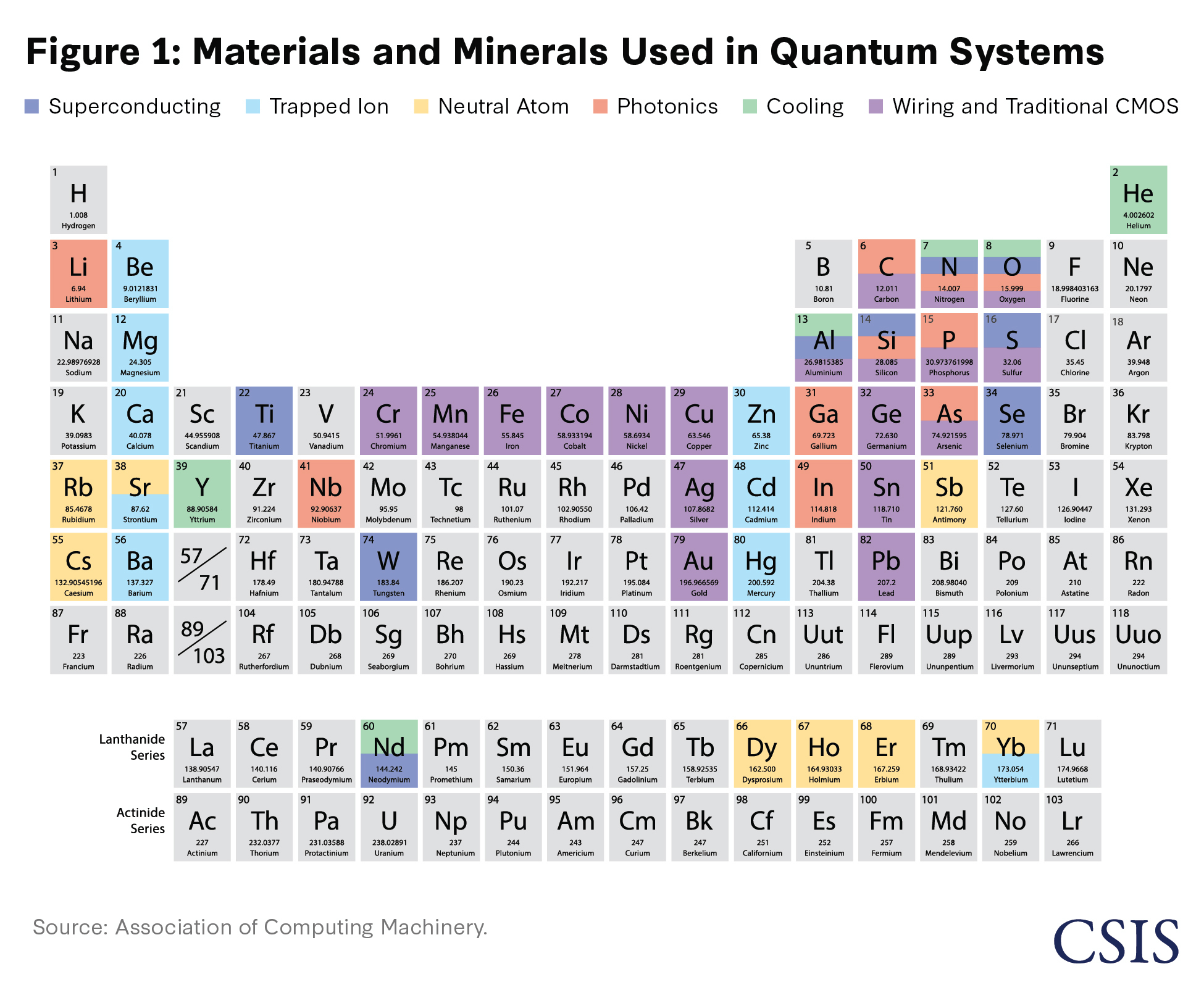
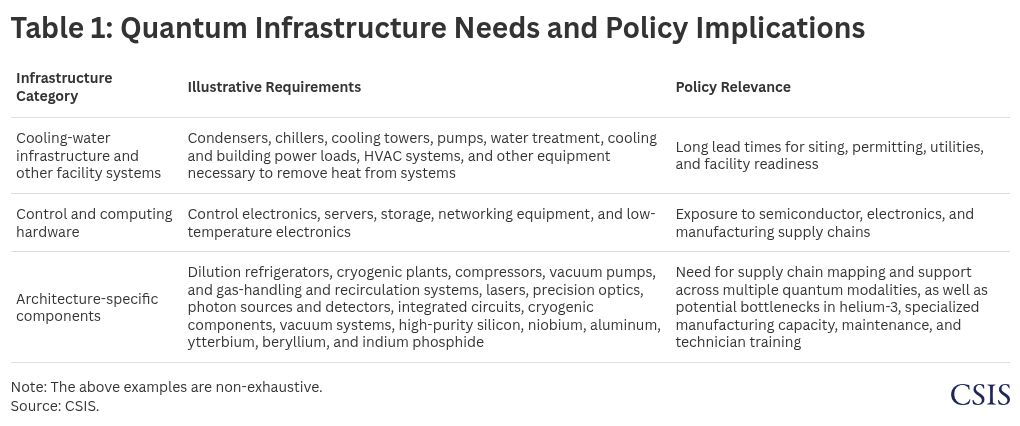
These requirements suggest that quantum readiness should be treated as an industrial infrastructure challenge, not simply a computing challenge. That distinction matters because quantum’s infrastructure constraints will differ from AI’s, even as AI offers a useful warning about the costs of delayed planning.
Lessons from AI’s Energy Demand Surge
The AI comparison is useful not because quantum computing will follow the same demand curve, but because AI shows the consequences of infrastructure planning that trails deployment. Quantum computing’s commercial demand trajectory remains far less certain than AI’s, but even if some demand accelerates, energy systems, permitting processes, supply chains, and capital markets may struggle to adjust quickly enough. They are less mature than those supporting semiconductor fabrication or data center construction today.
The surge in AI data center demand is already forcing the United States to expand energy infrastructure faster than expected. BloombergNEF reported that capital expenditure by the world’s 14 largest data center service companies is expected to reach nearly $750 billion in 2026, up from less than $450 billion in 2025. Of the data centers under construction in the United States as of September 2025, 75 percent are expected to consume more than 23 gigawatts of energy. By 2030, peak energy demand is estimated to add the equivalent of Texas’s entire electricity consumption, about 84 gigawatts, to national demand, which has remained relatively flat since the 1970s. Utilities, grid operators, and federal and state regulators are now responding to a wave of demand that was difficult to anticipate only a few years ago.
AI also illustrates how efficiency gains can increase total resource demand when lower costs enable more use cases, more queries, and broader deployment. This dynamic resembles the Jevons Paradox, originally used to describe coal consumption in nineteenth-century Britain. If quantum systems become more capable and commercially valuable, similar demand dynamics could emerge around specialized facilities, components, and materials even before electricity becomes the dominant constraint.
The lesson for quantum is not to assume an identical demand trajectory, but to plan before constraints harden. Once commercial demand accelerates, scaling energy systems, siting options, grid capacity, specialized facilities, and supply chains becomes far more difficult. The result is not only an economic challenge but also a national security concern.
Toward Preemptive Quantum-Ready Infrastructure
Lessons from the current AI buildout should shape U.S. quantum policy now. Because quantum computing has not yet reached AI-like scale, the United States still has time to build a more anticipatory infrastructure strategy. Commercialization may accelerate in the early 2030s, but the supply chains, facilities, workforce pipelines, and permitting pathways needed to support deployment will take years to prepare. A preemptive approach should focus on five priorities:
- Conduct scenario planning for multiple quantum futures. Federal agencies should assess potential constraints across cooling water, helium-3, helium-4, rare earths, specialty semiconductors, photonics, cryostats, lasers, and high-purity materials. Scenarios may include a superconducting-system-dominant future, a diverse-modality future, and a future in which supply chain breakthroughs reduce dependence on key components such as dilution refrigerators. These estimates should identify where early intervention may be needed.
- Strengthen supply chain resilience before shortages emerge. If scenario assessments reveal vulnerabilities in helium-3, helium-4, rare earths, specialty semiconductors, or high-purity materials, the U.S. government should support diversification through targeted incentives, commercialization support, and research and development These tools could help build domestic and allied capacity in cryogenic technology, lasers, integrated photonics, and precision optics, especially where suppliers are focused on faster-growing AI markets.
- Prepare facilities and permitting pathways for quantum deployment. The federal government should consider adapting policy tools from adjacent infrastructure-intensive technology sectors to quantum. Just as policymakers are streamlining permitting for AI data centers and related infrastructure, federal and state agencies should develop flexible frameworks for quantum computing facilities, cryostat manufacturing plants, and related supplier infrastructure. Many current quantum projects are located on national or state-owned property where review processes may be easier to manage, but future commercialization could require more siting options and faster deployment pathways.
- Build the workforce needed to operate and maintain quantum infrastructure. Quantum readiness will require technicians and engineers who understand cryogenic systems, vacuum equipment, lasers, photonics, control electronics, and facility operations. Workforce investments should therefore extend beyond quantum information science to include the industrial capabilities needed to install, service, and scale quantum systems.
- Use pilot facilities to collect operational data. Policymakers should treat early quantum deployments as learning platforms, not simply demonstrations. Department of Energy user facilities and pilot deployments such as Quantum Genesis can provide real-world data on resource use, maintenance needs, cooling-water demand, helium losses, supply delays, and facility constraints. This can help government and industry update planning assumptions before deployment scales.
Conclusion
Quantum-ready infrastructure must be understood as more than electricity supply. As quantum computing moves toward commercialization, the United States will need reliable power, cooling-water systems, cryogenic gases, precision components, specialized facilities, resilient supplies of critical materials, and the workforce needed to operate and maintain them. AI’s infrastructure experience reinforces the central lesson of this analysis: When demand accelerates faster than planning, energy systems, permitting processes, capital markets, and supply chains can become strategic constraints.
The United States still has a window to reduce that risk in quantum computing. A quantum-ready infrastructure strategy should map architecture-specific requirements, strengthen vulnerable supply chains, prepare facilities and permitting pathways, build the necessary technical workforce, and use early deployments to collect operational data. These steps will not eliminate uncertainty, but they can reduce the risk that resource bottlenecks might slow commercialization, weaken U.S. leadership, or become strategic vulnerabilities. The question is not whether quantum infrastructure will matter, but whether the United States will prepare before it becomes a constraint.
Hideki Tomoshige is a fellow with Renewing American Innovation at the Center for Strategic and International Studies in Washington, D.C.
The author would like to thank David L McCollum, a distinguished R&D staff member in the Energy Science and Technology Directorate at Oak Ridge National Laboratory, for sharing his insights in preparation for this article.