Ensuring Economic and Energy Security: Opportunities for U.S.-Japan Leadership
September 24, 2026 • 9:00 am – 12:00 pm EDT
Hosted by Japan Chair
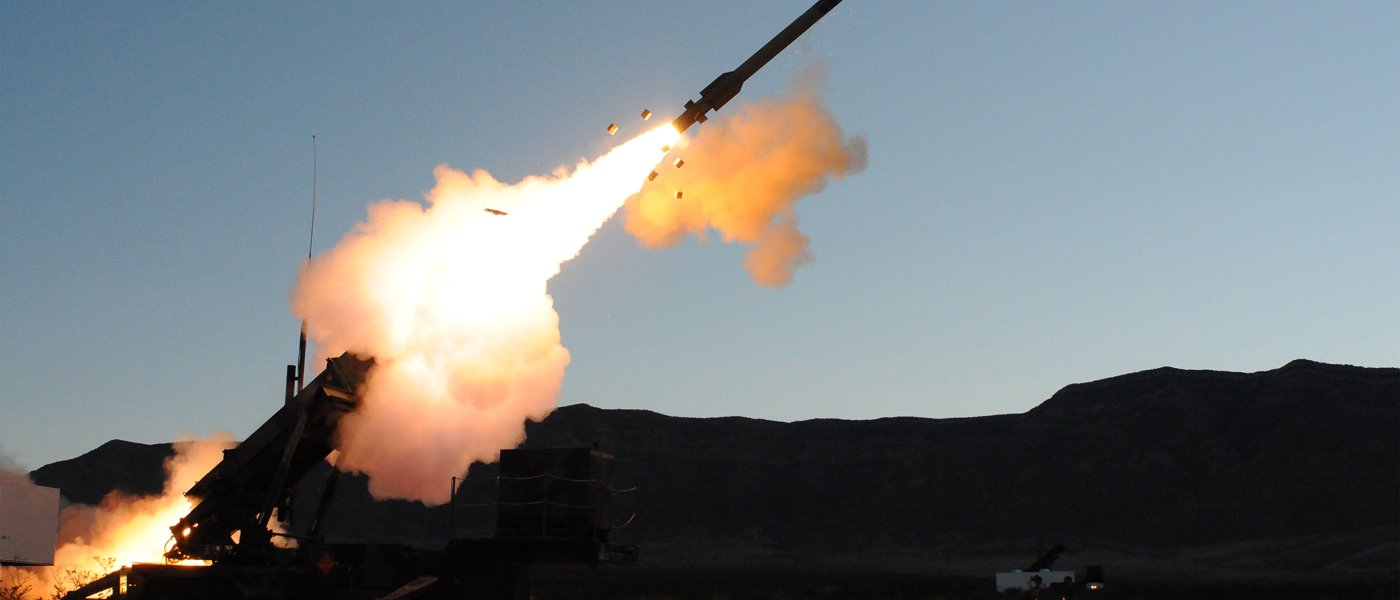
Photo: Darrell Ames/Program Executive Office Missiles and Space
This commentary is part of a report from the CSIS Defense and Security Department entitled War and the Modern Battlefield: Insights from Ukraine and the Middle East.

Digital Feature by The CSIS Defense and Security Department — September 16, 2025
From time to time, commentators opine that emerging technology will make some traditional features of war obsolete. These predictions are almost invariably premature. The use of antitank weapons in Ukraine was initially received as signaling the death of armor.1 The arrival of mass unmanned platforms on land, sea, and air, likewise, has been accompanied by predictions of the death of platforms such as advanced tactical aircraft and ships.2 The advent of numerous means of non-kinetic and electronic warfare has been occasioned by predictions that they will render traditional kinetic fires, if not a thing of the past, at least less important than they have been.
The future of warfare will likely be characterized by an increased demand signal for offensive and defensive fires.
Artillery has long been known as the “king of battle,” and for good reason. In virtually every major land conflict for centuries, artillery and missilery have accounted for the vast majority of casualties. Instead of becoming less relevant, the future of warfare will likely be characterized by an increased demand signal for offensive and defensive fires.
Trends affecting the demand for fires include the diffusion of precision guidance and its marriage with pervasive surveillance and targeting abilities. In a transparent battlefield, anything can be targeted, and in a world full of precision-guided munitions, everything will be. Weapon systems development likewise reflects these trends. Today, virtually all rockets are equipped with guidance of some kind, and almost all gravity bombs are smart bombs.
The reign of fires, both offensive and defensive, is at little risk of being toppled. Today’s new missile age is defined by a surge in the global supply and demand for a spectrum of standoff strike capability and the means to counter it. Air defenses and long-range missiles have consistently been the Ukrainian government’s top two requests for aid. The United States has significantly increased spending on long-range strike since Russia’s 2014 invasion and occupation of Crimea, and this trend is unlikely to change anytime soon (Figure 6.1). Air and missile defense (AMD) and long-range precision fires are likewise the top-two modernization priorities for allied countries such as Australia and Japan.3


Defensive fires have also assumed a newfound salience and reputation. Over the past four years, nearly every AMD system the United States or Israel operates has had successful engagements against missiles fired in anger, especially in Ukraine, the Red Sea, and in the defense of Israel. Only the Ground-based Midcourse Defense system, the system designed to intercept ICBMs, has not been operationally employed.
The rest of this chapter is divided into six sections. The first outlines the nature and character of missiles. The second, third, and fourth sections examine lessons from Ukraine, the Red Sea, and Israel, respectively. The fifth assesses implications for the future, especially the salience of fires, and the sixth provides brief conclusions.
To understand the character of this new missile age, it is helpful to consider the nature and character of missilery. Given that the defense world has a penchant for jargon, word definitions and origins are one way to seek clarity amid confusion. In this case, it is helpful to recall the etymology of the word “missile,” which derives from the Latin verb mittere, meaning “to send, dispatch, cause to go, let go, release, discharge.”4 A missilis is something “that may be hurled or cast, that is thrown or hurled.”5 The words “mission” and “emissary” share this etymology—thus the old saw in diplomatic circles that an ambassador is “an honest man sent to lie abroad for the good of his country.”6
In the early days of the first missile age, distinctions were made between the terms “rocket” and “missile,” with the latter usually reserved for projectiles that are guided rather than unguided. Thus, a simple Katyusha rocket was distinguished from an Atlas missile, though the distinction was somewhat artificial. At bottom, a missile is simply a thing that is sent. When the 2019 Marine Corps commandant declared in his guidance document that the operational environment had become “an era of missile warfare,” it was a way of saying that there is a high supply and demand for standoff capability.7
In today’s jargon, Iranian Shaheds are often referred to as one-way attack drones, loitering munitions, remotely piloted aircraft, Group 3 unmanned aircraft systems (UASs), or some other turn of phrase.8 Fundamentally, however, they are missiles: physical, kinetic delivery systems sent to accomplish some mission. In the past, air defenders had several basic categories to contend with, such as fixed wing (FW), rotary wing (RW), tactical ballistic missile (TBM), and air-breathing threats (ABTs) such as cruise missiles (Table 6.1). The diffusion and increased reliability of guidance, propulsion, and targeting have led to the massive blurring of these categories.
For this reason, it was entirely appropriate that the 2022 Missile Defense Review included UASs as part of its mandate.9 Countering UASs is such a prevalent need that the mission is now part of U.S. Army basic training.10 Rather than creating a new threat category, however, it might be better to think about countering UASs as simply a new chapter of air and missile defense.
For this reason, a new taxonomy will be needed to better explain the spectrum of objects sent in and through the air. With the ubiquitous availability of remotely piloted or autonomous systems, the characteristic of being unmanned will likely come to be taken for granted. A future taxonomy might deprioritize the distinction between unmanned and manned as well as focus on the physical characteristics of systems. A Shahed is, after all, a fixed-wing air-breathing threat not unlike the V-1 missiles of yesteryear.
The last three years of the Ukraine conflict have yielded considerable case studies of the role of standoff capability in the future of warfare. Hundreds of thousands of drones, cruise missiles, ballistic missiles, and even some hypersonic systems have been employed to great effect. As in wars past, the vast majority of casualties on both sides of the Ukraine war have resulted from artillery and missile attacks. Russia has made advances through its use of long-range strikes, but the effects have been insufficient to produce a decisive victory.
At the outset of the war, Russian forces attempted to attack too many targets with too few missiles, a result of their underestimation of the scale of effort needed to accomplish their objectives.11 Analysts have noted a slow over-the-horizon targeting cycle, frequent shifts in targeting priorities, and irregular availability of precision-guided munitions (PGMs) on the Russian side. Russian failures after the initial period are attributable to Ukrainian defense tactics and poor Russian strategic planning. In this respect, the decisive edge may go to the side with the better surveillance and the ability to accelerate their targeting cycle. Conversely, new forms of countering missile threats may emerge from electromagnetic warfare: camouflage, concealment, and deception (CCD) and other means to thwart the intelligence, surveillance, and targeting that underlie an adversary’s standoff strike. The missiles or drones may always get through, but they may not get to the right place at the right time.
Since the fall of 2022, Russia’s long-range air and missile attacks against Ukraine have become larger but less frequent as Russia has attempted to overcome the growing efficiency of Ukrainian air defenses (Figure 6.2).12
Although Ukrainian air defenses have proved effective, especially since the influx of Western air defense systems in October and November 2022, no weapon system or operation is perfect (see Figure 6.3). The overall neutralization rate of Russian missiles since the beginning of the conflict remains high, estimated at around 84 percent.13 Ukrainian air defenses have struggled the most with intercepting faster missiles, with Russian short-range ballistic missiles having the lowest successful intercept rate.14 Even with a diminished frequency and a high intercept rate, sustained air attacks against Ukraine’s electrical grid increase the risk of exhausting Ukraine’s capacity to repair it, highlighting the importance of passive defense and the capacity to quickly reconstitute capabilities and infrastructure.15 In addition to degrading Ukraine’s electrical grid, the composition of Russian missile salvos since October 2022 suggests a secondary Russian goal of depleting Ukrainian air defense capacity.
A combined arms approach remains critical to contending with Russian long-range fires. Operational art will require incorporating new aerial assets into traditional formations and capabilities, which, in many cases, has not been done well by either side. Across domains, Ukrainian forces must use different combat arms simultaneously and effectively, including mechanized infantry, tanks, artillery, air defense, and antitank systems.16
Another critical case study is the protracted conflict with the Houthis in the Red Sea, which has been marked by numerous tactical successes for U.S. AMD forces. A frequent refrain in popular commentary on the engagement has been the cost-exchange ratio, measuring the cost of a threat missile against the cost of a defensive interceptor. While lower-cost interceptors exist, they come with greater operational risk due to their limited range and capabilities.17 When a $2 billion warship is at risk, the cost trade-off of shooting down a cheaply manufactured threat with a sophisticated interceptor is no longer so unfavorable. While the cost ratio of an offensive missile to a defensive interceptor is a valid one to consider, it also reflects a partial perspective. A more complete assessment would consider other factors, including the value of the defended asset, the operational cost of failing to defend, and the ratio of combined arms activity by both sides.
For ship-based air defenses, inventory limitations have proved a restrictive factor. With only so much capacity on board, equipping a ship with numerous low-cost options limits the space available for high-necessity systems or interceptors. An increase in short-range, low-cost intercept options means a corresponding decrease in the number of longer-range, high-value interceptor vessels needed to defend larger areas. The U.S. Navy is reportedly looking at a Maritime PAC-3 MSE, which the Army produces in greater quantities than the SM-6.18 It seems likely that navies will look to supplement maritime counter-UAS capacity as well, even if resources must be taken from land-based systems.19
The USS Carney has thus far set the standard for successful air defense engagements at sea—a standard that has been replicated many times since October 2023. Recently, the Navy detailed the types and quantities of intercept methods used in engagements with more than 400 Houthi-launched aerial threats (Table 6.2). The wide variety of Standard and Evolved Sea Sparrow missiles used highlights the cost-exchange fallacy: A commander is sure to decide that a grave threat to the safety of the crew is worth the cost of an interception.
The challenges and successes of the U.S. Navy in the Red Sea have demonstrated the effectiveness of missile defense technology in an active weapons engagement. At a CSIS event, Rear Admiral Fred Pyle, former director of surface warfare, observed that U.S. Naval forces have not seen this level of action since World War II.20 The near-immediate response time required, combined with an imperative to “get it right” 100 percent of the time, suggests that defensive interceptors warrant a high degree of trust.
Pyle additionally highlighted several possible routes for minimizing the perceived inefficiency of the cost-exchange ratio.21 Whether improving the recertification process for older munitions or increasing scalability, options exist to reduce the spending burden for defense without sacrificing operational integrity. Developing technologies in directed energy (DE), such as lasers or high-powered microwaves, could also contribute to a more attractive cost per shot, though development and maintenance costs will be substantial.
A third case study of recent air and missile warfare comes from the defense of Israel against missile attacks. On April 13, 2024, Iran launched a large salvo of missiles and drones at Israel. A retaliation for a fatal Israeli air strike against an Iranian diplomatic base in Damascus, Syria, Operation True Promise included approximately 170 drones, 120 surface-to-surface ballistic missiles, and 30 cruise missiles.22 The attack was the single largest instance to date of a complex and structured air and missile attack. It also represented the single largest number of same-day AMD engagements in history. Another attack in October 2024 included a wave of approximately 200 ballistic missiles launched from Iran.23 In both cases, a relatively small number of missiles reached their targets.
The importance of effective AMD capabilities was once again made clear in the Israel-Iran conflict in June 2025.24 Over the course of the 12-day conflict, Iran launched a series of missile attacks at Israel. According to reports of Israel Defense Forces estimates, these included approximately 550 ballistic missiles and 1,000 drones.25 While Israel’s layered missile defense systems were largely successful in responding to the incoming strikes, their efficacy was increasingly challenged as the conflict progressed, and Israel and the United States expended large numbers of interceptors, forcing difficult choices about which assets to defend, and potentially changing shot doctrine.26
In addition, U.S. air defenders reportedly fired more than 150 Terminal High-Altitude Area Defense (THAAD) missiles, almost a quarter of the total number the United States military has purchased in its history. The number expended will likely take years to replace.27 Israeli officials reported concern about the ability of their interceptor stockpiles to outlast successive Iranian missile attacks, with one former official saying that interceptor stocks are not infinite, and another explaining that “we can make it, but it’s a challenge.”28 These defensive successes highlights the importance of magazine depth, defended asset prioritization to conserve interceptor expenditure in protracted conflicts, and accurate sensors that can inform defenders about the end target of a threat. Following the Iranian attack on the Al Udeid air base in Qatar, U.S. soldiers fired a considerable number of PAC-3 interceptors, and only 1 of the 14 missiles fired reportedly got through.29
Israel’s development philosophy has been informed by the urgency and proximity of its threat environment. “Cheap enough” and “good enough” are more attractive technology descriptions in times of conflict than they would be in times of stability. This approach is not necessarily applicable to the United States or other actors. Nevertheless, Israel’s historical integration of disparate and multinational AMD elements has proven critical in weathering major attacks from Iran over the past two years.
One of the features of Israel’s defense is multinational cooperation.30 Moshe Patel, the director of the Israeli Missile Defense Organization, highlighted the importance of the interoperability and integration that the United States provides, expressing a newfound appreciation that “sharing the sky picture and the full engagement cooperation capability” is “very, very important.”31 Patel highlighted a series of landmark missile defense moments from the conflict, from the “first outer space, exoatmospheric kind of operational interception of a ballistic missile” in November 2023 to the April 2024 coordinated defense that “built a huge confidence about [the Israeli] capability and . . . system.”32 While these successes are worth celebrating, they also provide a blueprint for continued development. The attacks launched on Israel demonstrate the potential composition of future attacks and once again highlight the need to scale up current capabilities.
Each of these case studies confirm the salience of fires in this new missile age. Missiles coming and going, offensive and defensive, will be in high supply and demand for the foreseeable future. The United States and its allies have already begun to reckon with the implications of this new environment for operational doctrine and force planning. The forthcoming U.S. Army Warfighting Concept, for instance, is expected to emphasize that maneuver forces should support fires, rather than the other way around. To contend with this new environment, at least four areas of technological and operational innovation merit special attention: frying the sky, hunkering down, building up, and the advent of space fires.
Missiles coming and going, offensive and defensive, will be in high supply and demand for the foreseeable future.
Frying the Sky
The first such area is only partly a technological one, namely the continued development of DE systems. The ability to “fry the sky” will be an important offset to the capacity problem posed by air and missile swarms and salvos. Although the United States is making significant investments in DE technologies, hurdles remain to transition DE capabilities from research and development to programs of record.33
Operationalizing DE capability is by no means just a technological problem. Doctrine, organization, logistics, and sustainment are among the many aspects of DE that must be considered. Moreover, DE is not as inexpensive as marketing brochures might suggest.34 The real cost is not measured in the “cup of coffee” worth of electricity for a single shot but rather across the life cycle—what it takes to build, maintain, and operate the system continuously. Increasing the role of DE weapons in responding to aerial and missile threats will increase the advantage of the defender. Future investment in high-powered microwave weapons, high-powered radio frequency weapons, lasers, various forms of jammers, and other forms of electronic attack will be pivotal to effective AMD operations.35
Building Up
A second category meriting attention is the need to build up offensive and defensive munitions. U.S. and allied defense industries have been structured to be lean, with limited stockpiles for peacetime, which has left a number of countries woefully underprepared for conflict scenarios.36 The expenditure of THAAD, PAC-3, and Standard Missile variants in the Red Sea operations and in the defense of Israel now presents the United States with a considerable shortfall of AMD interceptors. It seems likely that supplemental appropriations will likely be applied to replenish and expand the inventory.
Limited munitions stockpiles have hindered U.S. assistance to Ukraine throughout the conflict. Both the Trump and Biden administrations delivered far fewer missiles to Ukraine than were necessary to deter Russia.37 The conflict between Israel and Iran highlighted the same issue of high intercept expenditure rates depleting limited stockpiles. China’s growing ballistic missile stockpile further exacerbates the deficit problem. In the event of a conflict in the Indo-Pacific, the United States would likely run out of munitions in less than a week, including long-range precision-guided munitions that would be critical to military success in a Taiwan Strait conflict.38 The problem almost certainly necessitates a high-low mix of munitions, specifically a combination of commercial off-the-shelf technologies and novel technologies designed specifically to counter emerging threats on the battlefield.
Hunkering Down
Active defense is necessary but insufficient. The entire joint force needs to “look up” and understand what it can and must do regarding the spectrum of air and missile threats. Nevertheless, the simple reality is that not all air and missile threats can or will be engaged, and damage limitation and consequence management must assume renewed importance. The shifting threat environment also requires military planners to develop capabilities for hunkering down, giving increased attention to passive defense (including mobility); counter–intelligence, surveillance, and reconnaissance; hardening; and deception. For both offensive and defensive fires alike, there will be growing demand for mobile launchers that can better “shoot and scoot” to evade counterbattery fire and suppression. Passive defenses and the operational concepts to operate within an adversary’s weapon engagement zone represent a necessary means to compensate for the simple reality of active AMD shortcomings.39
Space Fires
A final, emergent category of fires will soon appear in the newest warfighting domain: the heavens. Although tracking and interceptor capabilities will increase the resilience of forward-deployed assets, they will never be 100 percent effective. This implies a need for hardening and deception to minimize losses.40 As air and missile threats become more complex, it will be necessary to have military assets that can survive attacks that get through active defenses. Investing in hardening things like air bases, missile silos, and command centers is low-hanging fruit in AMD: The Department of Defense can increase the resilience of infrastructure over a much shorter time horizon than it can develop and scale production of components like DE weapons.41 These strategies will be force multipliers in future conflicts, ensuring mission success in the face of increasingly complex air and missile threats.
As space becomes an increasingly pivotal warfighting domain, both offensive and defensive “space fires” will assume a new salience, including space-based interceptors. The Trump administration’s January 2025 executive order calling for the creation of a homeland missile defense shield references a provision for space-based interceptors. Boost-phase intercept is becoming an increasingly attractive option as missile technology matures, as these interceptors strike missiles before they maneuver, reach high speeds, or release decoys or multiple warheads.42
While creating these capabilities is still costly and technologically challenging, it is a much more realistic objective than it was 20 years ago.43 The cost of launching a satellite into orbit has also fallen by orders of magnitude, and the emergence of counterspace capability may well yield spinoff capability for countering missiles of various kinds.44
The reign of fires will long endure, and its kingdom spans from mud to space. Combined operations will necessarily incorporate a number of new technologies and concepts, including non-kinetic cyber, information, electronic warfare, and DE activities. The demand for kinetic kills, however, will not dissipate anytime soon, and any prediction of its forthcoming demise will almost certainly be premature.
Offensive and defensive fires will remain a central feature of the future battlefield. Operations in Ukraine, the Red Sea, and Israel have emphatically demonstrated their salience. Fires remain the king of battle, and long live the king.
Please consult the PDF for references.
Thomas Karako is the director of the Missile Defense Project and a senior fellow with the Defense and Security Department at the Center for Strategic and International Studies (CSIS) in Washington, D.C. Hannah Freeman is a program coordinator and research assistant with the CSIS Missile Defense Project.
The authors thank the entire CSIS Missile Defense Project team, who contributed substantially to the research for this chapter—Grayson Phillips, Wes Rumbaugh, Masao Dahlgren, and Patrycja Bazylczyk.