Three Nations, One Table: North American Agriculture under USMCA
June 24, 2026 • 9:30 am – 3:00 pm EDT
Hosted by Americas Program

Photo: Michal Fludra/NurPhoto/Getty Images
Operation Epic Fury, the ongoing U.S.-Israeli military campaign against Iran, is consuming vast quantities of air defense interceptors—expensive munitions that were already in critically short supply before the operation was launched. European countries depend heavily on U.S.-produced air defense systems and munitions for their own defense and for protecting Ukraine. During the winter, Russian missiles and drones bombarded Ukrainian forces, as well as its cities and energy infrastructure, making air defense munitions vital to Ukraine’s survival. Europe now faces a looming crisis: The U.S.-made interceptors it needs, both for Ukraine today and for its own rearmament against Russia, may simply not be available. In response, European states should launch a crash program to rapidly expand production of European-made air defense systems and interceptors. Modeled on the European Union’s 2023 Act in Support of Ammunition Production (ASAP), a new “ASAP for Air Defense” would channel EU funds into European munitions and systems—such as the IRIS-T, SAMP/T, and NASAMS systems—to reduce dependence on U.S. suppliers for the medium-range and cruise missile defense systems where European alternatives exist.
Since the U.S.-Israeli strike campaign against Iran began on February 28, Iranian retaliatory missile strikes have struck targets across the region—including military and civilian targets in Israel, the Gulf states, Cyprus, and Turkey. While the intensity of Iranian bombardments has since decreased, the scale of interceptor consumption has been staggering, particularly for three key munitions types: anti-ballistic missile Terminal High Altitude Area Defense (THAAD) interceptors; ship-based surface-to-air SM-3 missiles; and mobile, land-based, surface-to-air PAC-3 MSE missiles.
During the 12-day Israel-Iran war in June 2025, the United States fired approximately 150 THAAD interceptors—roughly a quarter of the entire inventory ever purchased by the Pentagon—and around 80 SM-3 missiles from naval vessels. CSIS estimated that the June 2025 conflict consumed up to 20 percent of available SM-3 interceptors and between 20 and 50 percent of THAAD missiles. The unit cost of THAAD missiles is $12.8 million, while the unit cost for SM-3s runs from $8 million to $25 million, depending on the variant. The current conflict is accelerating the drainage of these stockpiles, with Bloomberg reporting that interceptor stocks were already most likely “dangerously low.” Within days of the February 2026 strikes, The Economist estimated that Arab countries using U.S. systems may have burned through 800 PAC-3 MSE or THAAD interceptors. In recent days, the United States has also reportedly begun diverting air defense assets from other regions to mitigate rapidly depleting stockpiles, including relocating THAAD components in South Korea to the Middle East.
During the 12-day Israel-Iran war in June 2025, the United States fired approximately 150 THAAD interceptors—roughly a quarter of the entire inventory ever purchased by the Pentagon.
Annual production rates indicate that interceptors will be hard to come by when the smoke clears and U.S. allies seek to replenish stockpiles. Patriot interceptors in particular were already in critically short supply; according to the New York Times, just 620 of the most advanced Patriot PAC-3 MSE interceptors were delivered to militaries in 2025, while Kyiv has received only about 600 during four years of war.
Supply concerns are now visible at the highest political levels. Shortly after the first strikes against Iran, the White House called an urgent meeting with the CEOs of major U.S. defense manufacturers, including Lockheed Martin and Raytheon/RTX, to discuss accelerating production and replenishing rapidly declining interceptor stockpiles. Bloomberg reported that while the companies supported the administration’s goal to speed up deliveries, the specific plans for increasing production capacity were not clear at the time.
Lockheed Martin produces roughly 600 PAC-3 interceptors annually and previously agreed to scale up production to 2,000 over the next seven years. CSIS has estimated that the Pentagon has purchased an average of roughly 270 PAC-3 missiles annually between 2015 and 2024, with Business Insider estimating each to cost approximately $3.7 million. The situation is equally dire for THAAD, as Lockheed currently produces 96 interceptors per year, with aims to increase annual production to 400 units.
For Ukraine, the implications are dire. Ukraine’s ability to withstand Russian air assaults depends on the continued flow of American interceptors and support capabilities. Yet the flow of these supplies is in doubt, as the replenishment of recently expended U.S. stockpiles will inevitably take precedence over Foreign Military Sales (FMS) deliveries, especially to Europe. As global inventories are drawn down and competing theaters take priority, Ukraine may suffer.
Europe does produce capable air defense systems, but they address different segments of the threat spectrum rather than offering a single, full substitute for U.S. systems. This gap is also unlikely to close in the near term.
SAMP/T, developed by the Franco-Italian EUROSAM consortium (MBDA and Thales), is Europe’s primary indigenous system comparable to Patriot, capable of intercepting ballistic missiles, high-end cruise missiles, and advanced aircraft using the Aster 30 interceptor. While comparable to the Patriot on paper, SAMP/T has seen more limited operational use, having only recently been put to use to defend Kyiv in Ukraine. By contrast, NASAMS, co-developed by Norway and the United States, has had significant operational use. It is a medium-range system designed to protect cities and bases against cruise missiles, aircraft, and many unmanned aircraft systems (UASs), but it lacks a ballistic missile defense role. IRIS-T SLM, produced primarily by Germany’s Diehl Defence, provides a similar medium-range role against cruise missiles and drones. It is a cost-effective workhorse to combat high-volume attacks but is less than an ideal platform for high-end missile defense. The United Kingdom’s Sky Sabre system, built around the MBDA’s Common Anti-Air Modular Missile (CAMM) interceptor, provides short- to medium-range shield, further strengthening Europe’s lower and mid-tier air defense layers.
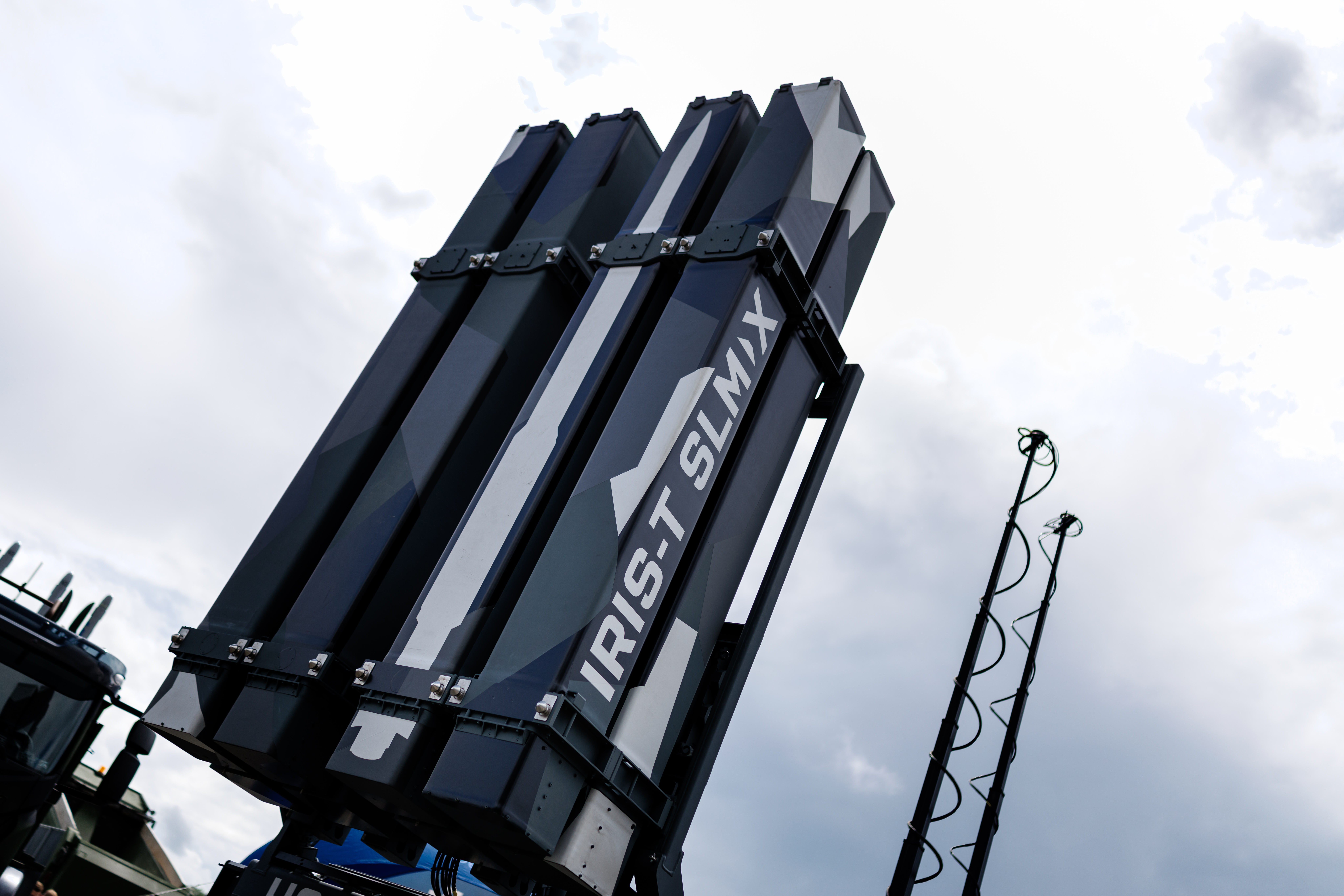
The IRIS-T SLM is a medium-range air defense system effective against aircraft, cruise missiles, and drones, but not designed for ballistic missile defense.
Photo: Matthias Balk/dpa/Getty Images
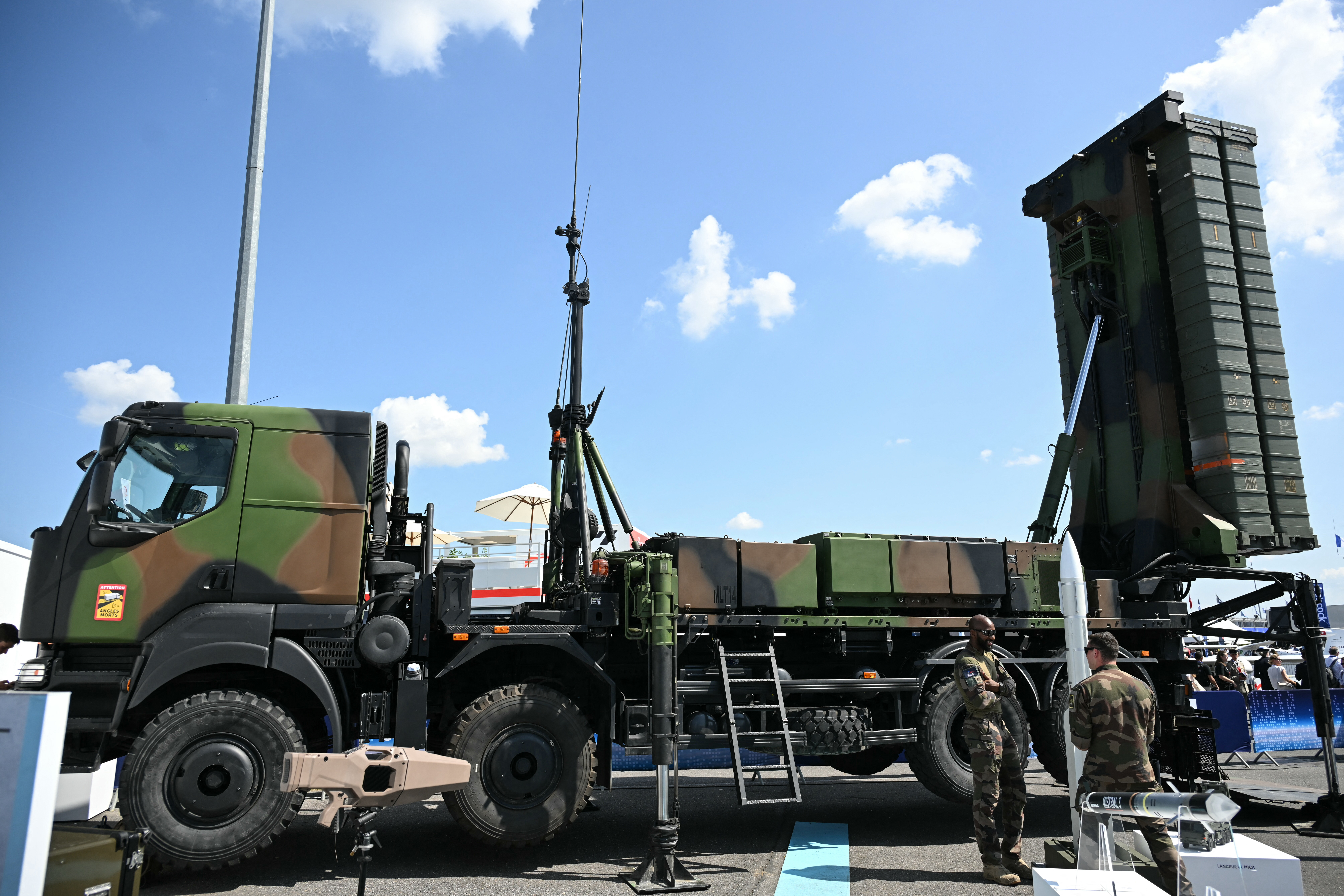
The Franco-Italian SAMP/T surface-to-air missile system is Europe’s closest replacement for Patriot systems. Photo/Bertrand Guay/AFP/Getty Images
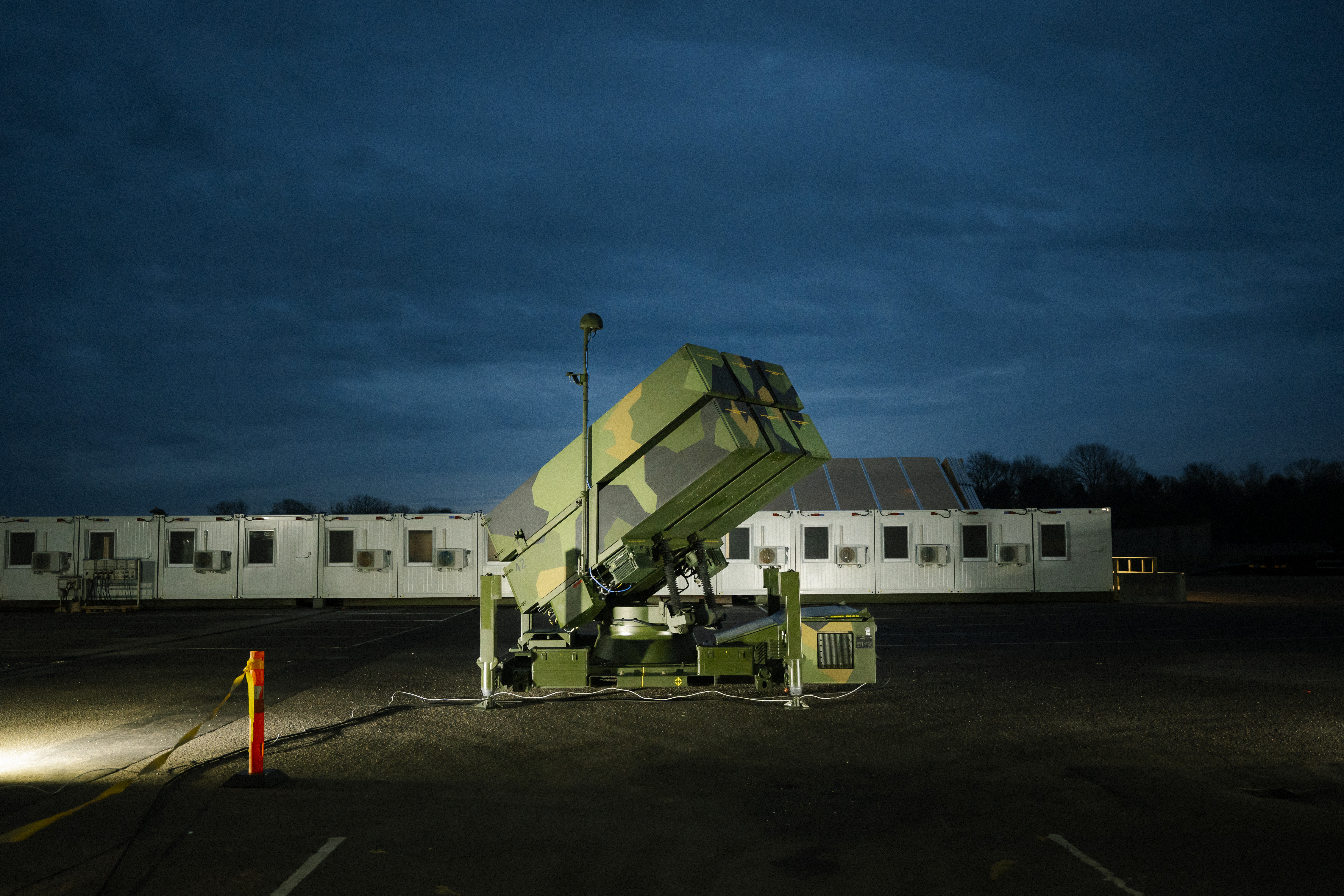
National Advanced Surface-to-Air Missile System (NASAMS) is a Norwegian medium-range air defense system developed in the 1990s. Photo: Emil Nicolai Helms/Ritzau Scanpix/AFP/Getty Images
It is important to distinguish between air defense systems and the threats they are designed to address. The Patriot platform is indispensable for intercepting ballistic and cruise missiles, but it is not designed to counter UASs, such as Iran’s Shahed-type drones. Using multimillion-dollar interceptors on low-cost UASs is neither efficient nor sustainable, meaning Patriot scarcity directly affects Europe’s ability to defend against high-end threats—not drone swarms.
Ukraine has grappled with this difficult operational reality since Russia’s 2022 full-scale invasion. Russia’s quantitative advantage in missile and long-range drones has forced Ukraine to divert limited air and missile defense assets away from the front lines, leaving Ukrainian forces vulnerable to glide bombs and short-range ballistic missiles. Additionally, Russian attacks on Ukrainian critical and civilian infrastructure have taken a heavy toll. According to ACLED, Russia has significantly increased the number of attacks on Ukrainian energy infrastructure this winter. Russia’s intensifying assaults are causing generation plants and distribution networks to buckle, resulting in rolling blackouts across the country.
Taken together, these dynamics underscore that Europe’s challenge is not the absence of capable air defense technologies, but the lack of sufficient production scale, especially for interceptors capable of countering ballistic and advanced cruise missile threats. This picture also highlights an often-overlooked feature of Europe’s air and missile defense ecosystem: Many of its most important interceptors—including the Aster 30 missile used in the SAMP/T as well as the CAMM used in Sky Sabre—are produced by the multinational European missile manufacturer MBDA. This implies that expanding interceptor production will necessarily depend on cooperation across a broader definition of the European industrial base, including stakeholders in the United Kingdom and Norway.
Despite these European options, the Patriot has understandably remained the continent’s system of choice since the Gulf War due to its long and stellar track record. The platform likewise benefits from a large global user community, delivering interoperability, established supply chains, and a deep support ecosystem unmatched by any other Western system. The appeal of buying American and the potential for closer engagement with the U.S. military has also had strong appeal. The Patriot is currently used by several European countries, including Ukraine, with many deepening their commitment to the system in recent years. European NATO countries have signed contracts for surface-to-air missile systems worth more than $50 billion since 2022, with Patriot orders making up almost one-third of those orders.
Each European country that has selected the Patriot has done so for very logical reasons. However, this choice has meant that European air defense systems have lacked the orders, and therefore the resources, to expand production. This lack of investment has also further stunted product improvement. The reemergence of great power competition and attritional warfare has led to an explosion of orders globally for Patriot systems. As a result, the U.S. defense industrial base has struggled to—and presently cannot—meet European demand.
The Biden administration sought to address this through co-production efforts through which U.S. companies would move production to Europe. For example, European contract orders for up to 1,000 PAC-2 missiles enabled a Raytheon-MBDA joint venture to establish a new Patriot production facility in Germany through the NATO Support and Procurement Agency (NPSA). Missiles produced there are to primarily restock the inventories of European allies rather than the United States, providing some degree of certainty that European-owned Patriot interceptors cannot be unilaterally redirected to U.S. stockpiles. However, the United States retains considerable leverage through the International Traffic in Arms Regulations (ITAR), as well as through supply chain inputs of advanced technology. An administration determined to expand production for itself could in theory use export controls or licensing restrictions to redirect key technology and inputs to disrupt, intentionally or unintentionally, European-based production. Expanding co-production with U.S. companies could be one mechanism to meet Europe’s growing needs, but this requires a degree of transatlantic trust and prioritization that may no longer exist.
Yet, despite efforts to indigenize spending on critical systems, non-European suppliers have largely maintained their dominant position in Europe’s air defense, exemplified by a continued preference for the Patriot system over European alternatives. The Franco-Italian SAMP/T, Europe’s only homegrown long-range alternative, has until recently been acquired only by France and Italy, with Denmark ordering a system in September 2025.
This dependence has immediate consequences for European security. The Trump administration has refused to appropriate new tranches of military aid to Ukraine, leaving Europe to foot the bill entirely. To maintain flows of critical U.S. weapons, NATO is coordinating purchases of critical defense equipment to Ukraine by other NATO allies under the Prioritized Ukraine Requirements List (PURL) program, including U.S.-made interceptors. By late 2025, approximately 75 percent of all Patriot interceptors and 90 percent of other air defense interceptors reached Kyiv through PURL, according to NATO Secretary General Mark Rutte.
But PURL’s effectiveness is entirely contingent on available American supply. In the weeks leading up to the Iran campaign, European allies lamented industry delays and prolonged U.S. procurement processes limiting efforts to rapidly provide interceptors to Ukraine through PURL. Following the strikes against Iran in June 2025, the Pentagon also briefly paused Patriot shipments to Ukraine in July over U.S. readiness concerns. A total of 19 countries operate Patriot systems across the globe, and all are competing for the supply of interceptors as U.S., Israeli, and Gulf state wartime consumption draws down stockpiles. The math is sobering.
The prioritization of filling U.S. arms export orders, or “re-sequencing,” while often technical, is subject to the preferences of the U.S. government through its FMS system and is solely the purview of producers in the U.S. defense industry. Given the shortfalls in U.S. stockpiles, the Pentagon will inevitably prioritize rebuilding its own arsenal over supplying foreign partners. Moreover, the New York Times has reported on a repeated reluctance by the Pentagon to supply Ukraine. Combined with a greater prioritization of Gulf countries, as well as Asia and the threat posed by China, Europe may well receive almost no deliveries of U.S. air defense interceptors in the near term.
If Europe cannot reliably secure a supply of interceptors from the United States, it must rapidly improve its capacity to produce them itself.
The scale of the Russian threat makes this prospect particularly alarming. Russia is now estimated to produce up to 2,000 cruise missiles, 800 to 1,000 9M723 and Kh-47M2 Kinzhal short- and medium-range ballistic missiles, and over 30,000 Geran-2 drones annually—a potential volume of fire that demands robust flows of interceptors to replenish European stockpiles. If Europe cannot reliably secure a supply of interceptors from the United States, it must rapidly improve its capacity to produce them itself.
The European Union’s 2023 ASAP program creates a potential model. ASAP showed Europe can mobilize in response to security crises when circumstances demand it. The €500 million program funded 31 projects targeting bottlenecks in ammunition production. By January 2024, European 155 mm shell capacity reached 1 million rounds per year (and aims to eventually reach 2 million).
But ASAP also had significant limitations. The €500 million budget—roughly 0.04 percent of the European Union’s multiannual financial framework (the European Union’s budget)—was more of a pilot project. The European Commission’s initial ASAP proposal also included articles providing it with greater powers to, for example, issue priority-rated orders and facilitate intra-EU transfers of defense-related products, but the European Commission’s powers were watered down during interinstitutional negotiations. Any successor should be dramatically larger, more empowered, and laser-focused on the guided interceptors that will likely remain in critically short supply.
Money alone, however, will not solve Europe’s interceptor shortfall. Missile production relies on complex supply chains, long lead times, and scarce specialist skills. A modern interceptor is comprised of thousands of components—often sourced from single or near-single suppliers—meaning shortages in rocket motors, seekers, sensors, semiconductors, or explosives can stall output across the entire system. Production timelines typically exceed 18 months and are difficult to compress even under crisis conditions, particularly with the specialist workforce required. These challenges are compounded by Europe’s fragmented industrial structure, with different stages of production spread across multiple countries, slowing output compared to more vertically integrated U.S. production lines. Any meaningful expansion effort must therefore address supply chains, workforce constraints, and industrial coordination, not just headline funding levels.
The European Union should commit €5–€10 billion in dedicated funding for European air defense interceptor production. Unlike ASAP’s modest budget, this would send a demand signal large enough to justify new production lines and supply chain investment. Funding should come with guaranteed multiyear contracts to give manufacturers the predictability needed for significant capital expenditure. An “ASAP for Air Defense” need not be an entirely new legislative instrument. It could take the form of a dedicated air defense production initiative within the Security Action for Europe (SAFE) framework, with ring-fenced funding and the enhanced European Commission authorities which ASAP lacked. Alternatively, the European Union could issue new joint debt through so-called eurobonds.
Once procured, the European Union, like NATO through PURL, would act as a facilitator for interceptors to Ukraine. However, should Ukraine’s demand in future years be met, the European Union could potentially take direct ownership of additional interceptors, creating a strategic reserve for European militaries and Ukraine.
EU investment should be channeled predominantly to European-produced systems: Diehl’s IRIS-T, MBDA’s SAMP/T and Aster 30 missiles, and Kongsberg’s NASAMS with AMRAAM-ER missiles. The SAMP/T is of particular strategic importance as Europe’s most capable indigenous system for ballistic missile defense, even though it does not yet match the Patriot’s proven combat record or range of engagement. Funding these systems would reduce dependence on U.S. supply chains while building genuine European industrial capacity. It would also help bridge the political divide between the German-led European Sky Shield Initiative and concurrent French-led efforts by ensuring EU money flows to a broad array of major European producers.
Any EU-led effort to expand interceptor production should also be structured to enable deep cooperation with the United Kingdom and Norway. The United Kingdom has already signaled its own commitment to this challenge, announcing plans to invest up to £1 billion in new air and missile defense capabilities. These investments would carry greater impact if coordinated with EU-led production efforts. Excluding the United Kingdom from European defense industrial initiatives would risk fragmenting the continent’s missile production ecosystem at precisely the moment when scale and coordination are most needed.
The program should set aggressive targets: tripling Aster 30 output from an estimated 220 to 250 per year to over 500 per year by 2028, and pushing IRIS-T production well beyond the current 800 to 1,000 missiles per year. Whether Europe’s fragmented industrial base can scale up to that extent on this timeline is an open question, but the purpose of the European Commission setting ambitious production targets is largely to identify the bottlenecks that EU funding and regulatory tools should address. To achieve these goals, the European Union should fast-track environmental and industrial permitting, streamline intra-EU export controls, and address the steep energy costs that disadvantage European manufacturers. Critically, the European Commission should be empowered—unlike under the original ASAP—to issue priority-rated orders when bottlenecks threaten delivery timelines. A portion of funding should also target workforce expansion, given the bloc’s estimated need for 600,000 additional defense industry workers by 2030. The program should also allocate funding to invest in Ukraine’s growing air defense production capacity and in firms developing cost-effective alternatives to conventional interceptors.
This effort should be led by the European Union because the challenge Europe faces involves not just coordination but also capacity. NATO’s Support and Procurement Agency (NSPA) and the German-led European Sky Shield Initiative (ESSI) both play important roles, but neither is designed to expand indigenous European interceptor production at scale. ESSI aggregates national demand but lacks a common budget and does not finance new production lines or supply chain expansion. The NSPA, meanwhile, is primarily a coordination and procurement body dependent on national funding and available supply; it cannot issue guaranteed multiyear contracts, derisk capital investment, or deploy regulatory and industrial policy tools to accelerate output. Only the European Union can shape the market conditions required for rapid industrial expansion. An EU-led ASAP for Air Defense would therefore complement—not duplicate—ESSI and NATO efforts by addressing the production constraints they are structurally unable to solve.
The production numbers for interceptors paint a stark picture. Europe and Ukraine remain at the mercy of U.S. supply for interceptors at a time when the Iran conflict has burned through years worth of missile production in days. European and U.S. production is ramping up, but slowly, and the gap between output and global consumption will likely continue to widen. The deeper problem is not any single industrial shortcoming—it is Europe’s persistent inability to collectively anticipate security crises and muster the requisite level of ambition in response. The artillery shell shortage that preceded ASAP was entirely foreseeable; European governments simply failed to act until stocks were nearly exhausted and Ukraine was rationing rounds. The same pattern is now playing out with air defense interceptors. The warning signs have been visible for years, and yet Europe finds itself once again scrambling to build production capacity in the middle of a crisis.
The deeper problem is not any single industrial shortcoming—it is Europe’s persistent inability to collectively anticipate security crises and muster the requisite level of ambition in response
An ASAP for Air Defense offers Europe a chance to break this cycle by capitalizing on existing investment pledges, further expanding production, and decreasing procurement timelines. Diehl has already invested €1 billion in expanding IRIS-T production capacity for Europe and Ukraine, while MBDA has committed €2.4 billion to expanding its production capacity between 2025 and 2029. A massive EU demand signal—backed by guaranteed contracts and front-loaded funding—could compress these timelines and expand their targets significantly. But this requires the bloc to act now, while Ukraine is still getting by with limited supplies.
The war in Iran has laid bare the fragility of Western interceptor stockpiles and Europe’s strategy for sustaining Ukraine. Europe has the industrial base, the financial tools, and the political frameworks to address this. What it has lacked, time and again, is the will to act with urgency before a crisis forces its hand. This time must be different.
The approach advised here runs counter to decades of bipartisan U.S. policy opposing EU defense initiatives, rooted in fears that EU spending would privilege European firms at the expense of U.S. market access. While this one-way trade has benefited U.S. defense companies, it is well past time for a strategic rethink.
Currently, the Trump administration has two conflicting positions—one from the State Department and one from the Department of Defense. At the State Department, U.S. ambassadors have aggressively opposed SAFE—the bloc’s massive €150 billion defense investment initiative—because of concerns it could “restrict market access for American companies.” This form of diplomatic advocacy may have made sense in an era of declining defense spending, limited demand, and a focus on counterterrorism. But it is no longer appropriate for an era of geopolitical competition, attritional conventional warfare, and strained supply chains. Opposing EU defense investment initiatives that will render European allies more capable makes little strategic sense.
Moreover, for perhaps the first time in the history of the NATO alliance, the United States and Europe are focused on different strategic threats, with the United States ostensibly focused on China and Europe focused on Russia. The difference in prioritization was emphasized in the Trump administration’s most recent National Defense Strategy. But it also has important strategic considerations for arms procurement and industrial capacity. In the event of a conflict in the Indo-Pacific, U.S. defense production capacity will prioritize supplying the U.S. warfighter, not resupplying Europe. Thus, it is important for Europe to build up its own defense industrial capacity, cooperate more, and better integrate procurement efforts—a key requirement of the SAFE initiative.
In contrast to the State Department’s messaging, the Pentagon has publicly acknowledged the need for a stronger European defense industrial base. Speaking at the NATO defense ministerial in Brussels in February 2026, Under Secretary of Defense for Policy Elbridge Colby framed the evolving transatlantic relationship as one based on “partnerships, not dependencies,” with Europe expected to carry the primary burden for its conventional defense. A day later, on the sidelines of the Munich Security Conference, Colby translated that strategic shift into industrial terms, arguing that if European allies are to spend 3.5 or even 5 percent of GDP on defense, they will inevitably need to “indigenize a large fraction of that production” to maintain domestic political support, adding that Washington now has “a different attitude” toward European governments prioritizing domestic or European suppliers.
To be clear, none of this suggests Europe should stop buying American or decouple from the U.S. defense industrial base. But what the Iran war has made abundantly clear is that demand for U.S. production has increased dramatically and that the United States will not be able to meet it, leaving Ukraine and Europe increasingly vulnerable.
Moreover, in an era of attritional warfare, the United States and its European and Asian allies need as much production capacity as possible. Therefore, instead of trying to inhibit European defense production, the United States’ focus should be ensuring that, if needed, it can also access those production lines and that European production can be used on U.S. platforms. A robust European defense industrial base should be seen by U.S. policymakers as a strategic priority, even if it causes some commercial concerns for U.S. companies.
European production is therefore not a divergence from U.S. interests but a prerequisite for burden shifting that will see Europe taking more responsibility for its own defense and relieving pressure on the United States and its depleted stockpiles.
Max Bergmann is the director of the Europe, Russia, and Eurasia Program and the Stuart Center in Euro-Atlantic and Northern European Studies at the Center for Strategic and International Studies (CSIS) in Washington, D.C. Otto Svendsen is an associate fellow with the Europe, Russia, and Eurasia Program at CSIS. Jonathan Burchell is a visiting fellow with the Europe, Russia, and Eurasia Program at CSIS.
This report is made possible by general support to CSIS. No direct sponsorship contributed to this report.