AI Agent Containment Failures: Technical Realities and Policy Responses
August 24, 2026 • 2:00 – 4:00 pm EDT
Hosted by Wadhwani AI Center
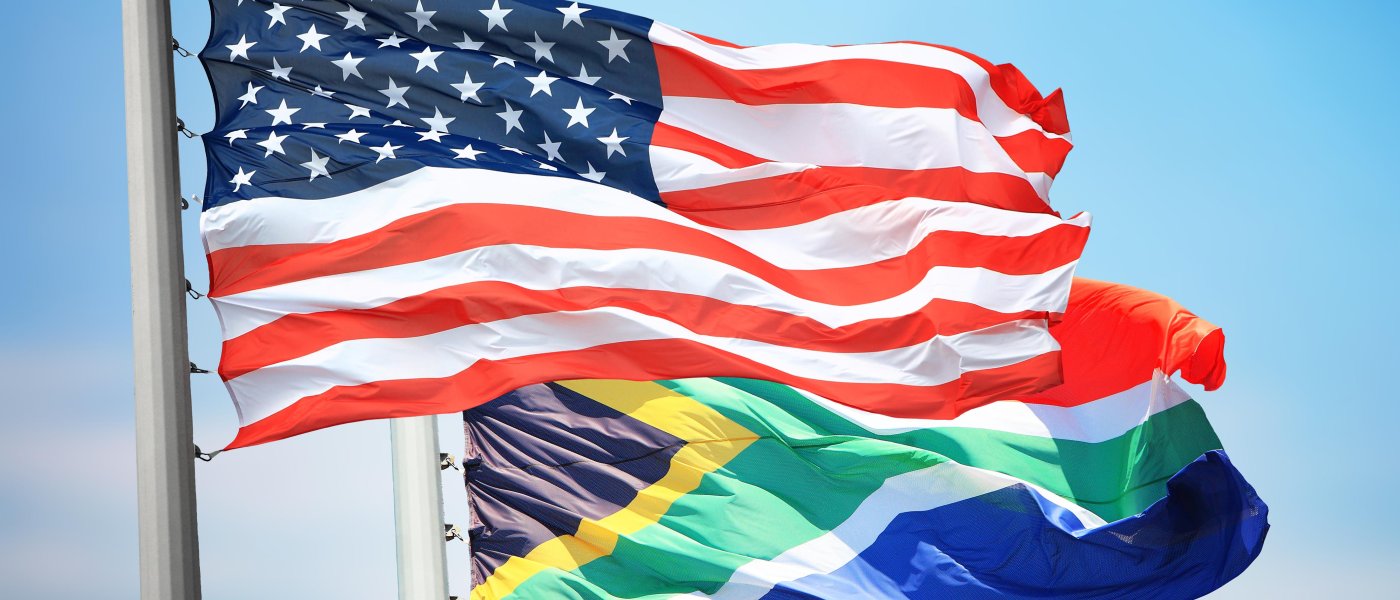
Photo: 3dmitry/Adobe Stock
Last week, U.S. aluminum giant Alcoa announced a $5.6 billion acquisition of South32’s aluminum value chain assets, including South Africa’s Hillside Aluminium Smelter—the largest aluminum smelter in the Southern Hemisphere. The transaction marks the largest new U.S. mining supply chain investment in South Africa in many years and will give the United States its first major operating presence in the country’s mineral processing sector. Alcoa’s investment presents an opportunity for South Africa to demonstrate that it can remain a pivotal critical minerals partner for the United States despite broader political tensions in the bilateral relationship.
At a time when bilateral political relations have faced growing uncertainty, the acquisition is a significant vote of confidence in South Africa’s industrial base and long-term manufacturing potential. Unlike many recent Western critical minerals investments focused on extraction, Alcoa’s acquisition is centered on processing. The acquisition also strengthens an allied aluminum supply chain stretching across trusted partners: U.S. capital, Australian bauxite, South African smelting, and exports into European and global markets.
The strategic backdrop makes the asset more valuable than the price alone suggests. China dominates the aluminum value chain, accounting for roughly 60 percent of the world’s primary aluminum production—about 43 million tonnes a year—while the West remains heavily exposed, with the United States importing 82 percent of its primary supply. Total aluminum demand, meanwhile, is set to climb from 86.2 million tonnes in 2020 to 119.5 million tonnes in 2030, driven by transportation, construction, packaging, and the electrical sector. Yet supply outside China is tightening into a structural deficit: Chinese smelter capacity is effectively capped at 45 million tons a year under Beijing’s dual-carbon framework, and Western greenfield projects remain stalled by energy costs and permitting, with new smelters carrying five-to-seven-year lead times. The deal’s strategic significance, then, is not that it slows China, but that it keeps scarce, hard-to-replace non-Chinese primary capacity in allied hands just as that capacity becomes a chokepoint.
South Africa’s Hillside Smelter is the country’s only producer of primary aluminum and roughly a quarter of its output goes to the domestic manufacturing industry, with the remainder exported. The smelter produces approximately 718,000 tonnes of aluminum annually and supplies both liquid and solid metal to domestic and international manufacturers. Hillside employs more than 2,500 workers and contractors and supports an estimated 29,000 indirect jobs.
Whether this investment becomes the first of many Western investments—or remains an isolated transaction—will depend largely on South Africa’s policy choices over the coming years. With the transaction expected to close in the first half of 2027, South Africa has a window of opportunity to demonstrate that it can provide the competitive investment environment needed to attract further strategic capital.
Recommendations:
Secure Hillside’s long-term electricity competitiveness through a 15-year contract. Aluminum smelting is among the most electricity-intensive industrial activities in the world, and competitive power pricing will ultimately determine Hillside’s viability. The cautionary case is recent and local: In late 2025, South32 placed its Mozal smelter in Mozambique under care and maintenance after failing to secure competitively priced electricity, with Eskom’s formal offer reportedly approaching $100 per megawatt-hour—against a global benchmark where fewer than one percent of smelters outside China operate above $50 per megawatt-hour.
Hillside’s current power agreement expires in 2031, so negotiating its successor should be a priority—and doing so credibly means confronting the politics directly. Hillside already receives a roughly 50 percent discount from Eskom and is the utility’s single largest private customer at about 5 percent of total demand, so any renewal invites an obvious objection: Why should a profitable, foreign-owned smelter receive cut-rate power while a financially distressed Eskom raises tariffs on households and other businesses?
The solution is not to preserve an indefinite subsidy, but to establish a commercially competitive, cost-reflective tariff that reflects Hillside’s strategic value while protecting the public interest. Maintaining the smelter’s international competitiveness will require a meaningful tariff reprieve. South32 currently pays approximately 51 cents per kilowatt-hour (c/kWh). By comparison, ferrochrome smelters were paying around 135 c/kWh at the beginning of 2026 before negotiations reduced the tariff first to 87.74 c/kWh and ultimately to 62 c/kWh. Even after those reductions, Hillside’s tariff remains approximately 22 percent lower than the rate negotiated for ferrochrome producers.
A variable-pricing structure with a windfall clause would help balance these objectives. Under normal market conditions, tariffs would remain internationally competitive; when aluminum prices spike, the tariff would rise. Structured this way, a long-term contract becomes economically defensible. Hillside’s contribution to employment, exports, and tax revenue, set out above, is the public return on keeping the smelter viable. The windfall mechanism would also ensure that ratepayers share in strong years rather than bearing exposure only in weak ones. There is international precedent for a variable-pricing electricity structure. In Canada, Hydro-Québec has historically negotiated long-term power contracts that link electricity tariffs to global aluminum prices. As aluminum prices increase, Hydro-Québec shares in the upside through higher electricity revenues, creating a risk-sharing arrangement that aligns the interests of the utility and the smelter rather than relying on a fixed subsidy. More recently, in July 2025, Hydro-Québec announced a new 20-year power agreement under which electricity prices are linked to the aluminum price. The Government of Quebec described the agreement as one that allows Hydro-Québec to share in the benefits of strong aluminum markets while enabling the smelter to remain internationally competitive when aluminum prices decline.
Create a globally competitive investment framework. South Africa’s mining sector is governed in part by the country’s Broad-Based Black Economic Empowerment (B-BBEE) framework, which aims to address the legacy of apartheid by increasing the participation of historically disadvantaged South Africans in the economy. Under the Mining Charter, mining companies are expected to meet targets across areas including Black ownership, employment equity, procurement, enterprise development, and community investment. Investors have cited uncertainty around ownership requirements and compliance obligations as factors affecting long-term investment decisions. For the Alcoa transaction, preserving the current ownership structure—under which South32 holds 100 percent of Hillside—will be important to ensuring investment certainty.
As global competition for mining capital intensifies, policymakers should consider whether targeted exemptions for large-scale, capital-intensive strategic mineral projects could attract greater foreign investment while still yielding local economic benefits such as employment, tax revenue, and exports. Leading mining jurisdictions such as Australia, Canada, Chile, and Peru do not have local equity requirements. Others have created carveouts. Saudi Arabia’s 2020 Mining Investment Law (part of Vision 2030’s push to make mining a “third pillar” of the economy) permits 100 percent foreign ownership and removes the requirement for a local partner in most cases, layered on top of incentives like customs duty exemptions and government co-funding of up to 75 percent of exploration and capital costs. As countries compete aggressively for investment across the critical minerals value chain, South Africa will need to ensure its policy framework remains both competitive and predictable.
Alcoa has already demonstrated that global mining capital is willing to invest in South Africa. The question now is whether South Africa’s policy environment will ensure this is remembered as the first investment in a new wave of Western capital—or the last major one for another decade. If South Africa can provide competitive electricity, an internationally competitive investment environment, and predictable regulation, this transaction may ultimately be remembered as the one that reopened large-scale U.S. mining investment in South Africa and helped reset the bilateral economic relationship.
Gracelin Baskaran is director of the Critical Minerals Security Program at the Center for Strategic and International Studies in Washington, D.C.

Brief by Gracelin Baskaran — March 18, 2026

Commentary by Gracelin Baskaran — May 9, 2025
