Energy Shots: Middle Distillates and the Middle East
August 21, 2026 • 9:30 – 10:00 am EDT

Photo: Mohammed Al-Rifai/picture alliance/Getty Images

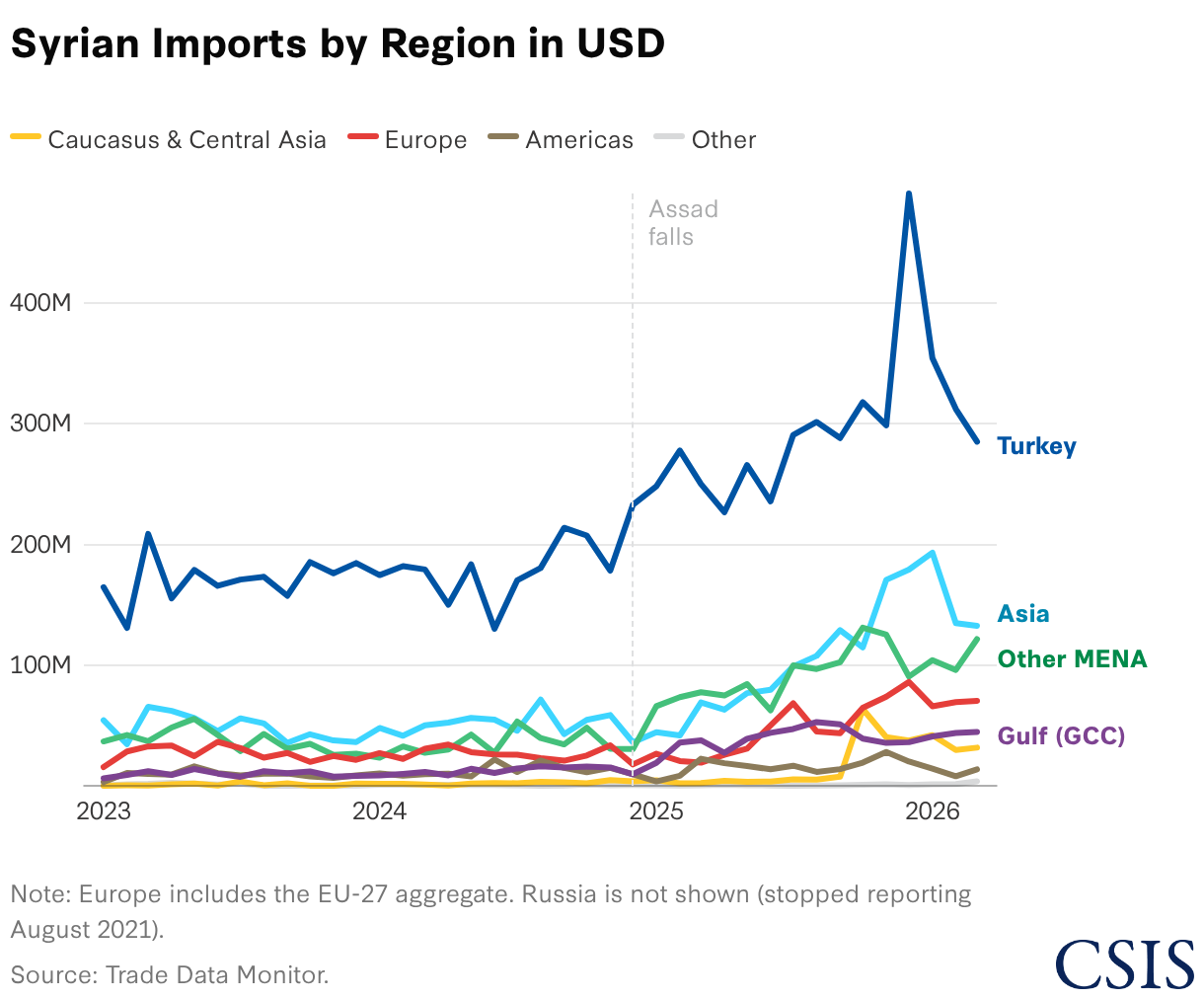

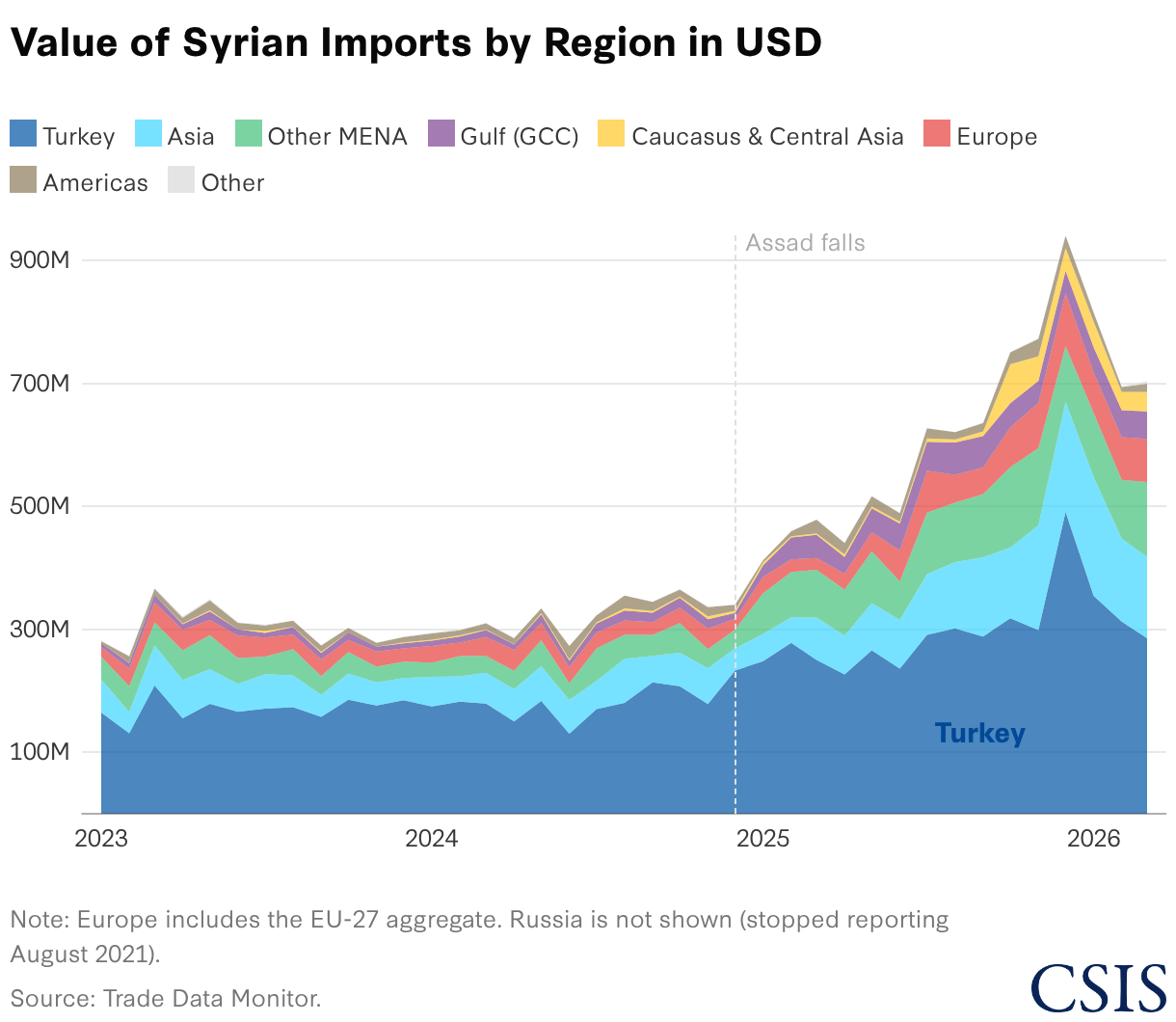
On June 30, 2025, President Trump signed an executive order revoking most U.S. sanctions on Syria, to support “the country’s path towards peace and prosperity”. Since then, other countries have followed suit, slowly integrating Syria into the global economy. This installment of Charting the Middle East spotlights growing trade volumes between Syria and select countries or regions since the fall of Assad and the lifting of sanctions.
Following the collapse of the Assad regime in December 2024, recorded total imports increased by about 81% in 2025, from roughly $4 billion USD to $7.3 billion USD. Imports have been driven primarily by food and agricultural products (31 percent) and construction and building materials (19 percent), reflecting demand for reconstruction and essential goods as displaced Syrians begin to return. While Turkey remained Syria's largest source of imports as of March 2026, suppliers from Asia and the Gulf are rapidly expanding their market share, underscoring Syria's growing economic reintegration and the gradual normalization of its trade relationships. Although trade volumes remain well below pre-war levels and significant political and financial constraints persist, the sharp increase in imports illustrates how sanctions relief and renewed diplomatic engagement are beginning to reshape Syria's economic landscape.
