All About the Base | AATB on Location: Conversations from AUSA
November 2, 2026 • 9:00 – 9:30 am EST
Hosted by All About the Base

Photo: Fabio Murgia/CSIS, with assets from Wikimedia Commons
The six charts in this analysis aim to illustrate the implications of the partial closing of the Strait of Hormuz on global energy markets. The conflict with Iran, which began with strikes by Israel and the United States on February 28, effectively closed the Strait of Hormuz, a waterway which enables 25 percent of seaborne crude oil and around 20 percent of liquified natural gas (LNG) to reach global energy markets. Energy prices did not spike as dramatically as in similar crises in 1973 and 1979 due to several important market conditions. In February 2026, ample amounts of crude loaded on tankers proceeded to customers, the International Energy Agency (IEA) secured pledges from its members to release 400 million barrels of crude from their strategic reserves, the United States filled supply gaps by increasing exports, and China and Japan significantly curtailed imports.
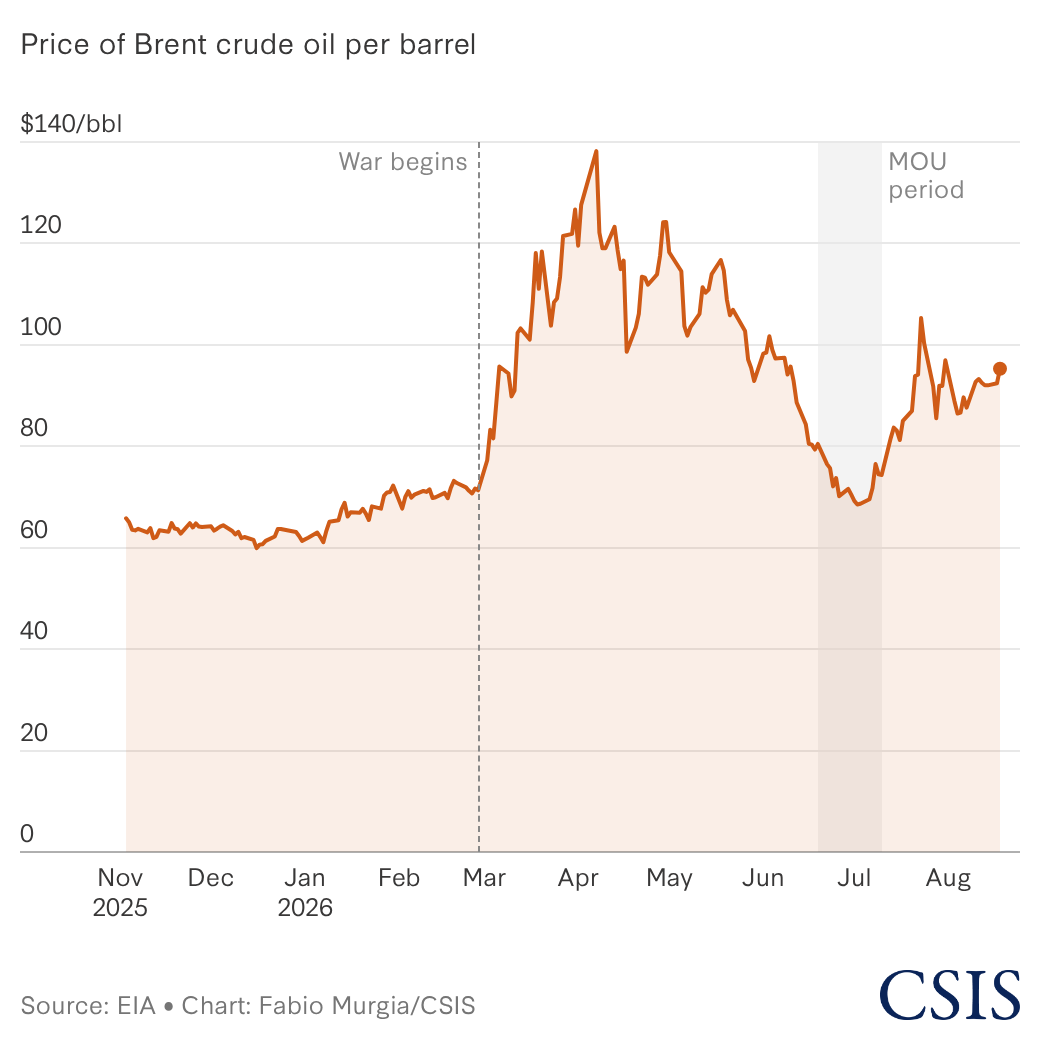
The initial closure of strait removed a large share of seaborne crude, placing an upward pressure on the price of oil, refined products, and natural gas. Brent crude prices responded to the disruption of energy flows, rising from around $70 per barrel in February to $145 in April, settling around $90 per barrel by the end of August. However, benchmark prices rose far less than expected due to several mitigating factors. In March, the IEA secured commitments from its members to release 400 million barrels from strategic reserves, with around 290 million barrels released by the end of July. By June, Saudi Arabia and the United Arab Emirates (UAE) redirected crude exports through the Red Sea, exporting 5.0 million barrels per day (mb/d) and 4.3 mb/d, respectively. Iraq also redirected its supply of crude by sending around 1,000 tanker trucks per day through Syria to export via the Baniyas refinery complex.
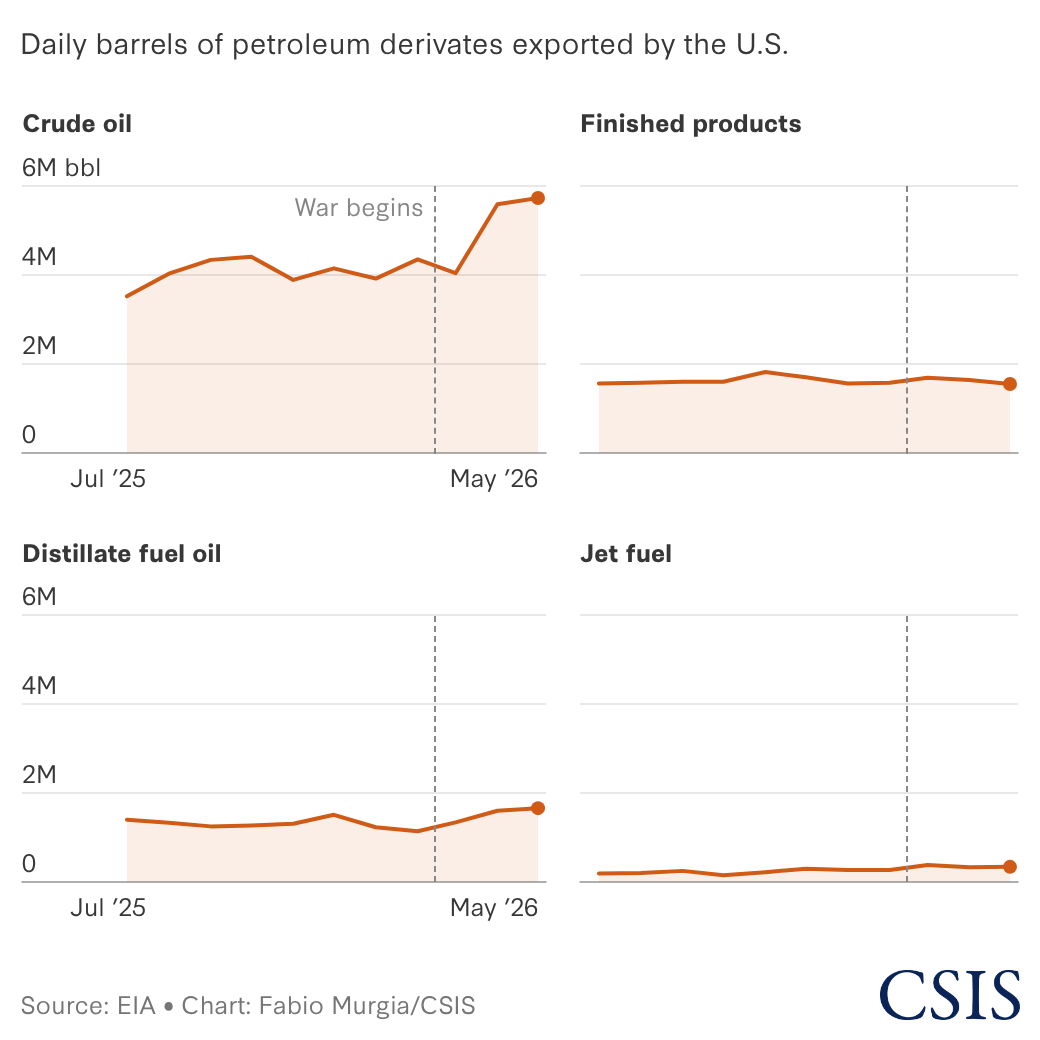
The United States entered the war with strong domestic production and exports of 3.9 mb/d of crude and 6.6 mb/d of refined petroleum products. The surge in U.S. exports helped fill supply gaps in the global market and demonstrated the flexibility of the U.S. refining system. Rising prices for crude and refined products outside of the United States incentivized the surge in exports. The structural changes of the sector in the last decade—namely the shale revolution, investment in Gulf Coast pipelines in the United States, refining capacity, and export terminals—made this surge in supply possible. Customers in Asia moved to increase purchases from U.S. suppliers, thereby minimizing conflict-related disruptions and ensuring their energy security.
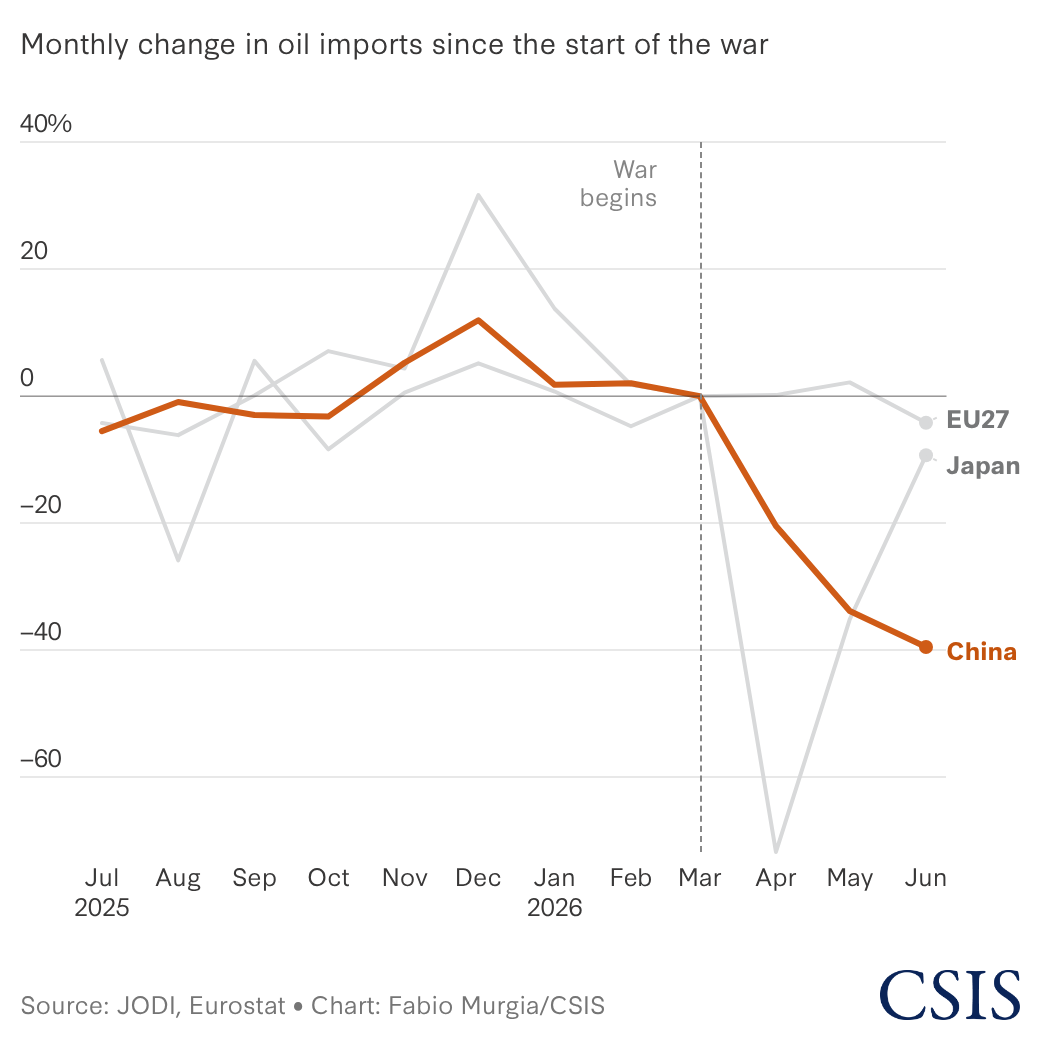
China, the world’s largest crude importer, entered the war with nearly 1.4 billion barrels in combined commercial and government stocks. Following years of stockpiling its strategic oil inventories, China cut crude imports by about 32 percent, from the average 11.6 mb/d in 2025 to 8.0 mb/d. China’s ability to maintain these deep cuts over time is a key determinant in how long the global economy can withstand significant traffic disruptions in the Strait of Hormuz. China’s crude imports increased in July and August 2026, which may result in a tighter supply of crude in global markets. In April, Japan’s imports of crude from Saudi Arabia and the UAE contracted sharply to 853,329 b/d, a decline of nearly 66 percent. In May, Japan agreed to cooperate on oil procurement and swaps with South Korea, importing additional crude from North America.
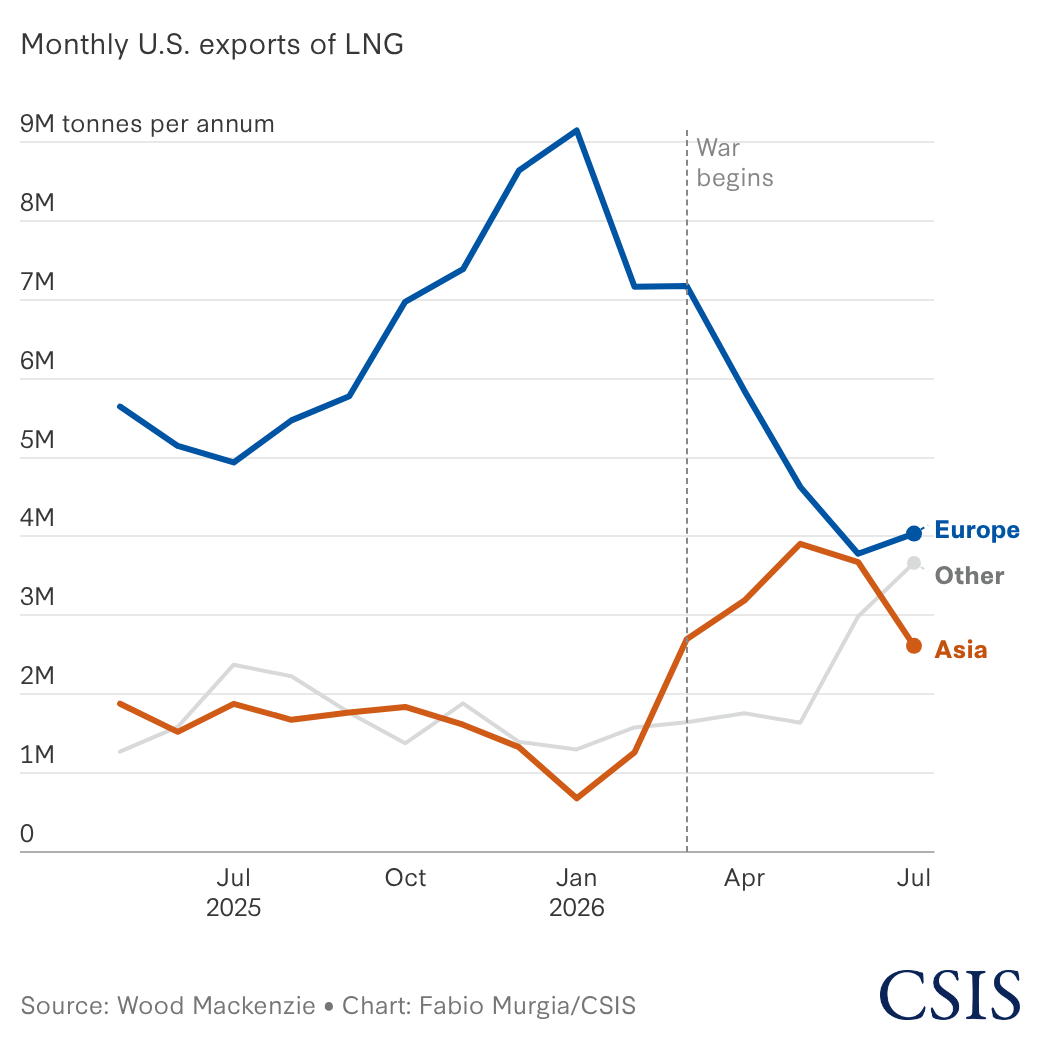
Asia’s share of U.S. LNG exports rose from about 12 percent in January to about 40 percent in May. Iranian strikes on Qatar’s Ras Laffan export facility and the closure of the Strait of Hormuz cut Qatar’s LNG supply to Asia, which tightened global supply and raised prices. To fill supply gaps and maximize profit, U.S. LNG facilities increased plant utilization to peak at over 100 percent in March. However, committing LNG vessels to lengthy voyages to Asia combined with the scheduled maintenance season resulted in a decline in available vessels and plant utilization by the summer. After the end of the 2025–26 heating season, Europe needed to refill its gas storage during the summer of 2026. During its last energy crisis, triggered by Russia’s invasion of Ukraine in 2022, European consumers and businesses absorbed the brunt of the elevated gas prices. This year, European leaders were willing to take a gamble and delay refilling their storage, hoping for lower gas prices. Now, Europe has filled just 68 percent of its gas storage, significantly short of its winter storage target of 80 percent. European gas prices continue to rise due to the ongoing conflict in the Middle East, along with reduced pipeline gas supply from Algeria and Norway. Europe now faces its heating season with below-average inventories, gas prices as high as in December 2022, and limited capacity to absorb additional supply and demand shocks.
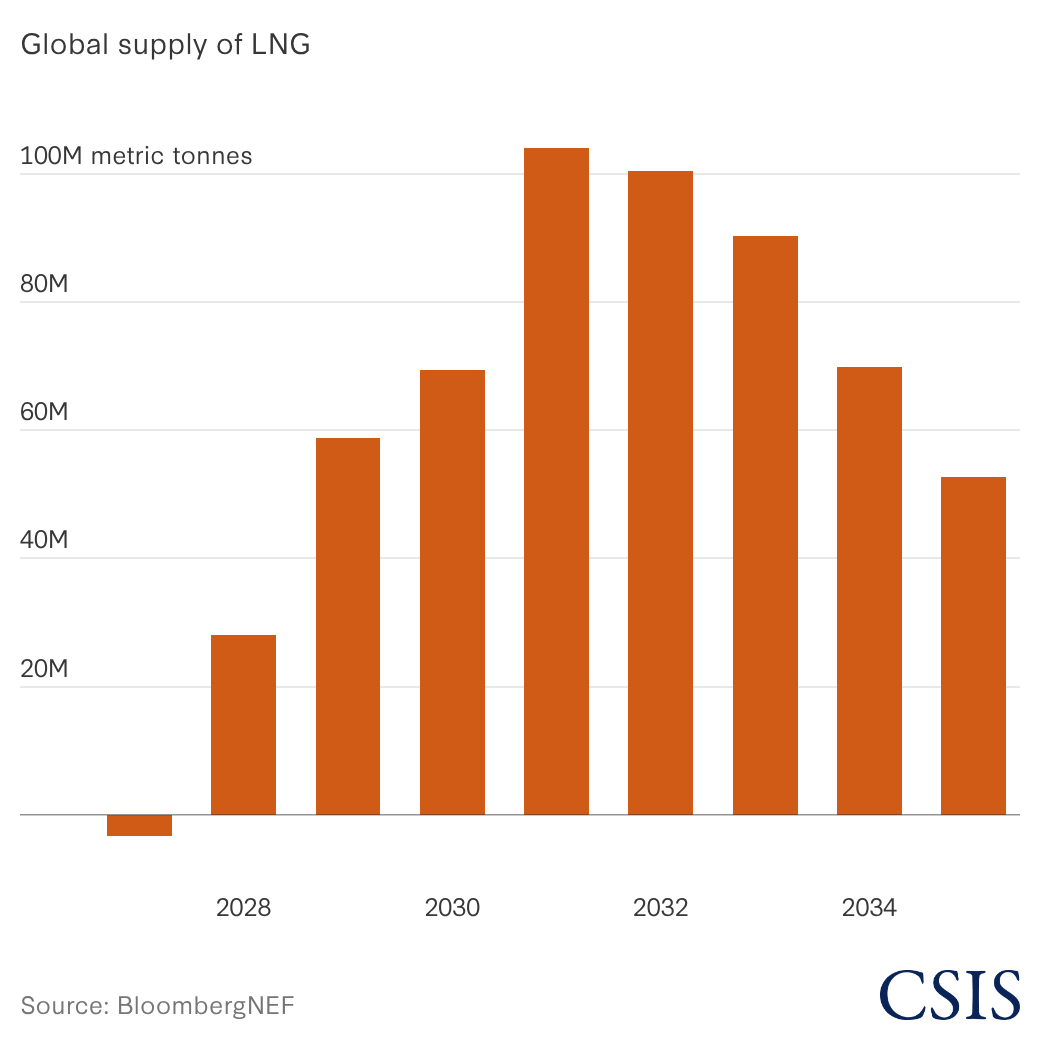
According to BloombergBNEF, hostilities with Iran also pushed back projected oversupply of LNG from 2027 to 2028. Instead of excess LNG supply of 1.7 million metric tons (Mt) estimated for 2026, conflict-related disruptions will create a shortage of 3.3 Mt in 2027, with peak supply of LNG at 104 Mt projected for 2031. Needed repairs, constrained by supply chain bottlenecks, reduced Qatar’s prewar export capacity and also further delayed the expansion of the North Field, potentially reaching completion in the next three to five years. During the conflict, the United States emerged as a global swing supplier due to the significant expansion of LNG capacity and offtake flexibility.
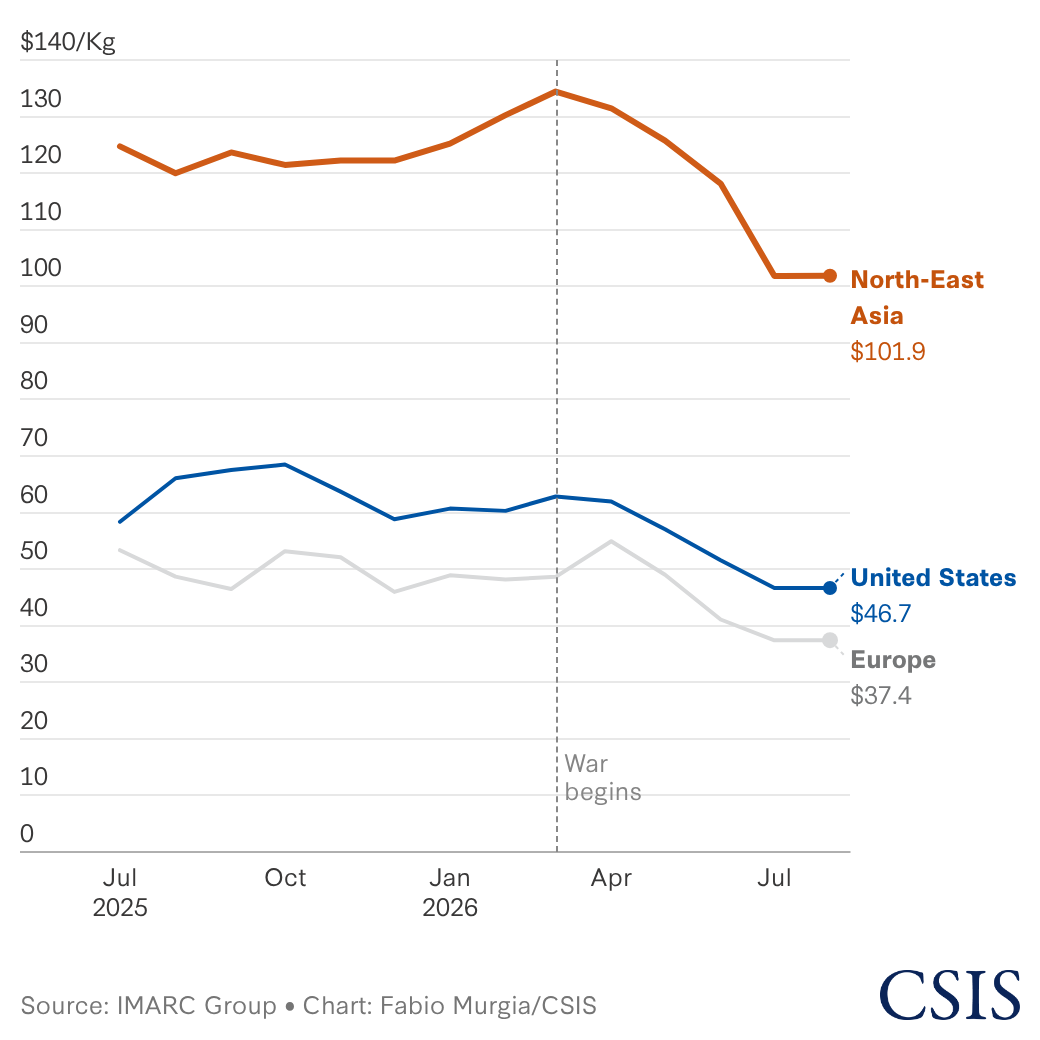
Prior to the closing of the Strait of Hormuz, Qatar provided about one-third of the world’s helium, mostly supplying semiconductor manufacturers producing AI-grade chips in Asia. The conflict temporarily shut in helium supply from the Gulf. Russia’s partial ban on helium exports in April put additional pressure on the price and supply of helium. To fill supply gaps, Asia’s chipmakers turned to U.S. natural gas producers to source helium, a byproduct of LNG production. U.S. industry ramped up production of LNG to fill the supply gap created by the conflict, which also increased production of helium. In the first five months of 2026, South Korea and Taiwan pivoted from Qatar and sourced the bulk of their helium from the United States. South Korea’s imports of U.S. helium rose from 28 percent to 56 percent, and Taiwan’s U.S. helium imports rose from just under 4 percent to around 60 percent. To reduce supply-side risk, Samsung and SK Hynix also signed long-term contracts with U.S. helium suppliers Air Products and Linde in April.
The status of the Strait of Hormuz remains dynamic, but several factors can shape energy markets in the short to medium term. Coordinated releases of nearly 300 million barrels of emergency crude reserves by IEA members, increases in U.S. exports of oil and gas, and Japan’s and China’s significant reductions of crude imports stabilized energy markets. Soon, the European Union, the United States, and others will need to refill their strategic reserves, competing for supply in a tight market, driving crude prices ever higher. Europe also needs to refill its natural gas storage for the winter heating season. Europe’s commitment to decouple from Russian pipeline gas by November 1, 2027, rests on the availability and affordability of LNG. The elevated cost of LNG may slow down Europe’s economy and delay its complete elimination of Russian-piped gas. The Houthi attacks in September further damaged Saudi energy infrastructure and constrained the country’s ability to export crude through the Yanbu (East-West) pipeline and the Red Sea. Finally, China’s role as a swing crude consumer during this conflict may make it challenging for the United States to achieve its economic priorities during the planned Trump-Xi summit on September 24.
This commentary is made possible by general funding to CSIS and the CSIS Energy Security and Climate Change Program.

Commentary by Raad Alkadiri — September 11, 2026

Transcript — August 24, 2026