The Uncertain Future of Thailand’s Gas Sector

Available Downloads

The Issue

  • Since the 1980s, Thailand’s economic and industrial growth has been driven by access to low-cost, domestic natural gas supplies. After peaking in the early 2010s, Thailand’s domestic gas resources are now in decline. As a result, liquefied natural gas (LNG) imports are rising and are bringing higher costs and more uncertainty to Thailand’s power sector.
  • These changes, alongside sluggish economic growth, have resulted in lower electricity demand and falling gas powerplant capacity factors. Without demand for higher-cost electricity, state-owned utility balance sheets are bearing most of the cost burden.
  • U.S. data center demand and AI exports could represent sources of new electricity demand, with a higher willingness to pay. Thailand’s gas power plants are idle, and are largely ready to run. Allowing U.S. data centers to access this power could improve the utilization of Thailand’s existing power assets, relieve utility balance sheets, and support new investment. However, doing so will likely require changes to current electricity market, contracting, and regulatory structures.

Introduction: The Role of Gas in Thailand

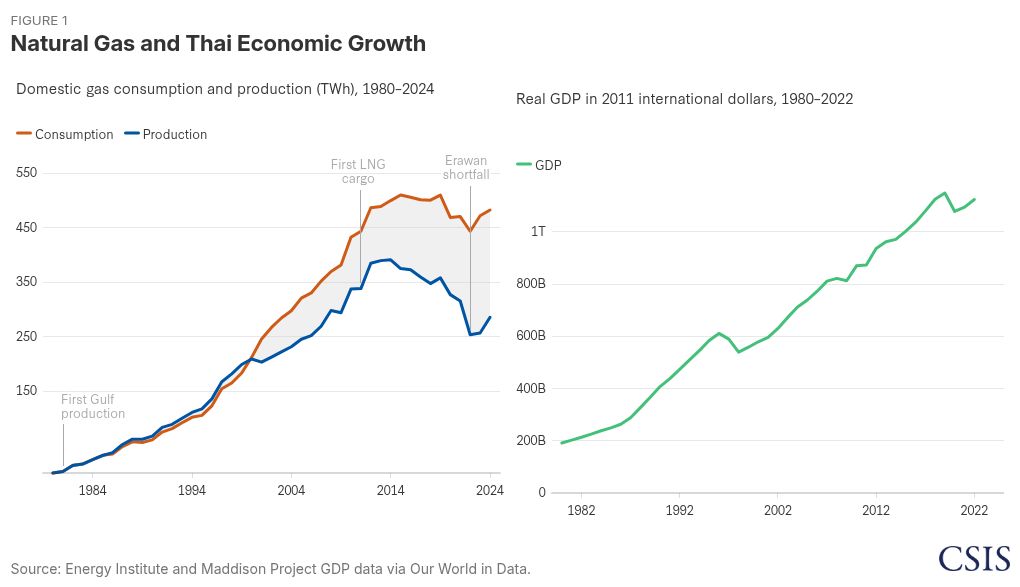
Natural gas is the foundation of Thailand’s electricity system. In the 1970s and 1980s, discoveries of domestic gas resources in the Gulf of Thailand provided a stable source of power and industrial feedstock, both of which constitute necessary inputs for economic growth. After the start of commercial production in 1981, domestic gas drove the development of Thailand’s first petrochemical and heavy-industrial complex; petrochemicals and plastics now account for approximately 7 percent of Thailand’s GDP. Affordable domestic gas supplies also powered the expansion of gas-fired electricity, refining, and energy-intensive manufacturing. Domestic gas, alongside export-oriented industrial policy and foreign investment, helped drive Thailand’s industrialization and contributed to an annualized GDP growth rate of 4.3 percent since 1980 (see Figure 1).

Remote Visualization

Figure 1 highlights this trend and shows that gas consumption and GDP have had similar growth trends over the past four decades. Between 1982 and 2024, gas consumption and GDP grew at a compounded annual growth rate (CAGR) of 8.8 percent and 4.2 percent, respectively. As a result, in 2024, Thailand consumed 46.5 billion cubic meters (bcm) of gas, up from 6.1 bcm in 1990. Nearly 30 bcm per year, or 64 percent of this gas, was used for electricity generation, while roughly 18 and 15 percent were used for gas separation plants and petrochemicals/other industry, respectively.

In 2025, gas accounted for over 65 percent of Thai electricity generation, whereas wind, solar, and hydropower collectively accounted for approximately 10 percent. While the share of renewables is growing, Thailand’s installed capacity base remains heavily gas-weighted. Gas-fired power plants account for roughly 31 gigawatts (GW) of capacity—or close to 60 percent of the country’s total generation capacity—compared to much smaller domestic wind, solar, and hydro fleet buildouts. However, due to softening electricity demand, expanding renewables deployment, and increased hydropower imports, parts of the gas fleet have seen utilization rates fall since 2023.

Power and Gas Market Structure

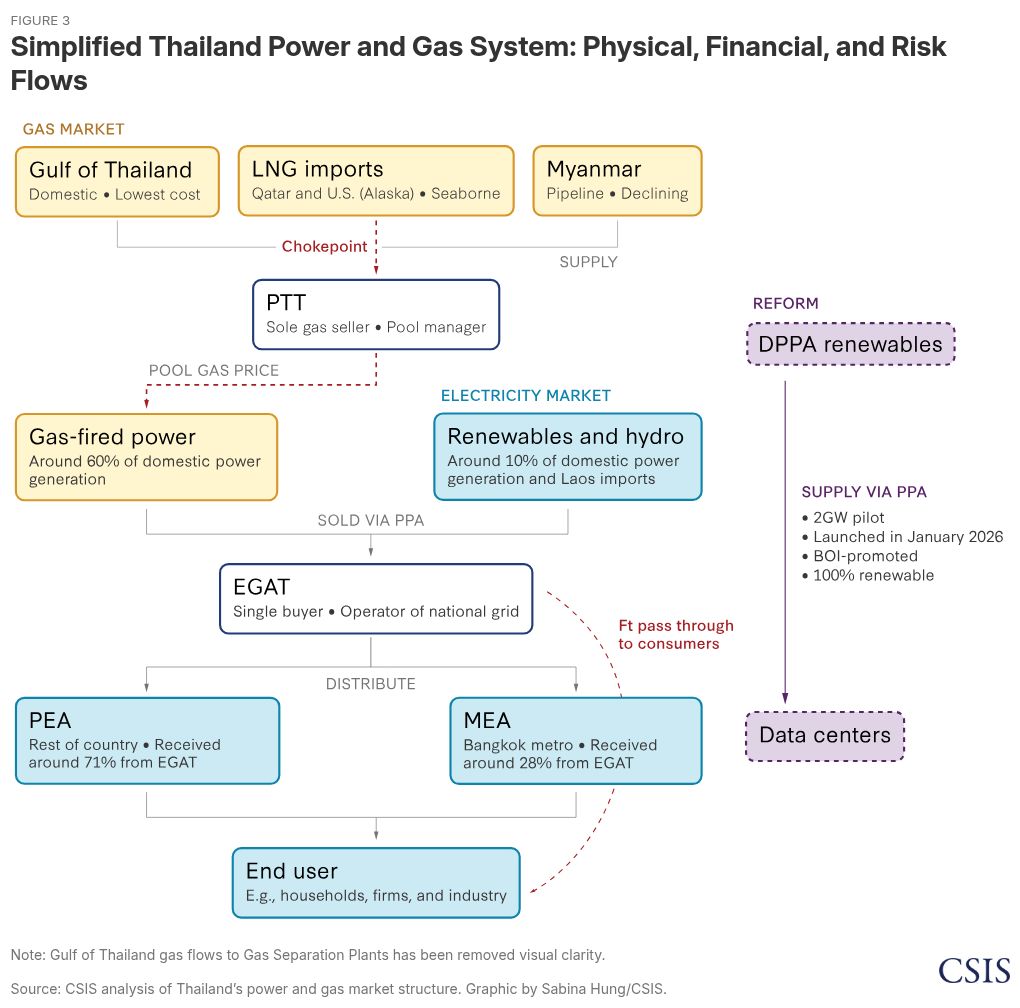
Thailand’s electricity market operates under a state-owned, single-buyer model, in which the Electricity Generating Authority of Thailand (EGAT) is the central buyer of power as well as the owner and operator of the national transmission grid. EGAT both owns power generation capacity and purchases power through Power Purchase Agreements (PPAs) with private players. Gas-fired power dominates both areas; it accounts for over 9.5 GW of EGAT’s 16.3 GW of owned capacity and is projected to make up 74–81 percent of PPA capacity between 2025 and 2030, based on EGAT independent power producer (IPP) and small power producer (SPP) planned contracts. Solar is the fastest growing competitor to gas in the system, as contracted PPA capacity grew by nearly 2 GW between 2020 and 2030, at a CAGR of 18.3 percent. This generation mix, alongside lower electricity demand due to the Covid-19 pandemic, has led Thailand to have one of the largest power reserve margins in Southeast Asia, ranging between 40 percent and 55 percent.

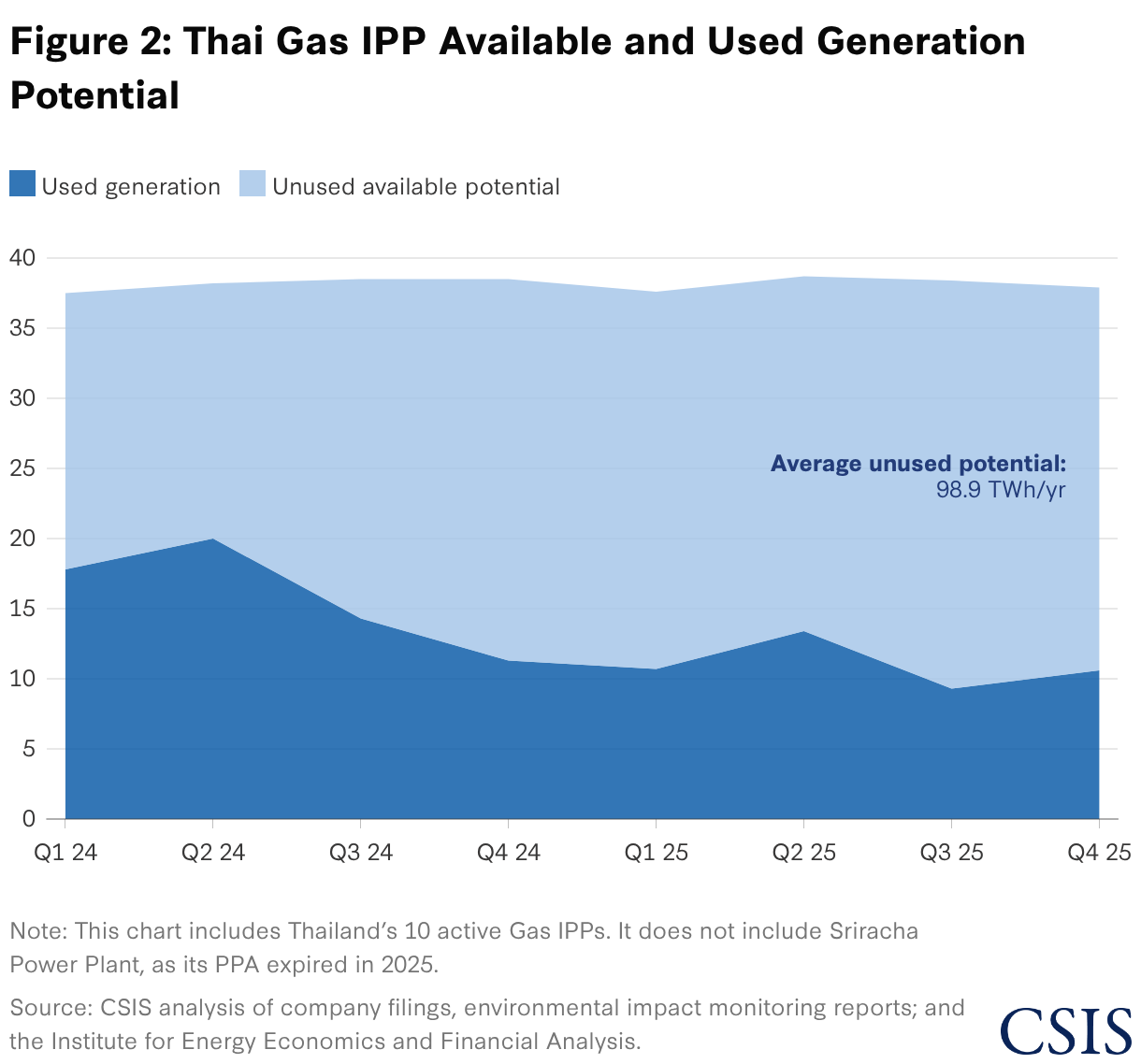
The abundance of gas-fired power is due in large part to the PPA structure offered by EGAT. These PPAs consist of direct availability payments (i.e., fixed payments made to the plant simply for being ready to generate, covering capital and fixed operation and maintenance costs) and energy payments (i.e., variable payments that cover the actual cost of fuel and variable operation and maintenance when the plant is dispatched). This structure moves fuel-price risk and electricity demand risk away from the private power producer and onto EGAT. If electricity demand drops, EGAT must continue making availability payments for idle plants; in early 2026, these capacity payments for underutilized plants accounted for approximately 0.63 Thai Baht per kilowatt-hour (THB/kWh), or nearly 17 percent, of the base electricity tariff. Across 2024 and 2025, most of Thailand’s gas IPP plants ran far less than half the time, resulting in approximately 99 terawatt-hours per year of available electricity generation, or 11.3 GW of available generation capacity (see Figure 2). This capacity is already built, contracted, and ready-to-run, yet sat idle due to diminished electricity demand. If fuel prices spike, private producers pass the increased costs directly to EGAT, leaving the utility to either keep excess cost on the balance sheet or pass the cost onto end consumers.

Remote Visualization

The Thai government’s Energy Regulatory Commission (ERC) utilizes a fuel tariff (Ft) adjustment mechanism to manage these decisions and pass fuel-price fluctuations on to end users. The ERC can direct EGAT and the state-owned oil and gas company, PTT, to utilize their balance sheets as price-shock absorbers. During periods of high fuel-price volatility, the ERC caps tariff increases to protect consumers and industrial competitiveness. The shortfall becomes a deferred cost carried on the balance sheets of EGAT and PTT. For example, following the energy crisis triggered by the Russia-Ukraine war, the ERC froze tariffs, forcing EGAT and PTT to carry nearly 150 billion THB in accumulated debt. These losses are eventually clawed back through tariff increases once prices stabilize, but they are dependent on sustained periods of low fuel-price volatility and stable electricity demand. EGAT is still paying off its subsidy burden from 2022. The ERC has recently taken a similar approach to shield consumers from the effects of the Strait of Hormuz closure, which will likely result in further debt accumulation.

As a result of this structure, the financial health of EGAT plays an outsized role in the ability of the power market to grow and operate. Because EGAT is the primary offtaker, project developers and lenders must be confident in its ability to make payments over the length of the contract. Historically, EGAT has maintained a strong credit profile and has had access to cheap domestic gas supply, making its PPAs bankable and limiting offtaker risk for the project developer. However, because EGAT is state owned, its credit rating is intertwined with Thailand’s sovereign financial health and broader macroeconomic stability. For example, because Thailand’s economy is highly export-driven, external shocks—such as U.S. trade tariffs—can depress industrial manufacturing and reduce power demand. In these scenarios, EGAT is still obligated to pay the fixed costs of its existing PPAs despite selling less electricity, directly straining its balance sheet. Thus, financiers and developers must evaluate broader geopolitical and demand-side risks alongside EGAT’s current ledger.

Remote Visualization

Because EGAT’s financial health is dependent on fuel pass-through costs, the physical and financial structure of the power market is linked to the gas market. Thailand’s gas market is centralized under PTT, which historically controlled the procurement and distribution of all three of the country’s gas sources: domestic Gulf of Thailand production, piped imports from Myanmar, and LNG imports. This supply feeds the “regulated market,” which accounts for the majority of national gas demand, including EGAT and all private grid-connected power producers. Thailand has recently introduced a “partially regulated market,” allowing licensed shippers to independently procure and deliver LNG for their own use in privately owned power plants or industrial facilities. However, this market is small, and of the eight licensed LNG importers, only three have actually imported cargoes. Consequently, the regulated market remains the primary source of gas supply for power producers and industrial end users.

Pricing for the regulated market is determined by the pool gas framework, which is set as the weighted average cost of domestic Gulf of Thailand gas, Myanmar pipeline gas, and imported LNG, plus the fixed costs for terminal and pipeline infrastructure. Historically, this pricing regime stabilized electricity prices because cheap domestic gas production was the dominant source of supply. With both gas prices and price volatility levels low, EGAT could offer long-term, low-risk PPAs to private developers. However, as domestic gas supplies dwindle, the introduction of more volatile, higher-priced LNG could change the risk profiles of these PPAs with knock-on consequences for end consumers.

These market actors, structures, and regulations were implemented in the early 2000s, when domestic gas production met or exceeded power and industry needs. However, global energy crises and rising power demand from data centers and industry are placing these systems under stress. As the era of cheap, abundant domestic gas closes, Thailand’s energy landscape is being actively reshaped by three converging trends.
 

Three Trends Reshaping Thailand’s Gas Sector

1. Legacy Gas Supply Is Declining

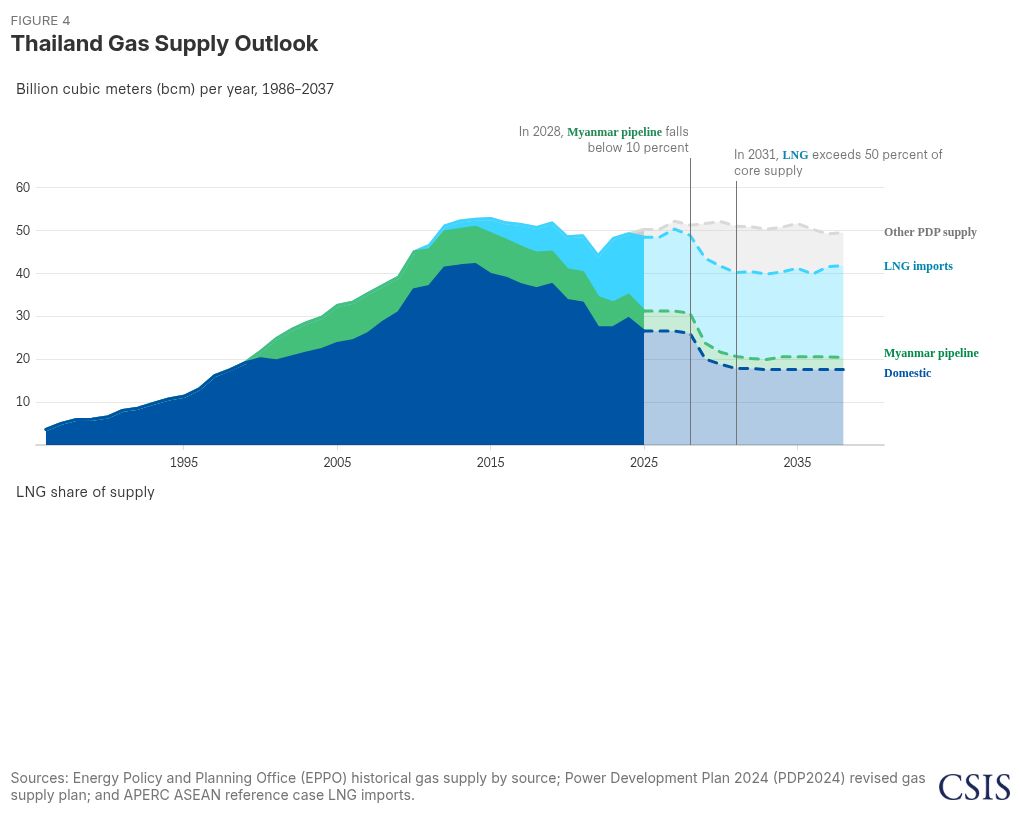
Thailand’s gas-security model has been built around domestic Gulf of Thailand production and pipeline imports from Myanmar, but both sources are weakening. Until 2010, these two sources supplied all of Thailand’s gas demand. Since then, domestic supply and Myanmar pipeline imports have fallen over 20 percent (see Figure 1). Domestic reserves are expected to deplete over the next 10–20 years, while Myanmar gas exports to Thailand fell by an estimated 9.6 percent in 2025, due primarily to field depletion and political instability (see Figure 1). Together, these trends mean that Thailand’s legacy sources are no longer sufficient to anchor the gas system, especially as Thailand is still planning to add 6.3 GW of new gas-fired capacity by 2037.

2. LNG Is Becoming the Marginal Source of Supply

As domestic sources decline, LNG is becoming a structural component of Thailand’s gas supply. The ERC projects that LNG volumes will rise by 27 percent through 2037, despite overall gas demand being projected to fall by 1.4 percent due to slowing population and economic growth. The Asia Pacific Energy Research Centre (APERC) projects gas demand to rise much more dramatically and for LNG imports to rise by over 170 percent, accounting for over 70 percent of overall demand by 2037.

Remote Visualization

In both scenarios, LNG flows are still expected to increase if domestic and Myanmar pipeline gas sources decline faster than overall demand. In fact, even before the closure of the Strait of Hormuz, Thai government officials had discussed the need to import more LNG.

3. Data Centers, Electrification, and Industry Are Increasing the Demand for Firm Power

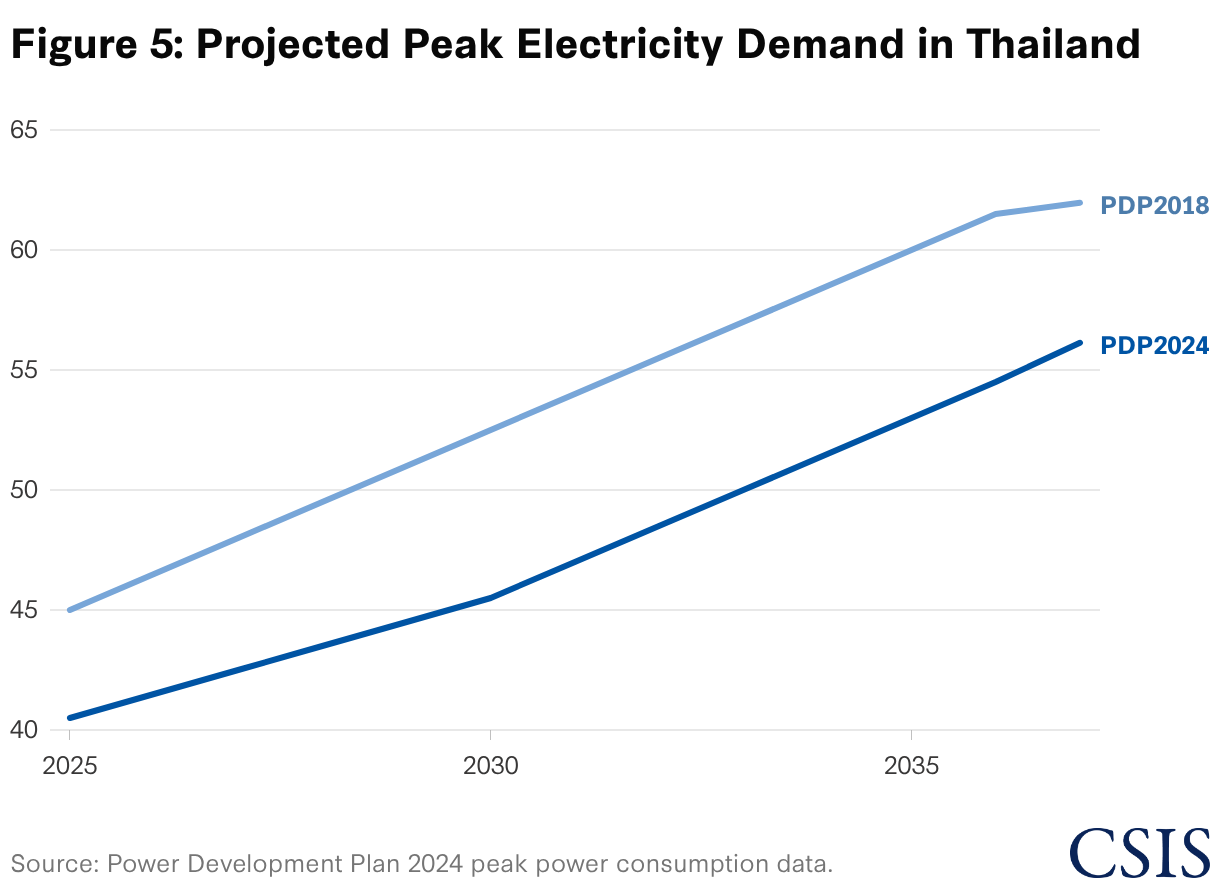
Thailand’s official electricity-demand forecasts have been revised downward due to weaker-than-expected economic growth and the aftershocks of the Covid-19 pandemic. However, innovation in AI, the need for critical minerals, and other trends could increase the need for reliable, high-quality power. Data centers, industrial electrification, cooling demand, and digital infrastructure could all increase the value of firm electricity supply, as is already being seen in the United States.

AI-related data centers, advanced industrial loads, and the uncertainties they introduce are likely not fully reflected in existing planning forecasts—but they could become a meaningful source of future demand growth, with some estimates placing additional electricity demand for data centers at 10 TWh by 2037. Perhaps more importantly, however, the countries that can offer affordable, reliable, and increasingly clean electricity will be better positioned to attract data centers and other high-value industrial investment, creating a new economic development opportunity. For Thailand, the ability to provide stable power is both an energy security issue and a driver of long-term economic competitiveness.

Remote Visualization

The convergence of these three trends with Thailand’s existing physical and financial power market structures creates a new risk environment. Thailand is becoming more dependent on internationally priced LNG at the same time that electricity reliability is becoming more important for industrial competitiveness, digital infrastructure, and household affordability. The rest of this analysis evaluates the two main risks embedded in that transition.
 

The Risks in Transitioning Toward LNG

1. LNG Price Volatility Will Increasingly Transmit into Tariffs, Industrial Costs, and Utility Balance Sheets

The pool gas framework, the Ft adjustment mechanism, and the ability for Thai utilities to accumulate balance sheet debt to prevent consumer rate increases were all designed for a system driven by stable domestic gas as the primary fuel source. As LNG becomes the marginal source of supply, these mechanisms must now manage prices that are both higher and more volatile. There are then two follow-on risks: first, that gas prices will become more expensive and more uncertain, and second, that price shocks will move into a system with limited, rigid financial buffers.

The Impact of LNG’s Growing Share on Price Volatility

At the system level, the volatility of imported LNG has historically been diluted by the remaining domestic gas production and Myanmar imports in the pool. When LNG’s share is small, its effect on the blended pool gas price is minimal. As its share rises, LNG dictates the volatility of the total gas pool.

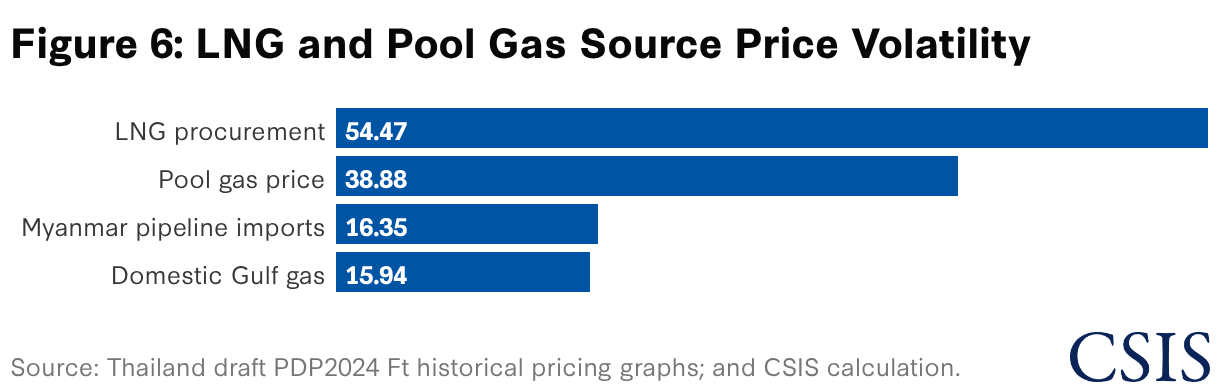
LNG grew from roughly 2 percent of Thailand’s gas supply in 2011 to approximately 29 percent in 2024, and as discussed above, both ERC and APERC scenarios project that it will expand significantly by 2037. As shown in Figure 6, LNG prices are structurally more volatile than legacy supply: Between January 2021 and May 2026, the annualized volatility of the LNG Thailand procured was 54.5 percent—roughly 3.4 times as volatile as domestic Gulf gas (15.9 percent) and Myanmar pipeline imports (16.3 percent). Because of this exposure, the blended pool gas price experienced an annualized volatility of 38.9 percent over the same period. As LNG’s share of the pool continues to grow, the volatility of the pool gas price will likely increase as well.

Remote Visualization

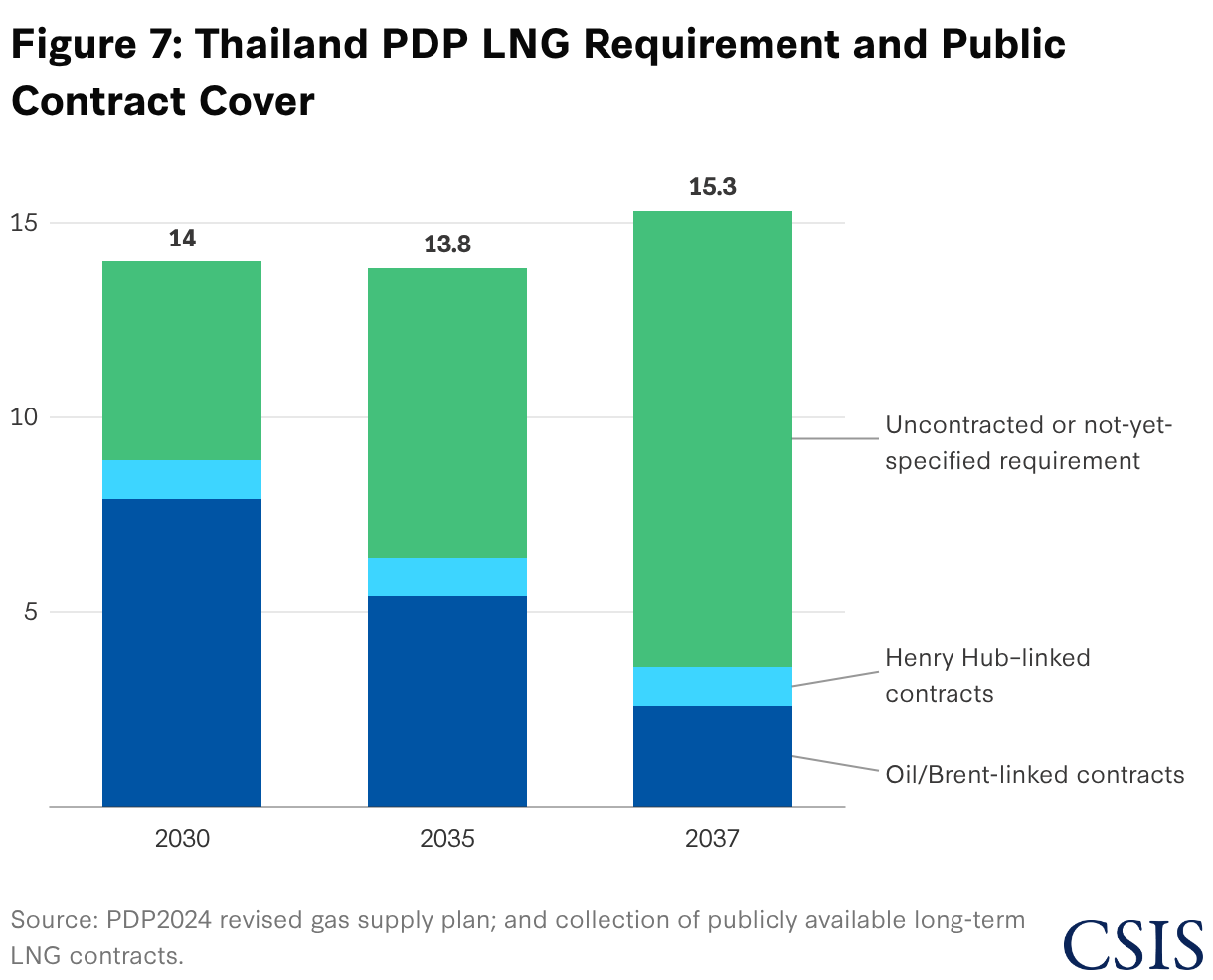
The level of volatility that increased LNG imports into Thailand depends on the pricing indices used in procurement contracts. Currently, over 80 percent of projected 2037 demand is uncontracted (see Figure 7). Because this supply is not yet secured, two LNG portfolios of the same volume could result in different pool gas prices depending on their pricing basis.

Remote Visualization

The features of various pricing indices are described below.

  • Spot/JKM-Linked: creates direct exposure to Asian spot market tightness and seasonal gas price spikes.
  • Brent-Linked: ties gas costs to oil-market volatility and macroeconomic crude supply trends.
  • Henry Hub-Linked: introduces exposure to U.S. domestic policy risks, rising U.S. data center demand, and exchange-rate fluctuations.
  • Portfolio Contracts: exposes the buyer to global opportunity costs and supplier flexibility constraints.

Contracting supply reduces volume uncertainty, but it shifts price risk into the indices and terms of the contracts. A portfolio relying heavily on spot markets has a wider range of cost outcomes than a diversified, long-term portfolio. In short, Thailand’s volatility exposure grows as it imports larger volumes of LNG and as it ties those imports to volatile pricing benchmarks.

Remote Visualization

Transmission of Price Shocks

LNG price volatility passes downstream as higher procurement costs raise the pool gas price, which increases gas-fired generation costs and triggers an increase in the Ft. If regulators cap the Ft, the unrecovered costs accumulate as debt for EGAT and PTT.

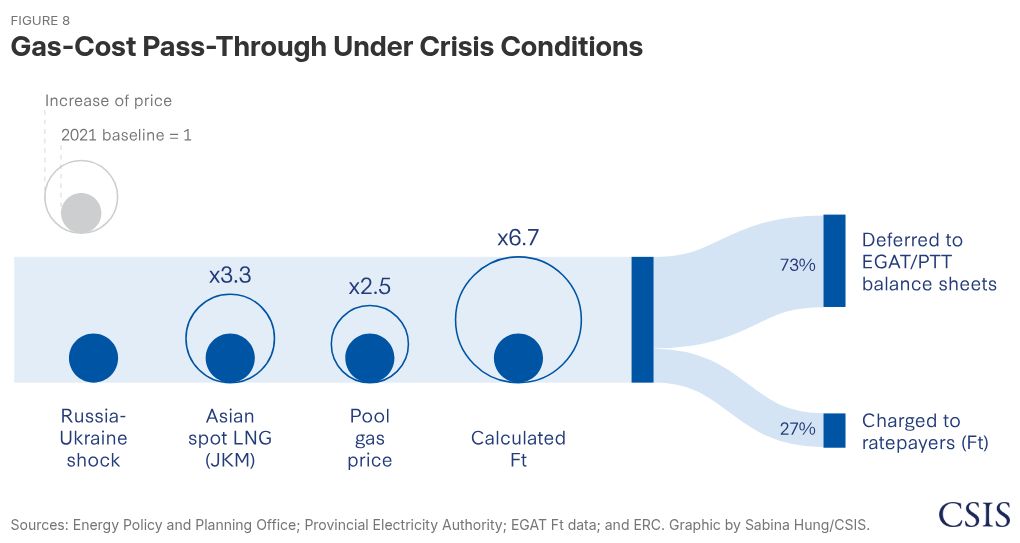
In 2022, when Asian spot LNG (Japan-Korea Marker) prices peaked near $70/million British thermal units (mmBtu) or approximately 2,500 TBH/mmBtu, pool gas prices rose by over 150 percent from 246 THB/mmBtu (average from January 2021 to January 2022) to 647 THB/mmBtu (September 2022). Electricity prices for consumers rose as well. Before the Russia-Ukraine conflict, consumers received a rebate on the adjustable portion of their electricity bills (Ft), reducing overall bills by 0.15 THB/kWh. During the height of LNG prices, Ft prices rose to 0.93 THB/kWh, with 2.56 THB/kWh deferred onto EGAT and PTT’s balance sheets (see Figure 8).

These price shocks affect both residential and industrial consumers. In Thailand, household electricity demand is highly price-inelastic, estimated at approximately -0.08, meaning that a 10 percent increase in electricity prices reduces household electricity demand by only 0.8 percent. In practice, this means households absorb most of the price increase through higher bills rather than materially reducing consumption. Energy already accounted for 11.9 percent of average Thai household expenditures in 2024, making energy price increases a direct household welfare issue.

Higher and less-predictable power costs also raise operating expenses for Thailand’s industrial and manufacturing end users. By 2025, Thailand was no longer a low-cost power market relative to key regional manufacturing competitors. Business electricity prices were materially higher than in Vietnam (one of Thailand’s main competitors for export-oriented manufacturing investment), and Thai industry groups have warned that rising power prices will make it difficult to attract foreign investment. Without a stable source of industrial electricity demand, Thailand’s state utilities will need to rely more on households and small business to recoup losses from the Russia-Ukraine crisis and the closure of the Strait of Hormuz.

2. Contracting Decisions Will Result in Tradeoffs Between Chokepoint Exposure Risk and Geopolitical Leverage Risk

The same procurement choices that will determine Thailand’s exposure to gas price volatility will also expose the country to other forms of risk. Future LNG contracts determine both what Thailand pays for gas and which suppliers, shipping routes, chokepoints, and political relationships Thailand depends on.

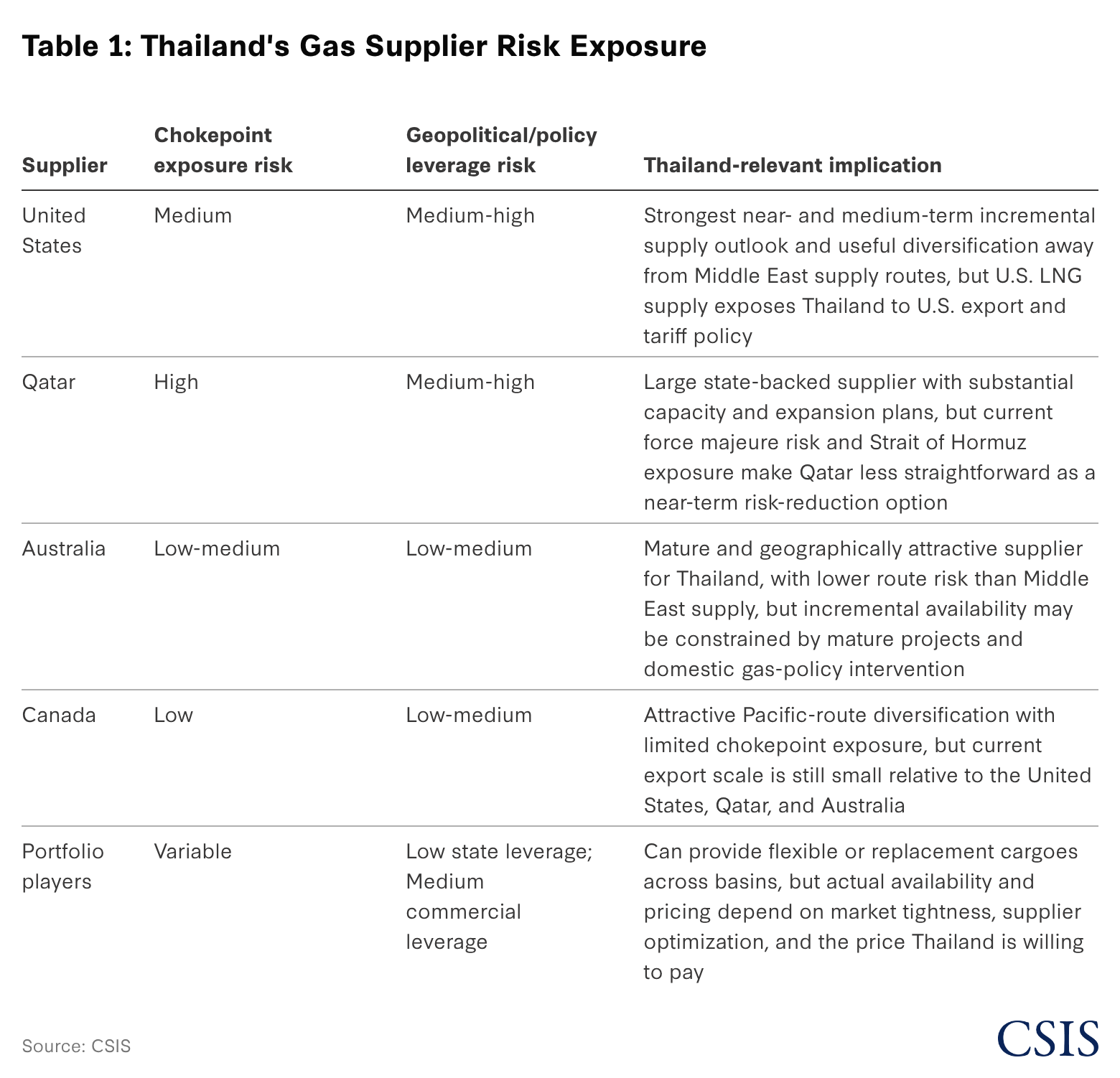
Given an increasingly fragmented global gas landscape, each potential source of future LNG supply introduces different sets and levels of risk, including chokepoint exposure risk and geopolitical leverage risk. A qualitative assessment of a limited number of suppliers is provided in Table 1. While the table is broken up by country, it is important to note that LNG export projects have a mix of commercial structures. For instance, LNG export projects in the United States are conducted by a variety of different private entities, whereas Qatari projects are primarily owned and operated by the state-owned national oil company, QatarEnergy. These risk categories therefore do not take into account project developers or operator-specific risks such as financial health or operational experience, but rather consider a broader set of risks that apply to all projects in each country.

Remote Visualization

Chokepoint Exposure Risk

Depending on its geographic origin, LNG supply to Southeast Asia must traverse several different chokepoints. Each is subject to influence from nearby countries and can be a hotspot for geopolitical maneuvering, and reliance on volumes that flow through these chokepoints creates risks for Thailand’s gas supply. As an illustrative example, Qatar—the second largest supplier of LNG globally—relies entirely on the Strait of Hormuz to export its LNG volumes. If the strait is closed, no Qatari volumes can be placed on the market. The strait is currently (and has historically been) in the crossfire of conflict and heightened tensions in the Middle East. As a result, reliance on volumes flowing through this strait carries the risk of disruption.

Medium- and long-term LNG contracts can last between 5 and 20 years. Thus, Thailand must consider the possibility and cost of disruption in the strait and its potential impacts over the lifetime of the contracts it signs. While other chokepoints exist, including the Panama Canal, the Strait of Hormuz presents the largest risk because Qatar has no other options. In comparison, U.S. Gulf Coast volumes can take a number of routes to Asia, including the Panama Canal, the Suez Canal, or around the Cape of Good Hope. While each of these routes has tradeoffs and introduces some risk, together, there are enough options to hedge against nondelivery.

Geopolitical Leverage Risk

While U.S. LNG flows do not contain the same chokepoint exposure risk as Qatari flows, they introduce risks around geopolitical leverage.

Under the Trump administration, the United States has shown a willingness to utilize LNG flows as a method of extracting political and regulatory concessions from trading partners. For example, the United States has used its position as the largest supplier of LNG to the European Union to lobby against the European Union’s Methane Regulation (EUMR), which sets methane emissions reporting and verification standards for LNG importers. In late 2025, the administration formally demanded an exemption from the EUMR, asking that requirements for U.S. producers be delayed until 2035, describing the rules as “unworkable” and a threat to U.S. gas flows to Europe.

Similarly, in the context of tensions over Greenland, the administration has leveraged the strategic importance of U.S. LNG to Europe as bargaining power. Amid Trump’s high-profile push to acquire or exert greater control over Greenland in early 2026, European officials expressed concerns that the United States could use energy exports as leverage in the dispute, prompting EU officials to call for reducing dependence on U.S. LNG to avoid vulnerability to such geopolitical pressure.

Thailand has experienced similar pressures. Facing Trump-era reciprocal tariffs on its exports, Thailand entered into a major trade framework agreement that includes commitments to purchase billions of dollars in U.S. LNG and energy products annually, largely considered a move to ease U.S. tariff pressure.
 

Charting Pathways Forward

Together, these risks are key drivers of Thailand’s LNG transition. As LNG’s share of the gas pool grows, the pool gas price will increasingly carry international price volatility and pass it down into household bills, industrial operating costs, and the balance sheets of EGAT and PTT. At the same time, the contracts Thailand signs to secure those volumes will determine which suppliers, shipping routes, and political relationships its electricity system depends on. The closure of the Strait of Hormuz has shown that chokepoint disruption is a serious risk, while the United States—the supplier best positioned to provide incremental volumes—has shown a willingness to use its exports as leverage. Navigating these challenges will require Thailand to address procurement and electricity market design together. The United States’ growing data center demand and expanding LNG supply could play a central role in mitigating these risks, in ways that advance both countries’ interests.

A Strategic Firm-Power Pathway for U.S.-Thailand Cooperation

The United States should include Thailand as a member of Pax Silica and use the initiative as the primary engagement framework to explore how U.S. and Thai interests can be jointly advanced through data center deployment, LNG supply, and power market reform. Pax Silica is a U.S. initiative meant to build secure, resilient, U.S.-aligned supply chains across the full stack behind artificial intelligence, from critical minerals and energy inputs through advanced manufacturing, semiconductors, AI infrastructure, and logistics, in coordination with partner countries.

Thailand is entering a period in which its legacy gas supplies are declining, LNG is becoming a more important marginal source of supply, and reliable electricity demand from data centers, industrial electrification, and advanced manufacturing could become a new source of growth. At the same time, several gas-fired power plants in Thailand have low utilization rates but have fixed take-or-pay agreements that are stressing EGAT’s balance sheets. However, these utilization rates could represent a strategic opportunity: If new data center load could connect to Thailand’s existing firm gas capacity, Thailand could raise utilization of existing assets, reduce pressure on EGAT’s balance sheet, and attract high-value digital infrastructure investment. If U.S. LNG is used to supply part of this incremental demand, the United States could secure long-term LNG demand while accelerating the deployment of U.S. AI infrastructure and reducing Chinese influence in Southeast Asia.

Achieving these goals will require Thailand to change or develop power procurement pathways that offer the flexibility necessary to attract stable, long-term data center investment. Current power procurement pathways are too rigid and brittle to be able to accrue the full set of potential benefits a more flexible solution could offer. There are currently three primary pathways:

  1. Grid Procurement Through a Distribution Utility: Data centers can buy power from the grid through one of Thailand’s distribution utilities—the Provincial Electricity Authority or, in the Bangkok area, the Metropolitan Electricity Authority—with EGAT acting as the single buyer that supplies them in bulk. This pathway preserves the central role of the Thai utilities and can deliver reliable power, but it is slow and rigid. Large loads require connection approvals, call for backup-service arrangements, and must pay prices at regulated tariffs, none of which gives operators the speed or flexibility needed to deploy quickly. Furthermore, if data center electricity demand rises drastically, Thailand may be incentivized to procure more LNG for power generation. As discussed in the risks section of this paper, further LNG procurement will raise the volatility of Thailand’s pool gas price and pass that volatility to end consumers.
  2. Cogeneration Through SPPs: Data centers can also contract directly with SPP cogeneration projects, particularly in industrial zones where gas-fired cogeneration plants already supply both electricity and steam to nearby users. This pathway offers firm, localized power and can be deployed faster than grid procurement. In fact, it is already in use: NTT Global Data Centers signed a 100 megawatt PPA with B.Grimm Power for its Bangkok 4 facility in early 2026. However, these agreements run directly through the cogeneration plants’ own capacity and do not help raise the utilization of Thailand’s large idle IPP gas fleet.
  3. Renewable Direct PPAs: Thailand recently introduced a pilot Direct PPA framework that lets qualified data centers contract directly with renewable generators and wheel power across the grid through a third-party access regime. This gives hyperscalers credible access to clean electricity and advances market liberalization, but it is new, subject to regulatory change, and unproven at scale. It also only allows renewable energy procurement and requires a backup agreement with EGAT. The Direct PPA framework helps developers meet their emissions goals, but it may not be robust enough to fully supply data center power demand. The data center buildout in the United States reflects this, as more than 100 GW of planned behind-the-meter data center capacity is set to run on natural gas.

None of the existing power procurement pathways offer the structure needed to simultaneously attract large-scale data center investment, raise utilization of Thailand’s underused IPP gas fleet, and ring-fence incremental LNG price volatility away from the broader pool gas and Ft framework. Pax Silica could serve as a vehicle for designing a new strategic firm-power pathway that can better achieve these goals.

Implementing any new, flexible pathway will require detailed analysis and engagement between Thai regulators, U.S. government, LNG providers, and data center developers that are beyond the scope of this report. Instead, we offer a potential high-level structure and components that could form the basis for a new pathway.

This pathway would have three core components:

  1. A Pax Silica Strategic Load Designation: Through Pax Silica, the United States and Thailand could create strategic load designation zones for data center demand. These zones could be used to host strategically important U.S. AI data centers and advanced industrial projects. Selected projects could access faster permitting, clearer power procurement rules, and coordinated financing support. For the United States, this designation would help ensure that the projects receiving faster access to power are tied to U.S. AI infrastructure, cloud providers, LNG suppliers, equipment vendors, or financing institutions. For Thailand, this designation would capture the immediate economic upside of data center development while unlocking larger downstream enhancements for its power grid.

    A Pax Silica strategic load designation could include several eligibility criteria:

  • minimum investment size and deployment timeline;
  • U.S.-aligned ownership, technology, financing, or procurement content;
  • long-term electricity offtake commitments;
  • willingness to accept a dedicated fuel-cost pass-through structure; and
  • compliance with Thai grid reliability, cybersecurity, employment, and local investment requirements.
  1. A Strategic Firm-Power PPA with Underutilized IPP Plants: Through Pax Silica, qualified strategic loads could secure firm power from underutilized IPP plants using a new, flexible contract structure. This structure could be a direct PPA, an amended PPA, or a tripartite agreement among the data center developer, the IPP generator, and EGAT. The goal of this agreement is to introduce the flexibility necessary for large strategic projects to access existing firm capacity significantly faster than standard grid procurement or new generation buildout might allow.

    Implementing this structure would require Thailand to adjust a number of current power market structures, including whether IPPs with existing PPAs can sell part of their output to qualified end users, whether EGAT must approve or intermediate those contracts, how dispatch rights would be allocated, and how existing availability payments would be adjusted. These changes, while potentially difficult, could enable significant foreign direct investment into Thailand and improve the balance sheets of Thailand’s utilities.

  2. A Dedicated LNG and Gas Market Treatment: A separate gas supply arrangement for the LNG needed to serve data center loads could both help secure firm power and potentially allocate higher costs and volatility onto higher-paying consumers. Under this structure, U.S. LNG could be procured to supply part of the incremental gas demand created by data centers, but the cost of those LNG volumes would not automatically flow into the broader pool gas price. Instead, the LNG cost would be assigned to the data center pathway through a separate commercial or accounting treatment.

    Thailand could create a narrow, regulated carveout for qualified Pax Silica data center loads. Under this carveout, licensed shippers could import U.S. LNG for dedicated data center demand, access existing LNG terminals and pipelines under clarified third-party access rules, and deliver gas to participating IPP plants. The incremental cost of these volumes could then be passed through the generator to the data center offtaker through a separate commercial arrangement, rather than being blended into the broader pool gas calculation. This would preserve the pool gas framework for ordinary consumers while creating a separate channel for large, price-tolerant users to absorb the incremental LNG costs associated with their own demand.

A framework with these components would provide direct benefits for both Thailand and the United States. For Thailand, data center demand would increase power consumption and potentially LNG imports, but it would not socialize the higher prices and fuel-price risk across the larger system. Thailand could also see higher utilization of existing gas plants, better recovery of fixed IPP costs, new data center investment, and potential job and tax benefits. For the United States, this type of framework could provide U.S. data centers with speed to power, a new market, and the potential to reduce Chinese influence throughout Southeast Asia. By utilizing Thailand’s existing gas fleet, data centers could access firm power faster than waiting for new generation.

The ability to execute these recommendations is highly dependent on the ability of the United States to mitigate its geopolitical leverage risk. As discussed earlier, the Trump administration has demonstrated a willingness to use LNG trade flows as leverage in trade and regulatory disputes. A framework that channels more U.S. gas, capital, and technology into Thailand’s power system increases U.S. leverage if the Trump administration were to weaponize these flows. Thus, the success of this pathway is dependent on the United States treating Pax Silica as a baseline for long-term cooperation rather than short-term leverage. As constructed, this arrangement could help the United States rebuild its role as a strategic partner by embedding LNG supply within durable institutional arrangements, instead of extracting concessions transaction by transaction.

Conclusion

Thailand’s gas sector is undergoing significant change, as cheap, stable domestic sources of gas supply run dry. The current financial and regulatory infrastructure surrounding the gas system, centralized procurement, blended pool gas pricing, and availability-payment PPAs function best given inexpensive domestic supply. As Gulf of Thailand production and Myanmar pipeline imports decline, LNG will increasingly set both the price and the volatility of Thailand’s gas, transmitting global market shocks into household bills, industrial competitiveness, and the balance sheets of EGAT and PTT. The contracting decisions Thailand makes over the next several years will determine not only its exposure to price volatility but also which chokepoints, suppliers, and political relationships its energy security depends on.

These risks, however, arrive alongside opportunity. Rising demand for firm power from data centers and advanced industry could raise utilization of Thailand’s idle gas fleet, relieve pressure on EGAT’s finances, and anchor a new wave of high-value investment—if Thailand can build procurement pathways flexible enough to capture it. A Pax Silica partnership offers the United States and Thailand a framework to do exactly that: pairing U.S. LNG, AI infrastructure, and financing with Thai power market reform in a structure that ring-fences incremental costs onto price-tolerant users rather than socializing them across the system. Neither country can realize these gains through existing structures alone. For Thailand, the choice is whether to manage the LNG transition reactively, shock by shock, or to shape it deliberately in service of long-term competitiveness. For the United States, it is whether to convert commercial LNG flows into durable strategic alignment in Southeast Asia. The window to make those choices well is open now—while Thailand’s uncommitted LNG volumes, underutilized capacity, and regulatory frameworks are still in flux.

Raj Sawhney is an adjunct fellow (non-resident) in the Energy Security and Climate Change Program at the Center for Strategic and International Studies (CSIS). Joseph Majkut is the director of the Energy Security and Climate Change Program at CSIS.

This report is made possible by general funding to CSIS and the CSIS Energy Security and Climate Change Program.

Image
Joseph Majkut CSIS
Director, Energy Security and Climate Change Program
Image
Raj Sawhney
Adjunct Fellow (Non-resident), Energy Security and Climate Change Program