China Continues to Exploit Rare Earth Chokepoints
September 11, 2026 • 9:00 – 9:30 am EDT
Hosted by Critical Minerals Security Program

Photo: Morteza Nikoubazl/NurPhoto/Getty Images
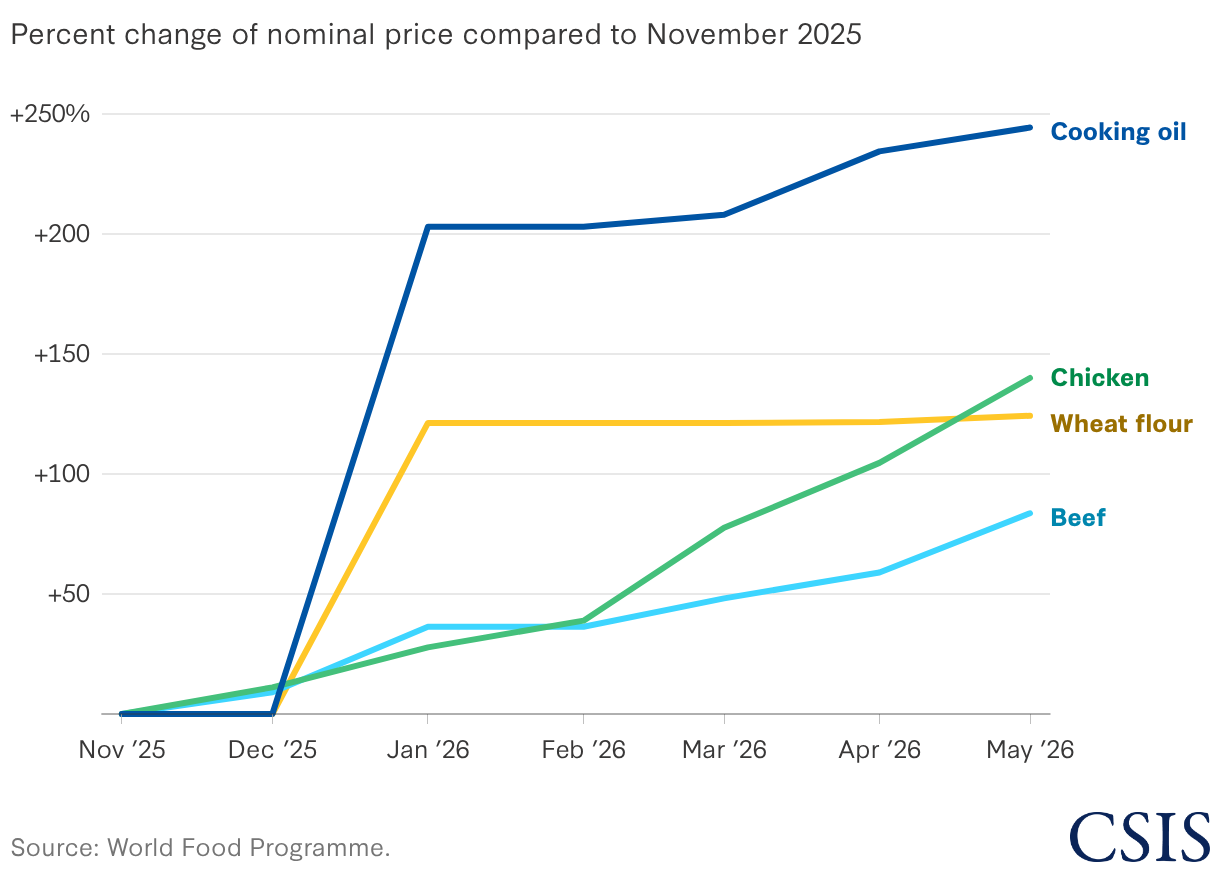
On May 26, an Iranian government-imposed internet blackout—lasting three months—was lifted, exposing Iran’s immense economic collapse, the result of both the war and an historic currency depreciation just prior to the outbreak of conflict. Conditions in Iran have only worsened. Despite government interventions—including the launch of a “resistance economy committee” to crack down on price gouging and address surging shortages—hyperinflation and shortages persist.
This installment of Charting the Middle East highlights the high cost of living in Iran. Shortly before the U.S.-Israel war with Iran began, overall food prices in Iran were increasing at unprecedented rates. Today, food staples—including flour, chicken, beef and cooking oil—are increasingly unaffordable, intensifying economic pressures on ordinary Iranians. The World Food Program (WFP) reports that in May, the price of wheat flour had risen by 124 percent compared to November 2025, prior to the severe depreciation of the rial that triggered mass protests across the country. As a result, Iranians have had to queue in long lines to obtain government-subsidized bread and decrease their consumption of meat and dairy products.
The International Monetary Fund (IMF) estimates that inflation in Iran will reach 68.9 percent in 2026, the highest figure since the 1979 Iranian Revolution. High inflation, currency depreciation, rising costs, and economic sanctions could lead to heightened food insecurity, economic degradation and potential humanitarian concerns, a grim reality that the Iranian government will need to address when the war is over.