The Implications of the Hormuz Energy Crisis for Energy Policymaking in Southeast Asia
October 2, 2026 • 8:30 – 9:30 am EDT
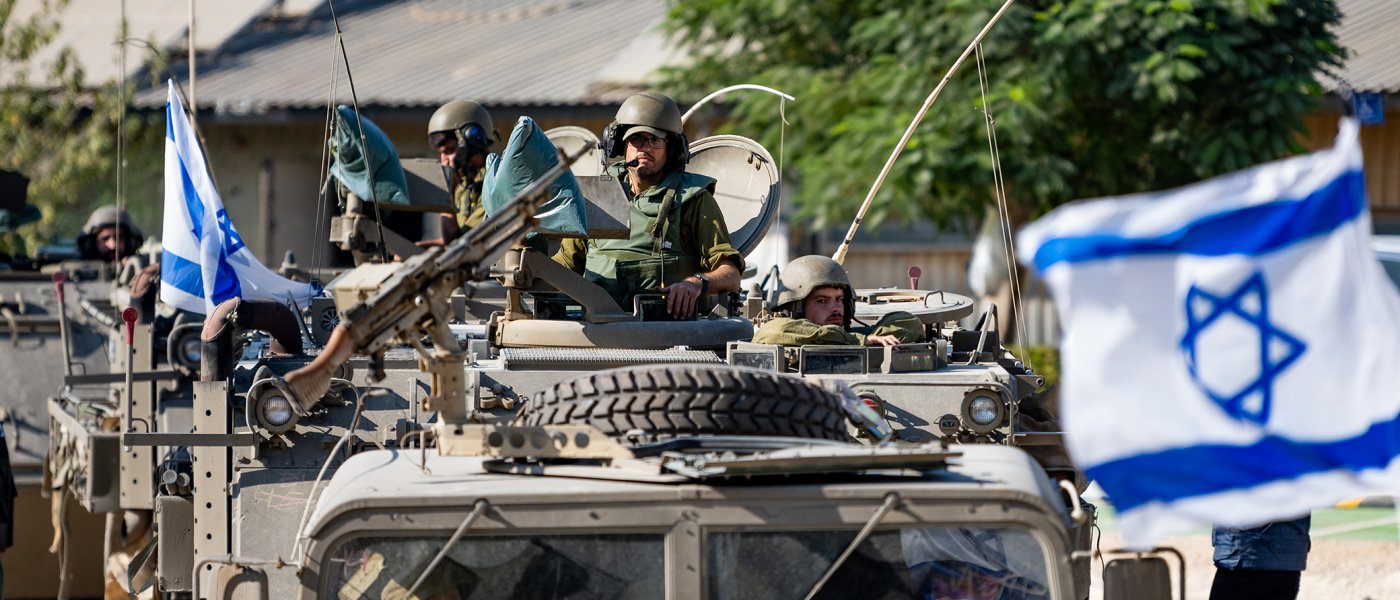
Photo: Alexi J. Rosenfeld/Getty Images
In a marked escalation of the conflict in Gaza, the Israeli security cabinet announced its decision to take control of Gaza City. If implemented, the plan would expand Israel’s occupation of Gaza, trigger further displacement, and likely worsen already dire humanitarian conditions. By opting for deepening occupation, Israel runs the risk of embedding itself in a “forever war,” while also provoking intensified international and Arab criticism.
The security cabinet unveiled the Gaza occupation plan following a tense 10-hour meeting in which the Israel Defense Forces (IDF) Chief of Staff Eyal Zamir reportedly voiced his strong opposition. He highlighted increased danger to the remaining hostages in Gaza as well as broader challenges associated with expanded occupation. The announcement follows an earlier statement by Israeli Prime Minister Benjamin Netanyahu that Israel would completely reoccupy Gaza, leaving open the possibility of a more ambitious military offensive. The Israeli military notes it occupies 75 percent of Gaza, while the United Nations estimates that 87 percent of Gaza is considered a militarized zone or under evacuation orders.
The new plan envisions the forced evacuation of Gaza residents over a two-month period, pushing them into an ever-smaller area of the territory and raising fears of forced expulsion by some Arab countries. It also sets out Israel’s longstanding goals of disarming Hamas and returning the hostages, but once again lacks a credible “day after” plan for how Gaza will be managed. The cabinet decision instead notes Israel’s “security control” over Gaza, with governance to be managed by a yet-to-be-defined entity. The security cabinet plan also includes provisions to provide humanitarian assistance outside conflict zones without further elaboration. The deadline for the plan’s first phase of evacuation and aid distribution is October 7—the two-year anniversary of the Hamas terrorist attack.
The security cabinet decision has sparked widespread condemnation, both in the Arab world and globally. Belying Netanyahu’s stated intention that Arab governments would assume control of governance in Gaza, regional governments have expressed outrage over the plan. The Arab League condemned the decision, as have several other governments, including Saudi Arabia, Egypt, and Jordan. The Israeli plan is directly at odds with a French-Saudi-led effort to end the war in Gaza and promote a two-state solution, highlighted by a UN conference last month. Meanwhile, efforts to broker normalization between Israel and Saudi Arabia—already in a deep freeze—will be further imperiled.
European and other countries have also criticized the move, with Germany announcing it would suspend arms sales to Israel, a significant move as Germany is the second largest arms supplier to Israel after the United States. Beyond Germany, several European leaders have condemned the plan, with the European Council president saying Israel’s actions violate an agreement on humanitarian aid reached last month. He called on the European Union to insist on consequences for Israel’s actions. Growing international condemnation of Israel comes against a backdrop of a rising outcry over widespread starvation in Gaza and decisions by key U.S. allies, France, Great Britain, and Canada, to recognize a Palestinian state.
No significant shift in U.S. policy toward Israel appears to be in the offing despite the latest decision by the Israeli security cabinet. On a foreign trip to London, U.S. Vice President JD Vance asserted that the United States would not recognize a Palestinian state, while in an earlier statement, President Trump noted it was “pretty much up to Israel” should it choose to occupy Gaza.
The Israeli security cabinet’s decision to occupy Gaza City highlights the absence of a viable long-term strategy in Gaza. Indeed, the plan to double down on occupation raises bigger questions about Israel’s endgame for the conflict. While Prime Minister Netanyahu has said Israel does not want to stay in Gaza or “act as a governing body,” he has also not provided an exit strategy. On the contrary, Israel’s expanding occupation in Gaza—absent a post-conflict game plan—will make it harder to leave. Israel’s deepening occupation is likely to provoke a potent insurgency in the territory. Hamas remnants, criminal gangs, and extremist jihadi groups would be well-positioned to counter Israel’s occupation of the territory, potentially spurring the need for even greater mobilizations.
At the same time, the IDF leader Zamir has raised concerns about IDF resources already being stretched thin. Last month, reports of rising fatigue among troops led to a decision to seek troop reductions in areas of Gaza, the West Bank, and the northern front, raising additional questions about how the IDF will mobilize to support the Gaza City operation. The war is also taking a psychological toll on soldiers, with reports of rising numbers of suicides and cases of PTSD.
With the Knesset in recess, hope had centered on Prime Minister Netanyahu seizing the moment of a political reprieve to push for a hostage release and ceasefire deal in Gaza, perhaps even paving the way for a more comprehensive deal that would bring nearly two years of war in Gaza to an end. Instead, in pushing a decision to expand Israel’s occupation of Gaza, Prime Minister Netanyahu may well be sowing the seeds for Israel’s forever war in Gaza.
Mona Yacoubian is senior adviser and director of the Middle East Program at the Center for Strategic and International Studies in Washington, D.C.
