The Implications of the Hormuz Energy Crisis on South Asia
September 21, 2026 • 8:30 – 9:30 am EDT

Photo: Majid Saeedi/Getty Images
The full extent of damage to Iran’s military from U.S. and Israeli strikes in 2026 remains unclear. What is clear is that absent regime change, Iran will move quickly to reconstitute. Iran’s military industrial base depends on foreign dual-use and commercial items, from raw materials to advanced manufacturing equipment, much of which has historically arrived as reexports through the United Arab Emirates (UAE). With that route unlikely to endure, rerouting through Pakistan and the Caspian Sea and more direct sourcing from China are the most likely substitutes. The shifting of networks offers three key policy opportunities for the United States:
This report offers an early assessment of what was destroyed, what Iran’s near-term military strategic priorities will be, what dual-use and commercial items and equipment Iran will need to procure abroad, and through which channels it is likely to do so. Subsequent work will dig deeper into each of these areas as the picture comes into sharper focus. This project aims to identify where U.S. and allied policymakers can act now to slow, raise the cost of, and, where possible, prevent the procurements necessary for Iran to reconstitute its military.
The procurement priorities identified below are not exhaustive; the scale of destruction will generate demand across a broad range of dual-use and commercial materials, components, and equipment. Rather, the items flagged here are those assessed to be among Tehran’s highest priority needs and, equally important, the areas where U.S. and allied policymakers have meaningful opportunities to act.
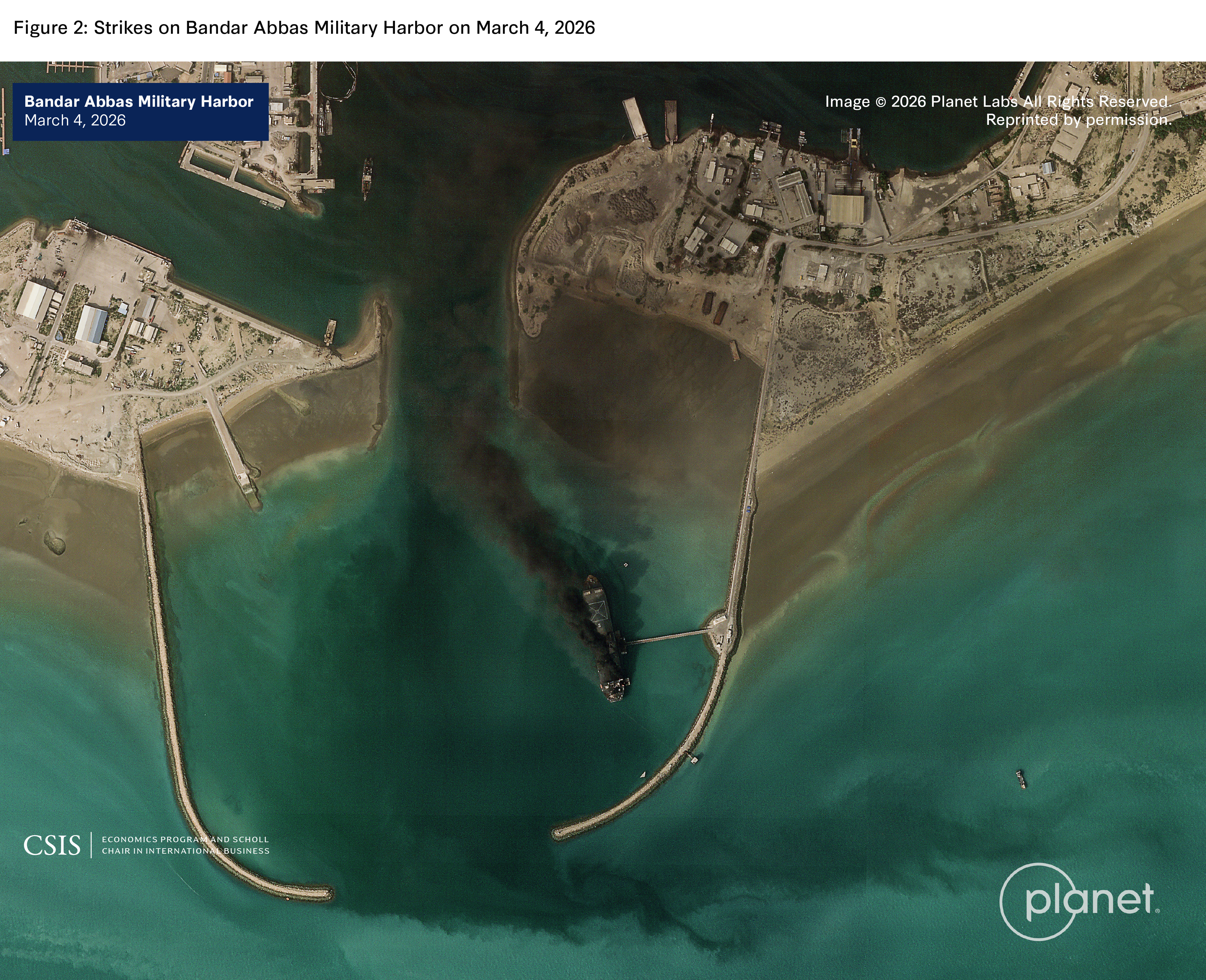
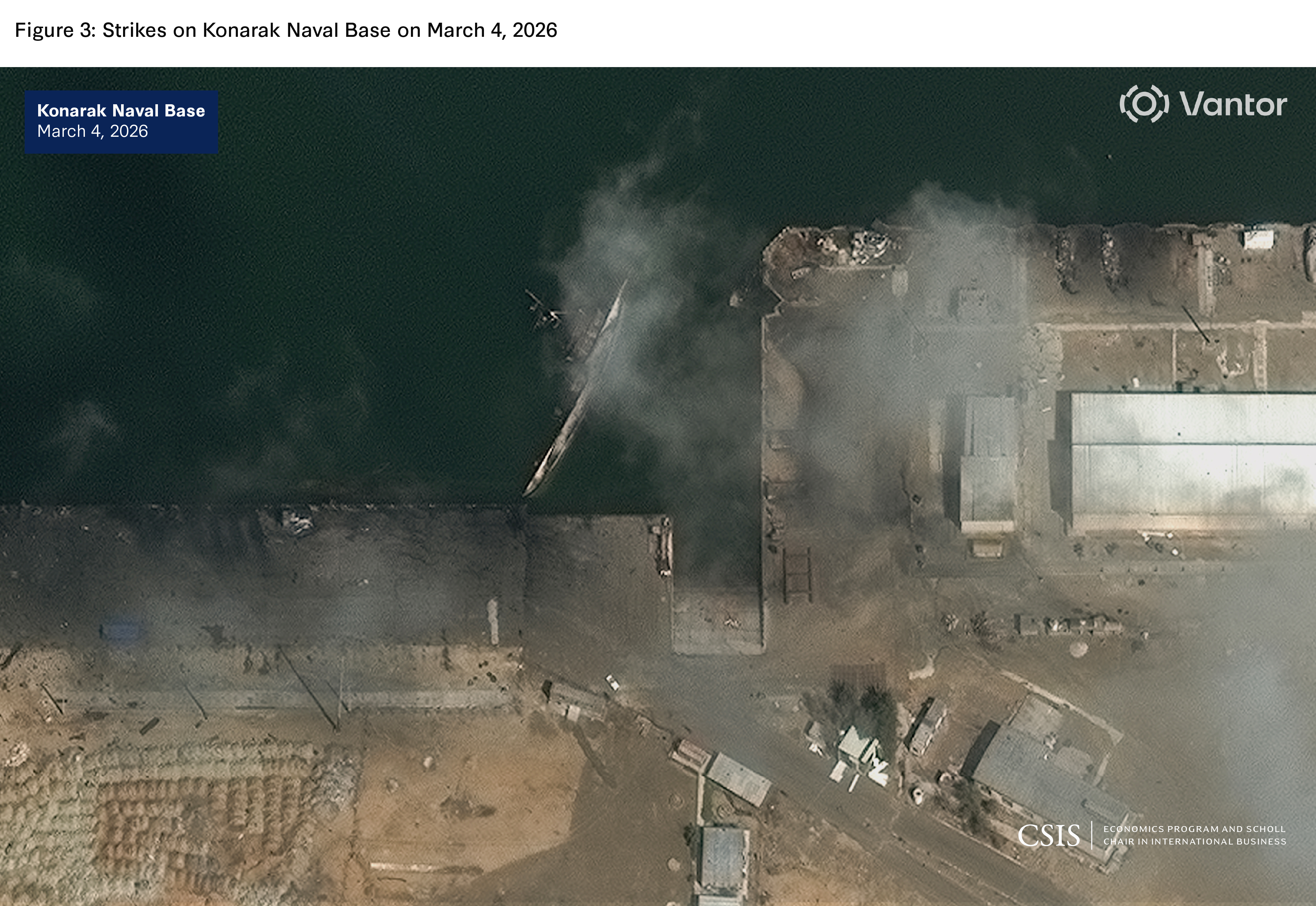
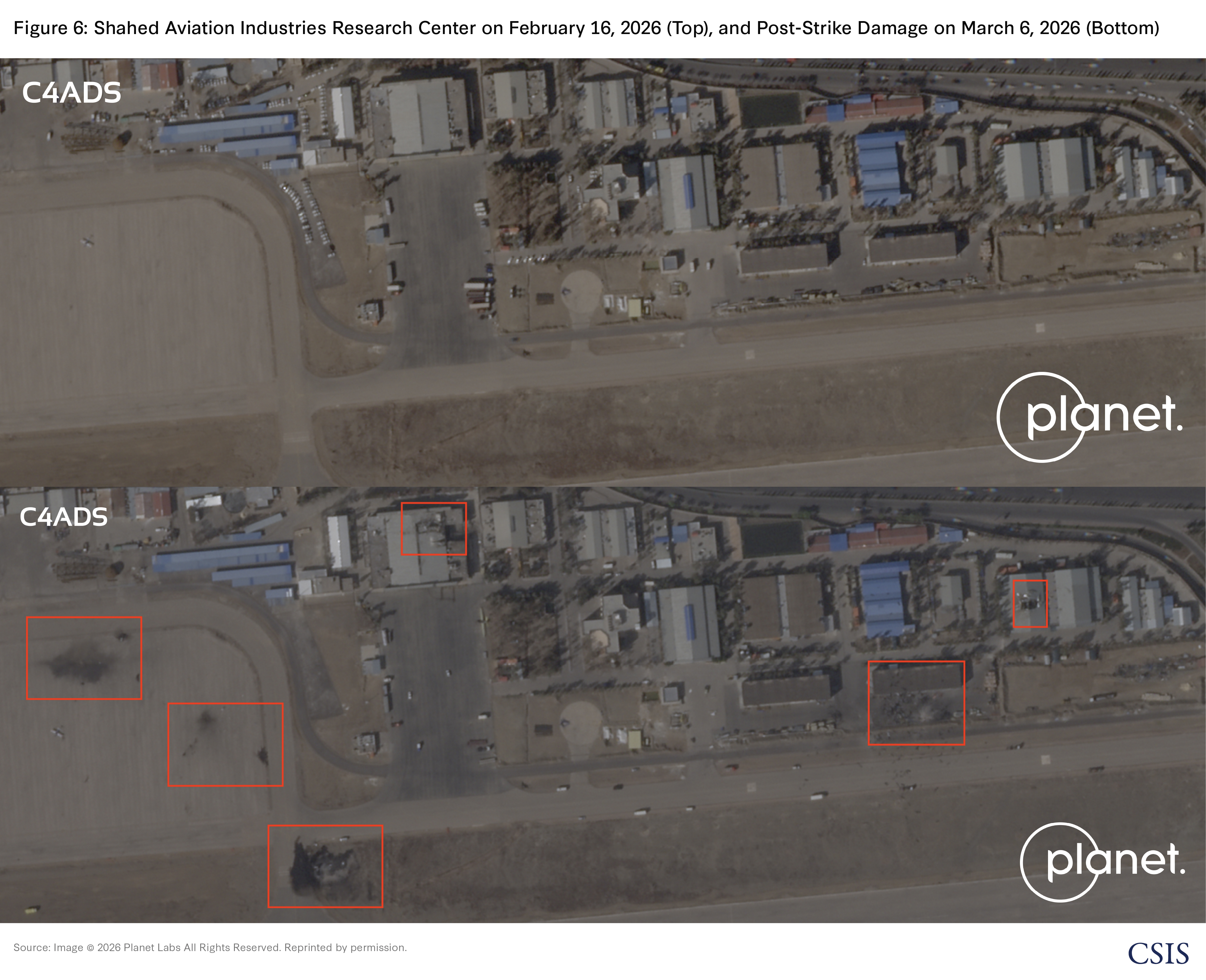
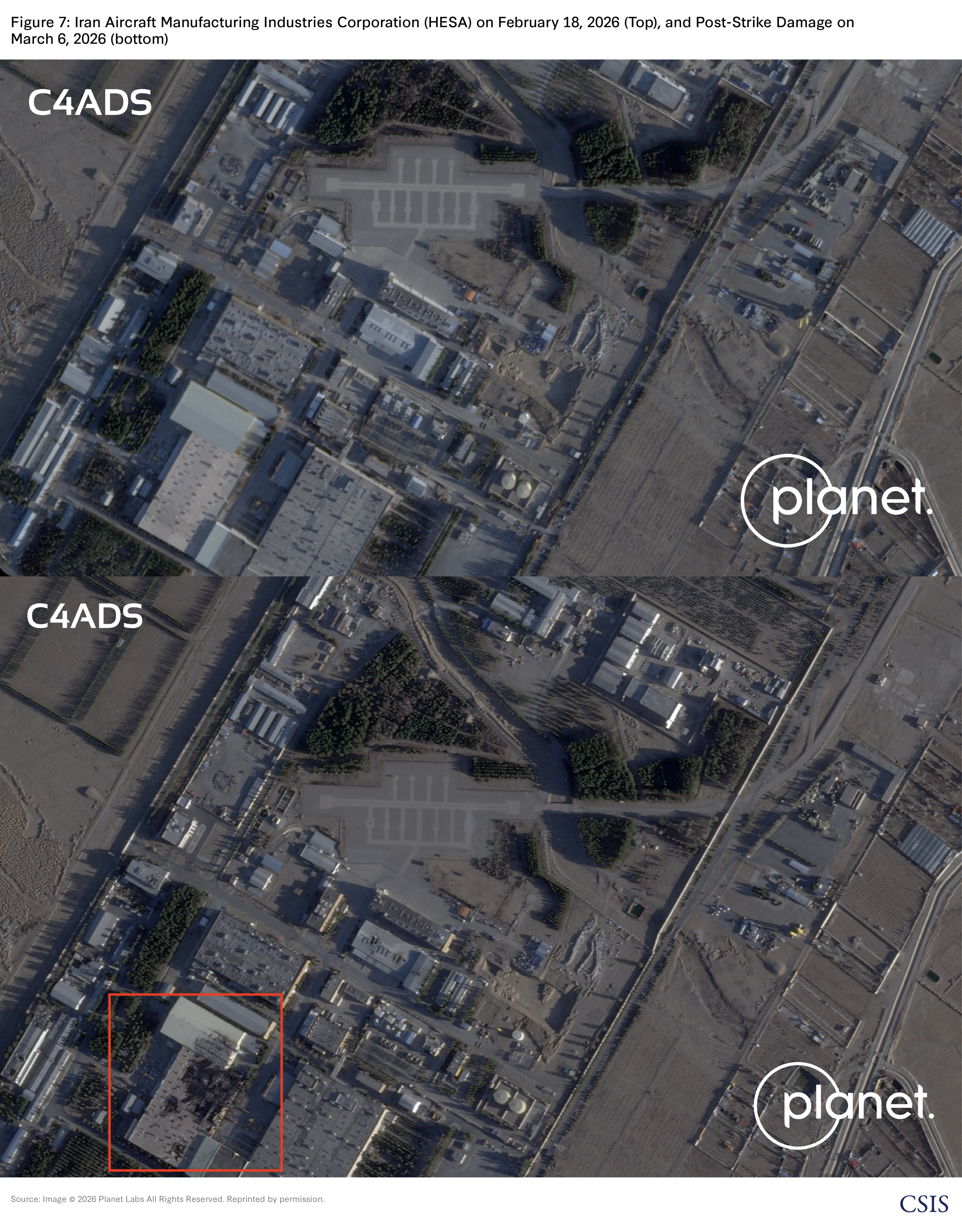
Open-source evidence, though incomplete, points to significant degradation of Iran’s military in the recent conflict. Commercial satellite imagery confirms the loss of nearly all of Tehran’s conventional naval surface fleet and further damage to its principal military shipyards and naval bases, which have also been rendered partially inoperable by sunken vessels blocking military berths (see Figure 2 and Figure 3). Imagery also shows damage to aboveground weapon production sites and munitions facilities. Reports vary on the extent to which the 6,770 drone and missile launches as of April 1 have depleted Iran’s inventory; recent U.S. government assessments reported in the New York Times and the Washington Post say Tehran retains 70 percent of its prewar missile stockpile but only 40 percent of its drone arsenal.
Iran’s conventional surface fleet—the “gray hull” navy of the Islamic Republic of Iran Navy (IRIN) and the Islamic Revolutionary Guard Corps Navy (IRGCN)—took heavy losses, as did the shipyards needed to rebuild it. Equally consequential, several of Iran’s principal ports are now partially blocked by sunken vessels. Until those wrecks are removed, the ports cannot resume normal operations, including the offloading of bulk cargo and the import of the very items Iran needs for reconstitution of its military industrial base.

Recent U.S. military strikes have extensively damaged Iranian naval infrastructure. At Bandar Abbas Naval Base, sunken naval vessels have obstructed transit in and out of the harbor, hindering deepwater berths. Meanwhile, 40 percent of Bushehr Naval Base’s harbor basin has been destroyed, along with much of its primary quay, and in Bandar Anzali (Caspian Sea), attacks have disabled a command-and-control (C2) center, the shipyard, and dozens of vessels, effectively shutting down a critical maritime supply line between Iran and Russia. Chabahar Port and Konarak Naval Base has also suffered losses in ships, severely degrading the IRIN’s ability to forward-deploy assets into the Gulf of Oman. Finally, heavy strikes have degraded Iran’s inland production and research and development capabilities, impairing the operations of the Maritime Industries Organization in Tehran and Iran Marine Industrial Company (SADRA) in Bushehr. Upstream weaponization was paralyzed following the destruction of naval cruise missile production sites in Shiyan and Imam Khomeini Town, underwater military equipment research sites in Vandar, and advanced munitions facilities at the Parchin Military Complex.
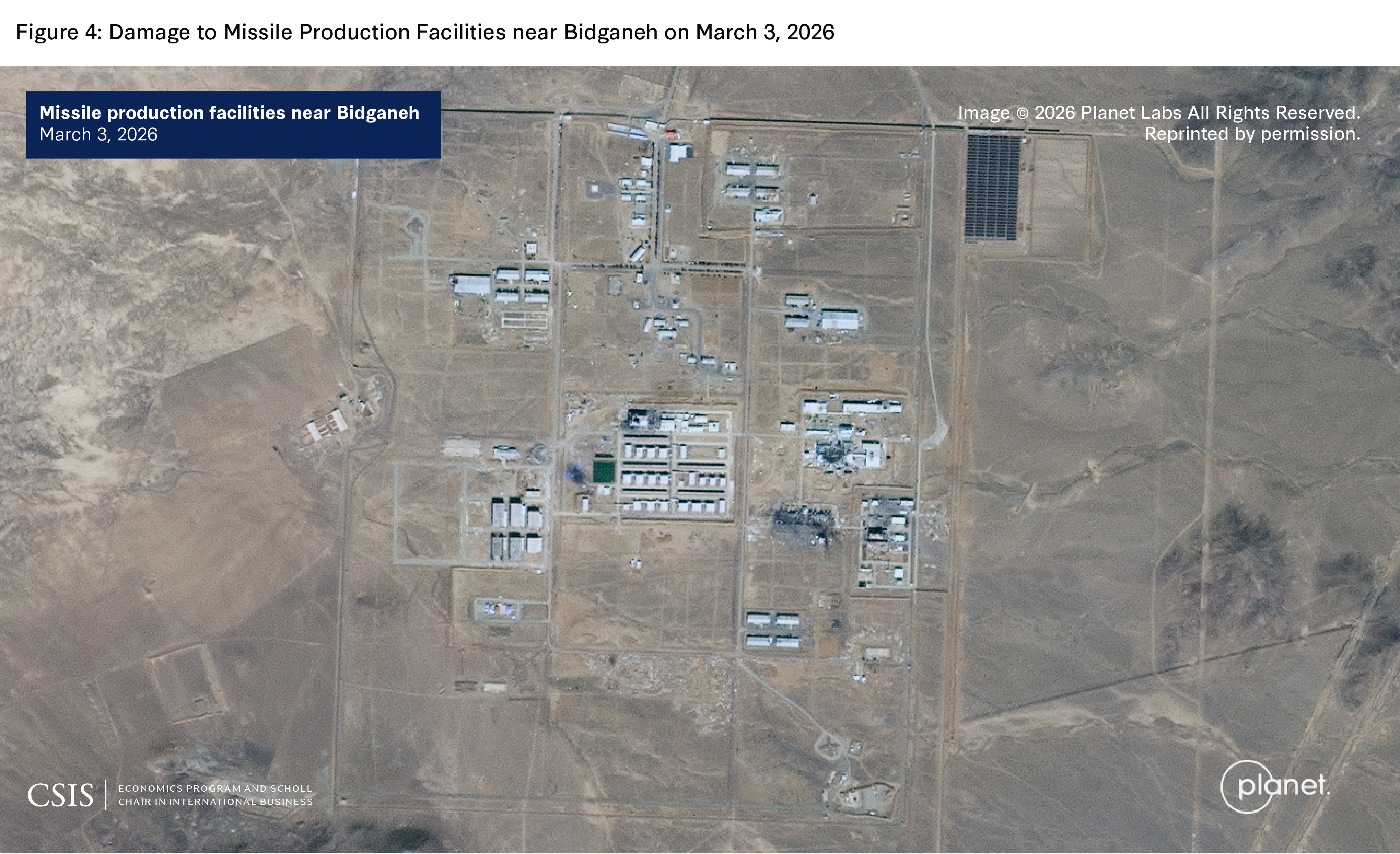
Iran expended an estimated 60 percent of its drones and 30 percent of its missile inventory during the conflict, drawing down stockpiles that took years to accumulate. Beyond the spent munitions themselves, strikes reportedly hit Iranian cruise and ballistic missile production sites, propellant production facilities, and the specialized transporter erector launchers (TELs) used for launch. The full extent of the damage to production capacity is difficult to assess from open sources because much of Iran’s missile manufacturing and storage is situated in hardened underground facilities. While surface damage is visible, the extent of damage below is publicly unknown.
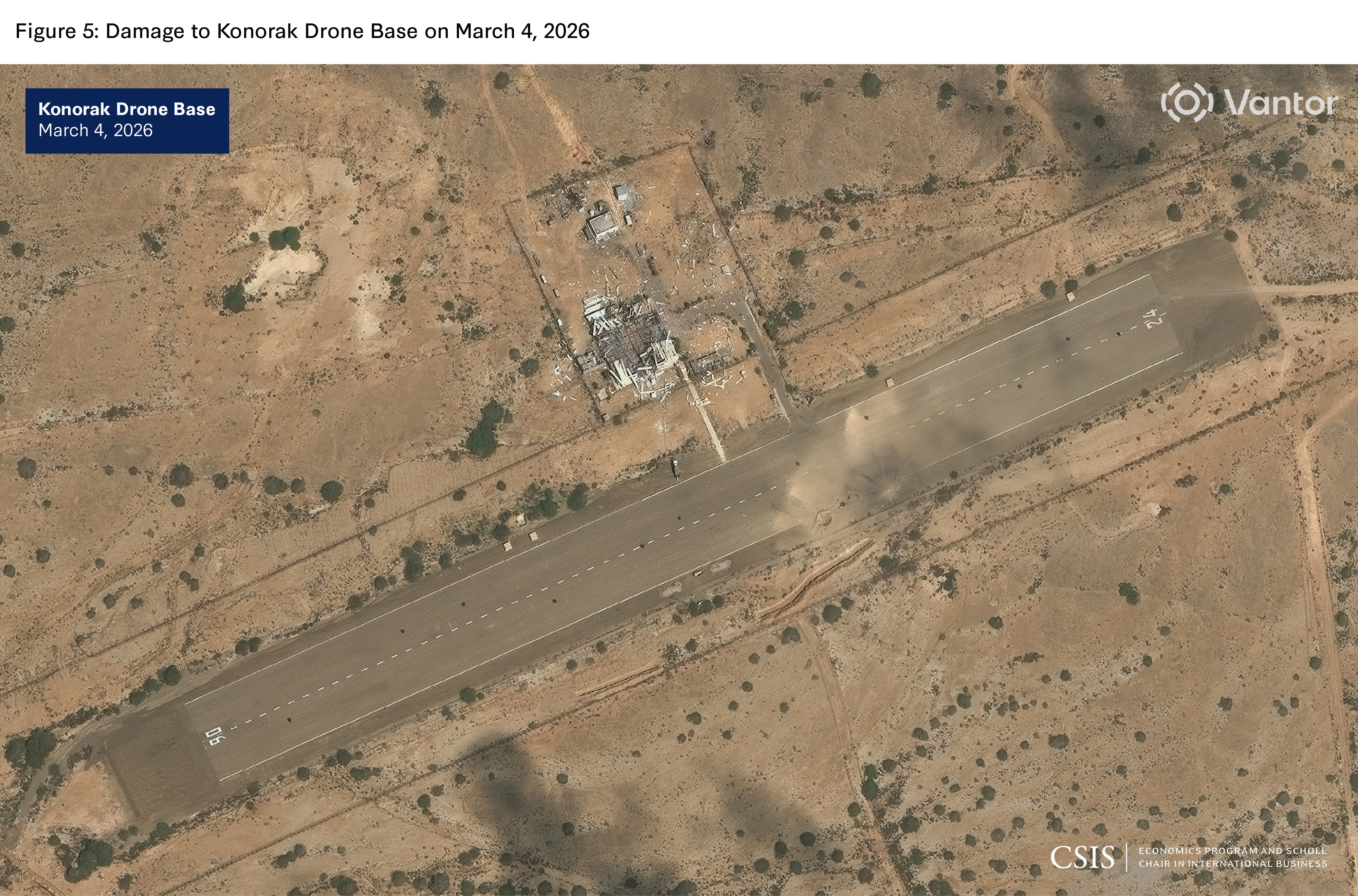
Iran’s drone production facilities have similarly visible surface damage, including a turbojet engine factory in Qom. Shahed drones are intentionally simple to produce, and leaked documents from the Iranian defense company Sahara Thunder allege that every drone plant has two replacement sites for redundancy.
Damage to Iran’s nuclear infrastructure is the hardest of the categories to assess. Even more so than with missile production and storage sites, much of the relevant infrastructure is buried, and Iran has strong incentives to obscure both losses and surviving capacity. This report therefore focuses on Iran’s conventional military reconstitution, where the damage and procurement indicators are more observable and immediately actionable.
Based on the damage discussed above, the authors identified four near-term priorities for Tehran:
As previously noted, the scale of damage to Iran’s military platforms, weapons stockpiles, and infrastructure translates into a wide range of procurement demands, from raw materials to advanced manufacturing equipment. The four categories below are not a comprehensive list, but they are the ones the authors assess to be among Iran’s highest and most urgent priorities, and where policymakers have the clearest opportunities to act early.
Allied trade controls on Iran differ in scope and, more importantly, in reach. The United States maintains a near-complete embargo on dual-use and commercial items, with only narrow humanitarian exceptions. The European Union and Japan historically allowed licensed dual-use trade (specifically enumerated goods, software, and technology that can be used for both civilian and military applications) and largely unrestricted commercial trade.
In 2023, the European Union expanded controls on Iran to include broadly defined commercial components used in drones, CNC machine tools, chemicals, and other items. Both the European Union and Japan further tightened controls in September 2025 as part of the United Nations’ snapback sanctions, with the European Union now controlling commercial goods tied to oil, gas, refining, and shipbuilding and Japan expanding its controls to capture machine tools, integrated circuits, and unmanned aerial vehicle (UAV) parts wherever there is a risk of military end use.
The main difference between the three sanctions regimes is extraterritoriality. U.S. controls follow the item; once an export license is issued, reexport and in-country transfer also require U.S. authorization, and foreign-made products incorporating U.S. content above de minimis thresholds (25 percent for most destinations, 10 percent for embargoed countries, 0 percent for certain technologies under the “see-through rule”) are likewise subject to U.S. licensing. U.S. foreign direct product rules can reach further still, capturing certain foreign-produced items made with controlled U.S. technology, software, or equipment. In contrast, EU and Japanese controls generally stop at the border of the first export. The European Union and other allies have for decades criticized U.S. extraterritorial controls as inconsistent with international law, while also acknowledging the role of intermediaries in circumvention.
Extraterritorial controls carry real costs—they can strain alliance relationships, invite retaliatory actions, and push foreign firms to design controlled content out of their products. They also impose compliance burdens on companies and are difficult to enforce without secondary sanctions that carry their own diplomatic costs. The case for adapting elements of the U.S. extraterrestrial approach to EU and Japanese controls on Iran is based on the judgment that the costs of narrow, tailored actions like those taken against Russia are warranted due to the risks posed from Iran.
The European Union has also undertaken creative new policies to curb the flow of goods to Russia through third countries, offering a model for expanded controls on Iran. A December 2023 requirement obligates exporters to include a “no reexport to Russia” clause in contracts for certain sensitive goods. In April 2026, the European Union used its anti-circumvention tool (introduced in June 2023) for the first time, banning the sale of certain machine tools and telecommunications equipment to Kyrgyzstan because of reexport risk to Russia. At present, no equivalent “no reexport to Iran” clause exists, and the anti-circumvention tool is only applicable to third countries supplying Russia.
Iran’s procurement routes are being reshaped by the conflict itself. In recent years, the UAE has been the top source of Iranian imports, as shown in Figure 8; however, the UAE does not produce most of what it sends to Iran. According to trade statistics from the UAE Ministry of Economy and Tourism, 95 percent of the UAE’s direct, non-oil exports to Iran in 2024 were reexports. The true origin of these goods is unknown due to limitations in available trade data.

Emirati authorities respect UN sanctions but typically decline to enforce unilateral U.S. or EU sanctions, leaving substantial space for reexport flows. For sensitive items, illicit transshipment through Emirati free zones has offered a second layer of obfuscation.
Iranian strikes on UAE territory during the conflict are likely to significantly affect the trading relationship. Iran launched over 2,800 missiles and drones at the UAE between February and May of 2026, more than at any other country—including Israel. The attacks have killed 10 civilians, injured hundreds more, and caused economic damage to the UAE’s tourism and property industries. The UAE closed its embassy in Tehran on March 1, considered freezing billions of dollars’ worth of Iranian assets in early March, reportedly revoked visas for Iranian nationals living in the UAE, and carried out military strikes on targets including an Iranian refinery.
The UAE has not issued a statement on changes to its trade relationship with Iran, but considering the open hostilities, it is likely that Iran will need to find new routes for reexport flows. Pakistan reportedly authorized reexports to Iran through its ports and territory as of April 25. This offers Iran a contiguous land route that does not depend on Gulf maritime infrastructure and that is less exposed to U.S. or Israeli interdiction. The volume and category mix of what flows through Pakistan in the coming months will be an early indicator of how Iran is rebalancing its procurement architecture.
Policymakers and enforcement officials can use reported trade data to monitor this rebalancing, keying in on increases in exports from third countries to Pakistan, the Caspian littoral states, or other plausible transit jurisdictions, particularly where the recipient country has no obvious domestic demand for the goods. Vessel tracking of UAE-flagged and UAE-departing cargo ships may also give indicators, if Iranian port calls shift elsewhere.
Iran is also likely to develop more procurement pathways through countries bordering the Caspian in general. Azerbaijan, Kazakhstan, Turkmenistan have limited resources and capacity to screen end users, identify dual-use diversion risks, or enforce against front companies operating in their jurisdictions. Routes that move goods from third-country suppliers into this region and then across the Caspian into Iran’s northern ports (Bandar Anzali and Amirabad) are attractive because they bypass the Persian Gulf and the maritime chokepoints where U.S. and allied interdiction capacity is concentrated. They are also harder to disrupt: The Caspian is a closed sea governed by its five littoral states.

In 2022, Iran began using the Caspian Sea as a logistical route to ship drone components to Russia. According to recent reporting, that same Caspian Sea maritime route may be allowing Russia to now supply Iran with drone components.
Across all four priority categories of procurement for Iran, China is the most likely supplier of first resort—U.S. and allied versions are generally preferable, but rarely essential.
Marine Salvage Equipment Imports
Iran has domestic marine salvage capabilities; the Iranian navy was able to lift a capsized warship in 2022. In addition to military capacity, there are private salvage companies in Iran. However, the extent of the damage will likely strain domestic capacity and cause Iran to turn to China to replenish and supplement its salvage equipment.
China is a global manufacturing hub for marine salvage equipment, especially underwater lift bags and salvage airbags.1 Iranian salvage companies previously used imported U.S. and Japanese cranes, but future imports would likely be sourced from China, which has become a global leader in crane production, including specialized salvage cranes.
Beyond China, North Korea is another possible supplier of this equipment. Pyongyang maintains an active salvage and shipbuilding industry and has previously marketed its salvage airbags, crane barges, and related production and service equipment to buyers in the developing world. Its willingness to engage in covert trade and its relationship with Iran makes it a plausible source should other channels prove difficult.
Machine Tool Imports
Similarly, most of Iran’s machine tools imports will likely come from China. Machine tools can be broadly grouped into two types: manual and computer numerically controlled (CNC). CNC machine tools allow for precision automation and are crucial for advanced weapon production at scale. China has struggled to match the quality and accuracy of European, Japanese, and Taiwanese CNC machine tools, which still dominate the high-end market. Despite this, Chinese equipment is largely adequate for Iran’s needs, and China is the global leader in both machine tool production (36.9 percent in 2025) and global exports (21.6 percent in early 2026). As shown in Figure 10, Iran’s imports of German CNC tools have already been largely replaced with imports from China.

Iranian distributors have long had access to a mix of German, Swiss, Japanese, Taiwanese, and Chinese machine tools, and they now utilize illicit procurement networks to maintain access to sanctioned equipment when available tools are insufficient. One Iranian company, Technoset, purports it was founded in 1986 under the supervision of Siemens engineers and was an authorized distributor of Siemens, Fanuc, Heidenhain, and Mitsubishi prior to sanctions. In December 2025, shortly after the European Union reimposed sanctions, Technoset posted a video on Instagram with the caption “import and clearance of goods from the United States, Germany, and Japan . . . lifting sanctions.” Text overlaid on the video translates to “sanctioned goods warehouse” and “import of sanctioned goods” (see Figure 11).
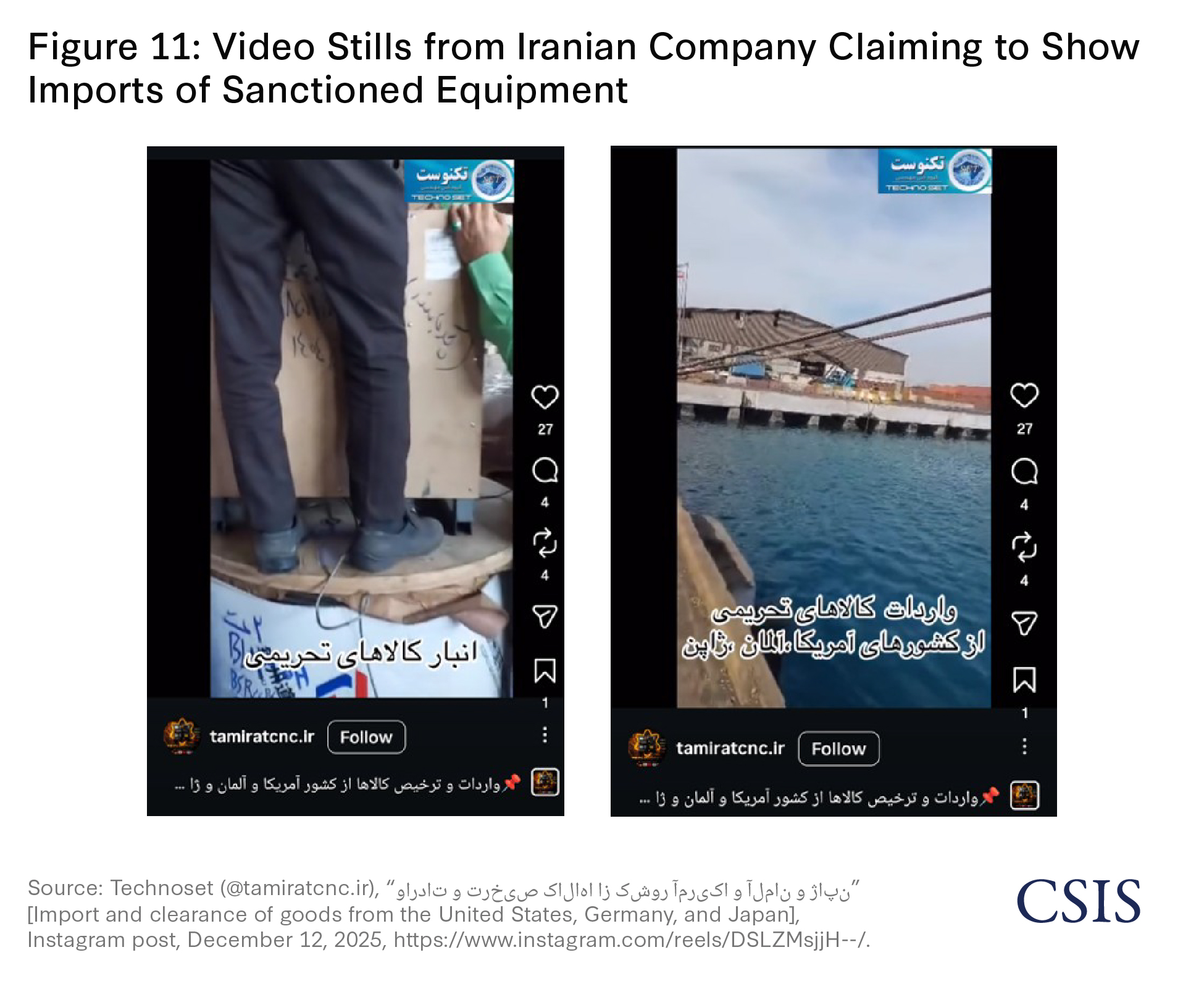
How Technoset acquired the tools is unknown. One of its videos is geotagged with Laplandia, Finland, where the company may have set up a proxy. Further sanctions and pressure on procurement networks will likely lead to increasingly complex illicit procurement networks routed through multiple intermediaries, while also accelerating a shift toward more readily available Chinese tools.
However, Germany’s Siemens and Japan’s Fanuc dominate the market for CNC machine tool controllers, the “brain” of every CNC machine that takes a set of user-programmed instructions and turns them into actual precision motions. Fanuc controllers alone are estimated to be on 50–60 percent of CNC machines worldwide, with Siemens on another 20–25 percent. The handful of Iranian companies that produce CNC machine tools advertise that their machines contain Fanuc and Siemens controllers. Chinese CNC machine tool companies similarly utilize Fanuc and Siemens controllers, including Anhui-based WMTCNC, which says it is supplies tools to “Tehran [and] the rest of Iran.”
The integration of German and Japanese controllers into Chinese CNC machine tools poses a challenge for regulators and enforcement authorities, given the lack of extraterritorial controls. But it also offers an opportunity to disrupt Iran’s reconstitution of its weapons production, similar to measures already used against Russian illicit procurement.
Iran also reports significant imports of CNC machine tools from Russia, which are likely reexports from China or elsewhere as Russia itself relies on imports for these items. Iran’s third-highest supplier, Turkey, has a strong domestic machine tool industry and produces CNC machine tools. However, Turkey has served as a transshipment point for high-end European CNC machine tools to Russia and may also be transshipping to Iran. Based on analysis of Iranian and Turkish trade data, Iran claims far more imports of CNC controllers and machine tools from Turkey than Turkey reports sending to Iran. While reported exports and imports often differ, sizeable gaps can indicate concealed procurement routes, and these discrepancies may be the result of Turkish intermediary companies facilitating sales that are shipped from elsewhere.
Marine Engine Imports
As discussed earlier, Iran suffered devastating attacks on both IRIN and IRGC naval capabilities and will need to rebuild its assets, including naval engines. Iran’s naval vessels likely rely on a variety of prime movers: While large naval vessels, such as frigate and destroyers, often rely on gas turbines, smaller boats, including cutters and fast attack boats, can use diesel piston engines and outboard motors.
Considering past trends in import data, Iran will likely depend on shipments from Turkey, China, and the UAE (if possible) for all marine engine types. Since 2022, according to analysis of IRICA data, around 40 percent of Iran’s marine outboard motors and components have come from the UAE, with another 32 percent coming from China and 10 percent from Turkey. As with CNC machine tools, Iran also uses illicit procurement networks to obtain engines sanctioned by the United States and other partners.
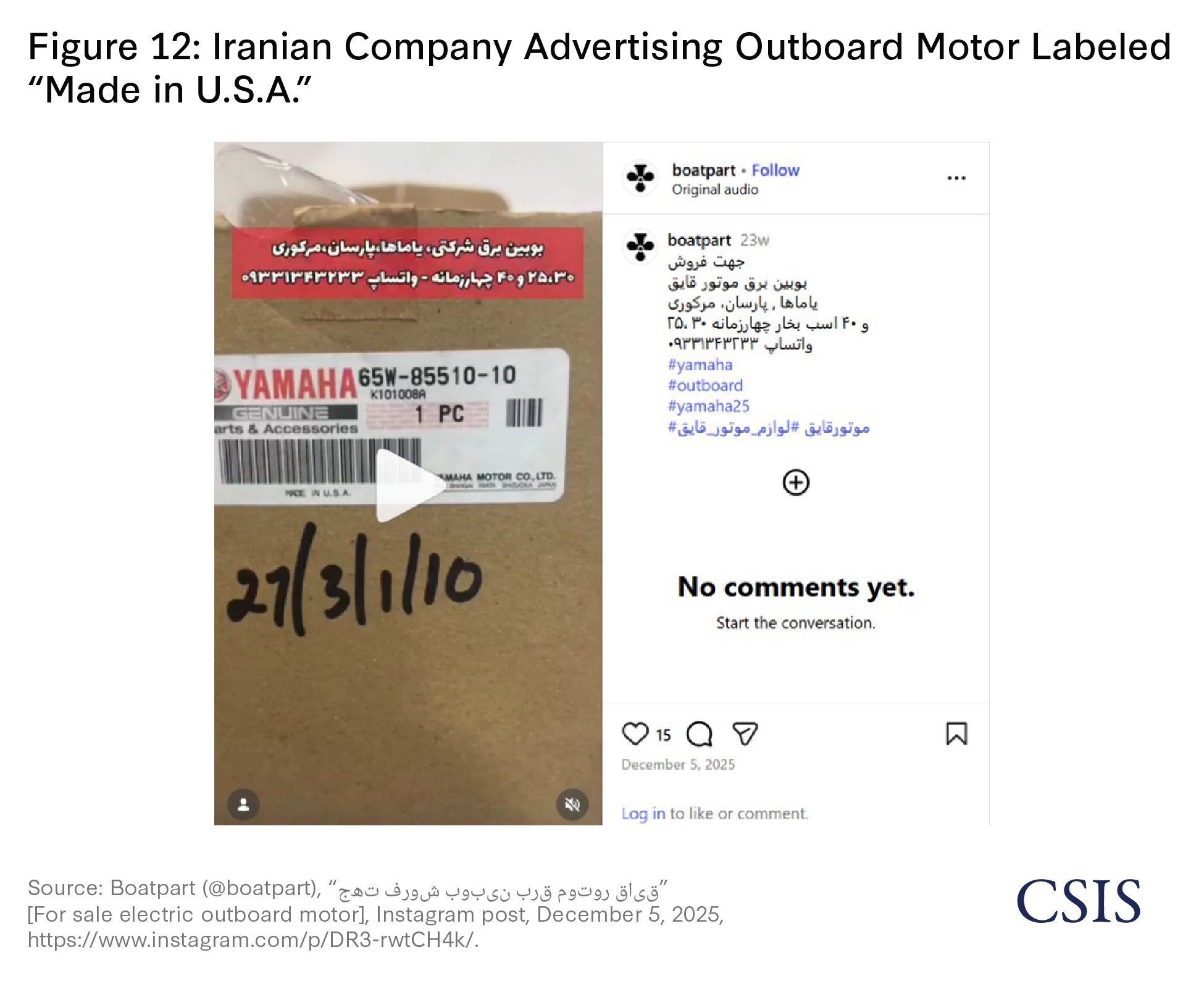
Iran’s imports of high-powered gas turbines have increased significantly from 2020 to 2025, indicating that they have yet to fully indigenize these capabilities, and almost all these imports were shipped from Turkey. Iran’s imported marine compression-ignition engines similarly increased from 2021 to 2025 by a factor of about 500 percent, coming almost exclusively from the UAE.
Procurement agents in Turkey and the UAE may be transshipping these engines from elsewhere. Turkey is developing high-powered gas turbines, but its navy currently sources them from GE Marine. According to its import data, Turkey receives large quantities of high-powered gas turbines from the United States and, to a lesser extent, China and France; meanwhile, the UAE imports compression-ignition engines from the European Union and Japan.
Imports for compression-ignition engine components in 2025 were more diverse than engine imports, stemming mainly from China, the UAE, and Turkey. While China likely domestically produces these parts, the UAE and Turkey may be transshipping them: The UAE received over $500 million in these components in 2025, mostly from the European Union and, to a lesser extent, South Korea and China. As with marine diesel engines, Iran is essentially the only country to which the UAE ships large quantities of compression-ignition engine components. Overall, Iranian imports of these parts increased by 28 percent from 2021 to 2025, suggesting growing domestic manufacturing in Iran. This corresponds with Iran’s reported improvements in domestic marine diesel engines for military use around 2021.
Drone Component Imports
As Iran’s drone program sustains continued losses, Iran will seek to maintain and reconstitute its capabilities. Before the start of U.S.-Israeli strikes in February 2026, Iran made progress reducing its foreign reliance by indigenizing various drone subsystems to insulate the program from potential international disruptions. For example, Iran has historically reverse-engineered at least two European-designed engines for use in its drones, the MD-550 piston engine and Tolou-10 jet engine. Meanwhile, Iran also claimed in 2022 to have domestically designed the circuit board architecture and the software used in its drones. Although Iran has decreased the need to import ready-made engines, it still imports raw inputs and specific parts, such as spark plugs and bearings.
As shown in Figures 14 and 15, Iran primarily imports turbojet components through the UAE and Turkey and piston engine components through China and Hong Kong. Iran reported an influx of piston engine components in 2024 that are not considered here, as they likely relate to Iranian production of drones for Russia.


Sanction actions from the U.S. government indicate Iran’s drone program relies heavily on internationally sourced tools and testing equipment for continued research and development, particularly from China. Leaked 2020 communications indicate that Iran had previously signed a contract to obtain dynamometers, a type of specialized engine testing equipment, from China’s CAMA (Luoyang) Electromechanic Co. CAMA is a military-civil fusion organization belonging to the China Airborne Missile Academy, which is in turn subordinate to the Aviation Industry Corporation of China (AVIC). The contract was coordinated through Sahara Thunder, an Iranian company sanctioned for its involvement in provisioning drones and supporting localization of production inside Russia for use in Ukraine.
Beyond this example of testing equipment, Iran has historically relied on other types of specialized tools sourced from foreign companies to support its drone production lines. According to leaked 2022 Russian observations of Iranian drone manufacturing techniques, production relied on casting equipment imported from China; automated assembly line equipment from South Korea and China; and CNC machines, lathes, and milling machines sourced from China, Germany, and Taiwan.
Due to Iran’s reliance on foreign equipment for both the development and production of its drones, disrupting future efforts by Iran to acquire replacement equipment would slow its ability to reconstitute and further enhance its asymmetric drone capability design and testing.
Despite its goal of achieving self-sufficiency, Iran still imports electronic components, including navigational sensors and microelectronics for manufacturing drones. As shown in Figure 16, entities in China are a key source of Western-origin electronics components to Iranian drone manufacturers. However, according to former U.S. Treasury Department officials, both the Iranian and Russian drone programs are increasingly using domestic Chinese components, notwithstanding that these items also are subject to U.S. extraterritorial controls pursuant to the foreign direct product rule.

Sanctions, export controls, and Iran’s inability to produce these components means Iran will continue leveraging illicit procurement networks to circumvent international trade restrictions. Due to the abovementioned damage to Iranian maritime infrastructure in addition to an ongoing U.S. blockade, procurement networks previously reliant on maritime routes will be forced to adapt. Drone components can generally be transported by air, but one potential alternative for heavier equipment is the Caspian Sea, as illustrated earlier.
Iran’s ability to reconstitute its military is dependent on its ability to import key materials and equipment. With the UAE’s role as Iran’s central reexport hub up in the air, policymakers have a narrow window to identify and disrupt new procurement routes as they take shape. While Chinese materials, components, and equipment will likely be good enough to meet the bulk of Iran’s needs, Iran will likely continue its attempts to illicitly procure advanced Western technologies, such as German and Japanese machine tool controllers. Diplomatic pressure on China could also lead to further trade obfuscation, with goods making multiple stops between China and Iran, making it more difficult to identify sources of supply but also slowing procurements and making them more costly.
Staunching the flow of illicit procurement, especially of commercial items, is never easy, and Iran has over 40 years of experience in establishing and operating worldwide covert acquisition networks. The extensive outreach and capacity building that the United States and its allies and partners have undertaken to prevent diversion to Russia through third countries with due diligence guidance, red flag indicators, end user screening practices, industry outreach, and government-to-government engagement with transshipment hubs translates directly to the Iran problem set. Many of the jurisdictions and evasion typologies overlap.
There is already limited direct trade between Iran and U.S. allies and partners; the European Union exported $4.3 billion in goods to Iran in 2024 and Japan exported $89 million. Extending new tools from the Russia playbook to address circumvention, chiefly a “no reexport to Iran” clause and the authority to restrict sales to third countries that serve as transshipment points, would help close the gaps as UAE-based reexport networks migrate.
The items highlighted here are starting points, based on information known to date. Future installments will dig further into each, identify enabling intermediaries, and track how trade routes evolve in practice. The window for proactive policy action, however, is now.
Please consult the PDF for references.
Kate Koren is deputy director of the Economics Program and Scholl Chair in International Business at the Center for Strategic and International Studies (CSIS) in Washington, D.C. Patrick Panjeti is a military fellow with the Defense and Security Department at CSIS. Emma Surnow is an intern with the CSIS Economics Program and Scholl Chair in International Business. Kevin Kurland is a senior technical expert (non-resident) with the CSIS Economics Program and Scholl Chair in International Business. Omar Al-Ghusbi is a senior analyst at C4ADS.
This report is made possible by general support to CSIS. No direct sponsorship contributed to this report.