Ukraine Has Problems With Both Koreas? | The Capital Cable #144
October 15, 2026 • 9:30 – 10:15 am EDT
Hosted by Korea Chair

Photo: -/US NAVY/AFP/Getty Images
Tomahawk missiles have emerged as the key discussion topic surrounding Ukrainian President Volodymyr Zelensky’s third visit to the White House today. U.S. President Donald Trump has floated the idea of sending the missiles to Ukraine: “If this war doesn’t get settled, I may send Tomahawks.” He had previously said that Ukraine is in a “position to fight and WIN all of Ukraine back in its original form” with the commitment to “continue to supply [U.S.] weapons to NATO.”
About a thousand Tomahawk missiles are available for transfer to Ukraine in the U.S. stockpile today. Their deployment could have a major impact on the war, but they would need to arrive in Ukraine quickly if they are to give President Trump the leverage he needs to get Russia back to the negotiating table.
Ukraine, however, competes with U.S. requirements in the Pacific, which the administration sees as a higher priority. Further, Russian President Vladimir Putin warned against the transfer in his recent phone call with President Trump and likely will do so again in the prospective summit in Budapest.
Even if President Trump defers a decision about Tomahawks, Ukraine and its supporters can raise the issue in the future.
Q1: What is the Tomahawk missile?
A1: As described by the Navy, “The Tomahawk Land Attack Missile (TLAM) is an all-weather, long-range, subsonic cruise missile used for deep land attack warfare, launched from U. S. Navy surface ships and U.S. Navy and United Kingdom Royal Navy submarines.” The missile has been around for a long time, with production beginning in 1980. Over time, there have been many versions, called “blocks,” and several special designs—including one developed to target the Iraqi electric grid.
The current version is Block V. Block IV is in the fleet and is being upgraded. Block III was withdrawn from service over the last few years, while earlier versions have long been retired. The recently procured missiles have all been conventional. The nuclear-armed version, TLAM-N, was procured in the 1980s and retired in 2013.
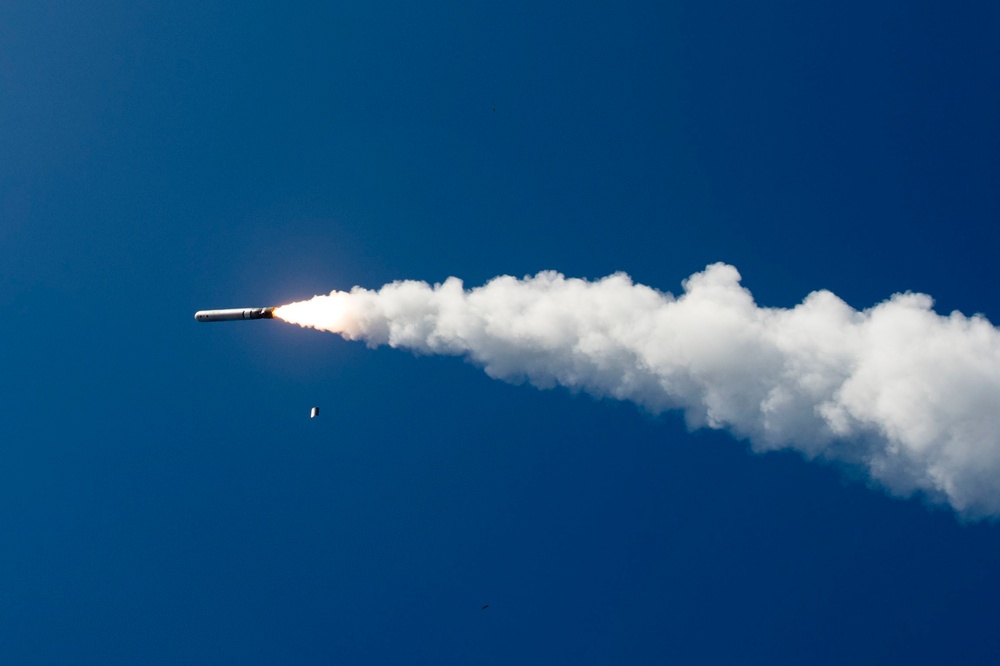
Source: U.S. Navy photo by Mass Communication Specialist 2nd Class William Collins III, Valiant Shield 2018 – Live Fire [Image 3 of 4], September 18, 2018. Public domain. The appearance of U.S. Department of Defense visual information does not imply or constitute DOD endorsement.
Tomahawk is a proven weapon. As Raytheon, the contractor for the missile, notes: “U.S. and Allied militaries have flight tested the GPS-enabled Tomahawk over 550 times and used it in an operational environment more than 2,350 times.” They were most recently employed in Operation Midnight Hammer against Iranian nuclear sites and would be a key munition in any conflict with China. The Trump administration may also use them against Venezuela as it mulls military action.
Q2: If Tomahawks are naval missiles, will Ukraine have to fire them from ships?
A2: No, ground-based launchers have been developed. The Marine Corps stood up a Tomahawk-armed long range-fires unit with ground-based launchers in 2023 but deactivated them earlier this year. Those specific launchers, or a derivative, could be sent to Ukraine.
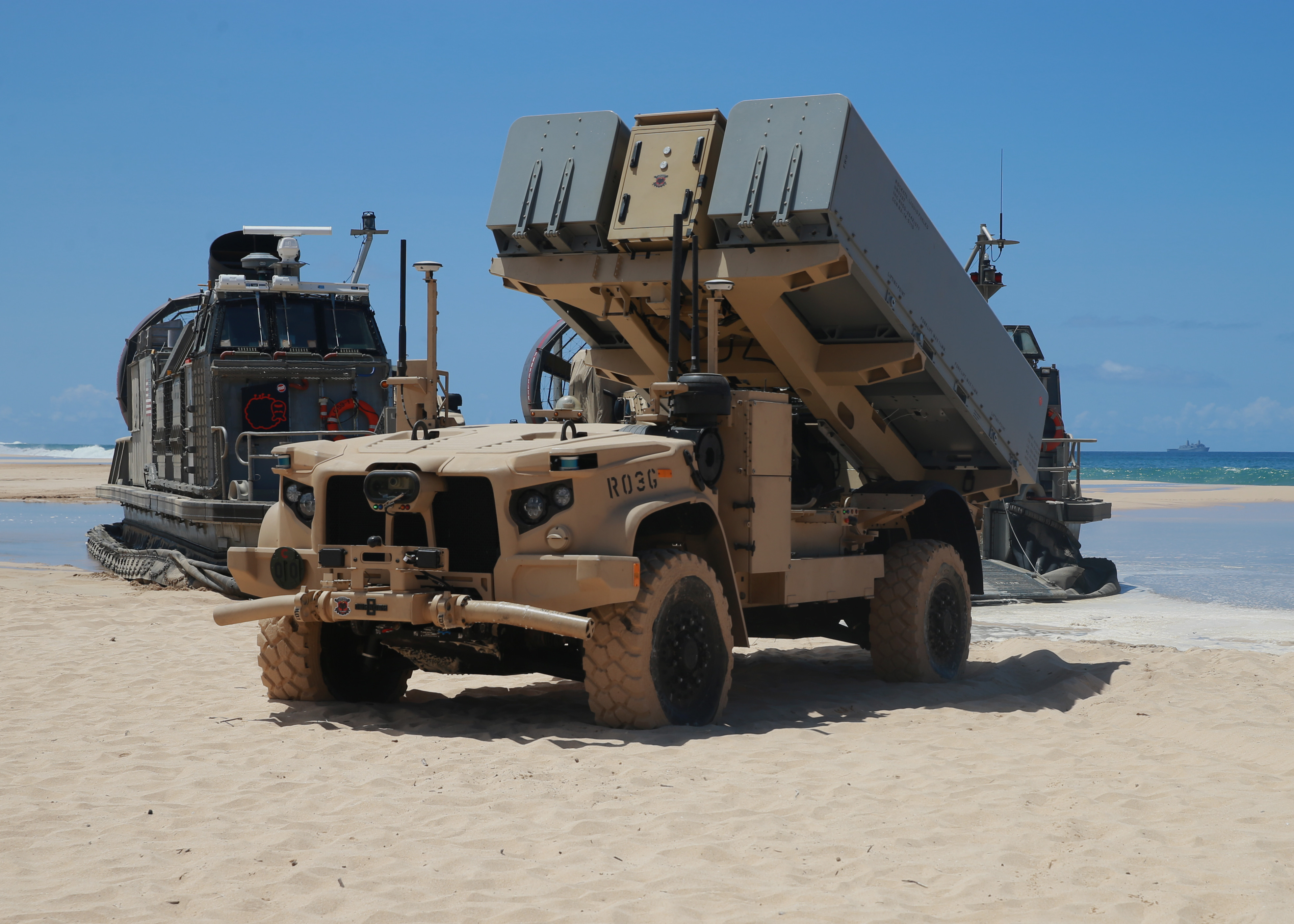
Source: U.S. Marine Corps.
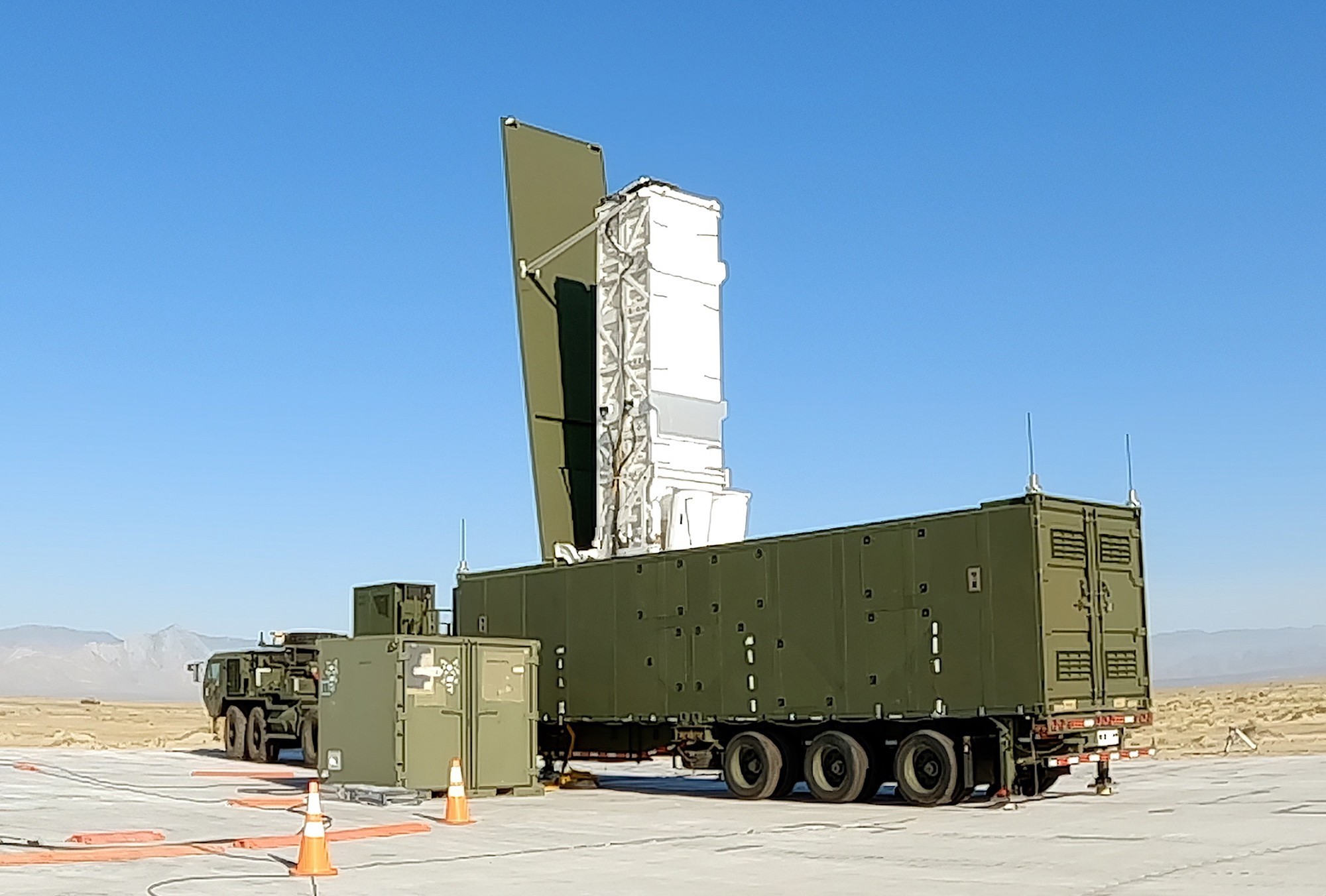
Source: U.S. Army.
There is no need for a sea-based launcher, which would be virtually impossible for Ukraine in any case, since it lacks a surface navy. Tomahawks cannot be launched from aircraft. Ground-based is the only option for Ukraine.
Q3: How much do Tomahawk missiles and launchers cost?
A3: The missile costs about $2.2 million, and a launcher about $6.2 million. However, costs vary widely depending on the block and any special capabilities. For example, the maritime strike version of Tomahawk, which can hit moving ships, is much more expensive ($4.1 million) than the ground attack version, whose aiming point is stationary.
The best analog to the Ukrainian needs is the Marine Corps acquisition of a Tomahawk capability from FY 2023 to FY 2025. During that time, the Marine Corps bought 38 ground attack Tomahawk missiles (Block V) and associated canisters for a total of $85.1 million, or $2.2 million each.
The Marine Corps ground-based launchers cost $6.2 million each, based on a planned FY 2026 purchase of 36 launchers for $222 million. There is no set ratio of launchers to missiles, but the Marine Corps acquisition plan included 36 launches for 94 missiles, or about one launcher per 2.5 missiles.
Q4: Will U.S. troops need to deploy along with the weapons?
A4: No. There is no need for U.S. or NATO troops to deploy with the missiles, as all necessary training can be done outside of Ukraine. The Ukrainians have already learned how to operate sophisticated foreign systems, from the F-16 and Patriot to High Mobility Artillery Rocket System (HIMARS) and counter-artillery radars—all without requiring foreign military personnel on the ground. They can handle Tomahawk missiles. Civilian contractors might be needed, but they have long operated inside Ukraine.
Q5: How many Tomahawks could the United States send to Ukraine?
A5: Actual inventory numbers are classified. President Trump said that “we have a lot of Tomahawks” as he floated the idea of supplying Ukraine with the missile. In his October 16 call with Putin, Trump reportedly threatened to send a “couple thousand” Tomahawks to Ukraine. Some analysts, however, calculated that the United States could spare only between 20 and 50 Tomahawk missiles. Enough information is available publicly to calculate rough inventory numbers.
The United States has procured a total of 9,000 missiles since the beginning of the program, but many have been retired. The chart below shows the procurement history of the nonnuclear variants since 1990.
Some Tomahawks are used annually for training and reliability testing, estimated here at 20 per year. The United States has also used thousands operationally, as shown in Figure 2.
The U.S. Navy has over 8,000 Vertical Launch System (VLS) cells across its surface warships and submarines that can hold and fire Tomahawk missiles. Of these, around 2,000 cells are on-station in peacetime, though it can surge to 5,000 in a crisis. The loadout of VLS cells depends on the type of mission a given ship is undertaking. Ships anticipating air and missile threats, as in the Pacific, would probably carry more air defense munitions. The Navy reports Tomahawk loadouts as 10–50 percent of VLS cells. This analysis used an average of 25 percent in its calculations.
Table 2 puts these numbers together and estimates the current U.S. inventory of Tomahawk missiles available for transfer to Ukraine to be around 1,000. Older Block III missiles were retired from service in 2020, though some may still be in storage and able to be reactivated for delivery to Ukraine. The United States continues to procure Block V Tomahawk missiles. Annual purchases in recent years have been in the low double digits, but the Department of Defense (DOD) may use funding from the One Big Beautiful Bill Act to increase procurement. (Section 20009 provides about $938 million for multiservice long-range cruise missiles.)
The United States would draw from this inventory to supply Ukraine. The slow pace of procurement and competing needs in other theaters would make Pentagon planners uneasy about depleting too much of the stockpile. This inventory would provide reloads in a major conflict. The Trump administration could nevertheless send several hundred Tomahawk missiles to Ukraine, judging that an opportunity to end the war was worth the risk.
Q6: How quickly will they get to Ukraine?
A6: The Trump administration is likely to use the Prioritized Ukraine Requirements List (PURL) mechanism to send Tomahawks to Ukraine. PURL was established following a July meeting with NATO Secretary General Mark Rutte. Under the mechanism, NATO member states would commit financial packages to purchase weapons from the United States.
NATO has announced four PURL commitments totaling $2 billion. So far, PURL packages have come from existing U.S. stockpiles of weapons, making rapid deliveries to Ukraine possible. These commitments, as Figure 2 shows, add to aid previously committed to Ukraine and provide an immediate bump in deliveries.
Once the president makes a “go” decision, the military process begins. The United States will train Ukrainian personnel on the operations and maintenance of the system. This will take one to two months. The launch system is not particularly complicated. The complex missiles would be sent back to the United States if there were problems. Repair for malfunctioning Tomahawks would not fall to Ukraine.
While this training process was going on, Tomahawk missiles and launchers would be withdrawn from the U.S. stockpile, checked out, prepared for shipping, moved to the logistics transit point in eastern Poland, and turned over to the Ukrainians. After about two months, the trained personnel and the equipment would come together in Ukraine, and operations would begin.
With the Tomahawks, Ukraine would be able to strike much deeper inside Russia than was possible with weapons previously provided by the United States and other countries.
Q7: Will providing Tomahawks to Ukraine weaken U.S. capabilities against China in the western Pacific?
A7: Yes, unfortunately. Most of the equipment and munitions being supplied to Ukraine are for ground combat, which figures less prominently in a conflict with China. However, Tomahawk is one of the few munitions (Patriot is another) that would be useful both in Ukraine and the Western Pacific. The DOD has established a review process to ensure that weapons and munitions going to Ukraine do not weaken what it regards as higher priority needs. This review process will almost certainly raise objections to this transfer, and presidential intervention may be required.
Q8: Will Russia retaliate?
A8: The Russian government is complaining bitterly about this possible deployment and hinting darkly at retaliation. For example, Foreign Minister Sergey Lavrov warned that a U.S. sale of Tomahawk missiles to Ukraine “would be an escalation, and a very serious one at that.” President Putin will undoubtedly try to stop any shipments when he and Trump meet in a few weeks, as he did in a recent phone call.
Ukraine is already striking targets deep in Russia with its existing assets—long-range, domestically produced unmanned aerial vehicles, the UK and French–supplied Storm Shadow, and the U.S.-supplied ATACMS—and Russia has not responded with major escalations. Russia has few escalatory options now.
Russia is already launching massive waves of missiles at Ukrainian cities and attacking on the ground as vigorously as it can. It might sabotage targets in Europe, as has been alleged. Striking targets in the United States would be extremely risky, guaranteeing a more aggressive attitude by Trump and Congress. Nuclear saber-rattling has become ineffective. It worked earlier in the war, but repeated use has reduced its impact. President Trump has also shown that he will match nuclear threats with his own nuclear counter moves.
Q9: Will this be a game changer for Ukraine?
A9: Maybe. Although no single weapon will change the course of the conflict, Tomahawk would help Ukraine strike Russia’s greatest vulnerability, its energy industry. Russian energy exports prop up both its economy and its war effort. A significant drop in these revenues might cause enough civilian hardship and difficulties with Russian suppliers of war materiel (China, Iran, and North Korea) to push Russia into serious negotiations.
It’s a matter of numbers. A few dozen Tomahawks won’t make a difference; however, hundreds might.
The U.S. Strategic Bombing Survey, an extensive analysis of bombing effects in World War II, concluded that Allied attacks on the German oil industry caused “catastrophic” damage to the German war effort. However, attacks had to be “massive, sustained, and concentrated.” For Ukraine, this means focusing on the energy industry and not getting sidetracked by other target sets, hitting these targets hard at the beginning, and continuing attacks to hinder Russian rebuilding.
Even then, the effects are uncertain because they are indirect: a reduction in production, leading to pressure on population and suppliers, leading to the government accepting serious negotiations, leading to a ceasefire that Ukraine can accept. A lot could go wrong in the chain of events. Nevertheless, this is probably Ukraine’s best shot at an acceptable outcome. It lacks sufficient personnel and equipment to launch a major ground offensive. It might inflict enough casualties on Russia through defensive attrition to cause a change in Russian attitude. However, Russia’s million casualties thus far have not produced that effect.
So, it could be worthwhile for the United States to take some risk in supplying Tomahawks, squeezing the U.S. inventory more than war planners might want, and refurbishing as many old missiles as possible to get them operable.
President Trump has been looking for a lever to get Russia to negotiate. His effort at direct diplomacy—meeting with President Putin in Alaska in August—failed. Threats and angry rhetoric since then have also failed. This may be President Trump’s most promising course of action to achieve the ceasefire that he promised “within 24 hours” of taking office and that has eluded him thus far.
Mark F. Cancian (Colonel, U.S. Marine Corps Reserve, ret.) is a senior adviser with the Defense and Security Department at the Center for Strategic and International Studies (CSIS) in Washington, D.C. Chris H. Park is a research associate for the Arleigh A. Burke Chair at CSIS.

Critical Questions by Mark F. Cancian and Chris H. Park — July 15, 2025

Critical Questions by Mark F. Cancian and Chris H. Park — September 8, 2025


