Changing the Narrative on African Investment
September 15, 2026 • 9:00 – 9:30 am EDT
Hosted by Global Development

Photo: Giuseppe Cacace/AFP/Getty Images; AFP/Getty Images
The United States and Israel went to war with Iran in February 2026 with the aim of reshaping the Middle East. However, it is Iran that seems to have emerged from the initial stages of the war poised to exercise greater power in the region, and the United States’ influence on the region’s future may be receding.
The United States and Israel expected that their attack would topple the Islamic Republic, and short of that, significantly degrade its nuclear and military capabilities. Iran would no longer pose a threat to Israel and the United States. With Iran defanged, the two allies could shape a new regional order in the Middle East. Israel and Saudi Arabia would normalize relations, and that would create the framework for settling the fate of the Palestinians, and the future of Lebanon and Syria. With U.S. support, Israel could then act as the region’s security bulwark, and its political and economic influence would extend unimpeded across the region.
The war has instead exposed the limits of U.S. and Israeli military power. Expecting the war, Iran was prepared. It put in place a strategy that impeded its more advanced nuclear-powered adversaries from achieving their war objectives. Far from defanged, Iran appeared stronger, even triumphant. It has survived the worst of the war so far and scored important strategic wins. The first was that by destroying a great deal of U.S. military infrastructure across the Gulf region, Iran in effect unraveled the security architecture the United States had long extended over the region. The devastation of several U.S. bases has raised doubts about the capacity of the United States to defend the Gulf, and even its willingness to build back what was destroyed.
Second, Iran asserted control over the Strait of Hormuz. During the early phase of the war, Iran closed the strait as a military tactic, to dissuade the United States from escalating its bombing campaign. It soon discovered that control of that vital waterway was useful beyond the war. It could not only deter future U.S. aggression, but also compel the United States to abandon the war and even negotiate removal of sanctions on Iran, a concession that Iran’s nuclear program had failed to achieve thus far.
The United States could not take away control of the strait, nor bomb the strait, nor sanction the strait. In short, the United States could no longer contain Iran as it had before but had to accept a greater role for Iran in the region as well as the global economy. For Iran, this meant that the region’s decades-old security architecture, going back to the Jimmy Carter and Ronald Reagan presidencies and built around the containment of Iran, was gone and would not return.
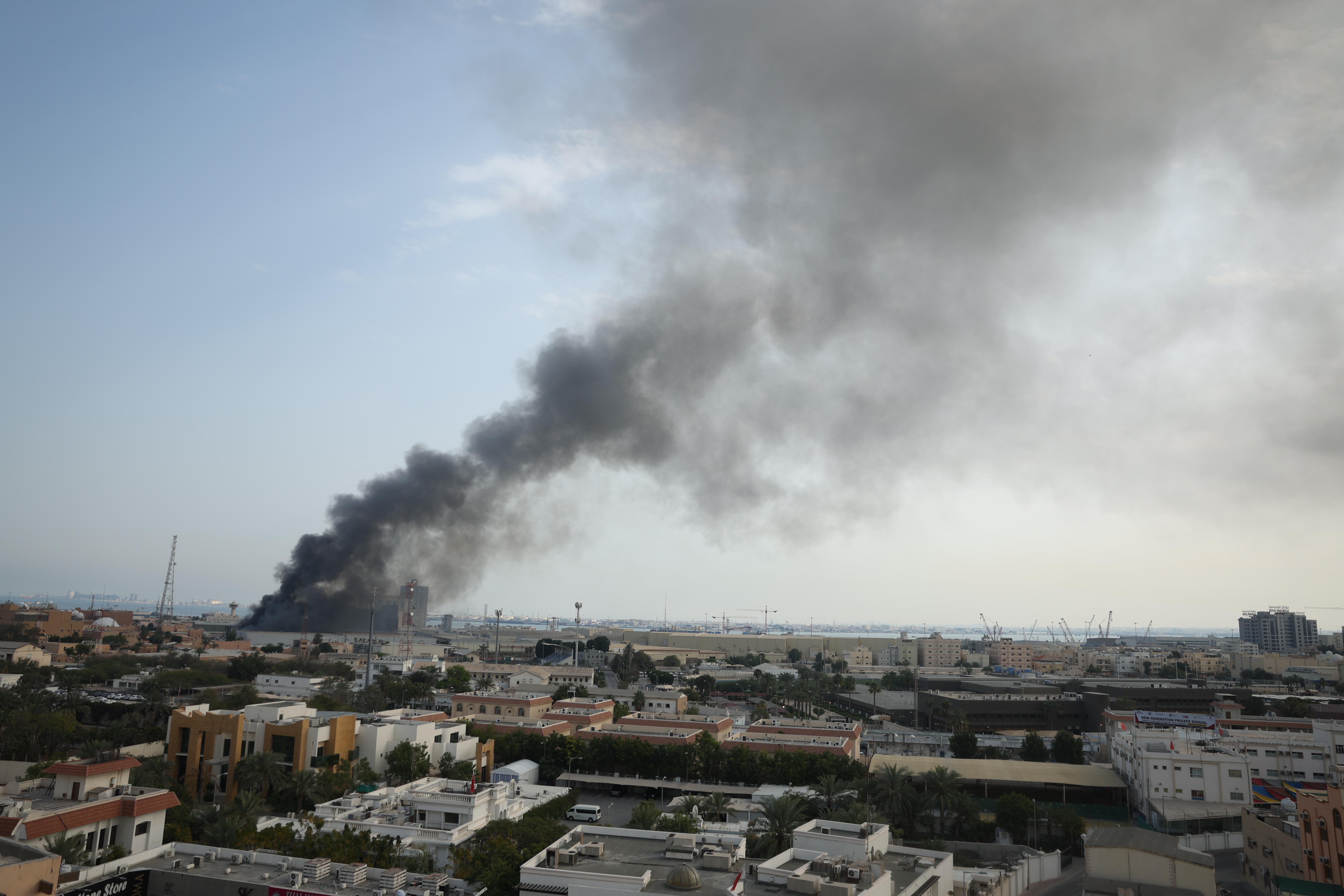
Iran launches a missile strike on U.S. Fifth Fleet Headquarters in Bahrain on February 28, 2026.
Photo: Stringer/Anadolu via Getty Images
Iran’s immediate response to U.S. and Israeli attack was to retaliate against U.S. military bases strewn across the Persian Gulf. Iranian missiles and Shahed drones overwhelmed U.S. and Arab interceptors causing great damage to over a dozen U.S. military bases. Iran would soon extend its attacks to military bases of Arab states that either housed U.S. military assets or were participating in U.S. operations. These attacks soon extended further to include energy infrastructure across the Persian Gulf. Most notably, Iran attacked Ras Laffan gas field in retaliation for an Israeli attack on its Pars gas field, and later attacked oil facilities in the United Arab Emirates (UAE) Fujairah port, as well as tankers carrying oil and natural gas belonging to the Gulf states.
Iranian attacks angered its Arab neighbors, but to Iran’s rulers, Arab fear and fury were not of concern in the short run and would not deter Tehran from attacking its neighbors. The Gulf states could not credibly threaten Iran with retaliation. They could not add much to the combined force of U.S. and Israeli firepower, and if they joined the fighting, they would risk even larger Iranian attacks that they were not prepared to absorb.
Iran, however, did not seek war with its Gulf neighbors. In attacking their territories, it had two strategic aims. First, Iran set out to destroy U.S. military bases and assets stationed in the Gulf that were vital to the United States’ ability to wage war. Iran’s attacks destroyed aircraft and radar systems, but also runways and naval facilities. This proved effective. The destruction of the headquarters of the Fifth Fleet in Bahrain, for instance, placed great pressure on the U.S. fleet that would—by the third month of the war—be tasked with maintaining a naval blockade of Iran. The U.S. Navy had to rely on much more arduous means than usual to secure logistical support for its war ships. Similarly, the loss of critical radar systems reduced the scope of battlefield intelligence that guided U.S. and Israeli bombing runs over Iran.
By the fifth month of the war, Iran had practically “de-based” the U.S. military from the Gulf. The scale of destruction of bases, combined with the ongoing threat of Iranian drones and missiles as the supply of U.S. interceptors dwindled, forced the United States to move its assets and operations to bases in Israel, Jordan and Syria. The Gulf states too, encouraged this move to reduce the scale of attacks on its territories, especially following Iran’s sustained attacks on Kuwait throughout July.
For Tehran, this was not just a wartime strategic win. It was also an important step in achieving its long-held goal of compelling the U.S. military to leave the Gulf region. In essence, the first two months of the war injected doubt about the future viability and value of U.S. bases to both the U.S. military and host countries. The United States could not defend bases so close to Iran and hence may no longer see value in rebuilding them. The Gulf countries, too, viewed the bases as a liability rather than protection, opening up the Gulf to war, economic havoc, and destruction of its critical infrastructure. Iran reinforced this point in its messaging, asserting that future peace between Iran and its neighbors would be possible only if U.S. bases did not return to the Gulf.
The future of U.S. military presence in the Persian Gulf is unclear. But Iran has secured an important strategic win in reducing its scope, and casting doubt over its value in the eyes of the Arab Gulf states. There will be Gulf countries will react differently to this proposition, and their internal divisions also serve Iran’s aims.
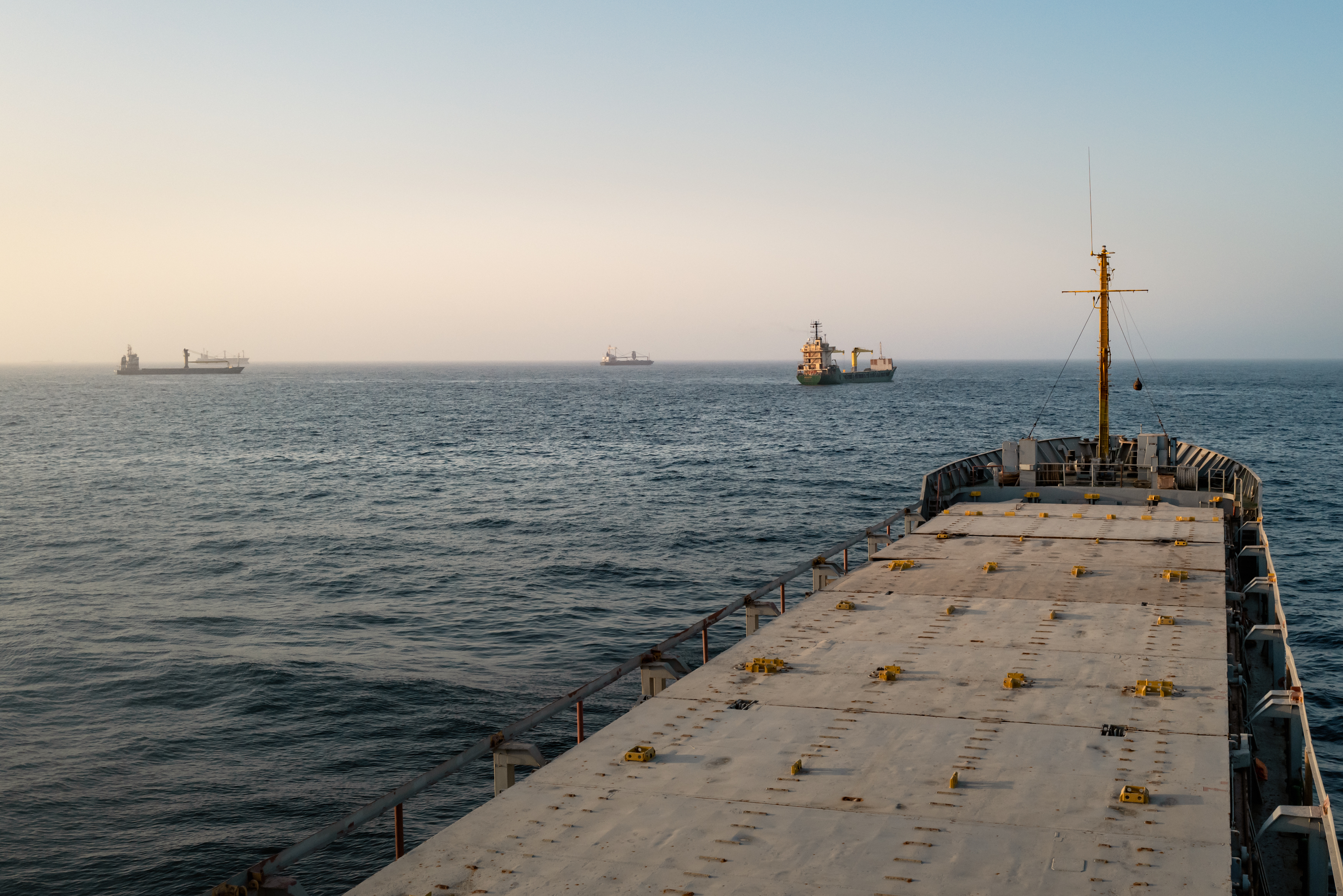
Oil tankers and cargo vessels anchored off the coast of Oman on June 23, 2026, after being stranded for days as congestion at Port Sultan Qaboos prevented them from docking.
Photo: Elke Scholiers/Getty Images
Iran’s second strategic objective in attacking Gulf states was to put pressure on the global economy. This became more acute after Iran targeted civilian infrastructure across the Gulf and closed the Strait of Hormuz. Whereas the United States and Israel saw Iran’s skies as the principal battlefield, Iran chose the Persian Gulf. The initial aim was to hamper attacks on Iran, but targeting the Persian Gulf turned the global economy into a target. The United States was unable to prevent Iran from impacting global energy markets and disrupting global supply chains that relied on trade with the Persian Gulf. Oil and natural gas prices soared, as did those of diesel and jet fuels. That impacted gas prices in the West and caused fuel shortages in many parts of the world, leading to surges in inflation and unemployment.
In addition, disruptions to the supply of manufactured goods and petrochemical products—including helium, urea, aluminum, and cooking oil—as well as cut-off of access to the mega ports of Dubai, disrupted industrial activity across large parts of Asia and raised worries over food security in Africa. Over the decades, the Persian Gulf has become vital not only to global energy supplies but also numerous sectors of the global economy as an important hub of global commerce. The Gulf states have long touted their global connectivity as a notable achievement and proof of the promise of their economic development models. The war turned the Gulf region into a vulnerability for the global economy.
The United States was sensitive to the economic impact of Iran’s strategy. Higher gas prices sparked inflation in the United States, as did the specter of global economic downturn. President Trump cited worry over the global economy when he agreed to sign on to an MOU with Iran in June 2026.
Thenceforth, the U.S. objective has been to wrest control of the strait from Iran and return the flow of commerce in the Persian Gulf to prewar levels. Iran is determined not to let this happen. It now sees its firm control of the Strait of Hormuz as irreversible. Not only has Iran now moved to claim the strait as sovereign Iranian territory over which it will exercise uncontested control, but it believes that its geography—a long coastline sitting atop the Arabian Sea and the Persian Gulf—makes any attempt by the United States or Iran’s neighbors to deny Iran control of the strait unsustainable.
Saudi Arabia and the UAE have been able to export oil during the crisis, using terminals on the Arabian Sea and the Red Sea—which have in the past been the target of Houthi forces aligned with Iran. Those facilities could be further expanded in the future, and also facilitate energy exports for Qatar, Kuwait, and Iraq. However, completing those projects will require time, and Tehran believes that the bypasses will not fully compensate for the traffic through the Strait of Hormuz—especially for trade beyond oil and gas. Furthermore, as conflict between the Houthis and Saudi Arabia escalates, these bypasses are vulnerable to drones and missiles of Iran’s proxies, not to mention Iran itself. In effect, Iran sees its power not limited to just its control of the Strait of Hormuz but extending to putting pressure on other chokepoints.
The world, Iran believes, must come to terms with the new reality. In Iran’s view, its control of the strait will reinforce the writ of the war. The containment of Iran has broken down. U.S. bases around the region have been destroyed, and the old model of encircling Iran militarily is likely now obsolete. Iran’s Arab neighbors cannot look to the old alliance with the United States as a solution to their security challenges. Their ranks will be divided; they will seek a variety of solutions to their security needs, which will at best mean multipolarity across the region, and at worst, a chaotic competition between overlapping alliances. In this environment, Iran will have far greater room to maneuver. It will balance amity with some of these alliances to offset others that oppose it.
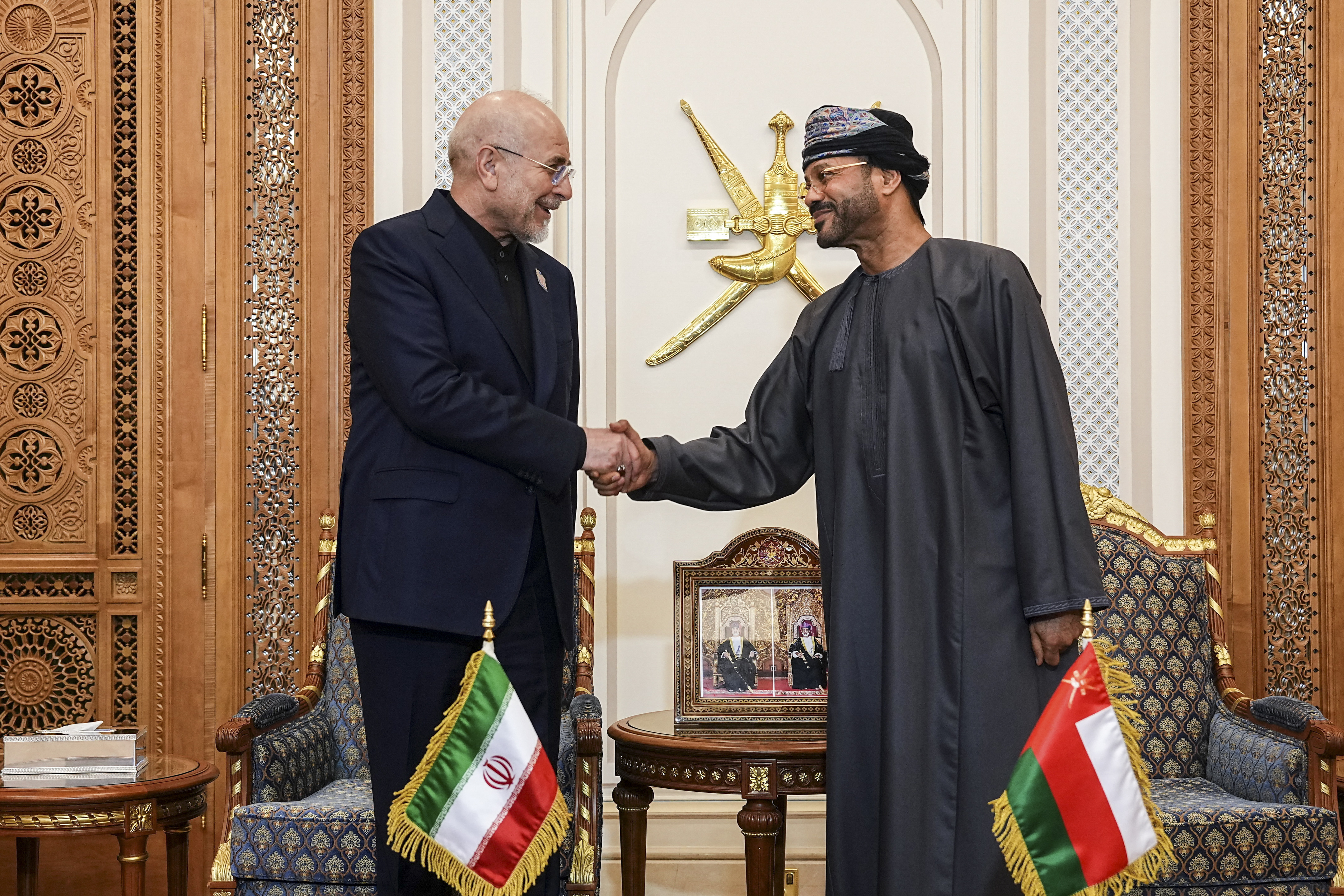
Iranian parliament speaker Mohammad Bagher Ghalibaf (left) shakes hands with Omani Foreign Minister Badr bin Hamad Al Busaidi (right) before a meeting in Muscat, Oman, on June 22, 2026.
Photo: Hamed Malekpour / Middle East Images / AFP via Getty Images
Iran’s greatest concern is Israel. The rivalry between the two will remain intense. Iran will seek to rebuild its position in Lebanon and use its perch in Yemen to pressure Israel, and for its part, Israel will seek to undermine the Islamic Republic at home and in the region. Iran, however, believes that the war has weakened Israel. The expectation that military power could achieve all of Israel’s strategic objectives and confirm its regional hegemony met an immovable object in two wars with Iran. The calamitous outcome of the U.S.-Israeli war on Iran has badly damaged the strategic consensus between the two allies and potentially opened a breach between the two over the future of the Middle East.
Iran believes that its hold over the Strait of Hormuz will diminish U.S. appetite for another war with Iran, and that will in turn limit Israel’s military options. Since 2023, Israel’s strategy has been anchored in military victory. Without war, Israel’s strategy will remain caged.
Israel has gained no new allies in the region since the war. Iran believes the Abraham Accords are unlikely to expand any further, and may even be under pressure. The Israel-UAE-India axis will face a challenge from the Mecca alliance forged between Pakistan, Saudi Arabia, and Turkey, and other alliances likely to surface. The Arabs see Iran’s threat growing, but they now also see Israel as a threat. The Arab security dilemma now must contend with both, and that is to Iran’s benefit. It believes that the future security order in the region will not be assembled around containing Iran alone.
In the vacuum left by the United States, Iran expects that China will play a larger role in the Middle East. Its economic presence will likely increase, as will its diplomatic role in mediating peace between rival alliances. China may also become a larger military presence in the Persian Gulf. It has close military ties with Pakistan, and in the past it has conducted naval exercises with Iran. The Chinese navy may set up bases in Pakistan’s Gwador port and Iran’s Chahbahar naval facilities. It could provide maritime security that would be acceptable to all Gulf countries. The greater security role that Pakistan is set to play, forging defense pacts with Saudi Arabia, and possibly Kuwait, is supported by China. The United States will inevitably have to compete with China to a greater extent, and that competition will change the nature of U.S. policy in the Middle East.
Europe, too, will have to adopt a new posture. Its Middle East policy has since the 1950s followed Washington’s lead—Tehran believes that this is particularly true when it comes to its posture toward Iran. Now Europe’s own interests in the Middle East, revolving around stability of energy supplies and trade, demand that it also adopt a new posture. It is already evident to Tehran that Brussels is keen to rebuild severed ties with Iran to be able to act as power broker between Iran and its Arab neighbors. Europe’s utility to Arab security needs will hinge on it having some degree of influence in Tehran.
Iran sees the immediate future of the Middle East as defined by the decline of U.S. influence. There will be a period of vacuum and transformation. Iran sees ample opportunity to influence the shape of an emergent order and sees itself as an important part of it. It does not see the Middle East organizing against Iran alone but reflecting the multiplicity of economic and security interests of divergent actors. In the meantime, other tensions, such as that between Saudi Arabia and the UAE, will bubble to the surface. A new order will have to take account of the fact that Turkey will be more concerned with Israel, the Pakistanis with India and Israel, while the Saudis will have to balance its worries over Iran with those over Israel and the UAE. In this melee Chinese, Russian, and European interests will mix to shape outcomes. The future looks chaotic, and that means receding military and economic pressure on Iran.
Vali Nasr is a senior adviser (non-resident) at the Center for Strategic and International Studies (CSIS).