Capital, Consolidation, and Leadership in the New Minerals Era
October 7, 2026 • 10:00 – 10:30 am EDT
Hosted by Critical Minerals Security Program
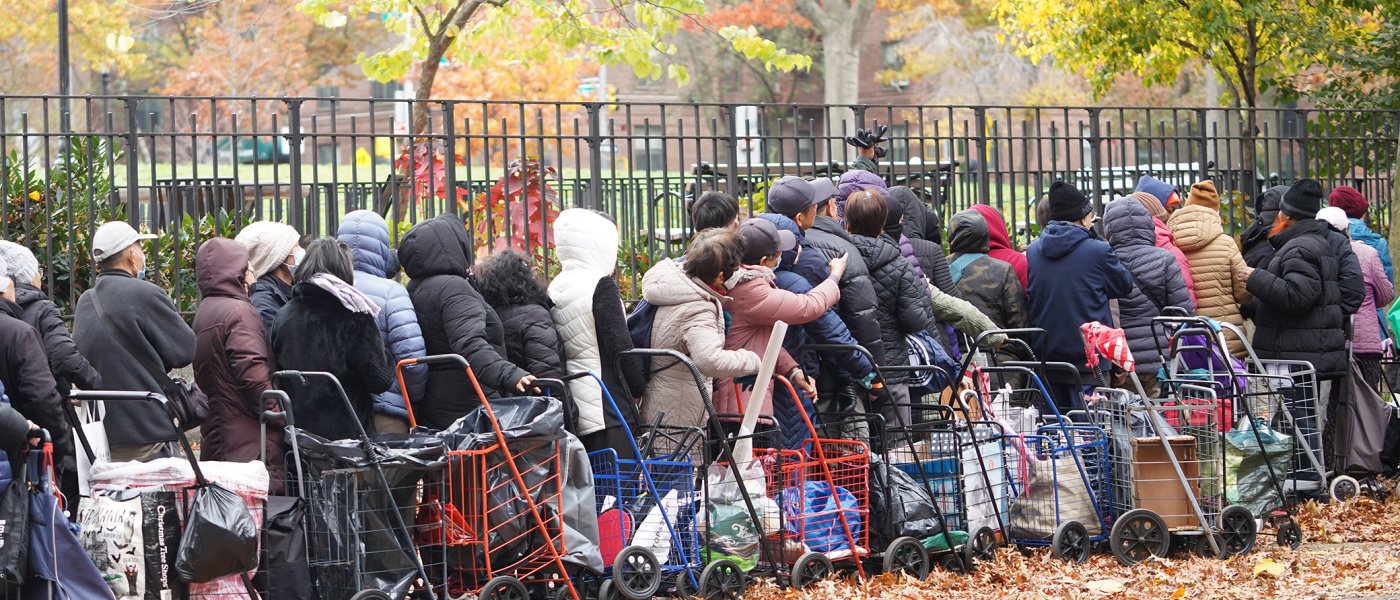
Photo: Zhang Fengguo/Xinhua/Getty Images
Last week, the U.S. Department of Agriculture (USDA) released its Household Food Security in the United States report, assessing that 13.7 percent of U.S. households were food insecure in 2024, marking the highest prevalence of U.S. food insecurity in nearly a decade. According to the USDA, this household food security report will be its last. In September, the USDA announced the “termination” of future reports with the claim that reports were “redundant, costly, politicized, and extraneous” and did “nothing more than fear monger.” To the contrary, for more than a quarter century, the household food security report has provided a consistent, national assessment of domestic food security that helped policymakers understand the drivers of food insecurity—and respond to them. The end of the report represents a rupture in long-standing data on food security among Americans, as there is no report that provides the same information to the public and policymakers today.
Q1: What was the Household Food Security in the United States report?
A1: The Household Food Security in the United States report estimated the prevalence of food insecurity and the absolute number of food-insecure people in the United States each calendar year. The report was based on the results of the U.S. Household Food Security Survey Module, administered annually by the USDA’s Economic Research Service. The survey contained 10 core questions administered to adults, and 8 additional questions asked of adults with children in their households. In household food security reports, the USDA described the food security status of various groups, including all households, households with children, adults, and children, and disaggregated results by race and ethnicity, geographic region, and household income, among other characteristics.
Q2: What did the report reveal?
A2: Published each year since the mid-1990s, the household food security report revealed trends in food security in the United States over time. The report also allowed a comparison of the food-security status of subgroups of Americans to the food-security status of Americans as a whole.
Since the administration of the U.S. Household Food Security Survey Module around the turn of this century, the household food security reports have shown the food security status of Americans to mirror the health of the U.S. economy broadly. For example, in the first decade of this century, food insecurity spiked with the onset of the Great Recession. Across the country, the unemployment rate doubled between 2007 and 2009, with 15 million Americans unemployed by late 2009. It wasn’t until the end of 2017 that the unemployment rate had finally fallen below prerecession levels for all, and not until 2018 that the prevalence of food insecurity among Americans fell below prerecession levels for the first time.
Households experiencing economic hardship often have difficulty obtaining “enough food for an active, healthy life,” meeting the USDA’s definition of food security. In this decade, the economic shocks of the Covid-19 pandemic also contributed to a spike in food insecurity among Americans. While robust support packages passed in 2020 kept food insecurity at bay, the expiration of Covid-19-era economic support in 2021—including stimulus checks to families as well as the expiration of the Paycheck Protection Program, unemployment insurance programs, and other pandemic relief programs—caused the greatest jump in food insecurity among U.S. households since the onset of the Great Recession.
In addition to job and income losses, high food prices can contribute to increases in household food insecurity, often putting adequate amounts of healthy food out of reach. In 2022, domestic food–price inflation reached a four-decade high, the result of lingering economic shocks of the Covid-19 pandemic exacerbated by Russia’s invasion of Ukraine, which increased the prices of food, fuel, and fertilizer worldwide. That same year, highly pathogenic avian influenza was detected among U.S. poultry, putting upward pressure on the price of eggs. Today, food prices across the country remain 29 percent higher than pre-pandemic levels. High food prices contribute to a continued increase in food insecurity among U.S. families today.
In addition to revealing food insecurity trends, the Household Food Security in the United States report also allowed policymakers to compare levels of food insecurity among sub-populations of Americans. For example, since 2018, the Department of Defense (DOD) has included a short-form version of USDA’s Household Food Security Survey Module in its Status of Forces Survey of Active-Duty Members (SOFS-A). The results of the DOD’s short-form survey are directly comparable to civilian samples as represented in the USDA’s household food security reports. Results of the DOD’s 2018 and 2020 SOFS-A survey indicate that food insecurity among active-duty members was nearly two and a half times the national average: “The prevalence of food insecurity was 25.3 percent in the military population and 10.1 percent in the demographically equivalent civilian adult population in 2018 and 2020,” according to USDA.
Similarly, organizations that support food-insecure families also relied on the USDA’s report. The Capital Area Food Bank employed the USDA’s survey module to assess food security in the greater Washington, D.C., region. Its latest report found that 36 percent of households in the Washington area experienced food insecurity in 2024. Using the USDA’s survey module, the Greater Boston Food Bank found that in 2024, 37 percent of Massachusetts households faced food insecurity in 2024. According to these assessments, the rate of food insecurity in the Washington, D.C., and Greater Boston regions was higher than the national average of 13.7 percent in 2024.
Q3: Was the report politicized?
A3: No. The origin of the Household Food Security in the United States report is bipartisan, with its roots in the National Nutrition Monitoring and Related Research Act of 1990 (NNMRRA). NNMRRA was cosponsored by 47 Republican and Democratic members of Congress and signed into law by President George H. W. Bush. The act aimed to “strengthen national nutrition monitoring” and tasked the secretary of agriculture and the secretary of health and human services to “prepare and implement a ten-year plan to assess the dietary and nutritional status of the United States population.” By 1994, U.S. government and private experts agreed on a measurement of food insecurity, which served as the basis for a questionnaire administered nationwide in 1995, under then-President Bill Clinton. The survey was administered annually, and results were published in the household food security reports every year since 1995.
Notwithstanding the administration’s claim that the report is “politicized,” the report reflected positively on the first Trump administration’s record on food security. The economic shocks at the onset of the Covid-19 pandemic caused many U.S. families to lose jobs and income, leading some experts to predict a surge in food insecurity in 2020. According to the Household Food Security in the United States report, however, the same proportion of U.S. households—10.5 percent—experienced food insecurity in 2019 and 2020. That food insecurity did not spike in 2020 was largely attributed to the comprehensive support packages, including direct assistance for U.S. families, passed by Congress and signed into law by President Trump that year.
While the Household Food Security in the United States report has enjoyed bipartisan support since its inception, it is reported to have informed legislators’ requests for more federal funds for the Supplemental Nutrition Assistance Program (SNAP) and Supplemental Nutrition Program for Women, Infants, and Children (WIC) federal food assistance programs. Support for SNAP and WIC falls along partisan lines, with Republicans generally backing lower levels of funding for SNAP and WIC and Democrats generally advocating for more federal assistance for the programs. However, SNAP and WIC funding is generally determined in the Farm Bill, the five-year omnibus package that sets funding levels for numerous USDA-funded agriculture and nutrition programs, or on an emergency basis, such as the onset of the Covid-19 pandemic. The confluence of numerous public and industry interests, and not the results of the household food security report alone, ultimately informs SNAP and WIC funding levels that are approved by Congress.
Q4: Was the report redundant?
A4: One of the stated reasons for the termination of the Household Food Security in the United States report is that it is “redundant” and “extraneous,” and that USDA has access to “a bevy of more timely and accurate data sets.” While a small number of reports collect food-security data on Americans, no report is comparable to the Household Food Security in the United States report in duration or comprehensiveness.
While the USDA measures and reports on food security, the U.S. Census Bureau measures and reports on food sufficiency among U.S. households. Food security and food sufficiency are similar in concept, and most families classified as food insecure by the USDA are also classified as food insufficient by the Census Bureau. However, an important difference lies in response rates to the USDA and Census Bureau surveys: The USDA’s food-security survey had a 74 percent response rate in 2023, while only between one and 10 percent of respondents to the U.S. Census Bureau’s survey answered questions about food sufficiency. The timeframes of the reports are also different: USDA reports food security on an annual basis, while the U.S. Census Bureau reports on food sufficiency in its Household Pulse Survey, reported biweekly or bimonthly. Finally, USDA measures food security through a comprehensive questionnaire of up to 18 questions, while the Household Pulse Survey includes only one question about food sufficiency.
Beyond the USDA, others claim that the household food security report was redundant. The implementation of the USDA’s survey nationwide on an annual basis is not to be confused with the use of the USDA’s questionnaire to assess food security among a select group of Americans on an irregular basis, and does not render the USDA’s survey duplicative of other surveys. Using the USDA’s questionnaire to assess food security among a subset of Americans does allow comparisons between the food security status of this group to the food security of Americans nationwide, as explained in A2.
Q5: Where do we go from here?
A5: Should the Trump administration go forward with its termination of the household food security report, experts may judge that the administration wanted to avoid culpability for a continued rise in food insecurity among Americans. As revealed in the household food security report for 2024, food insecurity has been increasing in the United States since 2021, driven by the economic shocks of the Covid-19 pandemic, coupled with persistently high food prices. The USDA’s survey of food security among households in 2025 would have been carried out late this year, reflecting general economic uncertainty and a stagnating job market. Alongside elevated food prices, experts may be right to assume a continued rise in food insecurity in 2025. In 2026, cuts in the SNAP program enacted in the One Big Beautiful Bill Act, estimated to eliminate SNAP assistance for millions of Americans, may further increase food insecurity among U.S. families.
Of course, ending a decades-old measurement of food insecurity among Americans does not mean the end of food insecurity among Americans. On both sides of the aisle, food insecurity among Americans has been considered a threat to U.S. national security. Diet-related health concerns led to the rejection of many recruits into World War II, informing the passage of the National School Lunch Act of 1946, which established the program “a measure of national security, to safeguard the health and well-being of the Nation’s children.” According to U.S. Army Lieutenant General (Retired) Mark Hertling, “The military has experienced increasing difficulty in recruiting soldiers as a result of physical inactivity, obesity, and malnutrition among our nation’s youth,” with over one-third of adult military applicants not meeting the Army’s weight standard for enlistment. Across the country, poor diets also lead to at least $50 billion in health costs annually.
The termination of the report will obfuscate the extent of food insecurity nationwide, but food insecurity will continue to affect U.S. national security and the U.S. economy. This or a future administration would be wise to reverse the decision to terminate the household food security report, which was the primary source of information about the food security status of Americans for over 25 years.
Policymakers could also seize this moment to explore ways to provide a fuller picture of food consumption among Americans. Of the 18 questions asked in the USDA’s Household Food Security module, 15 questions refer to the quantity of food consumed, while only three questions pertain to the quality of food consumed, including whether food constituted a “balanced meal.” The impacts of a poor-quality diet are of widespread concern in the Trump administration and among the general public today. In the future, surveys of U.S. households could better assess the quality of food consumed by U.S. families, informing approaches to incentivize consumption of diverse diets that are in the interest of individual—and the nation’s—health and food security.
Caitlin Welsh is the director of the Global Food and Water Security Program at the Center for Strategic and International Studies in Washington, D.C.

Commentary by Caitlin Welsh — May 21, 2025

Critical Questions by Caitlin Welsh and Zane Swanson — April 17, 2025

Brief by Jamie Lutz and Caitlin Welsh — June 1, 2022
