The Implications of the Hormuz Energy Crisis on South Asia
September 21, 2026 • 8:30 – 9:30 am EDT
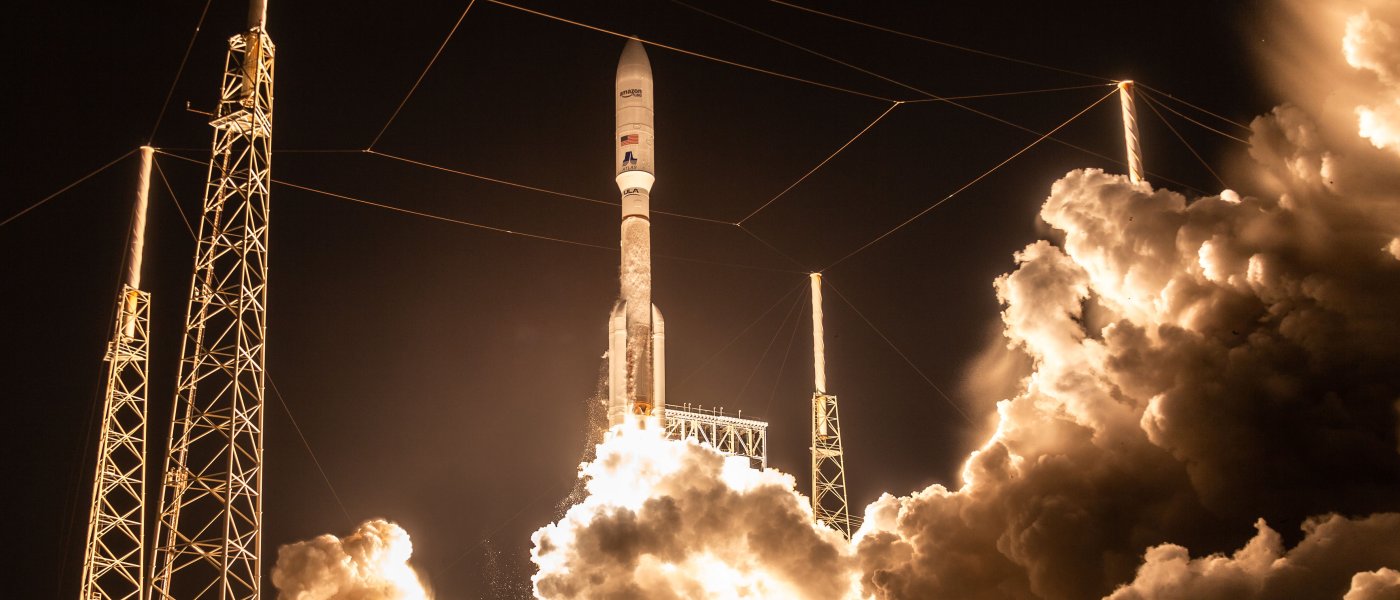
Photo: Manuel Mazzanti/NurPhoto via Getty Images
In recent years, technological innovation has supplanted traditional factors, such as the size of military forces and regional hegemony, as the foundational element of national power—and therefore as the key determinant of great power competition. The emergence of technologies such as artificial intelligence (AI), advanced robotics, and quantum computing has made technology a driver of economic growth and security, as well as a transformational element in the national security environment and the modern battlefield. It is no longer enough to lead in one of these technologies individually; rather, the United States, along with its allies and partners, needs a full stack—a complete set of technologies needed to build and deploy critical systems—that integrates and leverages multiple technologies together.
However, the United States cannot adequately leverage a full technology stack unless it has advanced, secure, and resilient digital infrastructure—the modern networks and computing facilities on which AI applications and other data ride. These networks underpin the modern financial system, economic growth, social services, access to information, education, public safety, and national security. In the United States and across many of its allies and partners, the private sector owns and controls most of this infrastructure. Leveraging industry is the right approach, as companies are in a better position than government to build, operate, and innovate quickly on digital infrastructure. For their part, policymakers must prioritize digital infrastructure innovation and engage on critical policy and regulatory issues to ensure that the United States and its allies and partners have a robust, dynamic, competitive, trusted, and secure digital ecosystem.
Since the first satellite was launched in the 1950s, digital infrastructure has gradually extended from Earth to outer space. That extension has accelerated as low Earth orbit (LEO)—which encompasses orbital regions 1200 miles or less from Earth—became home to over 13,000 active satellites; more than 10,000 of those are U.S.-owned and circling the Earth at speeds of 17,500 miles per hour. LEO satellite constellations, today primarily operated by the private sector, are rapidly transforming networks and computing, providing one of the most critical and cutting-edge components of modern digital infrastructure. For instance, they offer
In addition to their uses in people’s daily lives, LEO satellites have transformed the modern battlefield.
In addition to their uses in people’s daily lives, LEO satellites have transformed the modern battlefield. The war in Ukraine has highlighted the indispensable role of commercial LEO alternatives in conflict, when terrestrial networks and other communications are subject to interference. Unprecedented levels of electronic warfare (EW)—including signal jamming and spoofing—have dominated the conflict, with constant disruptions to a variety of wireless communications systems and other spectrum-based operations. Immediately before the invasion, Russian hackers attacked the U.S. satellite communications company Viasat, resulting in significant loss of communications for Ukrainian security services during the onset of the conflict. This coordinated effort to target space-based communications systems in tandem with a ground invasion revealed the growing multi-domain nature of warfare and the need for more secure communications and navigation satellites. Starlink, a mega-network of LEO satellites operated by U.S.-based SpaceX, has been heavily utilized in the conflict to supplement terrestrial communications, offering a tactical edge to Ukrainian forces and providing day-to-day communication capabilities for civilians.
Consequently, LEO satellite networks are equally as important for national security as economic security, making them a central instrument of national power, statecraft, and global governance. Today, the United States is the leading space power by key metrics, including value of the space economy (accounting for government and commercial investments) and sheer number of orbital launches. In 2024, the global space economy was valued at $613 billion, following 7.8 percent year-over-year growth. Of that total, U.S. government value was $77.3 billion, compared to $55 billion for all other governments combined. Still, the bigger story comes from the commercial space economy. Dominated by U.S. companies, the value of the commercial space economy rose to $480 billion in 2024—78 percent of the global total. In that same year, there was approximately one launch attempt every 34 hours, totaling 25, with a little over half of those operated by SpaceX’s Falcon 9 reusable vehicle. Additionally, of the 259 total orbital launch attempts globally, 145 were from the United States, outpacing China’s total launches 2 to 1.
Despite current U.S. leadership in LEO, in the long term, the United States risks losing its competitive edge in this technology ecosystem to China without sustained investments and proactive policy and regulatory reform. This paper explores U.S. leadership in LEO and argues that to maintain its dominant position, the United States must adopt a cohesive strategy that leverages LEO satellites’ dual-use capabilities, capitalizes on commercial strengths while mitigating strategic vulnerabilities, and implements streamlined policy and regulatory actions. Only by doing so can the United States sustain its dominant role and ensure a resilient and competitive space ecosystem amid intensifying global competition, particularly with China.
LEO satellites are critical dual-use technologies that serve civilian and military purposes. They have proven crucial force multipliers on the battlefield in recent conflicts, notably in Ukraine. This conflict revealed the unprecedented role commercial space-based communications can play. LEO constellations enabled communication in remote and hard-to-access areas, provided crucial intelligence to governments, and were used to disrupt enemy operations and assets. As in Ukraine, future conflicts will be defined by combatants’ ability to use and deny space-based services for key strategic purposes, particularly for communications and intelligence, surveillance, and reconnaissance (ISR).
The Ukraine war has exposed risks in the LEO ecosystem: namely, the ability of a single company, such as SpaceX, to control access to critical services has raised national security concerns about overreliance on a private sector satellite provider. As the Ukraine experience demonstrates, near-monopoly in the satellite communications ecosystem, especially in times of conflict, raises questions regarding security, resilience, and control of critical communications. Diversifying procurement across multiple LEO satellite providers can enhance operational redundancy and ensure continued communications even if a single network is degraded or compromised. Engaging multiple suppliers also strengthens supply chain security and reduces vulnerabilities that arise when critical capabilities are concentrated in a single network provider.
In addition to their extensive uses in conflicts, LEO constellations can be targeted by a range of both terrestrial and space-based kinetic (or physical) and non-kinetic threats. CSIS’s authoritative unclassified annual space threat assessment categorizes counterspace weapons into four categories: kinetic weapons, non-kinetic weapons, electronic weapons, and cyber operations. Within these categories, direct ascent anti-satellite (DA-ASAT) missiles, nuclear weapons positioned in space, jamming and spoofing of GPS in medium Earth orbit, and cyberattacks pose especially significant threats to LEO satellites. Russia and China possess terrestrial-based DA-ASAT weapons that can target and destroy LEO satellites and generate significant debris. Following Russia’s 2021 Nudol strike, the United States called for an international norm against “destructive” DA-ASAT tests. No tests have occurred since, though research and development has continued, with China, Russia, and India advancing existing capabilities. Russia’s apparent attempt to field a nuclear-capable space weapons program caught global attention in 2024, as this capability could jeopardize vast numbers of government and commercial space assets in LEO in violation of the Outer Space Treaty. LEO constellations depending on GPS satellites are likewise vulnerable to surging jamming and spoofing incidents. Civil aviation metrics show a 220 percent rise in GPS signal loss events from 2021 to 2024, a 500 percent spike in spoofing from 2023 to 2024, and 430,000 interference incidents over conflict zones in 2024. Cyberattacks targeting LEO satellites and ground infrastructure are often hidden from the public eye and difficult to track, yet it is clear their use has accelerated in modern conflicts. Specifically, the 2022 Viasat attack disabled 40,000 modems; Russia repeatedly targeted Starlink in Ukraine; and conflicts, including in Gaza, saw hundreds of cyber intrusions targeting space assets.
To increase resilience against attacks on individual satellites, modern LEO constellations employ proliferation and redundancy. However, scalable threats—such as cyber or jamming and spoofing or nuclear weapons on-orbit—can endanger entire constellations. As government and commercial space systems become increasingly intertwined, these risks have intensified, and the threats are acute for both government and commercial space systems. Indeed, the United States has focused significantly on enhancing cybersecurity requirements for space systems, and space cybersecurity requirements for government systems were updated in late 2025. However, holistic requirements are still largely lacking across the industry. A distributed supplier base could also reduce the likelihood that a single cyber or kinetic attack could disrupt a constellation. Simultaneously, AI applications are widening the threat landscape. Further, as ever more nongovernment players enter the LEO ecosystem, there are more questions than answers regarding the U.S. government’s role in protecting commercial space assets from nation-state space threats.
LEO satellites’ critical dual-use functions and vulnerability to threats underscore the need for a coordinated national approach to securing LEO constellations, an issue addressed through the targeted policy recommendations in this paper.
For several decades after the first commercial satellite launch in 1965, space activities were largely the purview of governments and large defense contractors. In more recent decades, there has been greater commercialization of space, as it is a sector comprised of fast-moving companies—some giants in their own right—and smaller companies pushing boundaries in every area of the ecosystem. This trend has accelerated in recent years with the advent of massive commercial satellite constellations —some numbering in the thousands—that provide connectivity, internet services, space domain awareness, Earth imaging, and other critical functions to governments and everyday people.
The U.S. space economy is dominated by private companies that can rapidly launch large LEO constellations on reusable launch vehicles. Reusable launch vehicles, first successfully pioneered by space firms SpaceX and Blue Origin, are among the most critical enablers of the exponential growth of space assets in LEO. Previously—from the era of the Apollo program and for decades following—launch vehicles were considered single use. Then, in late 2015, SpaceX and Blue Origin both successfully recovered rocket boosters. One of the key implications is dramatically decreasing launch costs, with SpaceX charging approximately 70 million per Falcon 9 launch, while its larger counterpart Falcon Heavy can cost upward of $90 million per launch. By comparison, the NASA Space Launch System, which launched once in 2022, is an $11.8 billion dollar program. The trend toward reusable commercial launch vehicles has not only slashed costs but fundamentally redefined the economics of space access and cemented U.S. dominance in LEO.
Beyond reusable launch vehicles, the increased commercialization of space also enables other types of critical innovation. Just as AI and machine learning are affecting every area of human society, they are also fundamentally changing space operations. Private companies are leading the way in implementing AI in orbit, including for tracking space debris, providing situational awareness services, and enhancing mission effectiveness. For years, AI has helped commercial spacecraft dock with the International Space Station (ISS) and enabled on-orbit robotic assistance to astronauts. Once hesitant to consider private companies full partners, the U.S. government now frequently leverages commercial space capabilities and augments government capabilities wherever possible. As one prominent early example, in 2006, NASA launched the Commercial Orbital Transportation Services (COTS) program—an ambitious NASA initiative for private industry to resupply the ISS. SpaceX, then a new company, was awarded $278 million to build its Dragon cargo capsule, which significantly reduced costs compared to NASA’s $100 billion shuttle program, and arguably helped SpaceX grow into the major space player it is today. Since then, the Pentagon has also become heavily reliant on private companies, with SpaceX and United Launch Alliance having been awarded contracts to carry sensitive national security space payloads starting in 2026.

Against this backdrop of rapid growth, innovation, and government adoption across the commercial space sector, there are structural and strategic challenges the United States must address that could threaten its long-term LEO leadership. Chief among these are supplier market concentration and fragmented roles and responsibilities across the federal space bureaucracy.
Regarding market concentration, SpaceX operates most of the U.S. satellites currently in orbit that facilitate space-based communications via its Starlink constellation; it is the leading global launch provider and the sole company to reliably transport and return astronauts to the International Space Station. Competitors, however, are emerging: Beginning in 2025, SpaceX competitor Amazon Leo began launching its long-awaited LEO satellite communications constellation; other U.S. companies, such as AST SpaceMobile, Inc., are developing LEO constellations to provide satellite internet services directly to mobile devices. At the same time, SpaceX’s market position poses a risk to future market competition—other LEO operators use SpaceX to launch satellites, creating a potential chokepoint that it could exercise to increase its market dominance in LEO (though New Glenn launches in 2025 suggest Blue Origin aims to establish itself as a strong alternative).
In this context, senior U.S. officials have warned about the perils of monopolies and the need for a diverse space economy, and federal agencies have awarded contracts to a diverse group of satellite operators, including more than one LEO operator. While such actions provide tentative starting point to address market concentration, the U.S. government has yet to adopt a unified whole-of-government approach to ensuring its procurement strategy creates a robust and diverse LEO economy. The absence of such a strategy risks market stagnation and could challenge U.S. long-term leadership in LEO.
Additionally, the United States government risks failing its commercial LEO sector due to national space policy fragmentation. U.S. space policy and regulatory authorities and responsibilities are currently spread among dozens of civilian and national security agencies—including the Federal Communications Commission (FCC), the Federal Aviation Administration (FAA), the National Telecommunications and Information Administration (NTIA), NASA, the Commerce Department, as well as the Pentagon and Intelligence Community. In the absence of a clearly designated and empowered space-focused body (such as the National Space Council or the National Security Council) to drive U.S. space policy and ensure cohesive policy and regulation, the U.S. government will be challenged to sustain leadership in LEO in the long term. Addressing these structural challenges is essential and demands policy and regulatory reforms, as proposed in the final section of this paper.

The United States commands most space-related achievements and headlines today. However, China has established space as a strategic priority and seeks preeminence. The Chinese Communist Party (CCP) has made sustained investments in recent years to deliver on its ambitions, including 25 percent average year-over-year increases in government spending. In LEO, the CCP objective is to provide global internet services and competitive alternatives to Western industry leaders, primarily in space-based communications using large constellations. China has also tripled its number of ISR satellites since 2018, according to the U.S. Department of Defense, with more than 100 Jilin-1 imaging satellites residing in LEO. Simultaneously, in MEO, an orbit extending from around 1,200 to 22,000 miles above Earth, China looks to establish supremacy in positioning, navigation, and timing (PNT) via the BeiDou constellation. China’s playbook for space mirrors its broader technology ecosystem approach: heavy reliance on state-backed funding, with growing—but still constrained—private sector participation and opaque ties to the state.
LEO satellite infrastructure matters to the CCP for several reasons: control of communications, norms shaping, and export of digital authoritarianism. Outside of China, LEO communications constellations could service many other countries, shaping their information flow and presenting an immense opportunity for People’s Republic of China (PRC) soft-power projection and control of online norms. China’s state-backed, quasi-commercial GuoWang constellation provides insight into existing capabilities and future ambitions. Chinese news outlets have reported that the satellite program possesses not only broadband communication payloads but dual-use capabilities including laser communication, synthetic aperture radar and optical remote sensing. These capabilities could support PNT, ISR, and a variety of maritime and aviation operations while also expanding influence in the satellite broadband market. China’s expansion would be an opportunity to promote its digital authoritarianism model through censorship, mass surveillance, and data collection. The growth of U.S.-operated LEO constellations, including those active in conflict zones, presents a challenge to China’s heavily censored internet regime and provides a geopolitical incentive for China to succeed in exporting its alternative model.
Economics also drive China’s expansive efforts in LEO. China has clear interest in investing in commercial LEO capabilities for domestic economic purposes. China currently has the highest number of internet users, with 1.1 billion people connected online. However, it also has the second-largest unconnected population in the world after India, as approximately 303 million people have no internet access. PRC-operated LEO constellations are thus a promising tool to close the connectivity gap, while reinforcing domestic economic development and reducing dependence on foreign providers (Starlink reaches much of the globe, but does not operate in China as of writing).
Further, from a military and intelligence perspective, the value of LEO to the CCP cannot be underestimated: Expansion of Chinese ISR assets and dominance by Chinese operators would enable CCP access to a treasure trove of surveillance and intelligence information from partners, competitors, and adversaries, and allow for rapid delivery of military communications during conflict. Expansion in LEO would also enable China to exercise greater governance over many of the rules, standards, and norms that govern international space security.
Today, China lags behind the United States’ position in LEO in key metrics including orbital launches (and overall number of satellites) and government and commercial investment (Government Space Budget by Country, 2020–2024). However, with China highly motivated to close the gap, U.S. dominance in LEO today does not guarantee the same tomorrow; indeed, the United States is currently highly-reliant on a single launch provider—SpaceX—and the Starlink constellation constitutes a majority of all U.S. satellites (see U.S. LEO Payload launches by company).
With China highly motivated to close the gap, U.S. dominance in LEO today does not guarantee continued dominance tomorrow.
The evolving launch market is one instructive example of the competitive threat posed by China, and why the United States cannot fall behind. The U.S. lead in launch is more vulnerable than it may appear, as its position is heavily dependent on the Falcon 9’s reliable capabilities. While China has been unable to develop reliable reusable launch systems like those now standard in the United States, this may not be the case for long. Notably, President Xi Jinping has identified these vulnerabilities in China’s space infrastructure and is committed to catching up in reusable spacecraft technology. China’s plans to launch its own reusable launch vehicle to LEO in 2025 underscore its intent to develop a rival to SpaceX. In other sectors, including renewable energy infrastructure and electric vehicles, China has previously repeatedly demonstrated the ability of its neomercantilist model to attain significant—or, in some cases, dominant—market share in complex technologies within very short timeframes.

While China’s LEO presence currently trails the United States, its activity in other orbits provides an important lesson about growing space-based ambitions. In MEO, China is rolling out BeiDou, a global navigation satellite system (GNSS) designed to compete with the U.S.-operated GPS. GNSS is a ubiquitous global utility, broadcasting time and orbital information that underpins global PNT. Despite being synonymous with PNT services for decades, the Pentagon-operated GPS constellation is aging and extremely vulnerable to jamming and spoofing interference, ultimately threatening both military and commercial activities that rely on this critical service. BeiDou’s expansion presents key national security risks for the United States, as it can expand China’s influence in global digital infrastructure for partner nations (including Iran and Pakistan) and increase Chinese precision in military operations. To date, China’s military has completely decoupled from GPS and transitioned to BeiDou, and its global expansion risks seriously diminishing the dominance of U.S.-operated PNT services.
If China’s successful efforts with BeiDou are replicated for LEO-based communications, this could provide an avenue for PRC normative internet infrastructures in many parts of the world—and a tool for wider global influence.
According to its state-funded New Infrastructure Strategy, China plans to grow its total LEO satellite footprint to 38,000 from fewer than 900 operational satellites in orbit today (Number of LEO Satellites in Orbit U.S. and China). This proposed expansion would present China with an economic and geopolitical opportunity, as it opens the door to building out the world’s largest internet infrastructure and controlling vast swaths of the internet communications infrastructure to expand the reaches of digital authoritarianism. Today, three state-backed, quasi-commercial companies are central to China’s ambitions in LEO: Guo Wang, Qianfan, and Honghu-3. Positioned as China’s domestic rival to Starlink in LEO, Qianfan currently has a notable number of satellites—108—in orbit and secured $943 million in government funding in 2024, signaling an ambitious growth trajectory.
China’s current activities in LEO (and MEO) make clear its coherent strategy to build out satellite-based internet infrastructure to increase control over global communications and extend its own views of digital governance abroad. These activities also make it clear the United States cannot rely on the status quo. Maintaining the strategic advantage in LEO for the long-term will require proactive and innovative actions, as described in detail in the policy recommendations section of this paper.

Against the backdrop of rapid commercial sector growth and competition heating up with China, the U.S. space policy and regulatory environment must evolve to both keep pace with and enable space sector growth, all while promoting a secure and sustainable LEO ecosystem. At a time of unprecedented private sector investment in space, it is urgent for the Trump administration and Congress to find ways to improve space policy cohesiveness and streamline regulations to allow the U.S. ecosystem to thrive and innovate. The December 18, 2025 executive order setting out this administration’s broad space goals calls U.S. space leadership “a measure of national vision and willpower” and key to “strength, security, and prosperity.” It aims to drive economic growth and technological competitiveness in the commercial space sector by boosting investment in American space markets, accelerating launch and reentry operations, and asserting U.S. spectrum dominance, among other priorities. The administration’s previous August 2025 executive order focused on streamlining licensing and regulation for commercial space, including launch and novel space activities. To achieve these stated goals, the administration must address the extremely fragmented space policy and regulatory environment.
Within the White House and across federal agencies, there are many government players involved in managing key interagency coordination and policymaking functions. These departments and agencies, each with different statutory authorities and missions, are critical to establishing consistent policy and regulation in space.

A fully staffed and empowered NSpC (or other coordinating body in the White House) has historically been critical for setting and implementing cohesive national space policy priorities. During President Trump’s first term, the NSpC set policy on human spaceflight, commercial space, cybersecurity, and space traffic management, among other issues, in quick succession. These policies were designed to be enduring, and stayed in place through the Biden administration, which focused on implementation. In May 2025, the Trump administration indicated it would stand up the NSpC, however, the December 2025 executive order appears to change course and centralize space coordination under the Office of Science and Technology Policy. Against this backdrop, space technology continues to advance rapidly, and the domain is increasingly less siloed and further linked to advances in other areas including AI and terrestrial next-generation telecommunications. Each of these significant, fast-moving developments in the space domain requires a concerted effort by the White House and relevant federal agencies to holistically review existing policy and regulation for its relevance today and into the future.
The current U.S. space policy landscape is hindered by fragmented regulatory authority across multiple federal agencies, leading to inefficiencies and delays. To address the broader challenge of dispersed authorities across many different departments and agencies, this report recommends efficient and harmonized space stewardship. In other words, the administration should have a twin focus on (1) streamlining the process of overseeing space activities, reducing unnecessary regulations, and speeding up reviews and approvals, and (2) being an effective steward in space by adopting carefully targeted regulations that reward responsible actors.
To address the broader challenge of dispersed authorities across many different departments and agencies, this report recommends efficient and harmonized space stewardship.
Streamlining, or increasing efficiencies in current processes, will help increase speed in obtaining government approval for activities in space, and will level the playing field by enabling both established and emerging companies to participate in the space economy. Streamlining should involve several key elements:
Streamlining alone, however, is insufficient to ensure continued U.S. leadership in space. While the “light touch” approach the United States has so far taken to space regulation should be maintained to allow for innovation, there is increasing support for additional, targeted regulations to ensure the federal government is authorizing responsible commercial space activities, such as
Agile licensing is key to spectrum policy: For a variety of commercial space operations, there is little point in obtaining other authorizations if they cannot use space assets for communication or other spectrum-based purposes. In this regard, the FCC recently proposed a major overhaul of how it licenses space stations and Earth stations, including expedited “presumed acceptable” licensing for applications that meet certain requirements. The FCC previously adopted satellite direct-to-device rules intended to authorize direct transmissions from satellites to mobile devices (such as smartphones and IoT devices) on the ground. These rules are particularly critical because they are the next key innovation for LEO networks, enabling constellations to serve billions of devices and permit numerous innovative use cases on Earth, including in rural and remote areas.
The FCC has also proposed to update the rules governing sharing between geostationary constellations and LEO constellations—specifically, the equivalent power flux density (EPFD) limits, which were developed more than 25 years ago. The current limits—both in the United States and internationally—cap the signal strength of LEO constellations, preventing them from transmitting at full power at certain angles or areas. In some cases, the current rules border on the absurd, requiring LEO operators to limit their transmissions even when no GEO satellite is present. The current rules effectively reduce the amount of data that LEO satellites can transmit, particularly at the edge of a satellite’s footprint. This approach is overly conservative, as the risk of interference to GEO satellite is minimal and advances in wireless technology, including adaptive coding and modulation, have further reduced that risk. In its proposal, the FCC indicated that it views the current limits as overly restrictive and is inclined to adjust them. The benefits of adopting these proposals in the United States are significant, as U.S. LEO operations could serve a larger number of customers using the same number of satellites, enabling them to generate greater profits and then redeploy those resources to compete with the PRC outside of the United States.
The FCC’s efforts should be commended. Further work is needed, however, to ensure that the United States exercises spectrum leadership in space, and it is important for the FCC to complete these reforms quickly. First, the FCC should adopt its overhaul of satellite licensing. Second, having direct-to-device rules alone is insufficient; once applicants have provided complete information, the FCC should decide on requests to use terrestrial or satellite spectrum for direct-to-device rules. While the FCC has begun granting such applications, ensuring that requests do not linger is critical. The FCC needs to adopt its proposed changes to the EPFD rules before LEO operators will be able to operate more efficiently in the United States. Finally, to provide greater transparency and predictability for commercial users who seek to operate in bands with federal allocations, it is critical for the FCC and NTIA to cooperate to develop a set of rules and procedure for both federal and nonfederal coordination.
In both spectrum and other space policy areas, domestic reforms alone are insufficient. Space operations are inherently international, particularly in orbits such as LEO where satellites are not stationary and therefore transmit over numerous jurisdictions. Thus, it is imperative for the administration to engage internationally—most importantly, it must prioritize space issues in its foreign policy, or it risks having China, rather than the United States, set international norms, rules, and standards. While there are several potential international areas to prioritize, two are particularly critical.
First, while there is significant benefit to having the FCC reduce the restrictiveness of the EPFD limits in the United States, there is even greater benefit to changing the rules internationally at the next World Radiocommunication Conference in 2027 (WRC-27). While WRC-23 did not propose a formal agenda item on reforming the EPFD limits, due to opposition from GEO operators and the governments they were able to sway, it did invite technical study in ITU-Radiocommunication Sector (the sector of the ITU that covers radio regulations) on the current limits, with those results to be presented at WRC-27. These technical studies are currently being carried out. Once they are complete, it will be critical for the United States to prioritize having WRC-27 revisit the EPFD limits.
One may ask about the benefit this would have to the United State in its geopolitical competition with China, given that—if the rules change—both U.S. and PRC LEO operators would be able to function under them—meaning that in the long term, both countries stand to benefit from changing the rules. In this case, however, timing is critical to preserving the United States’ position in LEO relative to China: because U.S. operators currently have a clear technological edge, they stand to benefit more than PRC operators if the rules change at WRC-27 rather than at a later conference. Indeed, this desire to delay progress on EPFD until non-U.S. LEO companies catch up likely motivated the regional body that China participated in to prepare for WRC-23—the Asia-Pacific Telecommunity—to oppose changing the EPFD limits.
Second, the European Union, specifically in the EU Space Act, is proposing to severely hamper the ability of U.S. LEO constellations in operation, reducing the size of the non-PRC market available to such operators. Most significantly, the EU Space Act would discriminate against U.S. companies by applying more rigorous controls and compliance procedures to constellations of more than 1,000 satellites—which would affect the plans of two U.S. companies, and no European companies. There is no rationale for applying arbitrary, sized-based standards to larger constellations that do not apply to smaller constellations. While these arbitrary limits are the most serious error in the European Union’s proposals, they are by no means the only ones. The act would also adopt duplicative licensing and authorization requirements, increasing costs for non-European operators (which are already regulated by their home jurisdictions). Further, it would create an inherent and egregious conflict of interest by giving the same body—EU Agency for the Space Programme—responsibility for regulating non-U.S. satellite operators and overseeing the development of a European LEO champion (IRIS). Additionally, the act would assert extraterritorial authority, creating legal conflicts for non-European companies seeking market access in the European Union. While the U.S. government has already raised these issues with the European Union in a formal response, it will be necessary for the administration to continue pressing to remove these efforts to create non-tariff trade barriers.
Both spectrum policy and international regulatory developments—most urgently in the European Union—shape the competitive landscape for the United States in LEO, and the recommendations below emphasize the need to maintain leadership in these arenas.
Building on the challenges and opportunities in the LEO policy and regulatory ecosystem detailed above, the following recommendations highlight targeted actions to maintain the preeminent U.S. position. Following the December 2025 order, the Trump administration must execute on a multifaceted policy agenda that includes continued leadership in commercial launch, investment in current and next-generation technologies, and regulatory and policy reforms. Most urgently, it should:
To direct a coherent national space policy, including one that implements the approaches described above, it is essential that the administration act on clear priorities at the national level. Today, in the absence of a National Space Council—and with a heavily reduced National Security Council staff—national strategy lacks a cohesive approach, which slows reforms, complicates interagency coordination, and makes it difficult for the U.S. government to fully leverage domestic and foreign policy authorities to address the challenges described above. Actively empowering a White House coordinating body (which today appears to be the Office of Science and Technology Policy), with an empowered leader focused on shepherding space policy priorities, would go a long way toward providing needed strategic direction—requiring close coordination across civil, defense, and intelligence Departments and agencies on ecosystem-wide issues—and engaging U.S. space industry. With China moving quickly to gain ground in LEO and beyond, the United States cannot afford to wait.
Taylar Rajic is an associate fellow for the Strategic Technologies Program at the Center for Strategic and International Studies (CSIS) in Washington, D.C. Lauryn Williams is the deputy director and senior fellow in the Strategic Technologies Program at CSIS. Matt Pearl is the director of the Strategic Technologies Program at CSIS.
The authors would like to thank Jacob Wentz, Anoosh Kumar, and Peter Dohr for their research and assistance in shaping this piece.
This piece was made possible by funding from Amazon.


Commentary by Matt Pearl and Clayton Swope — July 30, 2025