Why Agriculture is Africa’s Superpower
November 10, 2026 • 9:00 – 9:45 am EST
Hosted by Global Development

Photo: U.S. Army photo by Sgt. JaDarius Duncan via DVIDS
President Trump has repeatedly threatened renewed conflict with Iran to force a favorable settlement. Iran, in turn, has vowed retaliation. Does the United States have enough munitions to renew the fight? The short answer is yes—against Iran. Against China, there is great concern. Rebuilding inventories will require a multiyear commitment extending beyond the current crisis.
Our previous analyses focused on munitions that have been used heavily in the war against Iran and would be important in a war against China. This report updates inventory estimates and situates munitions expended in the Iran war among the full spectrum of U.S. munitions. That broader view shows a more nuanced situation: Some inventories are in good shape, others are not, and a few are critically short.
The Department of Defense (DOD) is concerned that every munition used against Iran reduces capability and potentially deterrence against China. This report assesses the warfighting status of these munitions with a war with China as the metric. Munitions of similar characteristics are grouped together. The nine categories, shown in Table 1, cover most conventional U.S. munitions, save for ones where there is no recent unclassified data.

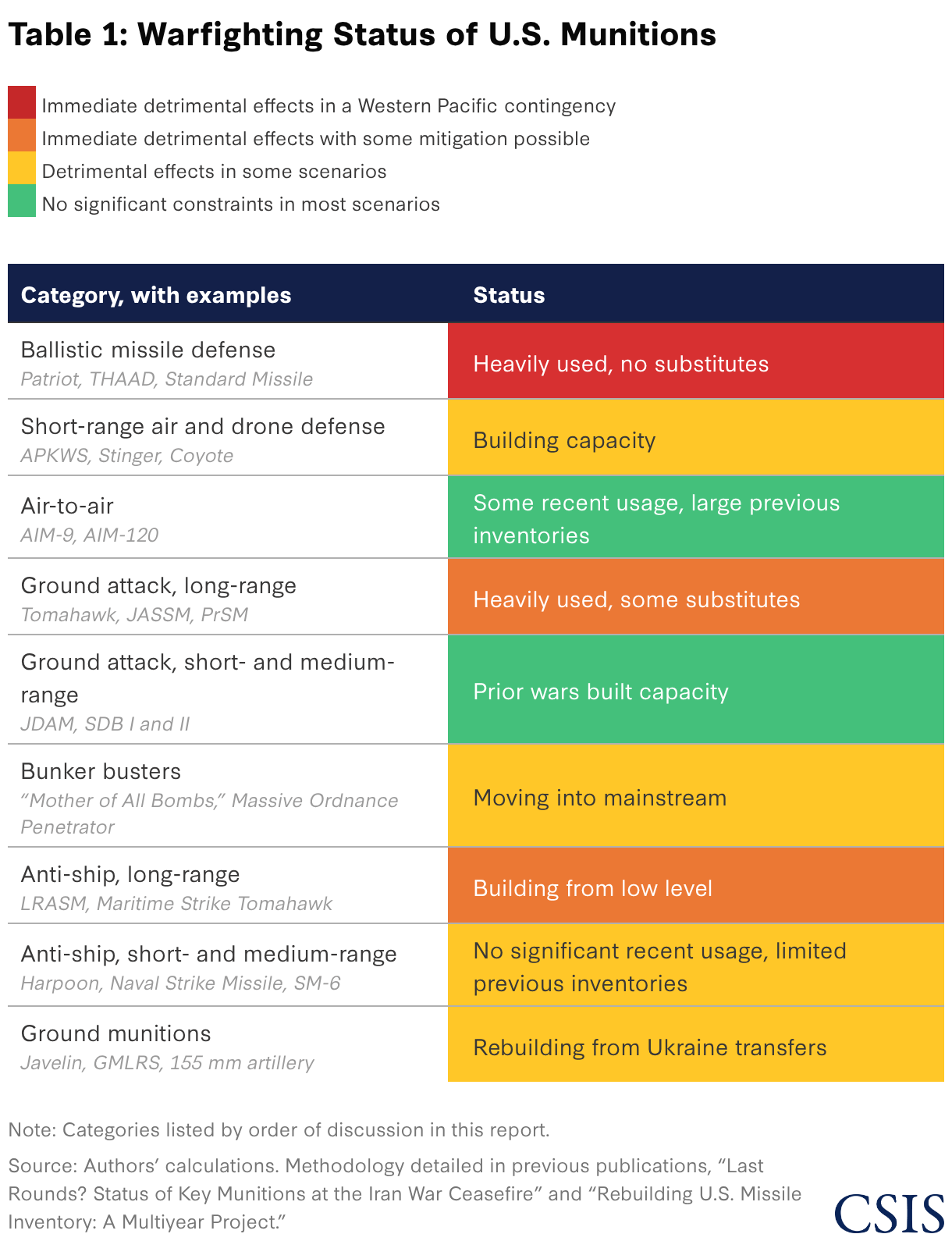
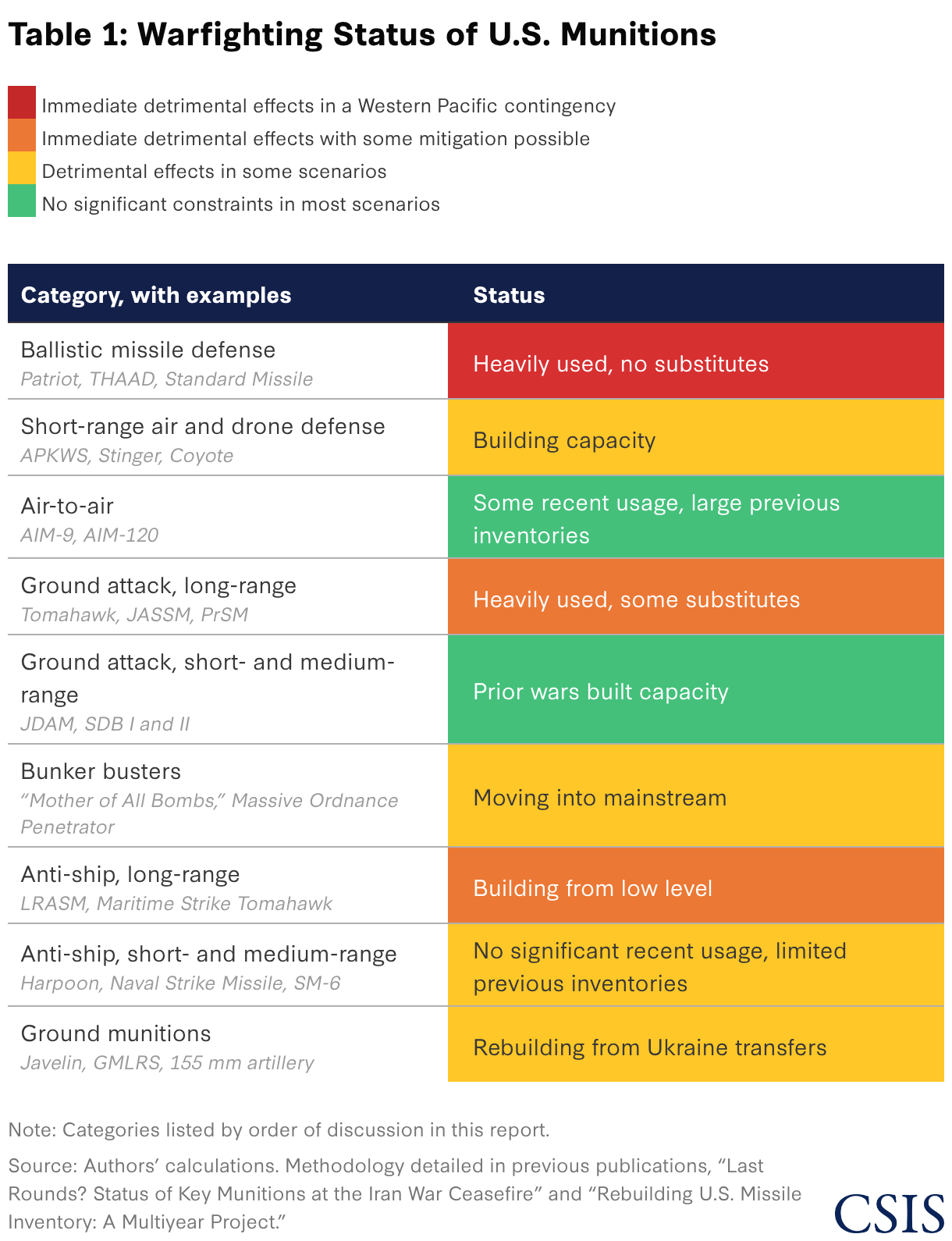
Table 2 shows acquisition status—cost, usage, and recovery time—for munitions with significant usage in the Iran war. Our April and May analyses, “Last Rounds?” and “Rebuilding U.S. Missile Inventory,” detail the calculation and methodology.
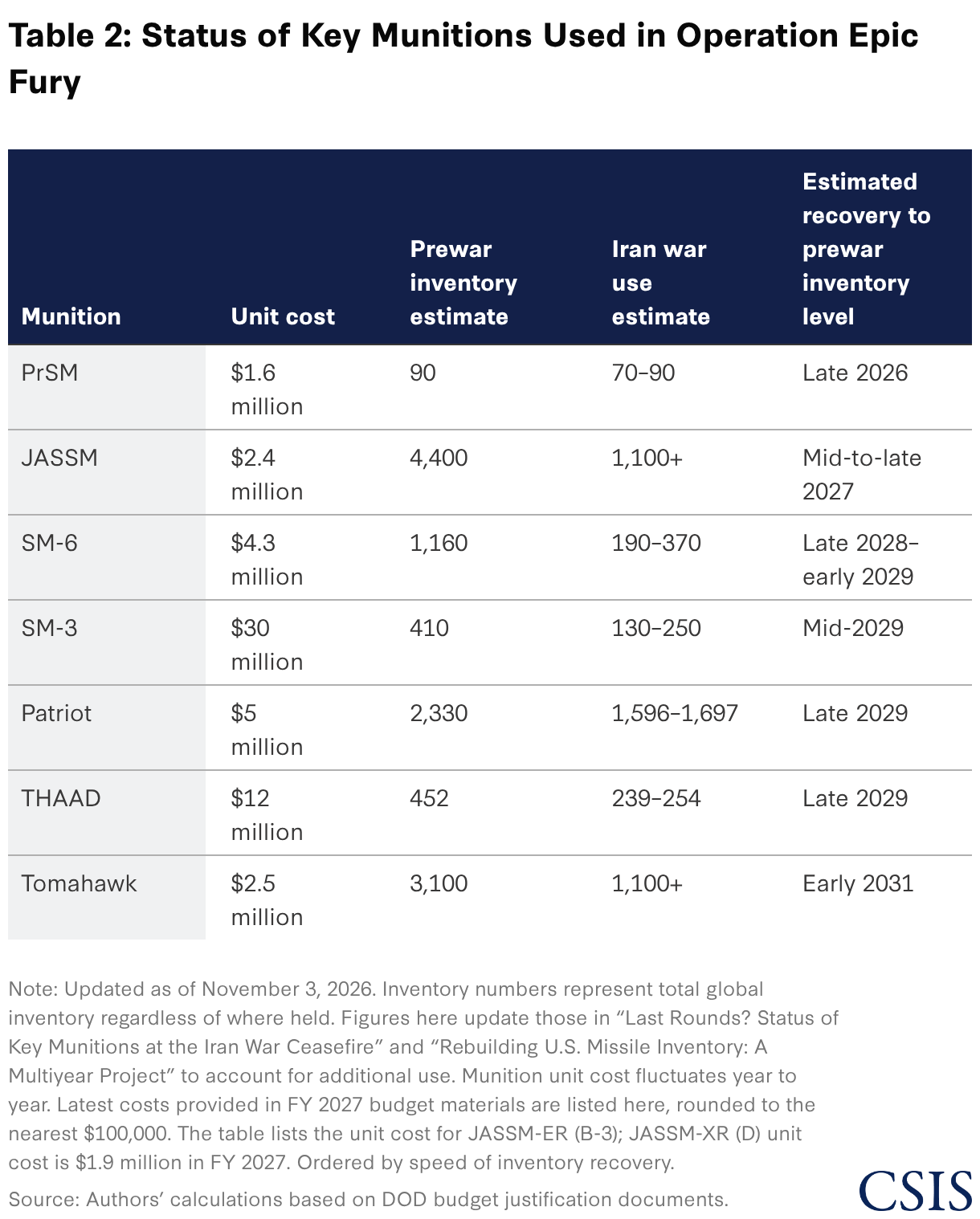
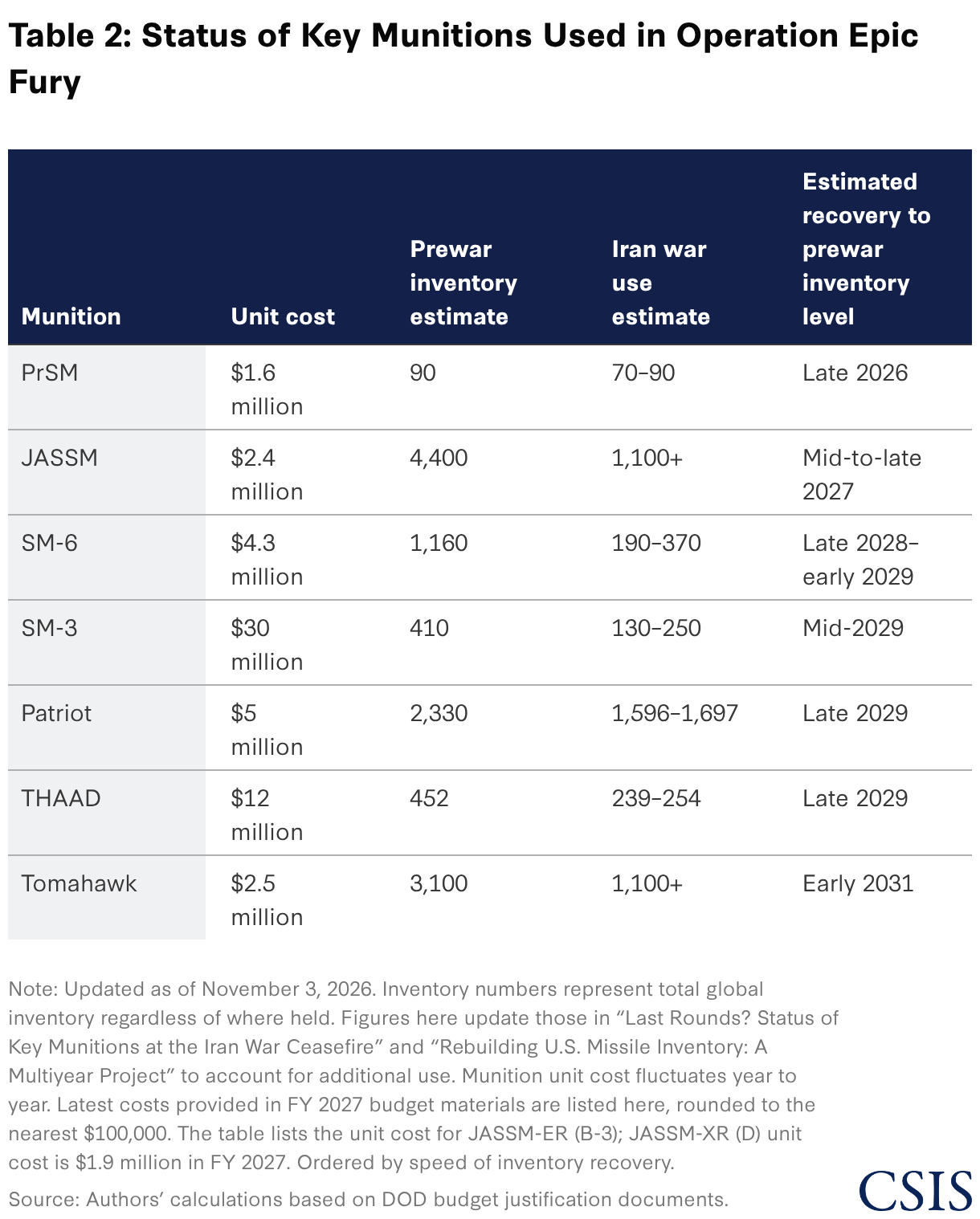
Four observations stand out from the estimates:
The sections below detail the nine categories of munitions. For seven munitions heavily used in the Iran war, two charts are provided to show:
Missile defense interceptors are in critical short supply, with the prewar inventory already considered inadequate for war against China. U.S. forces operate three principal missile defense programs, as the analysis below details. There are no substitutes for these as there are with other munition categories. Only highly specialized munitions can intercept theater ballistic missiles that reach a velocity of 5,000+ mph in their terminal phase. Aircraft and cruise missiles fly at about 800 mph and drones at 150–250 mph.
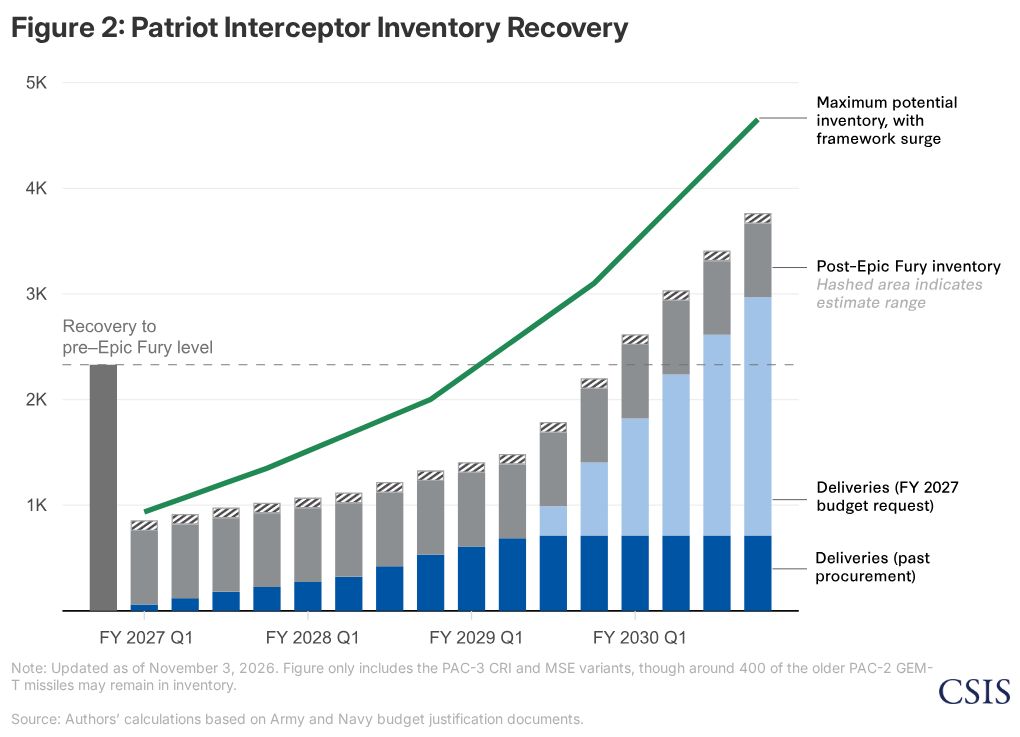
An estimated two-thirds of prewar Patriot interceptor inventory have been expended against Iranian ballistic missiles in the past nine months. Few, if any, were used by U.S. forces against one-way attack drones. Transfers to Ukraine have also diminished the U.S. inventory.

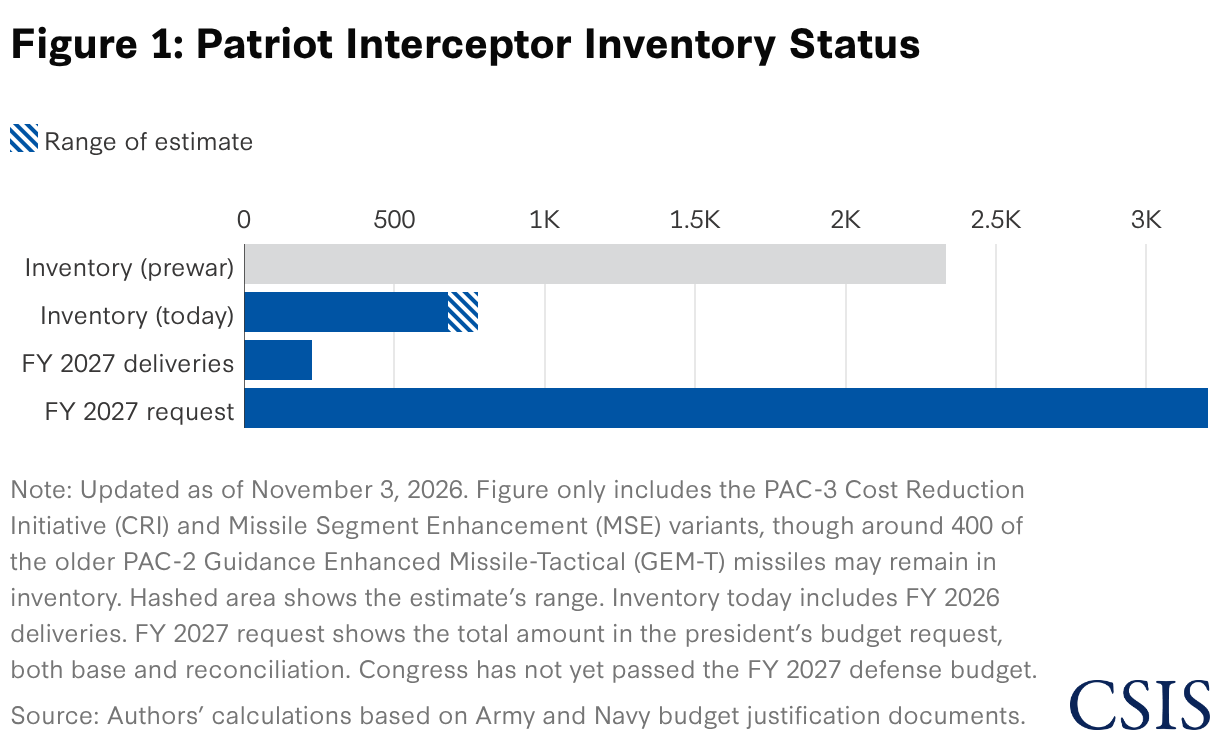
Lockheed Martin has announced an annual production goal of 2,000—up from around 600 today—under a January 2026 framework agreement with the Trump administration and has since received a contract from the DOD to build production capacity.
There will be a lot of competition for newly produced interceptors. In addition to the United States, 18 other countries operate the Patriot. Even before the war, an estimated 1,600 interceptors were in the allied backlog. U.S. coalition partners, who also heavily used Patriot missiles in the Iran war, have bought more. In October, the Trump administration also approved a sale of 500 interceptors to Ukraine, which reportedly has fully run out of its Patriot stock.
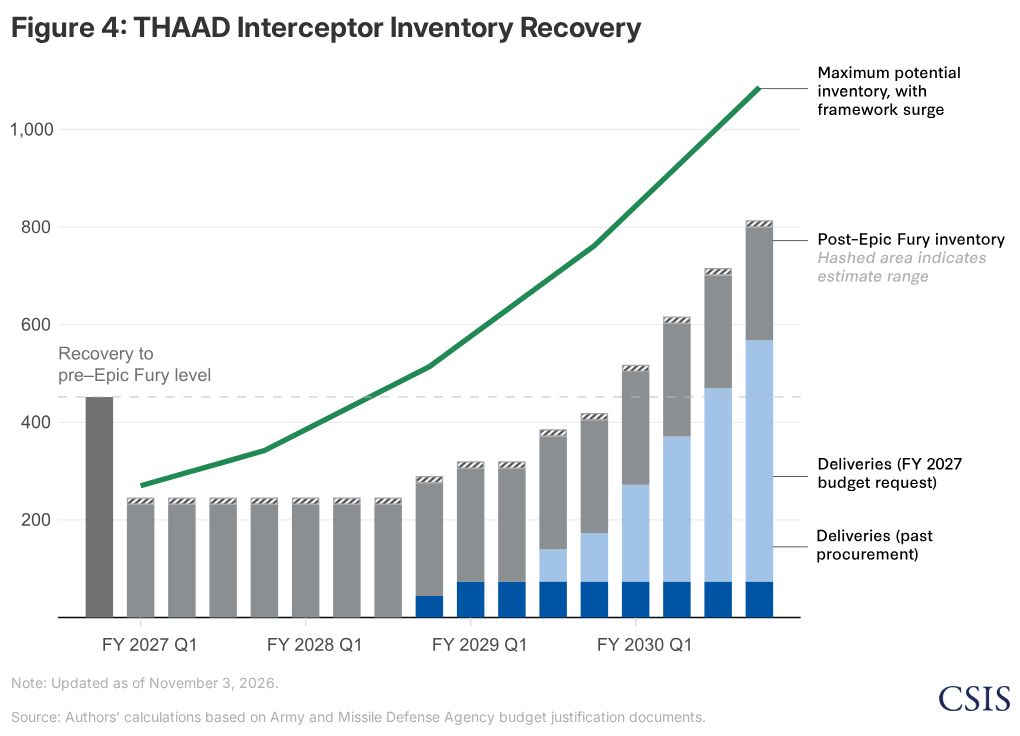
Around half of the prewar Terminal High Altitude Area Defense (THAAD) inventory is estimated to have been used in the Iran war. Eight THAAD batteries are operational, with at least two deployed outside the continental United States before the war, in Guam and South Korea. Several batteries have been sent to the Middle East for Operation Epic Fury. The interceptor complements Patriot by intercepting threats at a higher altitude and over a wider area.

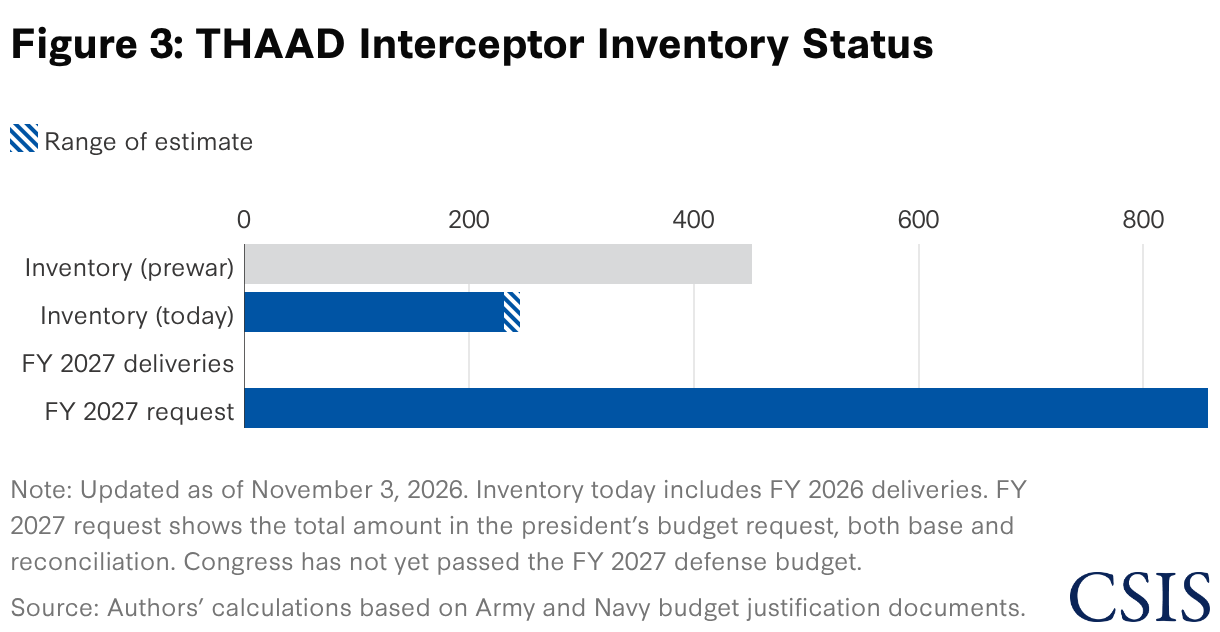
To address the high THAAD expenditures in the Middle East, the DOD resequenced deliveries of newly produced missiles in 2025 and 2026 to prioritize the U.S. inventory over those of Saudi Arabia and the United Arab Emirates. Under the framework agreement, Lockheed plans to quadruple THAAD interceptor production capacity.
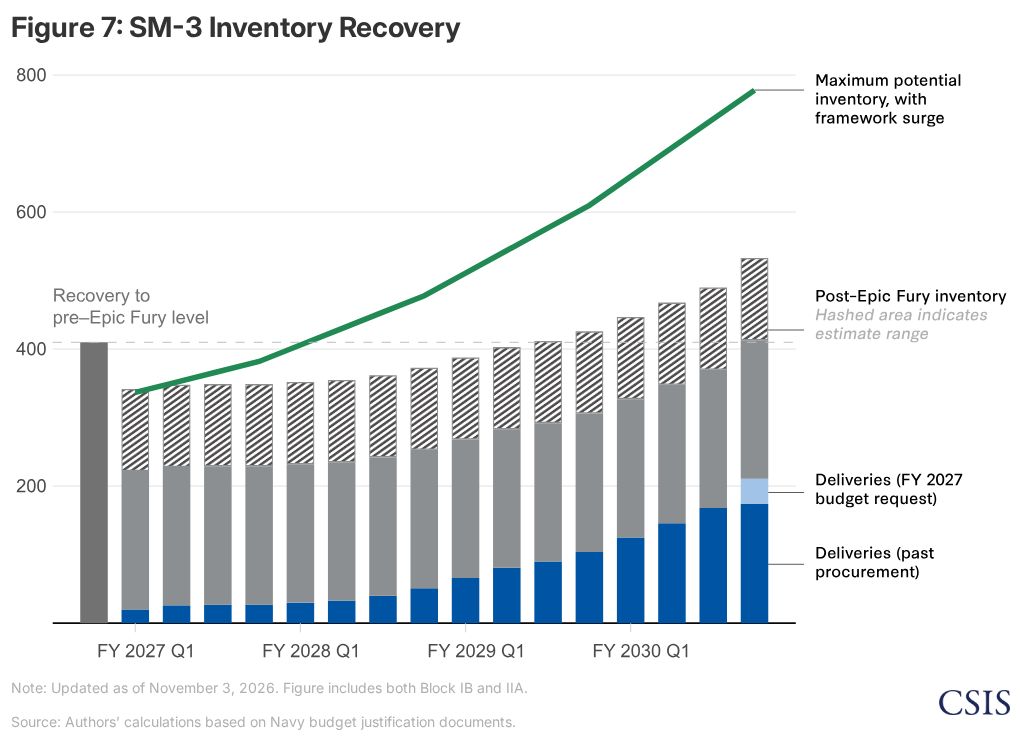
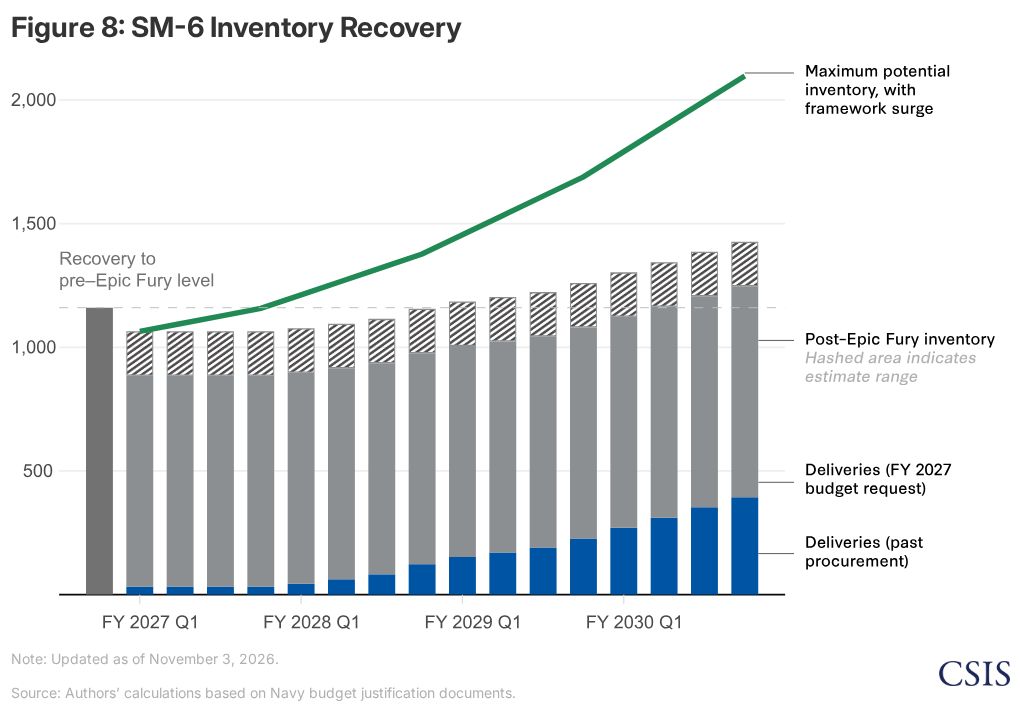
Standard Missiles are a family of surface-to-air missiles launched from vertical launch system cells on destroyers and cruisers. Use of both missiles has been relatively limited, partly because ships have been stationed outside the Persian Gulf. Standard Missile 3 (SM-3) can intercept ballistic missiles. The Missile Defense Agency procures two variants of the missile, Block IB and IIA, with the latter having greater range (2,500 km vs. 700 km), speed (4.5 km/s vs. 3.0 km/s), and cost ($30 million vs. $16 million). Shore-based versions, called “Aegis Ashore,” exist but are not in theater. Standard Missile 6 (SM-6) was designed as a replacement for the Standard Missile 2 for fleet air defense. It has some anti–ballistic missile capabilities against short- and medium-range ballistic missiles.

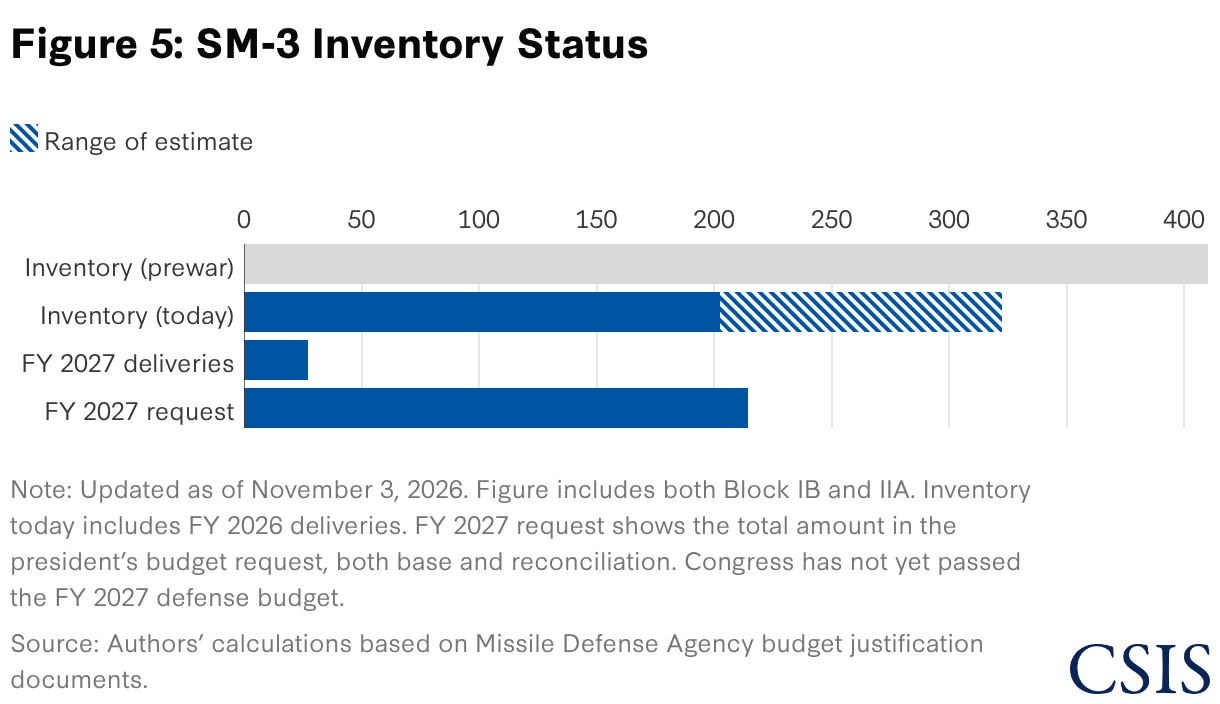
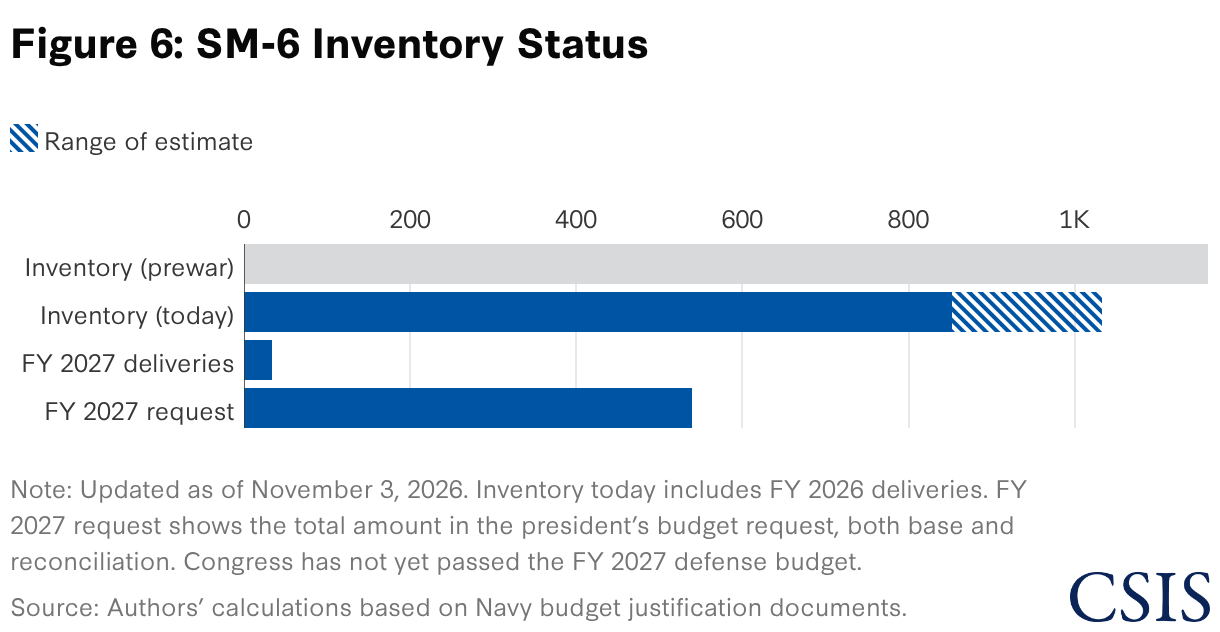
The Trump administration’s framework agreement covers both the SM-3 and SM-6, with RTX seeking to increase SM-3 IIA production “2 to 4 times” and grow SM-6 production to 500 per year. Despite relatively low use in the Iran war thus far, inventory recovery will take time due to small orders in recent years.
For countering drones and cruise missiles, the U.S. military has developed several low-cost interceptors. Because these have a relatively short range, many systems are needed to cover all forces and bases in a theater.
Several other systems are in development, often coming from nontraditional suppliers with expertise in technology, mass production, and low-cost manufacturing.
A large inventory of air-to-air missiles remains in U.S. inventory. These missiles are launched from U.S. fighters and have a primary mission to intercept adversary aircraft.

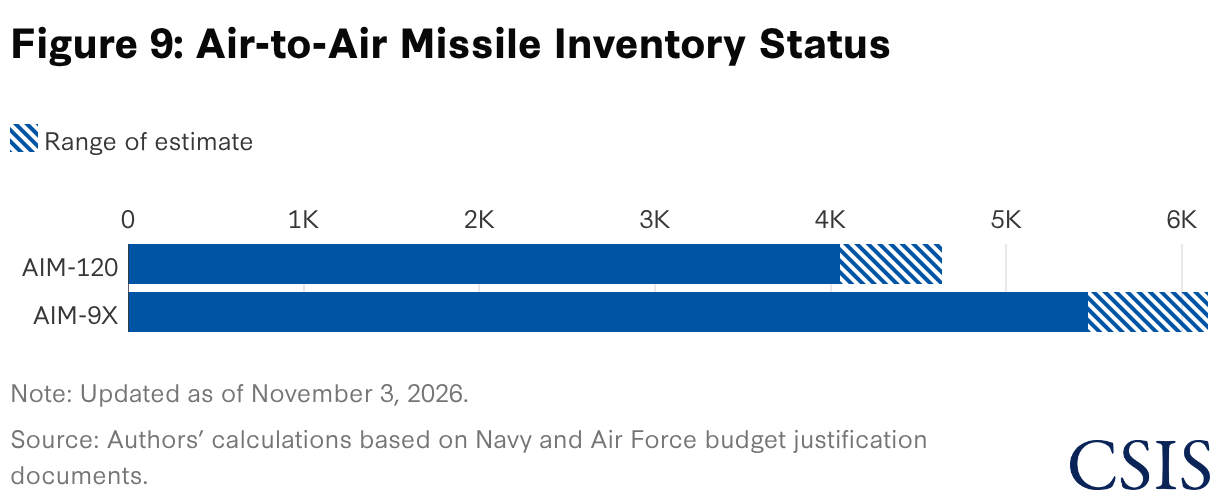
In the Iran war, U.S. and coalition forces have used both air-launched missiles against drones. The great cost imbalance—Shahed drones are estimated to cost $0.02–0.05 million each—makes this impractical as a long-term option. These missiles would be used extensively in a war with China against Chinese aircraft and drones.
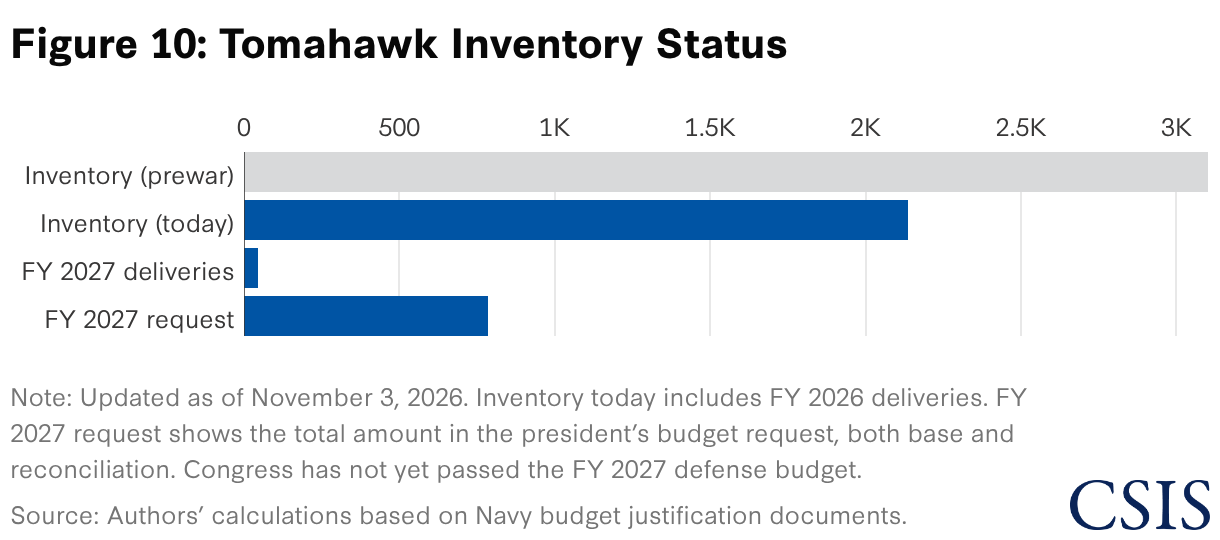
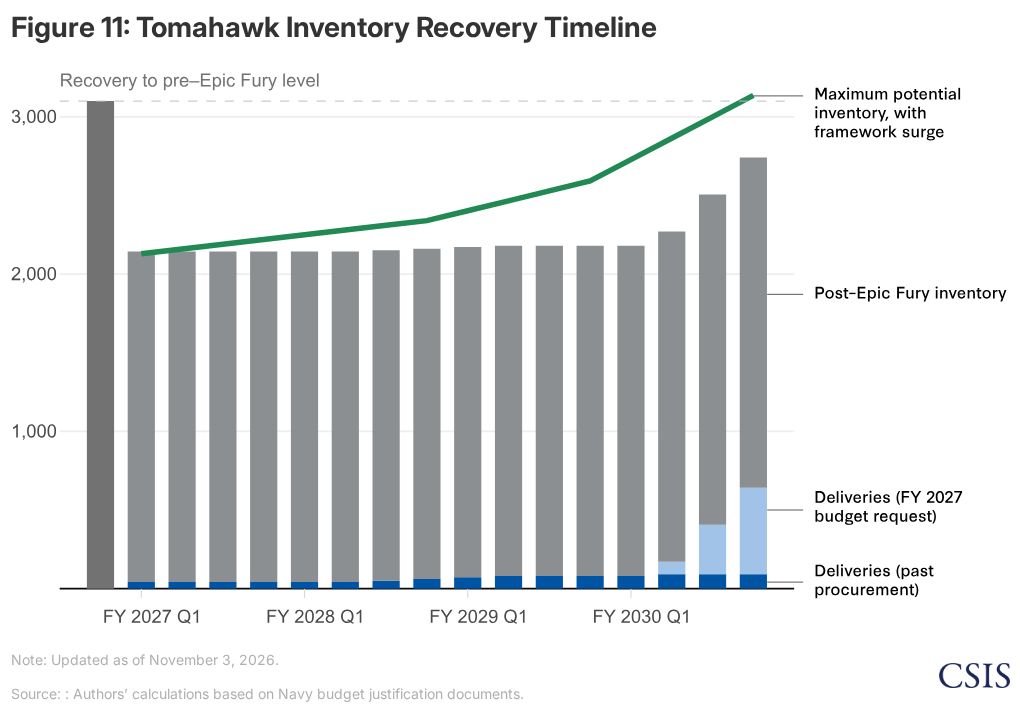
These munitions allow firing platforms to launch from outside an adversary’s strongest air defenses. They were heavily used in the early stages of Operation Epic Fury.
U.S. destroyers and submarines are estimated to have fired around a third of the prewar Tomahawk inventory so far in the Iran war. Tomahawks are fired from sea at ground targets at a range of around 1,000 miles. Ground-launched versions exist but are not in theater.

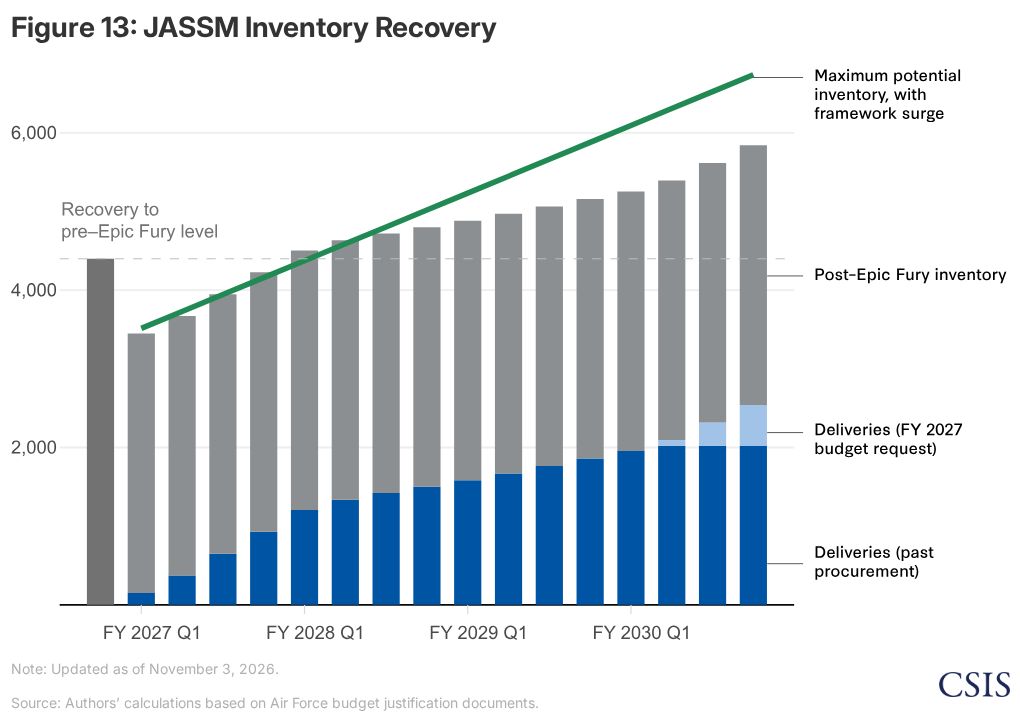
U.S. bombers and fighters launched Joint Air-to-Surface Standoff Missiles (JASSMs), stealthy, air-launched missiles with a 1,000-pound payload. Around a third of the prewar inventory was expended. The missile has been iteratively upgraded over nearly three decades. The baseline JASSM has a range of 200+ miles, the Extended Range variant (JASSM-ER) has a 500-plus-mile range, and the Extreme Range variant (JASSM-XR) is speculated to have a range of around 1,000 miles.

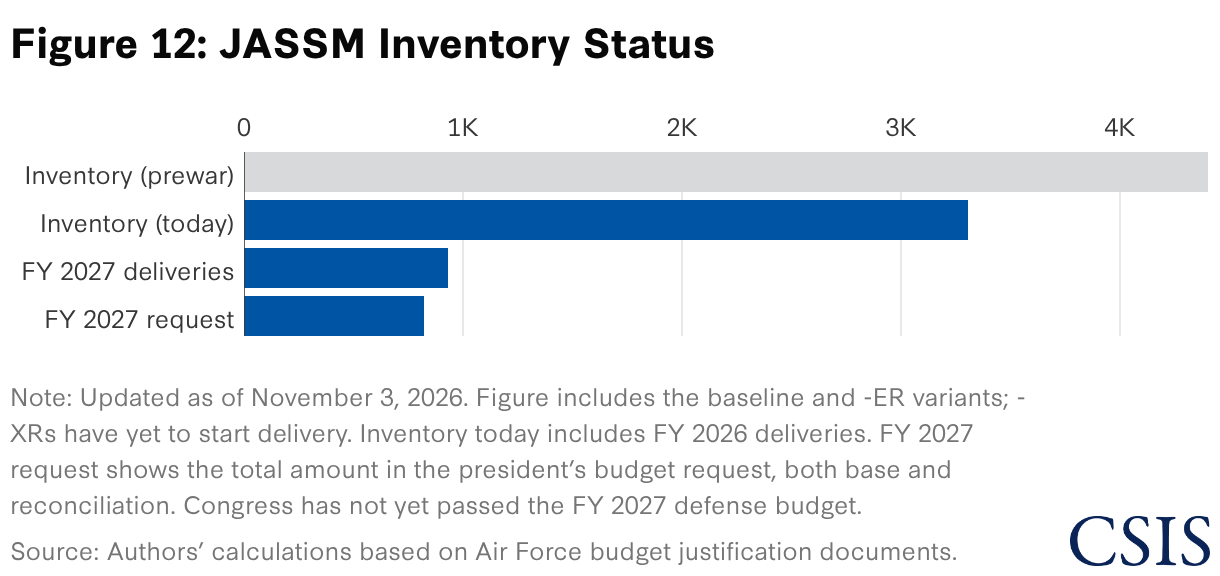
U.S. forces began the campaign in Iran with a large JASSM inventory, and sizable procurement in previous years will rapidly restock the diminished inventory.
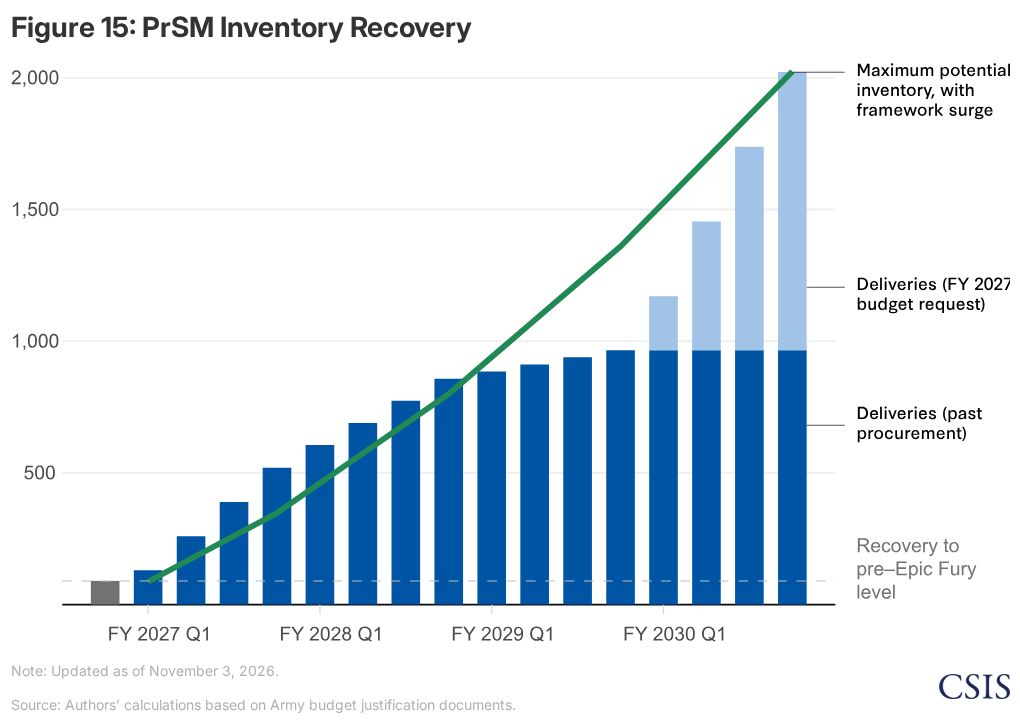
Operation Epic Fury was the first combat use of the Precision Strike Missile (PrSM), a ground-launched missile used by field artillery systems such as the Multiple Launch Rocket System and the High Mobility Artillery Rocket System. It has a longer range than its predecessor, the Army Tactical Missile System (over 300 miles vs. 180 miles).

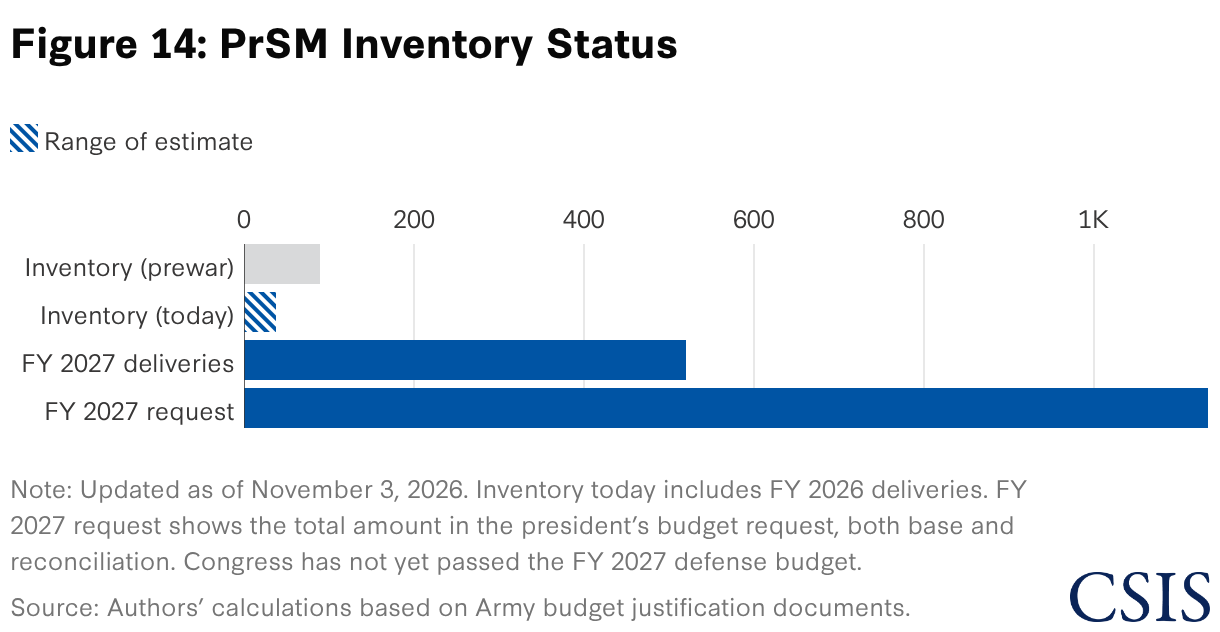
The prewar inventory for PrSM was low, as procurement began in FY 2023 and first delivery was in early 2026. Large orders from the Army in the queue—964 missiles between FY 2024 and 2026—will quickly replenish stocks and increase inventories greatly.
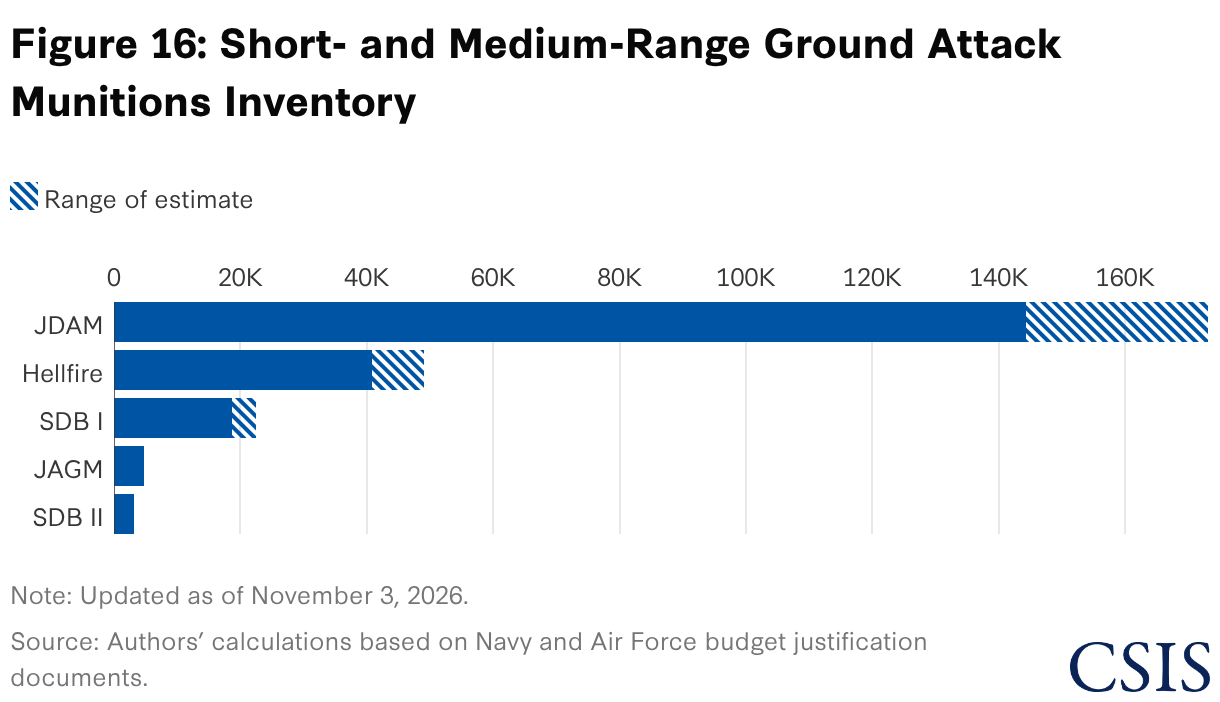
The United States has large numbers of munitions with the same explosive yield and accuracy as the long-range systems described above but with ranges under 300 miles. Thus, even if long-range ground attack munitions run low, the United States could continue the fight. Air superiority is required to use them extensively, however, as the shorter ranges put launch platforms in danger. These munitions include:
The shorter range makes these munitions much less expensive. To illustrate the cost/range trade-off, a JASSM and a BLU-110 bomb fitted with a JDAM guidance kit both accurately deliver 1,000-pound payloads. The JDAM has a maximum range of 15 miles and costs about $100,000, while the JASSM has a range of 600 miles and costs $2.4 million.

General Dan Caine, the chairman of the Joint Chiefs of Staff, stated that U.S. forces had reached a “point of munitions transition” to attack Iran “from standoff…to stand-in” by the fifth day of the campaign. By that, Caine meant that early strikes used long-range and expensive munitions to stay outside Iranian air defenses until these defenses were reduced to an acceptable level. Strikes then transitioned to lower-cost munitions. By day 14, Defense Secretary Pete Hegseth shared that less than 1 percent of munitions fired by U.S. forces were long-range. Figure 17 illustrates the change in the munition mix over time.

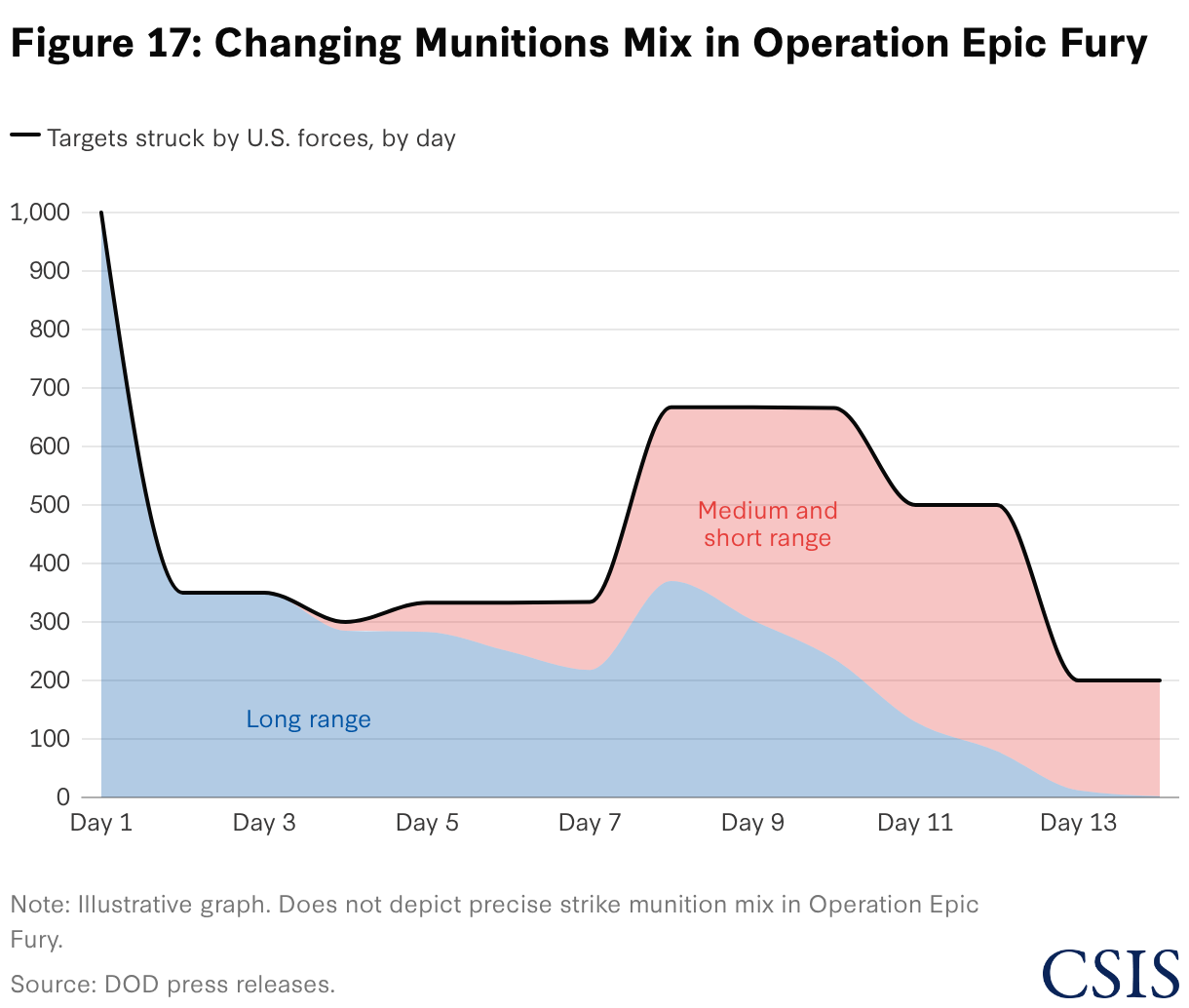
A renewed air campaign would likely follow this pattern. The United States would need to reestablish air superiority because Iran has had time to rebuild its air defenses. The transition to less expensive munitions might occur more quickly. A rebuilt Iranian air defense would be weaker than at the war’s beginning, and U.S. forces have periodically attacked these sites as Iran rebuilt. A faster transition would reduce the use of scarce, high-end munitions.
Although this transition is achievable against regional adversaries such as Iran, it may not be achievable against a great power like China. Extensive air defenses of the People’s Liberation Army would take much longer to reduce and might have enough continuing capability to prevent short-range munitions from being used widely.
Bunker busters are munitions designed to strike what DOD calls hard and deeply buried targets. A previous analysis discussed these munitions in depth and how they moved from a niche capability into the mainstream as adversaries have learned to tunnel and harden facilities to mitigate the effects of precision strike. Conventional U.S. bunker buster munitions available today come in five general kinds: 500 lb, 2,000 lb, 5,000 lb, very large, and standoff. Most of these are air-dropped bombs (bomb live units, or BLUs) that can be fitted with laser or GPS guidance kits to be configured as guided bomb units (GBUs).

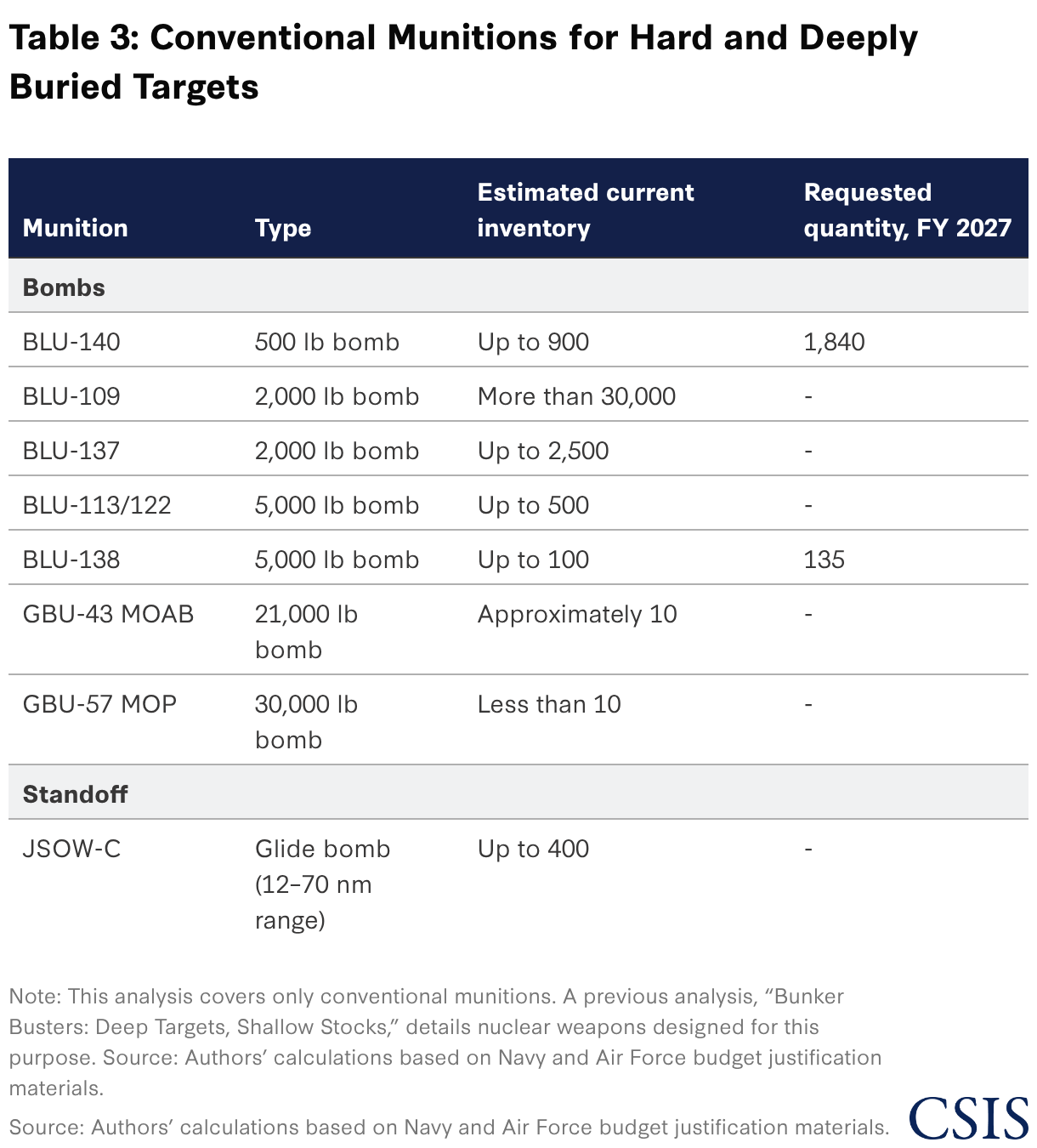
The 2,000-lb varieties are plentiful, but the larger bombs have a more limited inventory. The DOD is working to replenish munitions used in Operation Midnight Hammer. All these munitions will face greater demand as the number of hard and deeply buried targets expands. The president reportedly is considering using the “Mother of All Bombs” (MOAB) against Pickaxe Mountain, though the munition may not be able to fully damage the nuclear program facility buried deep inside the mountain.
These munitions played little role in the Iran war because the Iranian navy was quickly and easily destroyed.

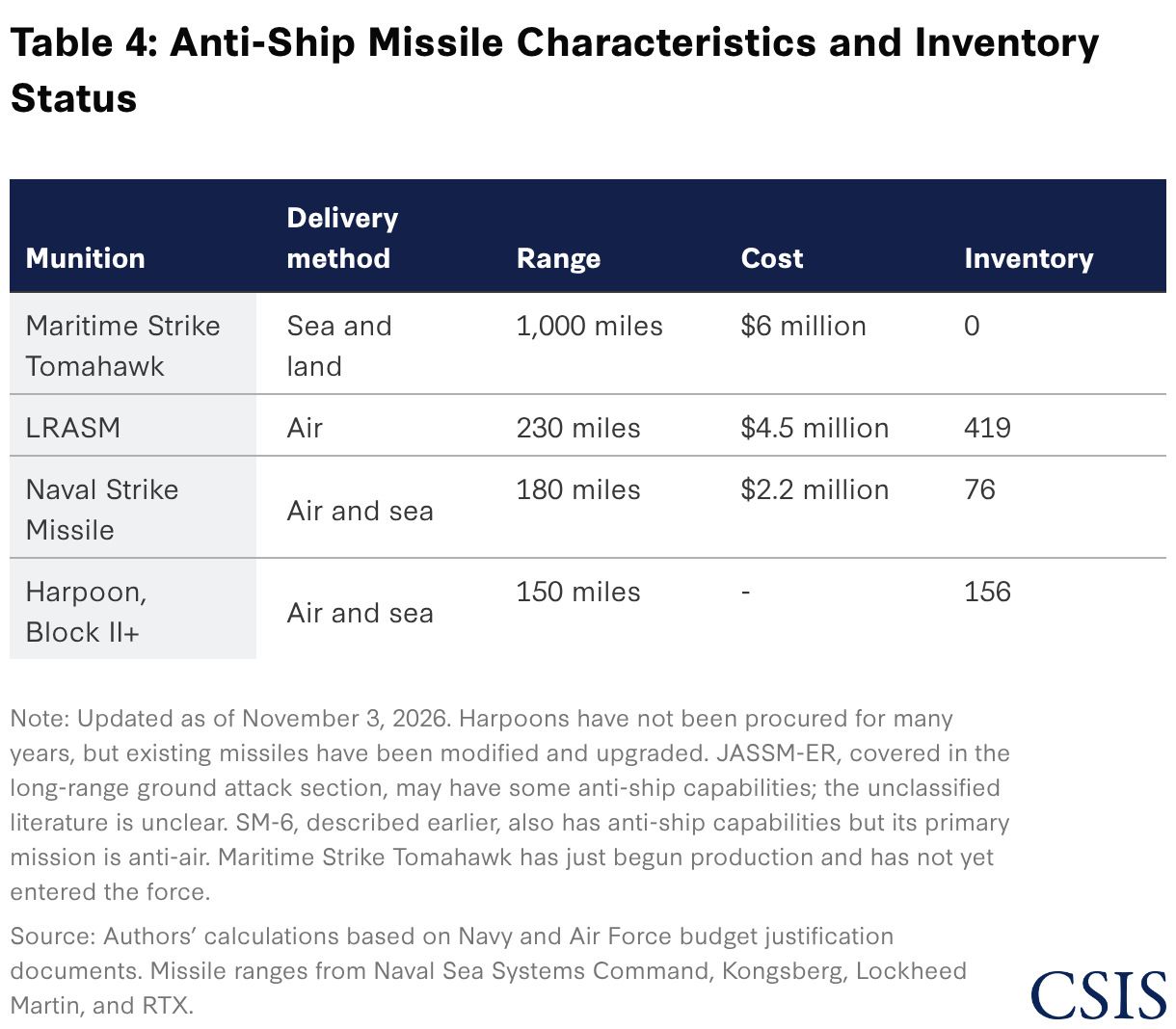
These munitions would play a major role in a conflict against China because of its large and highly capable navy. In CSIS wargames, U.S. players typically send bombers based outside China’s missile range to fire long-range anti-ship missiles—long-range platforms firing long-range missiles to stay outside China’s defensive zone. In the early phases of such a conflict, in particular, China’s defenses make close approach suicidal.
The Biden administration transferred large quantities of artillery shells, rockets, and anti-tank missiles from U.S. inventory to Ukraine, eventually capping transfers to maintain the minimums needed for U.S. war plans. Inventories have been rebuilding as most transfers ended when the second Trump administration came into office, though newly produced weapons under the Ukraine Security Assistance Initiative or Prioritised Ukraine Requirements List continue to flow to Ukraine. The Iran war has not used any of these munitions because there has so far been no ground combat. This category of munitions would probably not be used extensively in a U.S.-China conflict.
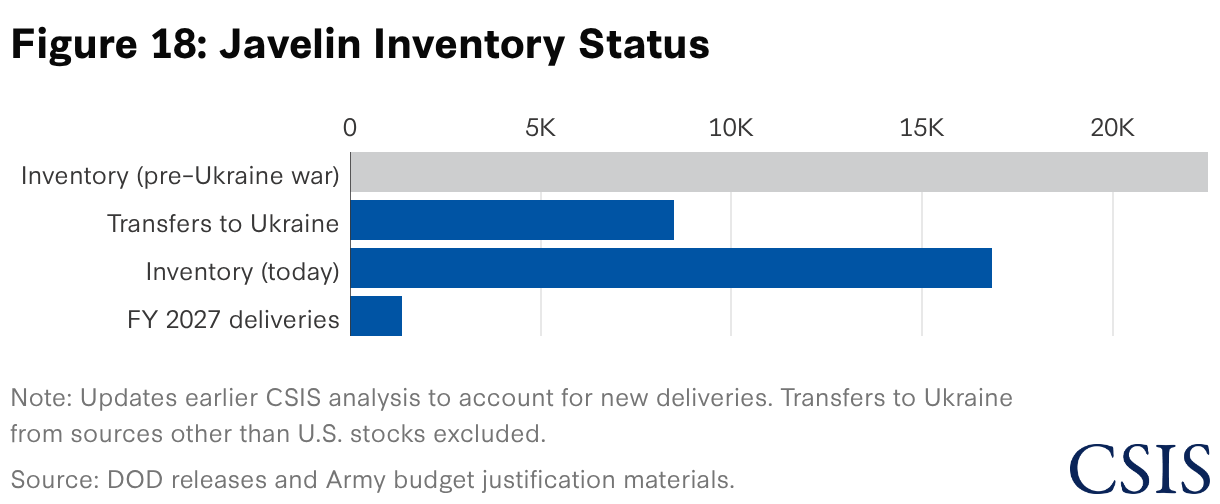
The Javelin anti-tank missile illustrates the current situation of this munitions category: Large inventory existed before the Ukraine war, but many (about 40 percent for Javelin) were transferred to Ukraine. Inventories are rebuilding now, with large procurements that began in the Biden administration and continue in the Trump administration.

Despite criticisms to the contrary, the munitions industrial base was not neglected, nor were previous administrations blind to future needs. The munitions situation today is the result of conscious and rational decisions in national security strategy and acquisition policy. A previous analysis laid out the reasons for low inventories:
Although the current munitions shortage arose from rational choices in the past, a changed environment requires new approaches.
Building more started several years ago when the war in Ukraine showed how quickly inventories of weapons, munitions, and supplies would be exhausted in an intense conflict. The Trump administration has accelerated that effort. Production of Patriot missiles is an example. Before the war in Ukraine, production was around 300 per year with half going to the United States and half to allies and partners. Now production is around 600 per year, with a goal of 2,000 per year by 2030.
The DOD cannot afford to build adequate inventories by relying solely on highly capable and expensive munitions and thus needs a mix of munitions. Some situations require exquisite capabilities, but many do not. A munitions with a range of capabilities and costs need to be developed and then ushered into production.
The nation finally needs to make a long-term commitment to building these inventories by funding them in FY 2027 and beyond. Multiyear commitments convince industry to invest its own money. Industry’s nightmare is that the DOD makes deep cuts in munitions procurement when the current crises ease, leaving industry with unused capacity. Although Congress seems unlikely to pass the DOD’s full FY 2027 request of $1.5 trillion, funding for munitions has had strong bipartisan support and could be given priority.
Mark F. Cancian (Colonel, U.S. Marine Corps Reserve, ret.) is a senior adviser with the Defense and Security Department at the Center for Strategic and International Studies (CSIS) in Washington, D.C. Chris H. Park is a former research associate for the Arleigh A. Burke Chair in Strategy at CSIS.
The authors thank Elyza Schoeberl for research support, Lauren Adler and Nina Prieur for editorial review, and Sabina Hung for data visualization.
This report is made possible by general support to CSIS. No direct sponsorship contributed to this report. This report was written in support of a project funded by the Smith Richardson Foundation.

Report by Mark F. Cancian and Chris H. Park — April 21, 2026

Commentary by Mark F. Cancian and Chris H. Park — May 27, 2026

Commentary by Mark F. Cancian and Chris H. Park — October 15, 2026

Commentary by Mark F. Cancian and Chris H. Park — July 31, 2026
